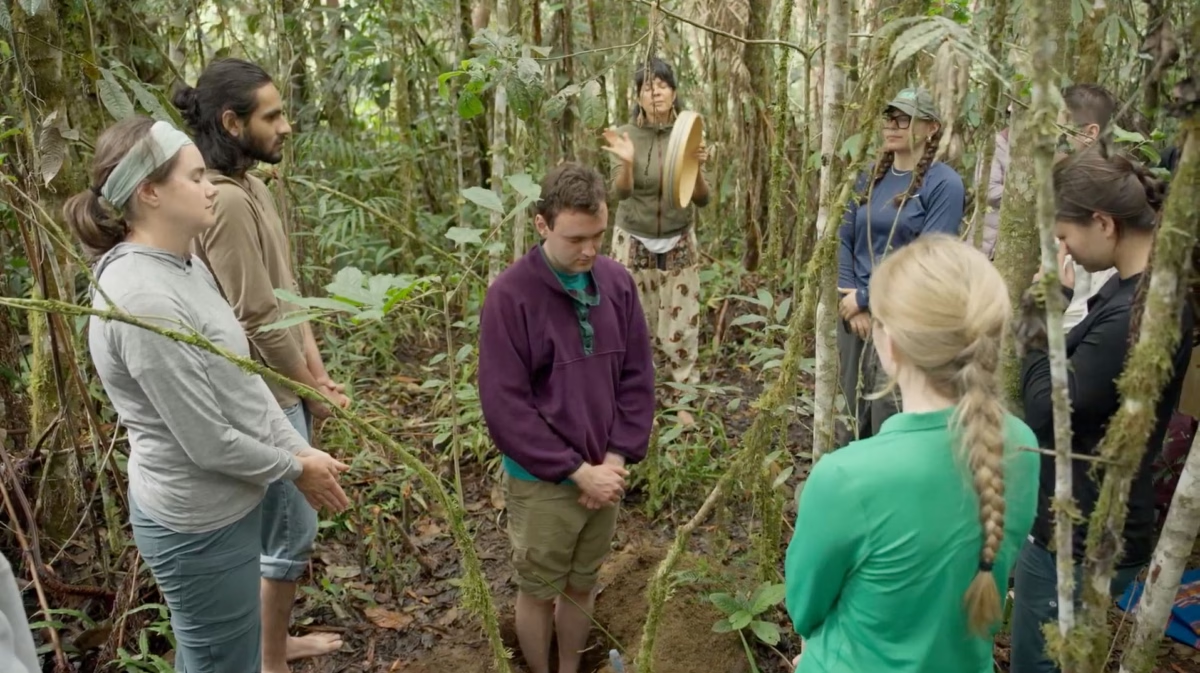
Deep in central Peru’s mountainous Amazon jungle, surrounded by his classmates and professors, Zach Baranowski ’25, M.S.-ES&P ’26, stood still like a tree, closed his eyes, and listened.
The experience, he said, brought to life his research into ecosystem “soundscapes,” especially the calls made by frogs.
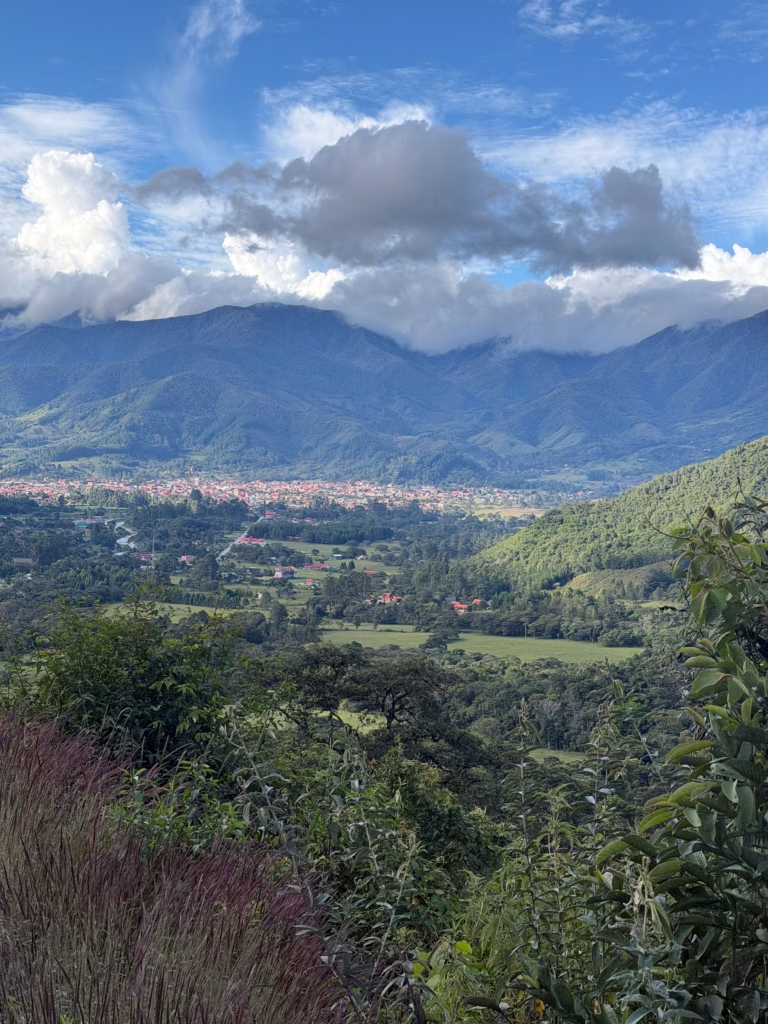
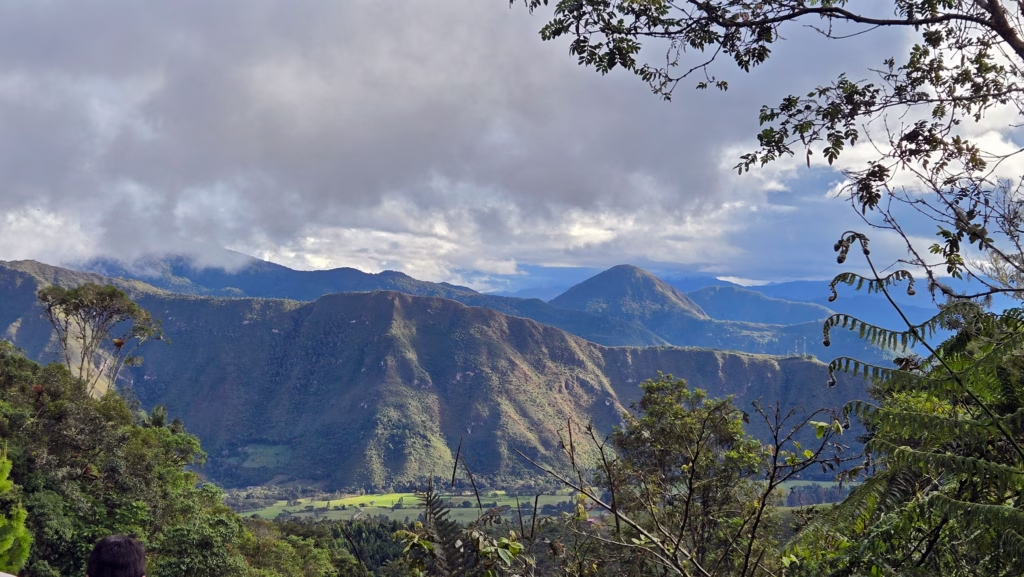
For just a few moments, Baranowski (above, center) immersed himself in the serene symphony of the tropical forest, part of the Oxapampa–Asháninka–Yánesha Biosphere Reserve (BIOAY), one of 797 UNESCO-designated natural areas around the world. The designation promotes a balanced relationship between humans and nature, supporting Indigenous and local communities’ biodiversity conservation and sustainable economic development.
Absorbing the sounds of Tierra de Bosques (Land of the Forests), Baranowski thought “about how it felt to be surrounded but also protected” by the natural landscape. The forest-meditation exercise, led by conservationist and ecotherapist Lucía Bacigalupo, prompted him to consider “the importance of slowing down, and how nature helps with that.”
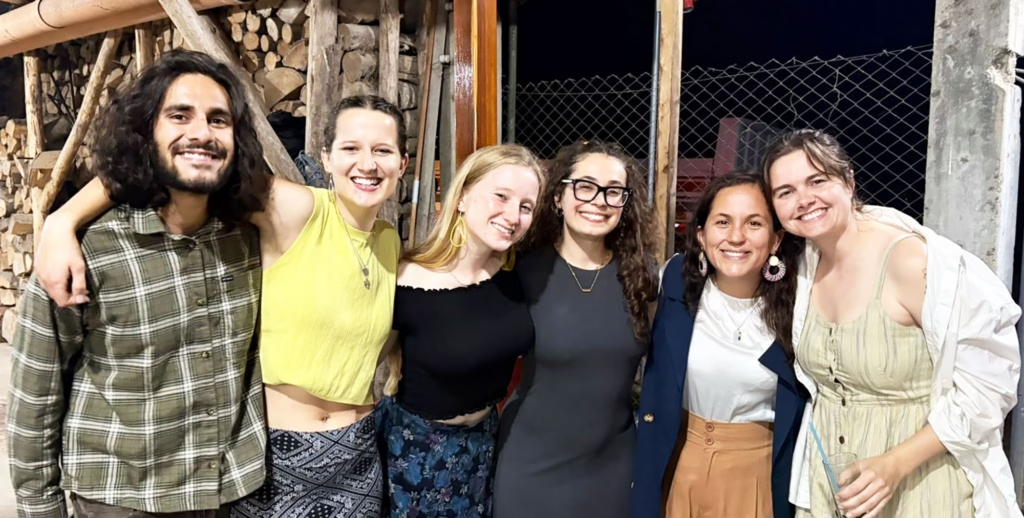
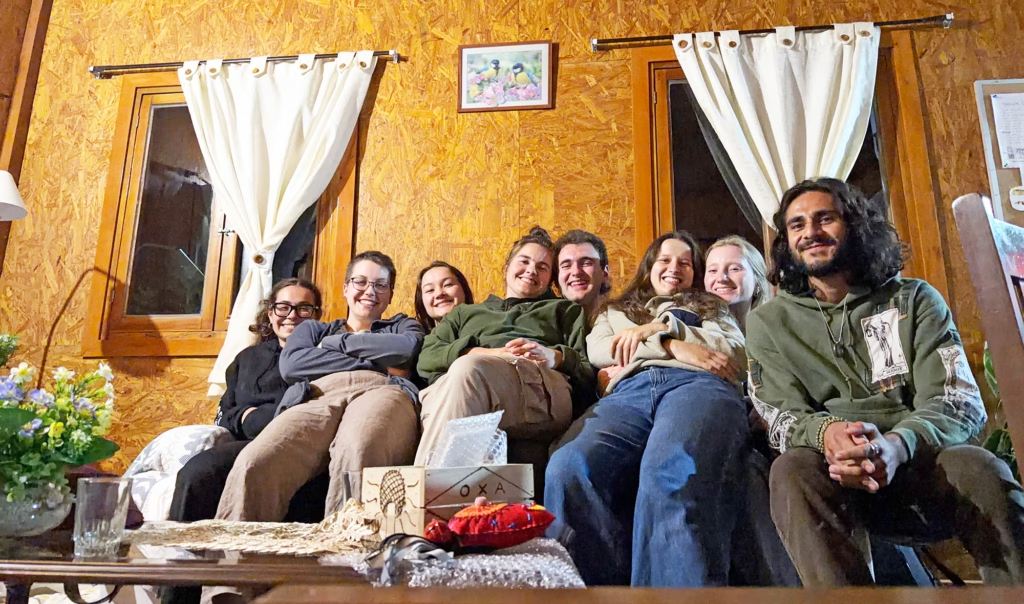
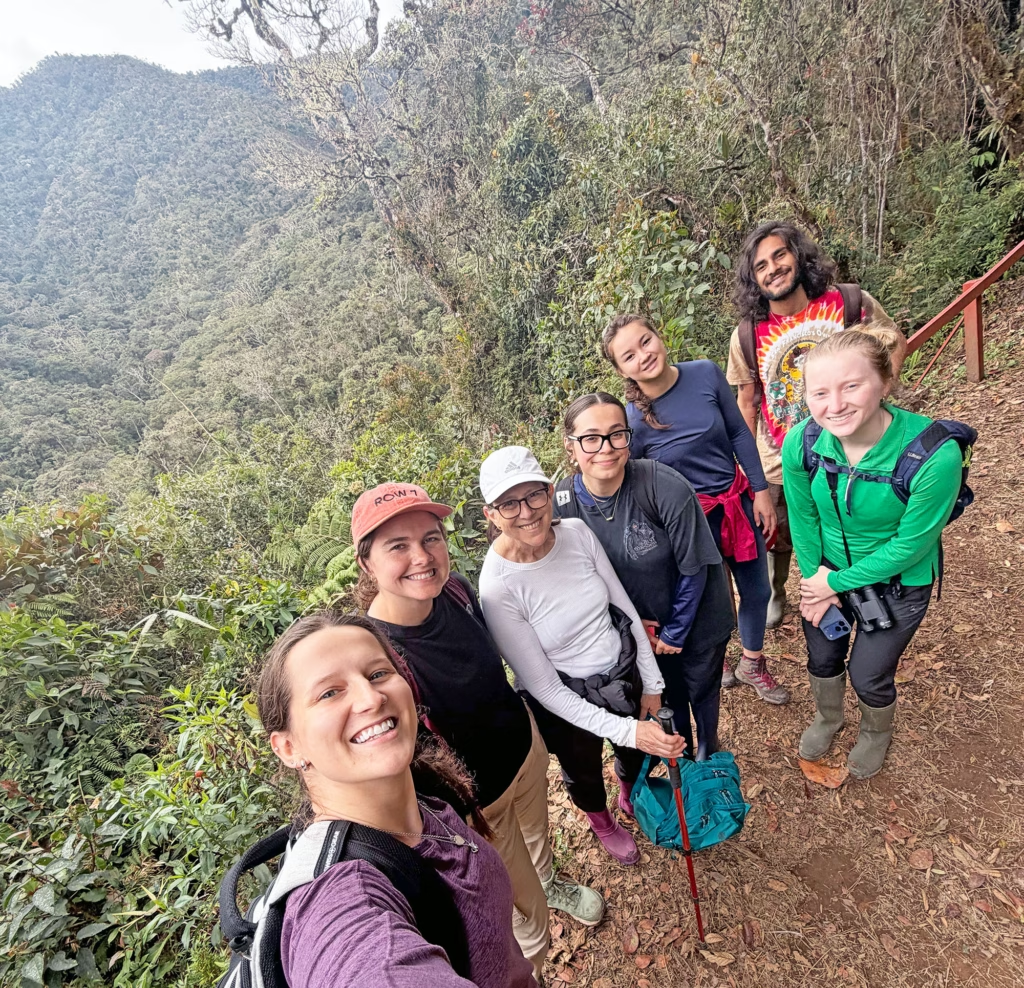
Baranowski was one of eight Clark students and recent graduates from Clark’s School of Climate, Environment, and Society who traveled to Oxapampa for a summer field-based experience, following an on-campus class, “Exploring the Micropolitics of Environmental Governance of a Biosphere Reserve,” in the spring. Their co-instructors were Professor Denise Humphreys Bebbington of the Department of Sustainability and Social Justice and geography alumna Mireya Bravo Frey, Ph.D. ’16, a program officer with Climate and Land Use Alliance in Peru.
The spring class and its culminating 20-day summer field module may serve as a model for future Global Learning Collaboratives — experiential courses, projects, and internships that allow students to learn outside the classroom and across the world, according to Professor Ellen Foley, associate dean of the School of Climate, Environment, and Society.
The Global Learning Collaboratives are an outgrowth of long-term, community-engaged research by faculty working with local partners in Worcester, Puerto Rico, and farther afield in Africa, Asia, Europe, and Latin America.
“Because Clark has such longstanding networks and relationships across the world, we can give students something that’s really special,” Humphreys Bebbington said.
“Giving students a hands-on experience makes it more than just a classroom discussion,” she explained. “Things that you talk about in class become real. Students can touch them, smell them, see them, and that gives them so much motivation. They’re talking with people who are doing the work — farmers, entrepreneurs, community leaders — and that makes all the difference.”
‘Empathy involves stepping into someone’s shoes’
Humphreys Bebbington gives Bravo credit for inspiring and co-teaching the class and leading students’ experiential learning in Oxapampa, where they learned about conservation and economic activities in the BIOAY and each explored a research interest. The instructors are planning to return to the region with another cohort of Clark students in 2027.
“Mireya played a huge role in making this happen,” Humphreys Bebbington said. “The class and Global Learning Collaborative build on her Clark Ph.D. dissertation, and her contacts and networks made this student experience possible.”
Bravo grew up in the Central Highlands city of Huancayo, but her familial roots lay 160 miles north, in the mountains of Oxapampa. There, she conducted research as an undergraduate anthropology major in 2003-04 and became aware “of conflicting relations of resource use and access.”
Yet, just a few years later, community members, environmentalists, NGOs, and local government leaders united in supporting UNESCO’s designation of the 4,383,872-acre region as a Biosphere Reserve, officially recognizing Oxapampa’s biological and cultural significance.
“You can really see how people value and depend on the surrounding landscapes.”
— Brianna Bodner ’25, M.S.-ES&P ’26
Returning to the region as a Ph.D. student, Bravo sought to understand how and why these “diverse social actors, despite their historical differences, have come to support [BIOAY] as a means of combining development and conservation.”
Her dissertation explores the complex “micropolitics of environmental governance” in Oxapampa and “institution building and social action” that have been foundational to BIOAY’s success.
The biosphere reserve has flourished, she concludes, because those involved in organizing and launching BIOAY found common ground and shared “trajectories of empathy” — the “process of perspective taking.”
“Some individuals are able to bridge their experiences because they are aware of their positions and are empathic about the perspective of others,” Bravo explains. “Empathy involves stepping into someone’s shoes, gaining an understanding of their feelings and perspectives.”
Oxapampa proves ‘that communities can build something different’
Humphreys Bebbington also has connections to Oxapampa. She was introduced to the region by her research and life partner, Anthony Bebbington, Milton P. and Alice C. Higgins Professor of Environment and Society at Clark’s Graduate School of Geography. He conducted research there for his Clark geography Ph.D. in the 1980s (and later served as Bravo’s dissertation advisor). Back then, deforestation and soil erosion were rampant in Oxapampa, and many feared the area would become consumed by extractive industries seeking to develop oil, gas and mineral deposits and cutting down forests.
Over the next four decades, the Bebbingtons continued their research, collaborating with Indigenous and local communities impacted by the extractive industry activities in the Andes-Amazon and other threatened ecosystems across the world. With Geography Professor John Rogan and Ph.D. students, they founded Extractives@Clark, the Center for the Study of Natural Resources Extraction and Society.
According to Humphreys Bebbington, Oxapampa could have become one of the many Amazon areas devastated by natural resources extraction and deforestation.
Instead, “Oxapampa is a success story, proving that communities can build something different that both protects nature and works economically for local people,” she said. “You’ve gotten a large, diverse group of people to agree on protecting forests, rivers, and biodiversity.
“When you have a successful economic proposition for an area,” she explained, “that is the best way to keep the oil and gas in the ground.”
‘Students could see people doing things that make a difference’
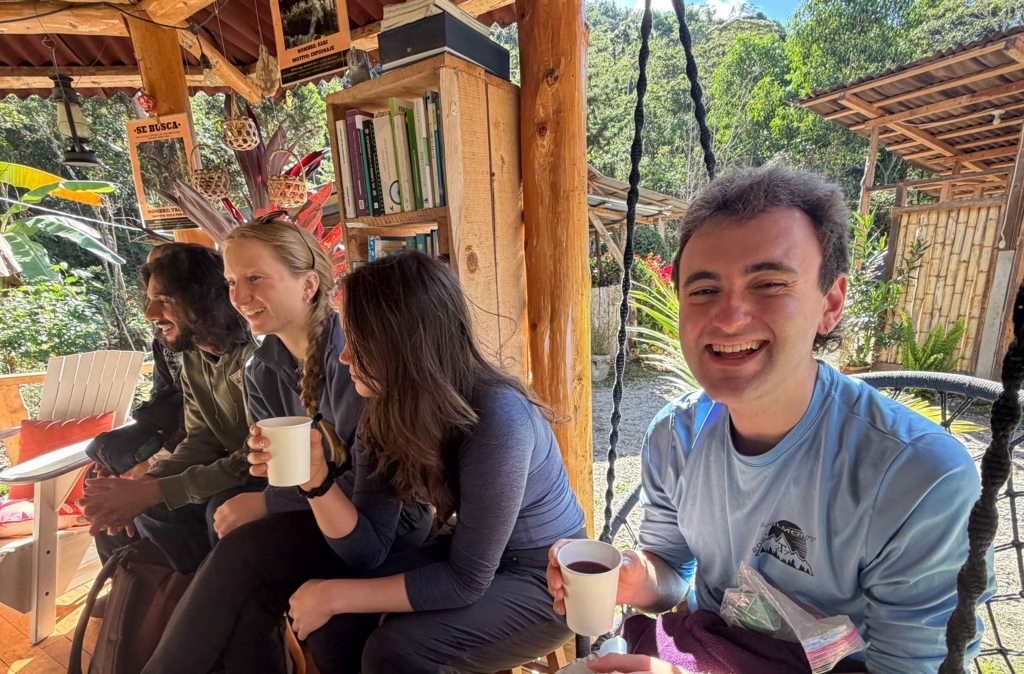
Traveling 10 hours overnight by bus from Lima through the Andes Mountains, the students — accompanied by Humphreys Bebbington — arrived in Oxapampa on June 5 to experience this “success story” firsthand. They started out on a celebratory note, attending activities marking the 16th anniversary of Oxapampa’s designation as a UNESCO-recognized Biosphere Reserve. And they received an up-close view of Peru’s national elections on June 7.
“So many times we hear stories of more deforestation and more environmental degradation,” Humphreys Bebbington said. “Here, students could see people doing things that make a difference. Those are powerful experiences.”
Over the next three weeks, the class provided students with an opportunity to learn about becoming researchers and practitioners. Students interacted with communities, built relationships, and “practiced reciprocity rather than simply extracting information,” she said.
Students learned about Oxapampa’s rich blend of cultures. The region includes Indigenous Asháninka and Yánesha communities, descendants of German and Austrian settlers, and migrants from the high Andes.
The class also met with Bravo’s assembled network of academic researchers, NGO representatives, and practitioners living and working in Oxapampa. They included Chris Knudson, Ph.D. ’16, associate professor and chair of geography at the University of Hawai‘i-Hilo, who researches the area’s governance, climate adaptation, natural resource use, and agriculture.
‘We’re trying to understand the world around us’
Students worked with Cristina Sono Núñez, a strategic communication consultant in Peru, to document their experience through video and photography. Sono developed a storytelling series for social media and other communications platforms at Clark and the School of Climate, Environment, and Society.
Meeting the Yánesha community of Tsachopen had a significant impact on Zoe Black ’26, M.S.-CDP ’27. “This was knowledge that was almost erased in colonization, so it’s very important that we are able to keep it,” Black said.
In their meetings with Oxapampa community members, she explained, “we’re trying to understand the world around us, so understanding the world through Indigenous perspectives is very valuable.”
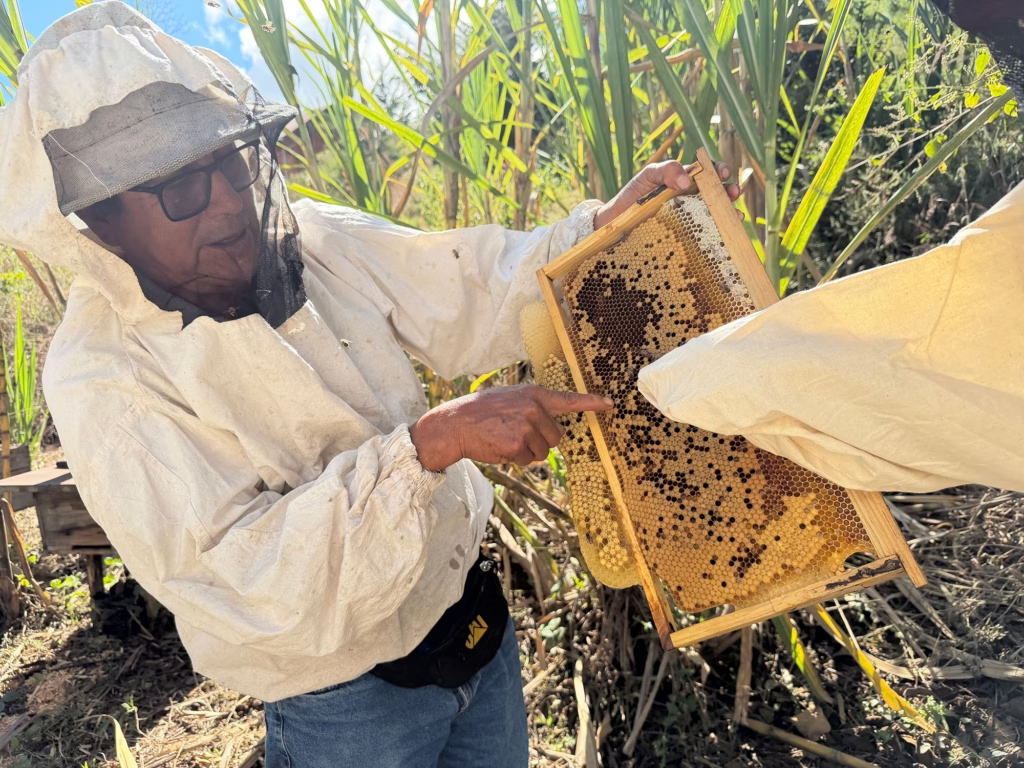
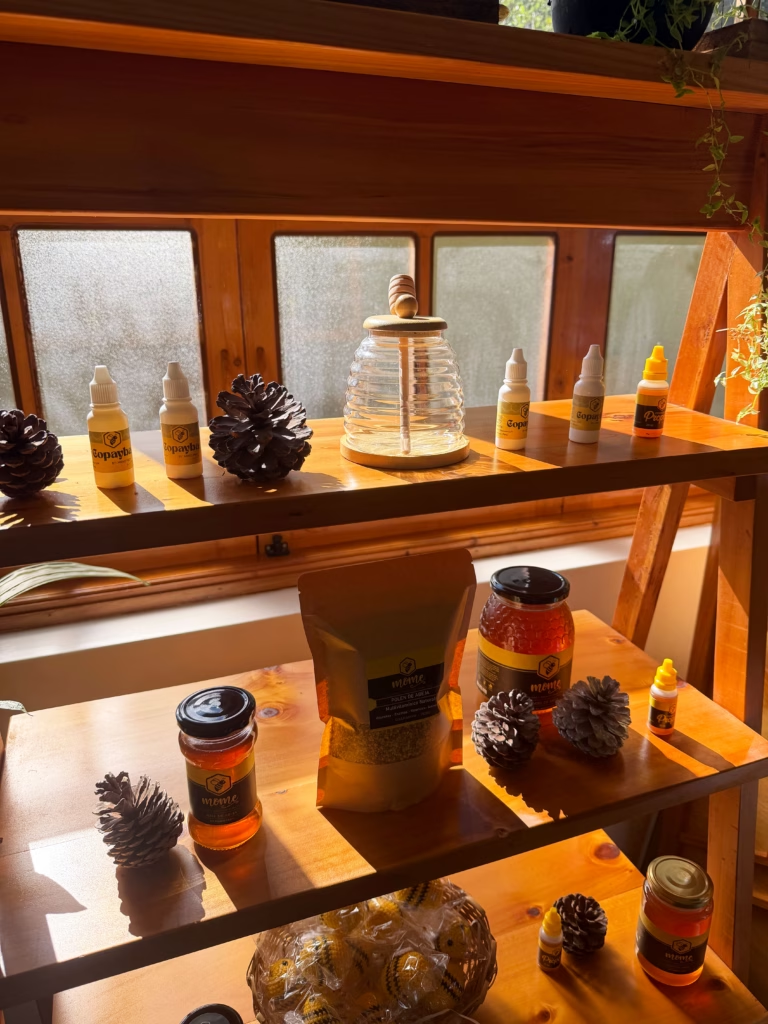
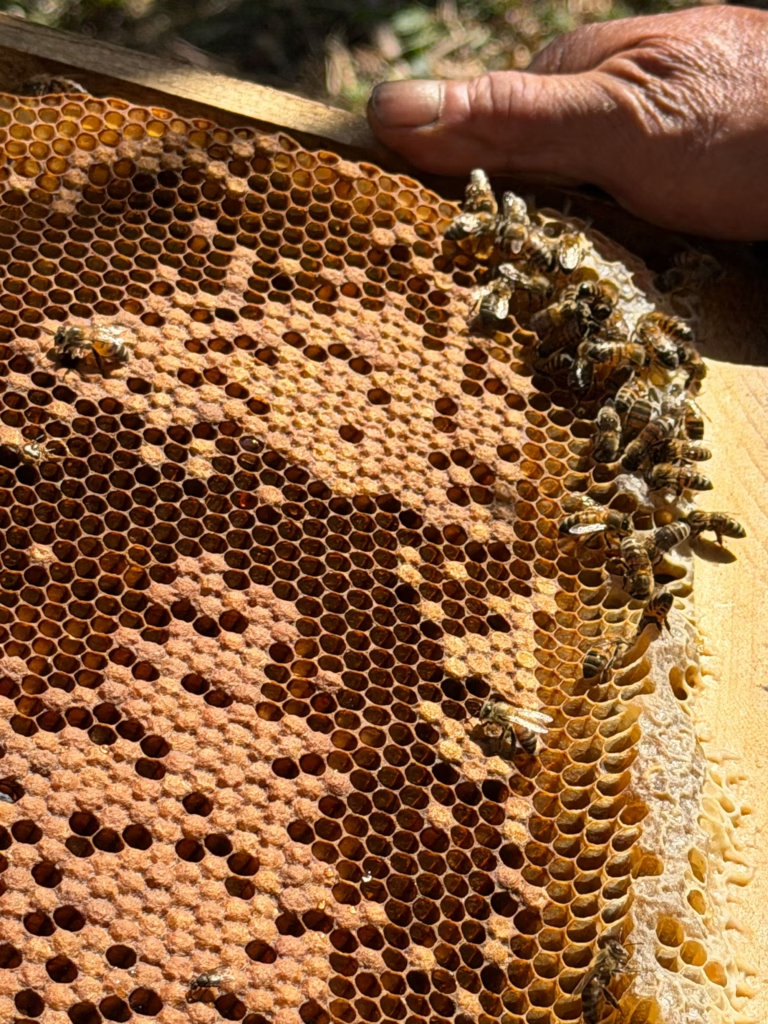
The students visited an ecological research center and school for underprivileged children in Centro Yanachaga (formerly, but often still called, Prosoya), a fish farm in La Colmena, and a bee museum, where they learned about apiculture and tasted honey.
Morgan McKeen ’25, M.S.-ES&P ’26, was struck by the transformation of Prosoya, where rural children receive a formal education while also learning trades like woodworking, baking, and beekeeping.
“Thinking back on the history of the campus is super-powerful because it used to be a hacienda, which comes with a lot of questionable history and treatment of people,” McKeen said. The site has been “rebranded,” and “making use of this beautiful property for something good and community-driven is super-impactful.”
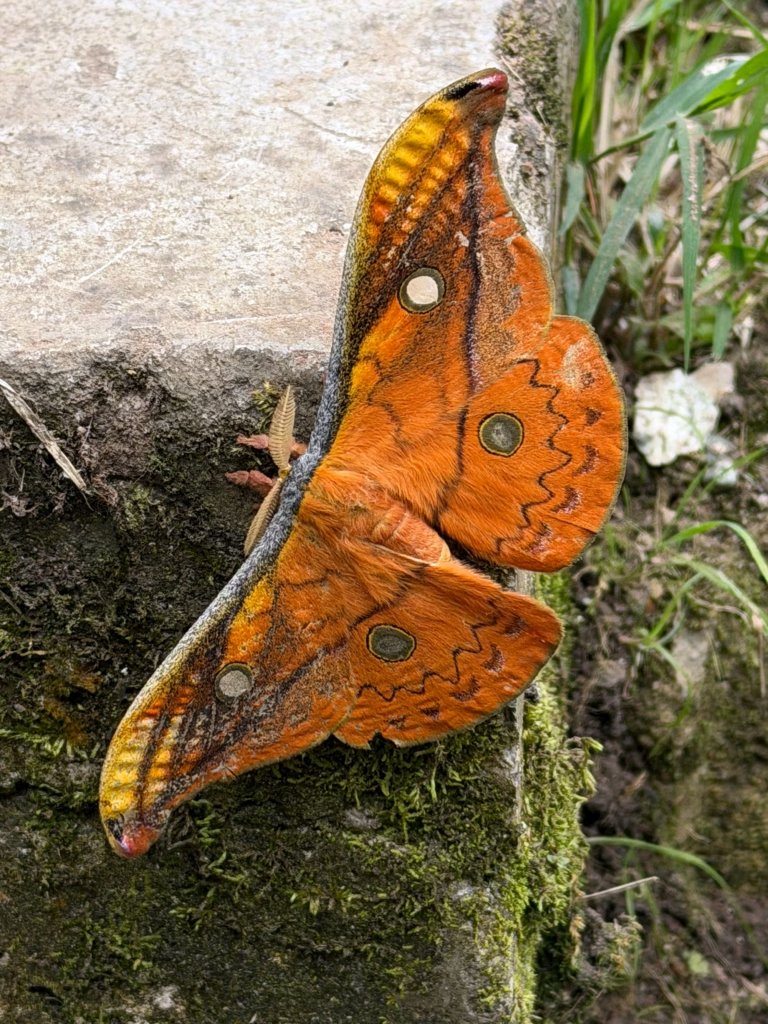
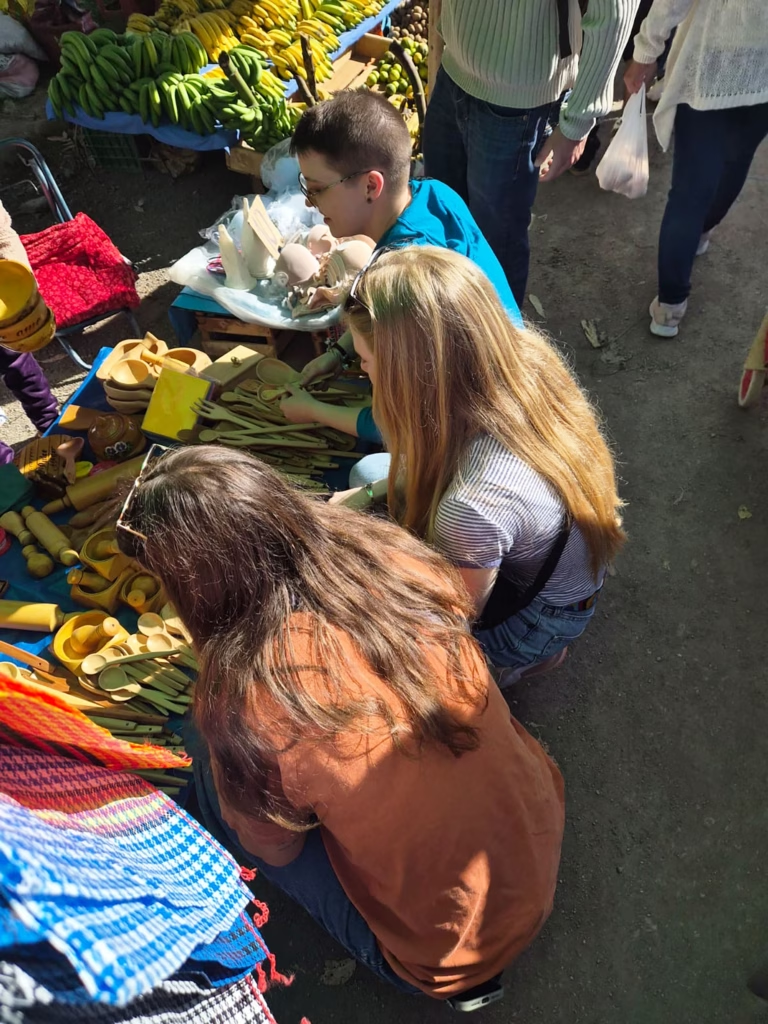
Visiting Ulcumano Ecolodge in Chontabamba, where Eduardo de la Calena is restoring a “cloud forest” that had been clearcut by timber companies, made an impression on Jenna Ward ’25, M.S.-ES&P ’26.
“We’ve been learning a lot from Ulcumano and some of the other environmental spaces we’ve been in about the importance of ecosystem services that these forests provide,” Ward said.
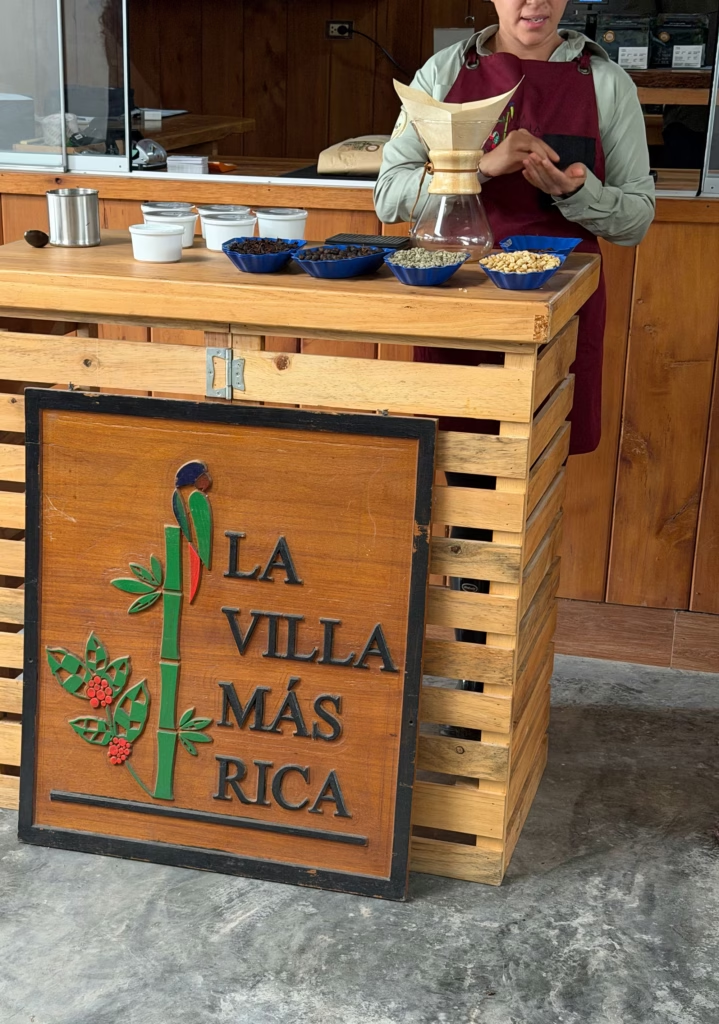
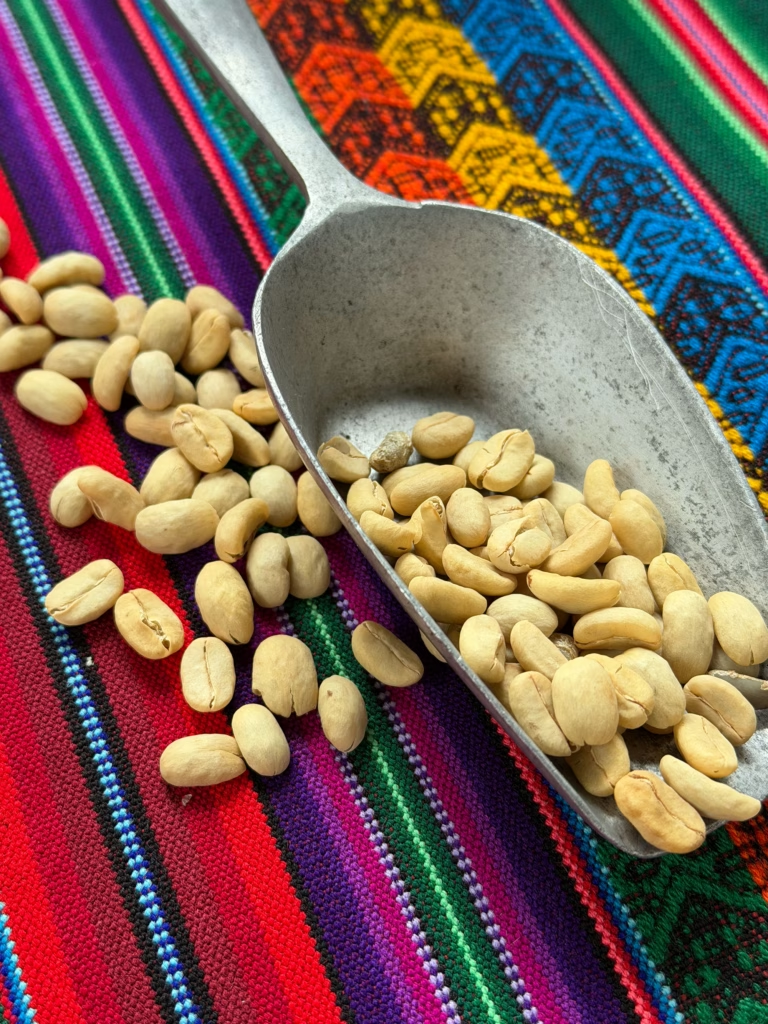
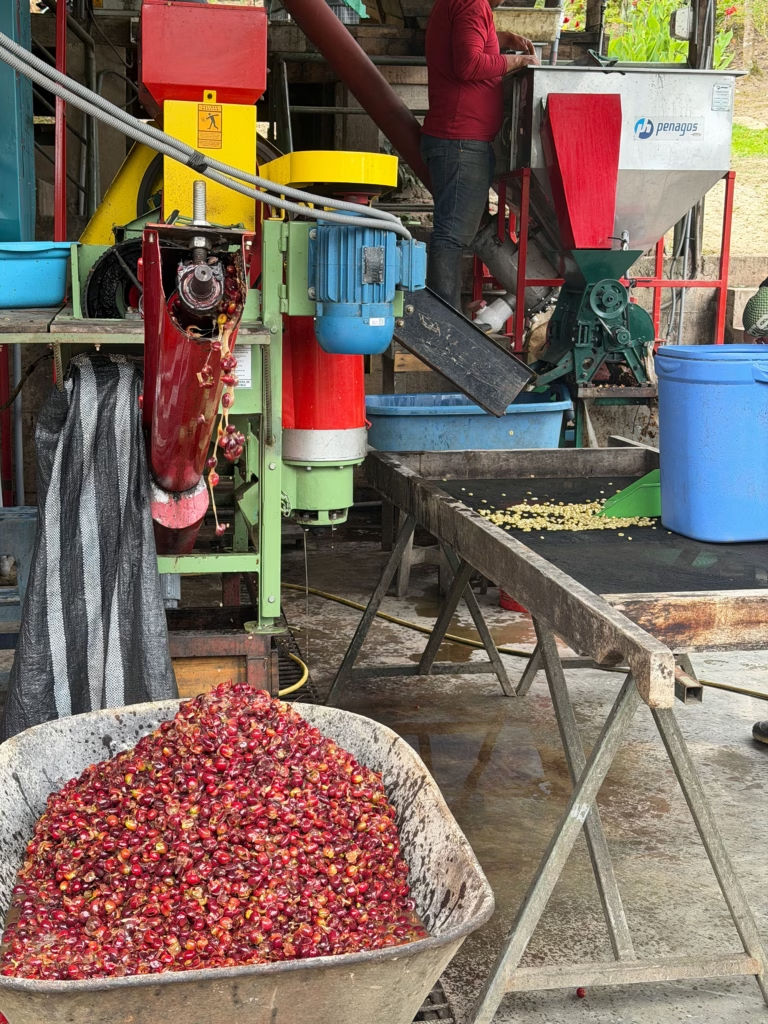
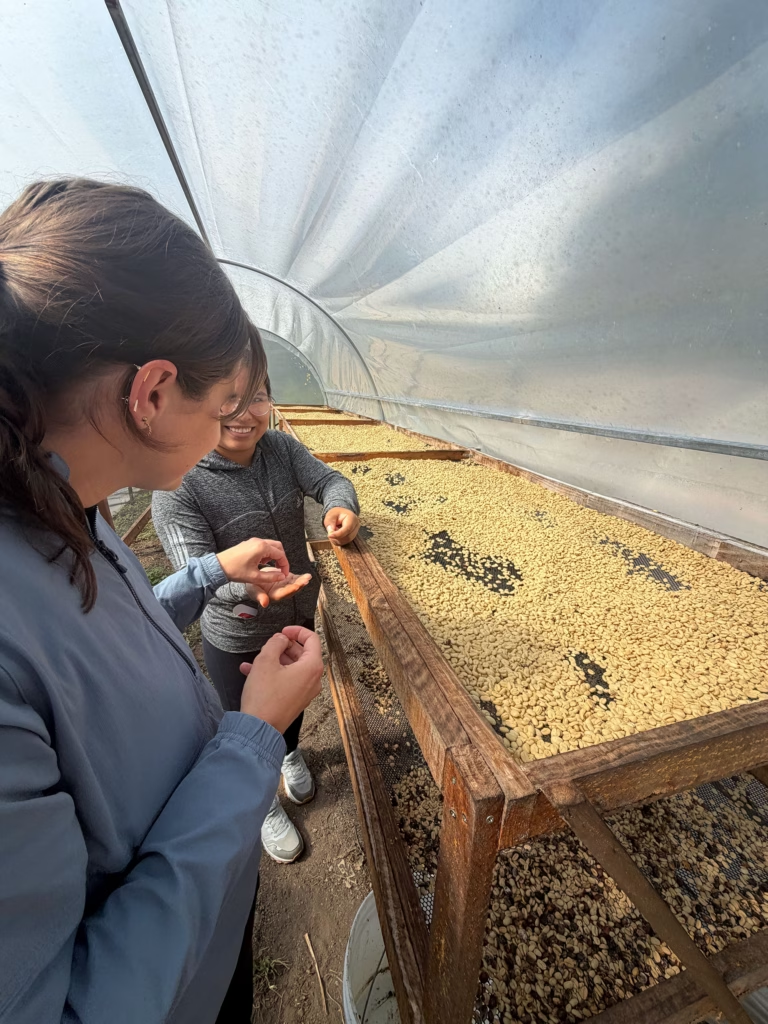
In Peru’s coffee capital of Villa Rica, students met environmental lawyer César Ipenza and fourth-generation coffee producer Juan Carlos Cueva.
“Villa Rica was a wonderful experience. Meeting Juan Carlos and his partner, his wife, and seeing them run this business together was really inspiring for me personally,” said Humza Musharraf ’26. “I hope to see more projects like that in the future that are in touch with the history of the landscape and local people and supporting local economies.”
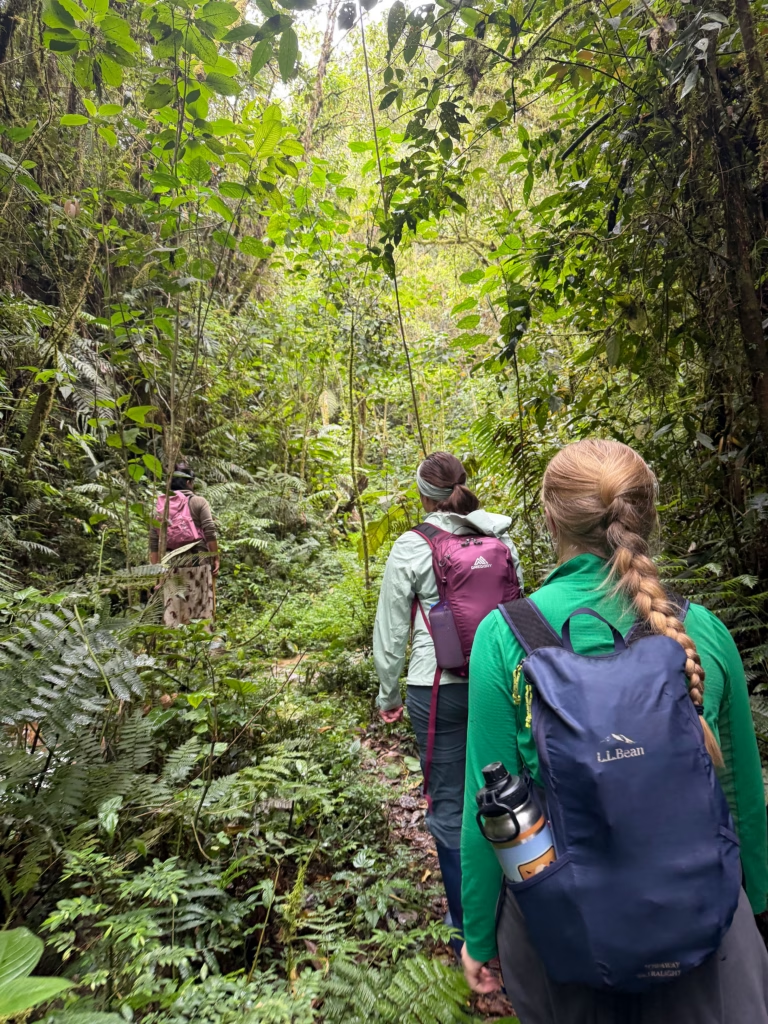
Later, in Yanachaga–Chemillén National Park, Álvaro Hurtado, CEO and founder of Tangara Music, took students on a “bioacoustics” eco-tour of this protected area of rainforests and cloud forests. Immersed in Peru’s Central Jungle, they heard a rich soundscape populated by hundreds of bird and amphibian species.
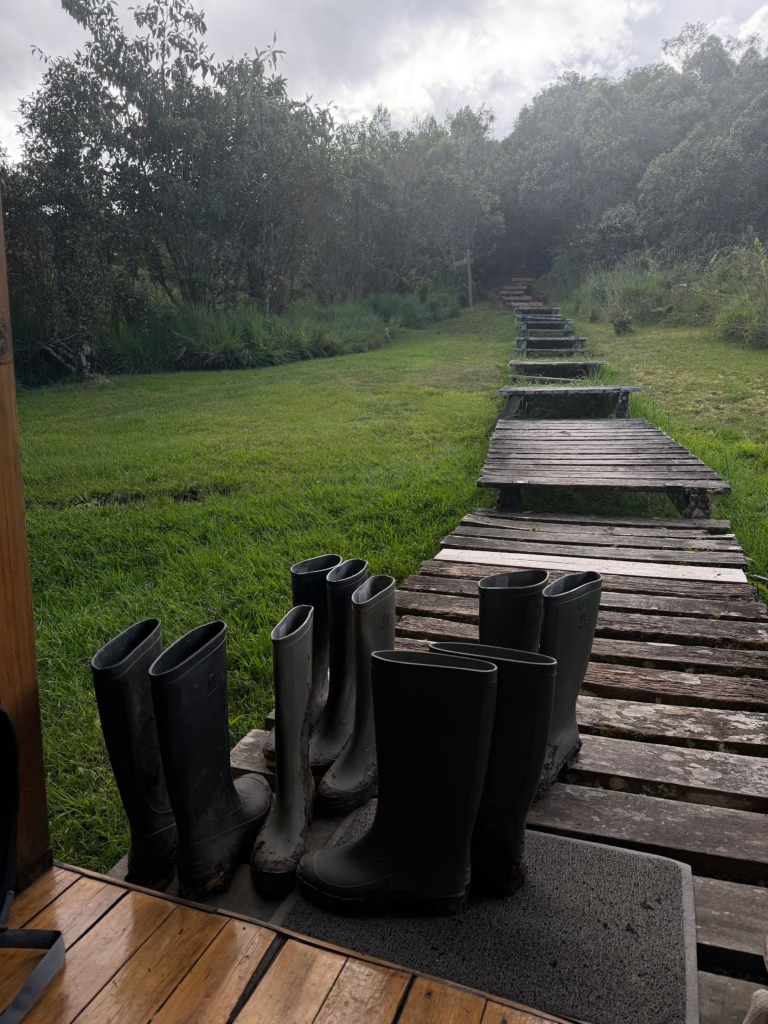
And in Fundo La Gorda, a conservation refuge and rustic ecolodge located in the cloud forest of Oxapampa, the students learned about medicinal plants, agroforestry, and sustainable land use.
Tanya Sheinkman ’26, M.S.-CDP ’27, saw reasons to be hopeful about the community-driven solutions she encountered in Oxapampa.
“When communities and local businesses prioritize protecting regional biodiversity and ecosystem services,” Sheinkman said, “it can create economic as well as personal incentives to preserve, engage, and actively conserve the environment.”
Meanwhile, Brianna Bodner ’25, M.S.-ES&P ’26, said that she understands “the forest better now by seeing how interconnected people are with nature. You can really see how people value and depend on the surrounding landscapes.”
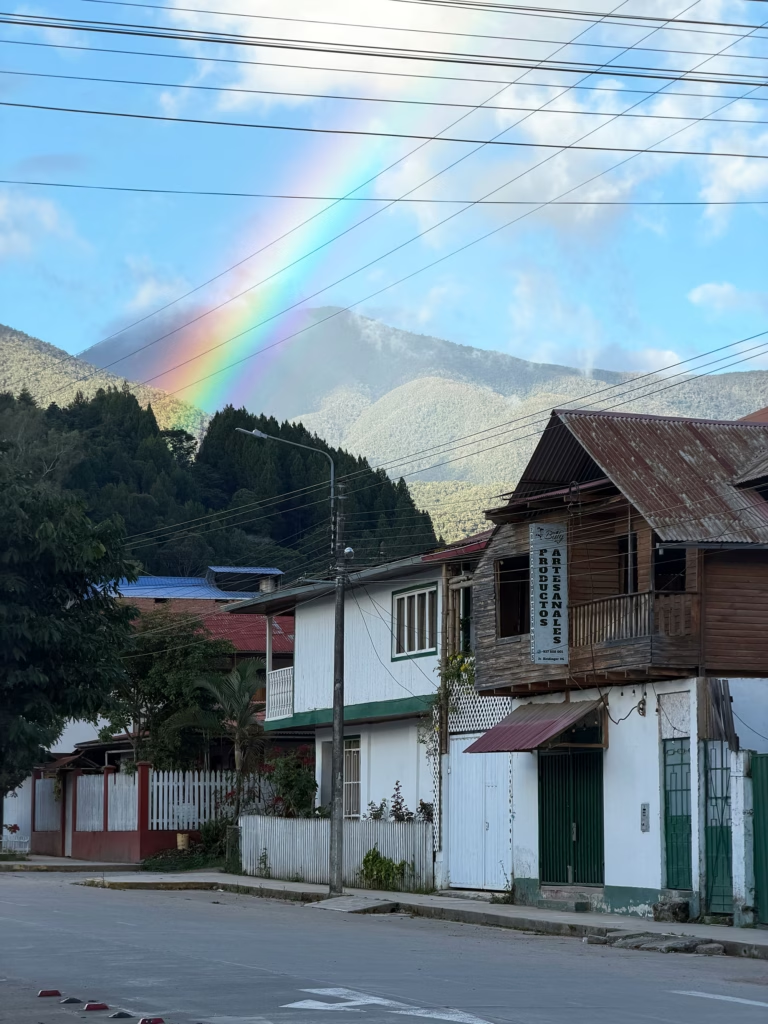
Photos by Cristina Sono Núñez, Brianna Bodner ’25, M.S.-ES&P ’26, and other students participating in the Oxapampa class