‘Here, you’re not just a number; you’re seen as a person’
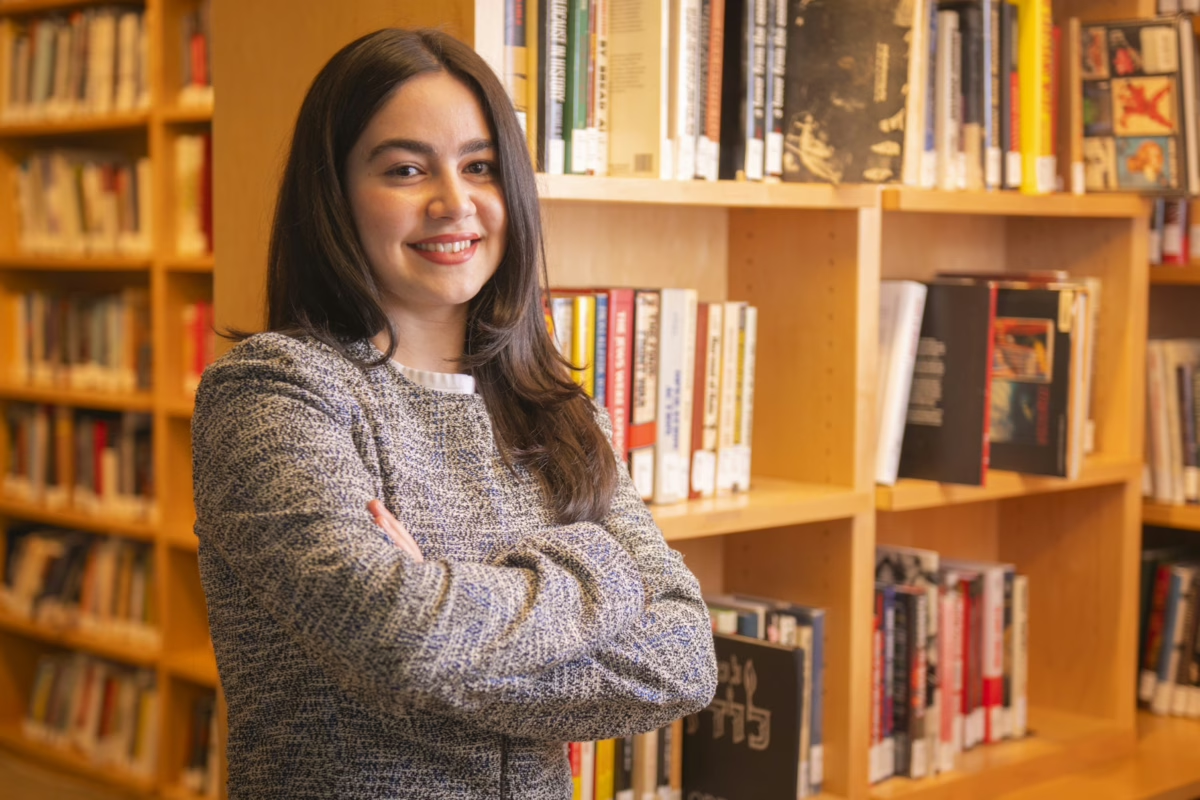
Anahit Marutyan ’29 remembers relocating from Armenia to Worcester in 2021. As the first Armenian student to attend her high school (in addition to her brother), she found herself constantly having to explain her culture and history, often pointing out Armenia’s location on the political map.
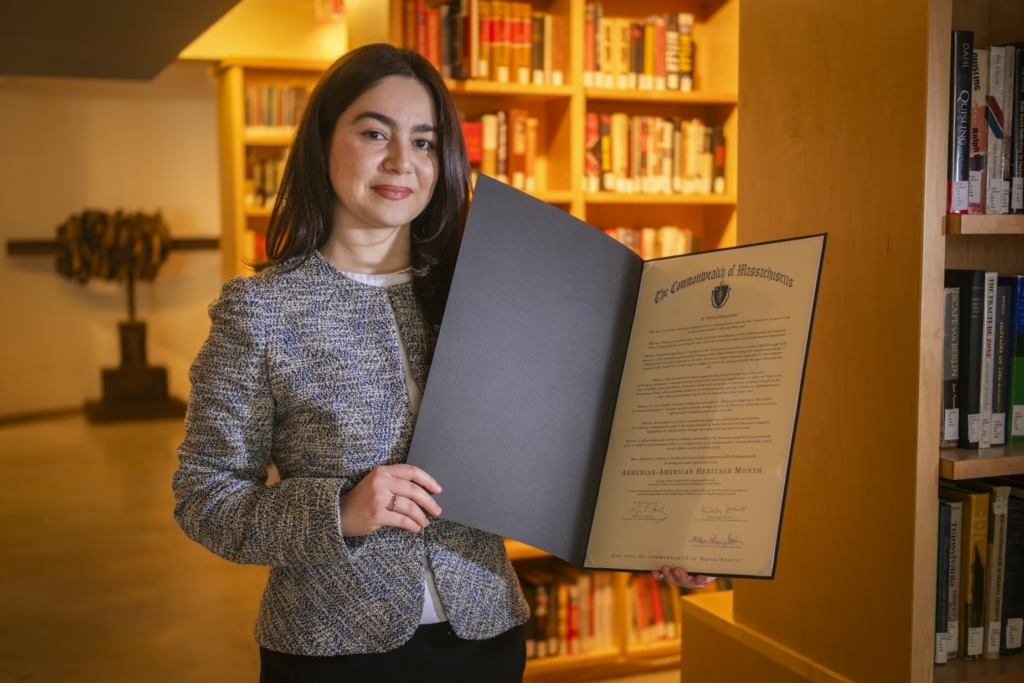
Fiercely passionate about sharing her Armenian heritage and highlighting the significant contributions of Armenian Americans to the well-being of the Commonwealth and beyond, Marutyan, while still a high school student, began advocating for Gov. Maura Healey to issue a proclamation recognizing April as Armenian-American Heritage Month for the years 2025 and 2026. The timing is especially meaningful, she notes, because April 24, 1915, marks the beginning of the Armenian Genocide, when Ottoman authorities arrested, exiled, and executed Armenian intellectuals in the capital, Constantinople. Between 1915 and 1923, approximately 1.5 million ethnic Armenians, citizens of the Ottoman Empire, were systematically killed through mass executions, starvation, deportations, abduction, and medical experimentation. Among the victims were an estimated 250,000 children. In addition, the Baku and Sumgait pogrom of 1988-1990 caused further devastation and displacement for Armenians.
After countless hours spent conducting research and fact-checking, Marutyan’s proposal was accepted on her second submission. In April 2025, the governor’s office issued the statewide proclamation recognizing what Marutyan describes as “a month of reflection, learning, and understanding, not only just about the genocide, but also about how Armenians rebuilt their lives afterward.” The proclamation was renewed in 2026, further acknowledging the resilience, suffering, and contributions of Armenian Americans in the Commonwealth. Additionally, at Marutyan’s request, the city of Worcester raised the Armenian flag in front of City Hall, with State Sen. Robyn Kennedy amplifying the effort.
Today, Marutyan is a political science major with an international development minor at Clark, where she attends on a Presidential Scholarship. Her accomplishments include interning in a state senator’s office and within the Massachusetts state court departments, as well as receiving the City of Worcester’s Woman of Consequence Award for her commitment to social justice.
Marutyan remains committed to contributing meaningfully to society and plans to pursue a career in law. In summer 2026, she will serve as a judicial intern in the chambers of Judge Margaret Guzman ’89 in the United States District Court for the District of Massachusetts.
Clarkie on a Presidential Scholarship
“Even if it means facing rejection a thousand times, as long as you keep trying, the answer will eventually be ‘yes.’ It only takes one person or one opportunity to believe in you and what you stand for – after that, everything else begins to fall into place. Clark was that for me,” Marutyan says, describing her approach to life.
As the first person in her family to pursue an undergraduate degree in the United States, navigating the admissions process was a learning curve. “I had to fully immerse myself in it, learn it, and understand it on my own. I also have siblings, and that motivates me even more. I wanted to put in the work now so I can guide them through it later,” she says.
Applying to universities as an international student felt like a barrier, but she remained determined. “Clark offered me that opportunity through the Presidential Scholarship, which is incredible. I can’t thank this institution enough for that,” she says.
Full-circle moment
Marutyan recalls taking an Introduction to Comparative Politics course at Clark as a high school junior, an experience that would later come full circle.
“Professor [Romulus] Maier’s class sparked my curiosity about Clark, and when I returned for the spring 2026 semester and ended up in another course with him, we reconnected. He even remembered me before. That moment really stood out to me because it showed that here, you’re not just a number; you’re seen as a person,” she says. “Even before I was a matriculated student, he remembered me, the points I had made in class, and our earlier discussions. It made the idea of building genuine, personalized relationships with professors feel very real.”
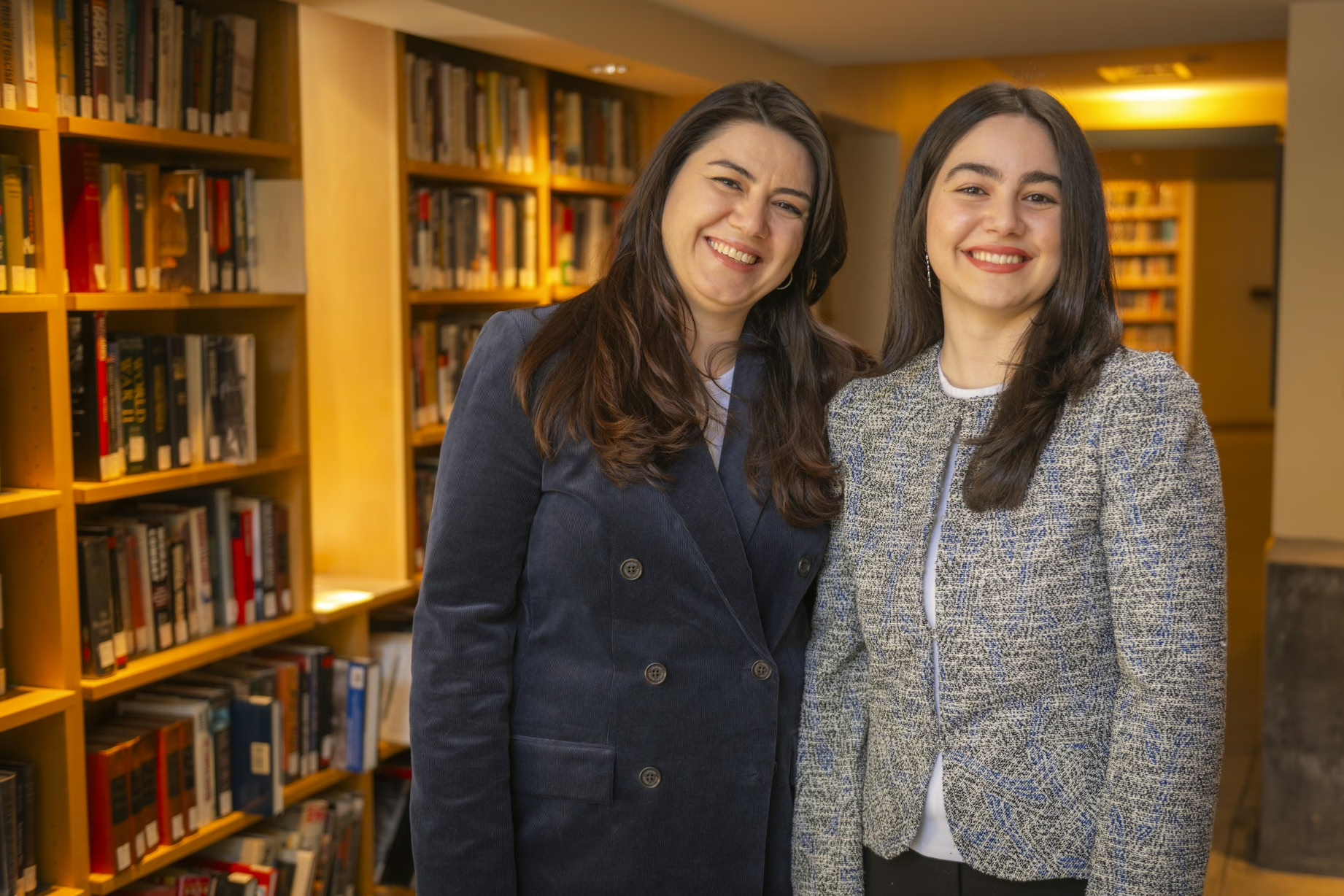
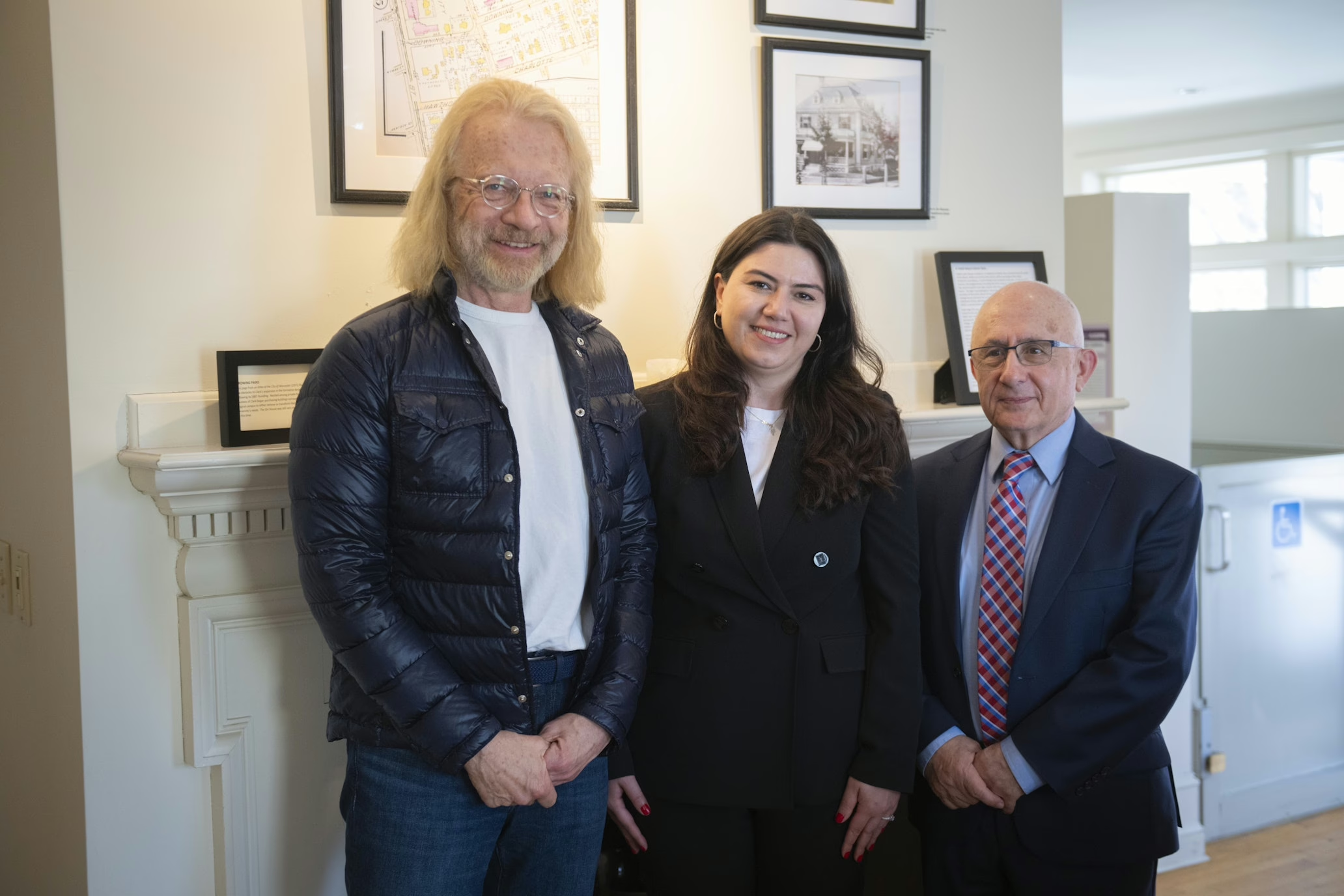
Another full-circle moment involved her mother, Diana Hayrapetyan, Ph.D. ’26, who in April 2026 defended her doctoral dissertation in history at Clark, specializing in the Armenian Genocide. Her advisor Taner Akçam, the former Robert Aram and Marianne Kaloosdian and Stephen and Marian Mugar Chair of Armenian Genocide Studies, returned to campus for the defense at the Strassler Center for Holocaust and Genocide Studies, where Anahit works as a student assistant.
“I couldn’t be half of who I am, or who I’m becoming, without my parents by my side,” she says. “I’ve always looked up to my mother. She embodies strength, resilience, compassion, and respect; she’s a role model in every sense.”
In addition to her work at the Strassler Center, Anahit is a student ambassador in the Office of Undergraduate Admissions. She also works to connect current students with alumni through events and opportunities as vice president of the Student Alumni Relations Committee.
Staying in touch with her culture
“I speak Armenian at home all the time, it’s non-negotiable,” Marutyan says. At Clark, she continues to speak Armenian with fellow Armenian students to stay connected to her culture. Although she comes from a different background than many of her peers, she says finding community at Clark has not been a challenge.
“The small class sizes at Clark remove barriers to connection, allowing community to form naturally through something as simple as a discussion or group project,” Marutyan says. “You feel like you belong.”
‘Remnants’ captures stories of horror and resilience in the Armenian Genocide
Elyse Semerdjian, a professor of history in Clark’s Strassler Center for Holocaust and Genocide Studies, has a deep family connection to the country’s history. Read more