
Theater Arts, B.A.
Overview
Theater is one of the oldest and most resilient art forms. It demands presence and brings people together.
Why study theatre arts at Clark?
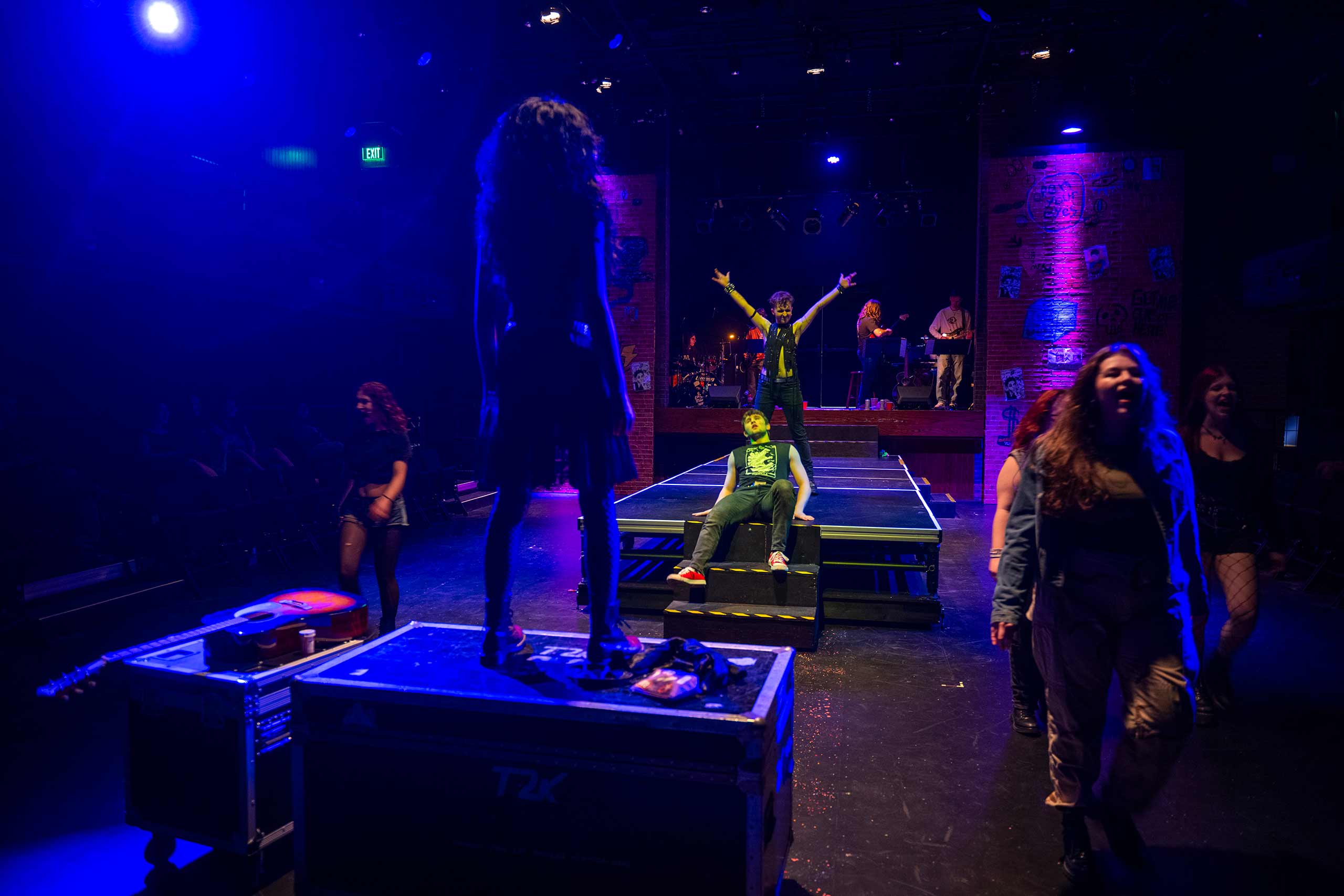
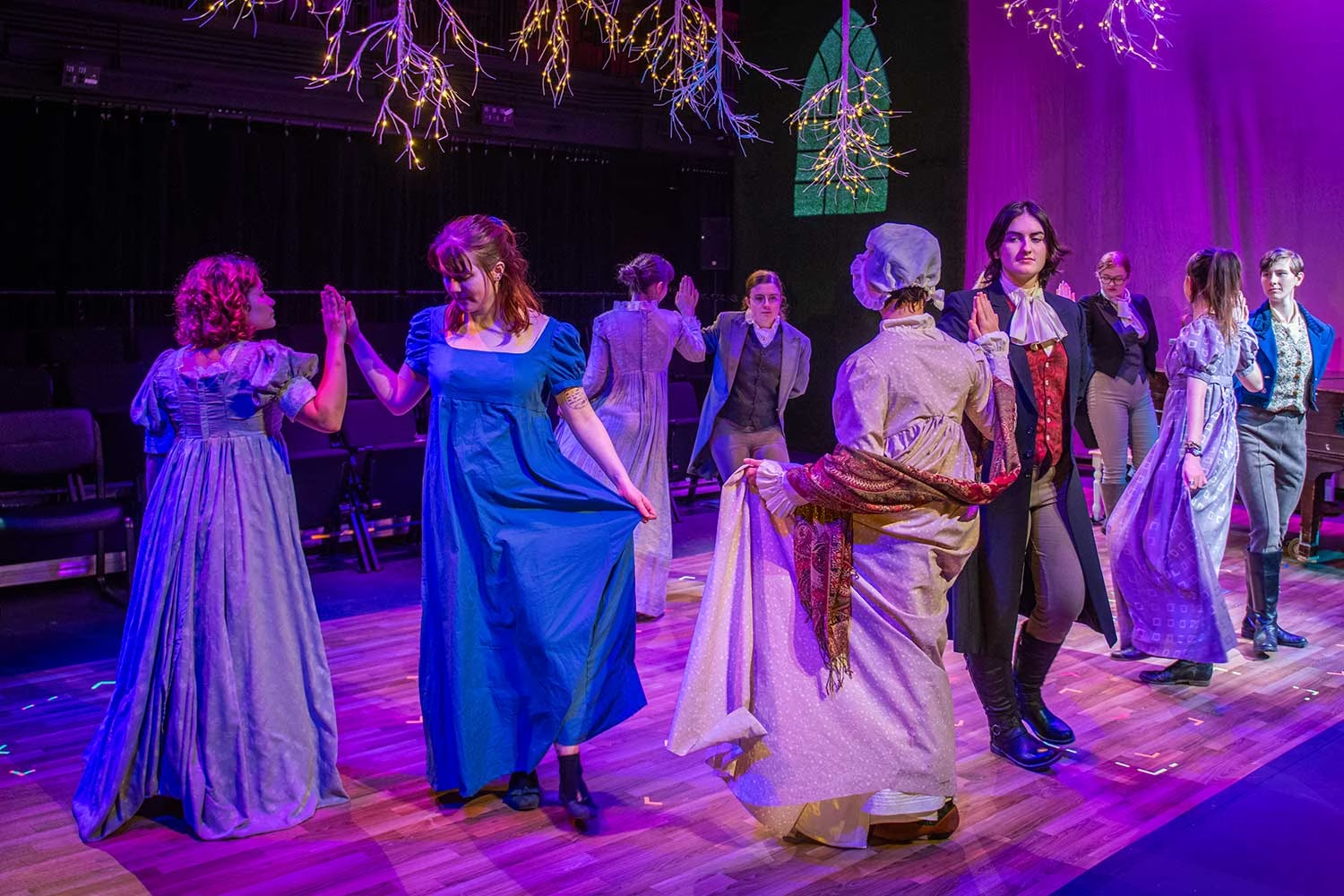
- In the Theatre Practicum, one of the most distinctive features of the program, students mount a fully produced, professionally directed production each semester as a curriculum course.
- Three concentrations mean three different paths through the major. Whether you’re drawn to performance, the technical and design work, or the writing, the curriculum is adapted to your interests.
- The New Play Festival, a biennial event where student playwrights present original work at Clark’s Michelson Theatre, provides a public platform for student writing — and an opportunity for undergraduates to see their work fully realized on stage.
- Every winter, theater arts majors have the opportunity to attend the Kennedy Center American Collegiate Theatre Festival — a regional and national gathering of collegiate theatre programs that connects Clark students to the wider professional world and to peers from across the country.
- The Little Center, home to theater arts at Clark, houses the Michelson Theater — a 120-seat black box — and the Experimental Theater, a 30-seat space used for student productions, read-throughs of new plays, and workshop performances.
Featured courses
Theatre History 1: Greeks to Shakespeare
Surveys the traditional dramatic canon of western literature with a focus on historical context and analysis. Course readings will include plays by Sophocles, Euripides, Jonson, and Shakespeare.
Theatre Practicum
This course will provide students interested in theatre performance the skills, training, and the experience of performing in a TA program full production in the form of a structured class for credit.May be repeated for credit (up to a max of 4 units)
The Creative Actor
Through a series of workshops, the student becomes familiar with the basic tools necessary to the art of acting. The approach is based on the techniques of Stanislavski, Viola Spolin, Joseph Chaikin, Robert Cohen and original exercises, including an introduction to basic voice and movement for the actor.
Frequently asked questions
Do I need prior theatre experience to major in Theatre Arts?
Prior experience is helpful but not required for all concentrations. The core courses — The Creative Actor, Introduction to Technical Theater, and The Play and its Stages — are designed to build foundational skills from the ground up. Students with significant prior experience will find those courses deepened and complicated by the analytical and historical frameworks the program brings. What matters most is genuine commitment to the work. Prospective students are encouraged to reach out to the program director with questions about fit.
What is the Theatre Practicum?
The Theatre Practicum is a professionally directed, fully produced theatrical production mounted each semester as a curriculum course. Students join either the acting track (through audition) or the technical and design track (through application) and earn academic credit for their participation. Three practicum formats are available: the Shakespeare Practicum, the general Theatre Practicum, and Advanced Production Projects. The practicum is one of the program’s most distinctive features — it’s where classroom learning meets the demands of a real production, with a real audience.
Can non-majors participate in theater productions?
Yes. Theatre Practicum productions are open to all Clark students through audition or application. All courses and seminars in the program are open to qualified non-majors, and students whose primary major lies elsewhere can declare a minor in theater arts.
What facilities are available to theater arts students?
The program is based in the Little Center, which houses the Michelson Theater — a 120-seat black box used for all program productions — and the Experimental Theater, a 30-seat space for student productions, read-throughs, and workshop performances. The building also contains a costume design shop and a set-building workshop.