Clark University has been awarded $354,443 from the Healey-Driscoll Administration and the Massachusetts Life Sciences Center (MLSC) to expand access to experiential life sciences education.
Clark was among the 22 academic institutions and nonprofit organizations — and one of only two schools based in Worcester — to receive an MLSC Post-Secondary Education and Training grant. In total, MLSC awarded more than $7.3 million to schools and nonprofit organizations to support the purchase and installation of laboratory equipment, materials, supplies, technology, and facility improvements that strengthen workforce training programs and prepare students for high-demand careers in the life sciences.
The grant is part of the $12.3 million awarded by MLSC and the Healey-Driscoll Administration through the MLSC’s Education and Workforce Development Grant Program. Together, the investments will expand access to hands-on life sciences education, out-of-school time learning opportunities, industry-aligned certificate and degree programs, and transformational workforce development initiatives that strengthen the Commonwealth’s life sciences talent pipeline and prepare learners for careers in the life sciences.
“We are grateful to the Massachusetts Life Sciences Center for its continued investment in Clark University and in the students who will become the next generation of life sciences professionals,” said Jennifer Hanselman, associate provost and dean of research at Clark.
“Through enhanced laboratory facilities and equipment, this award will provide more students with the hands-on experiences needed to succeed in graduate education, research careers, and the life sciences workforce, while strengthening the talent pipeline that supports Massachusetts’ vibrant life sciences ecosystem.”
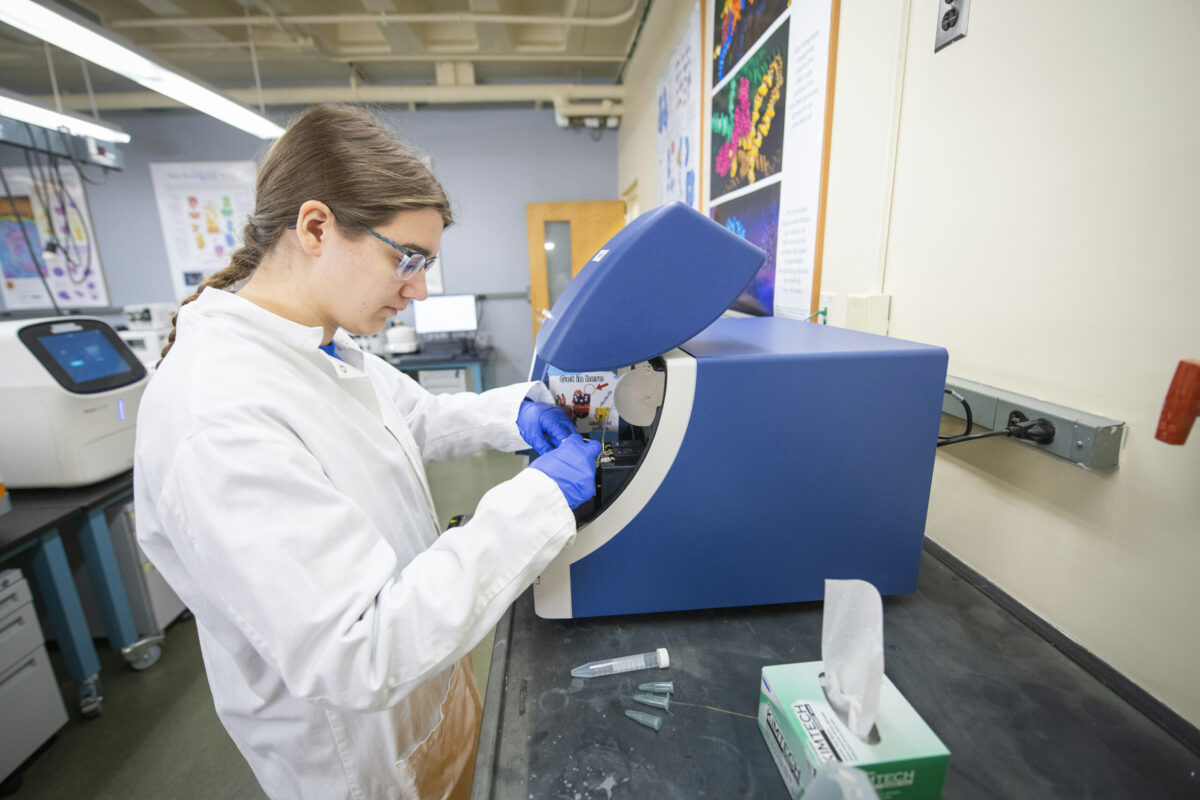
In the past two years, the MLSC has awarded Clark $1.1 million to support its biotech workforce training infrastructure through facility upgrades, equipment, and supplies to help prepare students for their careers. In 2024, Professor Don Spratt received a $750,000 Workforce Development Capital Grant to transform his lab, modernize the University’s biochemical instrumentation, and strengthen the research-grade training available to Clark students.
“The new Center for Biomolecular Research and Experiential Learning will transform how our students learn biochemistry at Clark,” said Spratt, chair of the Department of Chemistry and director of the Biochemistry and Molecular Biology (BCMB) program. “Students will gain valuable hands-on experience with mammalian cell culture, sterile technique, microscopy, quantitative analysis, and experimental troubleshooting as they move from growing living cells to generating and interpreting molecular data.”
“These investments will have a lasting impact on biochemistry education at Clark and prepare generations of undergraduates for graduate study, research, and careers in the life sciences,” Spratt added. “We are incredibly grateful to the Healey-Driscoll Administration and the Massachusetts Life Sciences Center for their continued investment in our students, and I am eager to see the Center come to life this year.”
“The groundbreaking discoveries and medical breakthroughs that happen in Massachusetts are made possible by the extraordinary talent we cultivate here,” said Governor Maura Healey in announcing the grants. “These awards will expand opportunities for learners across the Commonwealth to gain the knowledge, skills, and hands-on experiences they need to succeed in one of our state’s most important industries.”
Since the inception of the Life Sciences Initiative, the MLSC has invested more than $240 million through various programs supporting education and workforce training that strengthens the life sciences talent pipeline.
“The life sciences are foundational to Massachusetts’ economy, and maintaining our leadership in this ecosystem depends on building a strong, skilled workforce,” said Eric Paley, secretary of the Executive Office of Economic Development and co-chair of the MLSC Board of Directors. “These investments strengthen the connection between education and industry, ensuring residents across the Commonwealth have the opportunities and resources they need to pursue rewarding careers while helping Massachusetts life sciences companies meet the workforce demands required to drive the next generation of groundbreaking discoveries.”
“These investments also ensure that low-income, underrepresented, and non-traditional learners from every region of Massachusetts, whether located in our Gateway Cities or rural communities, have the skills and opportunities needed to enter and grow within the life sciences workforce,” MLSC President and CEO Kirk Taylor, M.D., added.