‘Materia’ is on display through Oct. 3
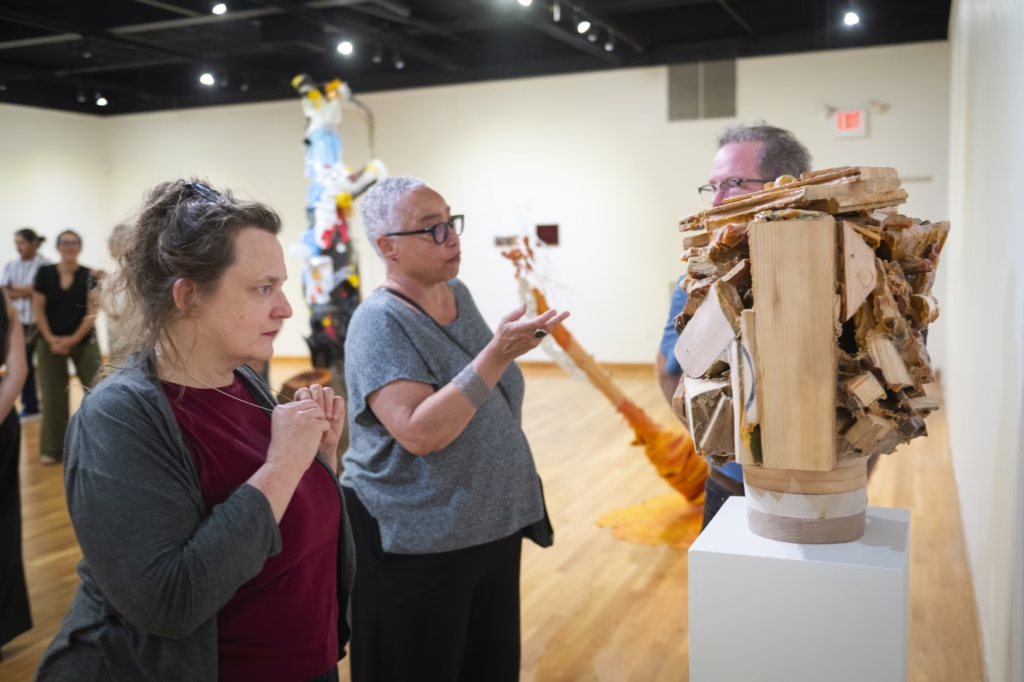
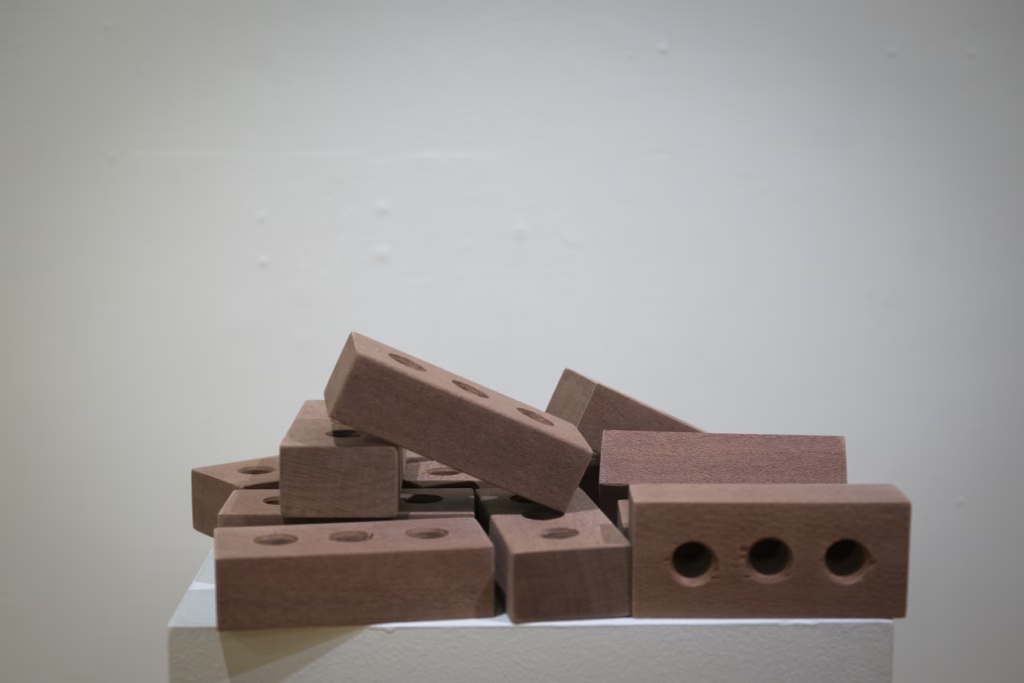
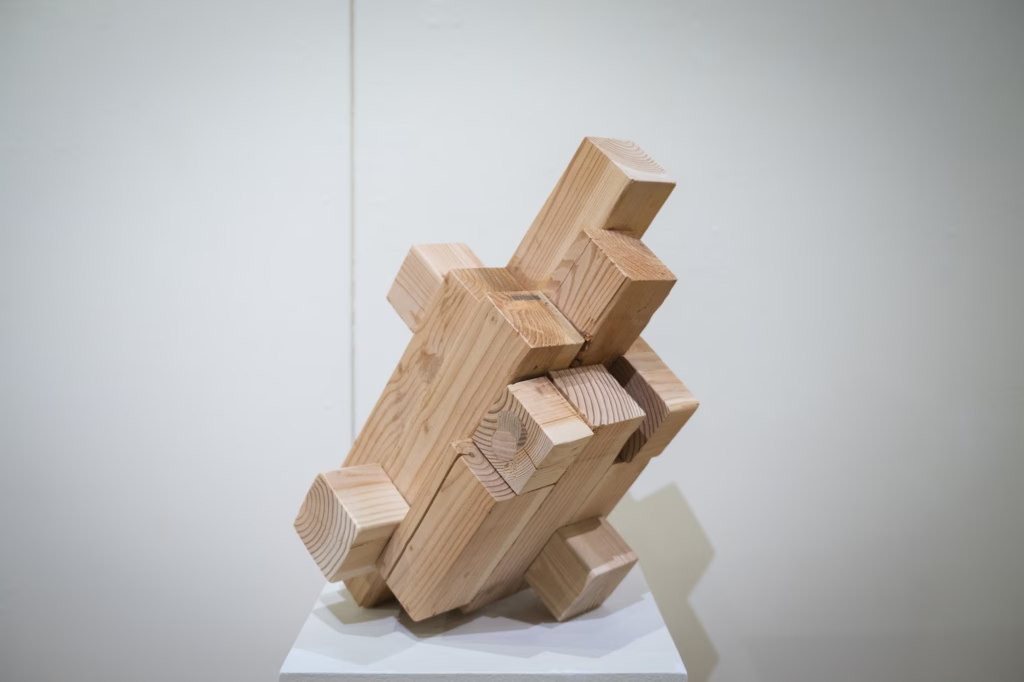
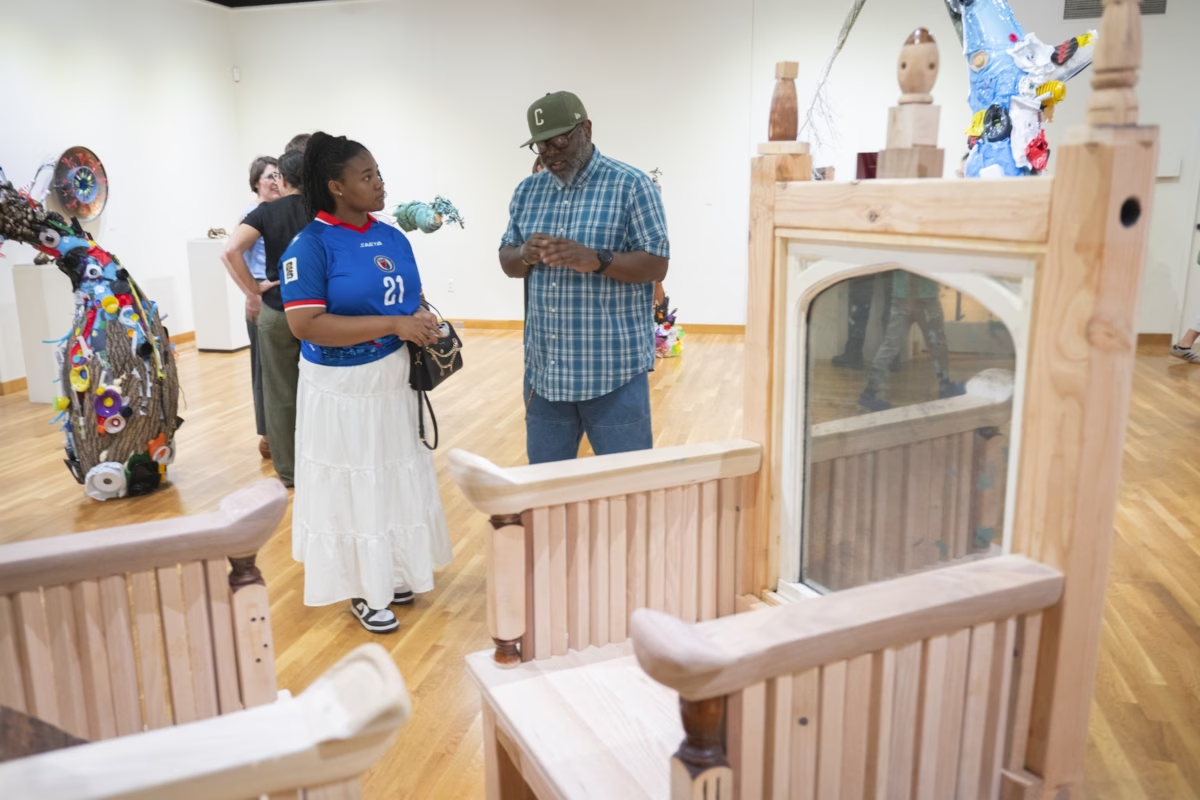
Ten works by Sculpture Professor James Maurelle are on view now at the Worcester Center for Crafts, a collection that the artist describes as a cross-pollination of cultures.
The pieces are part of an exhibit titled “Materia,” which also features 10 works by Holy Cross Sculpture Professor Victor Pacheco. Maurelle met Pacheco when he began teaching at Clark and the two immediately started talking about collaborating on a show.
“Materia” highlights the connection between language, materials, and cultures, and diasporic influences are apparent throughout the collection.
Maurelle sourced many of his materials from recycled or discarded items on Clark’s campus. Pacheco sources items in a similar way, Maurelle says.
“This show is more wood and [also] works in plastic, metal, bronze,” he says. “It’s this call and response to the materials between both of the sets. It’s a type of twinning.”
The show is on view through Oct. 3; an artist talk will be held on Friday, Oct. 2, at 6 p.m.
Maurelle’s pieces include two wooden thrones, both named after diasporic women. One is called “Pou Sen Suzanne” for Suzanne Simone Baptiste Louverture, who was arrested and tortured by soldiers of Napoleon Bonaparte, who wanted to find her husband’s whereabouts, during the Haitian Revolution. The other is named “Saint Althea” in honor of Althea Gibson, an American tennis player (who Maurelle calls the original GOAT – Greatest of All Time) who in 1956 became the first Black player to win a Grand Slam event.
The thrones contain mirrors given to Maurelle by a Clark colleague, and in the exhibit space, the thrones are placed facing one another.
“When you’re in a hotel or someplace where they have mirrors in an elevator, it does this infinity thing. The thrones for some reason do not do that,” he says. “It reflects three times.”
The pieces suggest self-reflection, the absence of bodies, and necessary conversations.
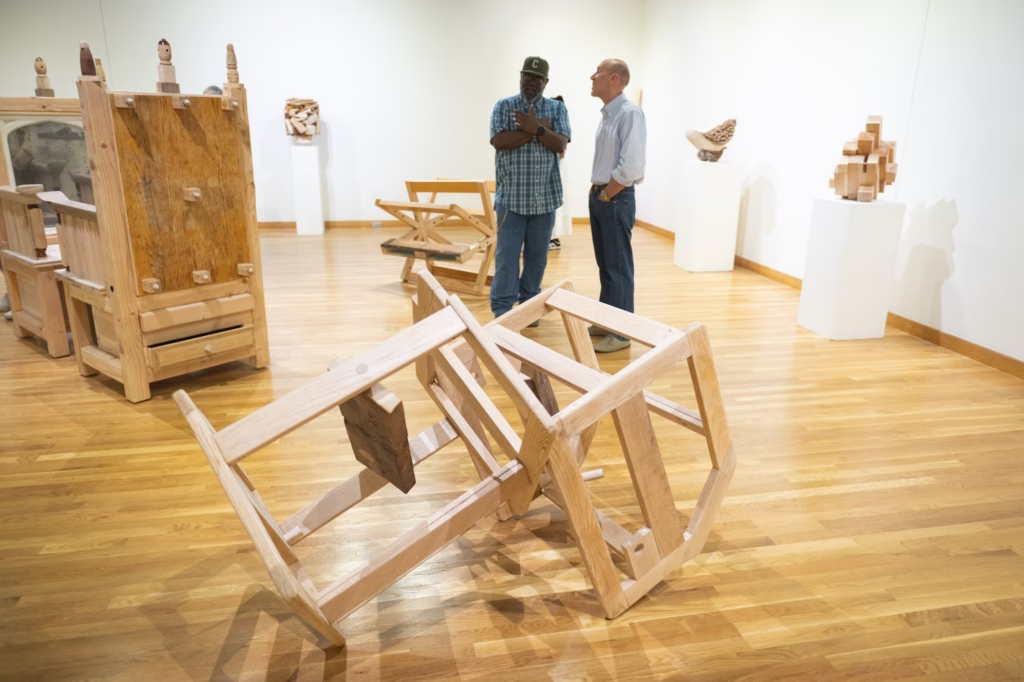
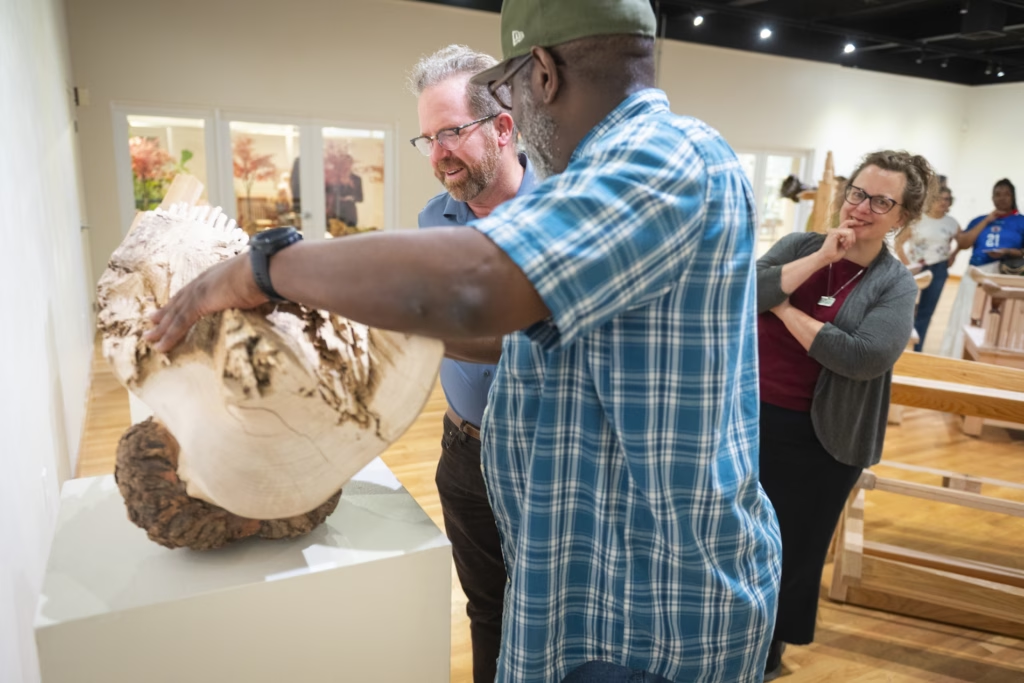
In addition to wood, paint, and graphite, Maurelle also used his own blood and spit as materials.
“It’s a marker that this is my work, but also this is tied to my family,” says Maurelle, who has two daughters. “It’s ‘CSI.’ I’m guilty of making this work. My DNA is all over everything.”
Maurelle sees his work as objects that are alive, something enhanced by the inclusion of biological materials.
“That reciprocal relationship of touch and feel and essence and bodily fluids. It’s something that is shared,” he says.
“Materia” is Maurelle’s first show without labels naming or describing the pieces.
“I want the work to exist fresh as it was in my mind when I created it, but also to engage viewing as a collaboration,” he says.
Maurelle is currently at work to create a version of a wooden abacus.