Clark undergraduate and graduate students aren’t the only budding scientists benefiting from the University’s labs and research expertise. Over the past three months, hundreds of middle and high school students from throughout Massachusetts have visited campus to gain research and career development skills and attend the Massachusetts Science and Engineering Fair, part of Clark’s broader STEM and Admissions outreach.
On May 9, Clark hosted hundreds of students and teachers for the middle school portion of the state science fair, held in Kneller Center and Atwood Hall, and presented an award to one student. On April 9, Clark presented merit awards to students at the high school science fair in the DCU Center.
“Thank you to the Clark faculty and graduate students who joined industry professionals in serving as judges, and to our events and facilities teams, who transformed the Kneller Gym and Atwood Hall into spaces where students could not only compete, but also feel like they are part of a larger community,” Jennifer Hanselman, associate provost and dean of research, said in a LinkedIn post. “We appreciate our partnership with the Massachusetts Science and Engineering Fair so students across the Commonwealth can ‘see themselves in STEM.’ ”
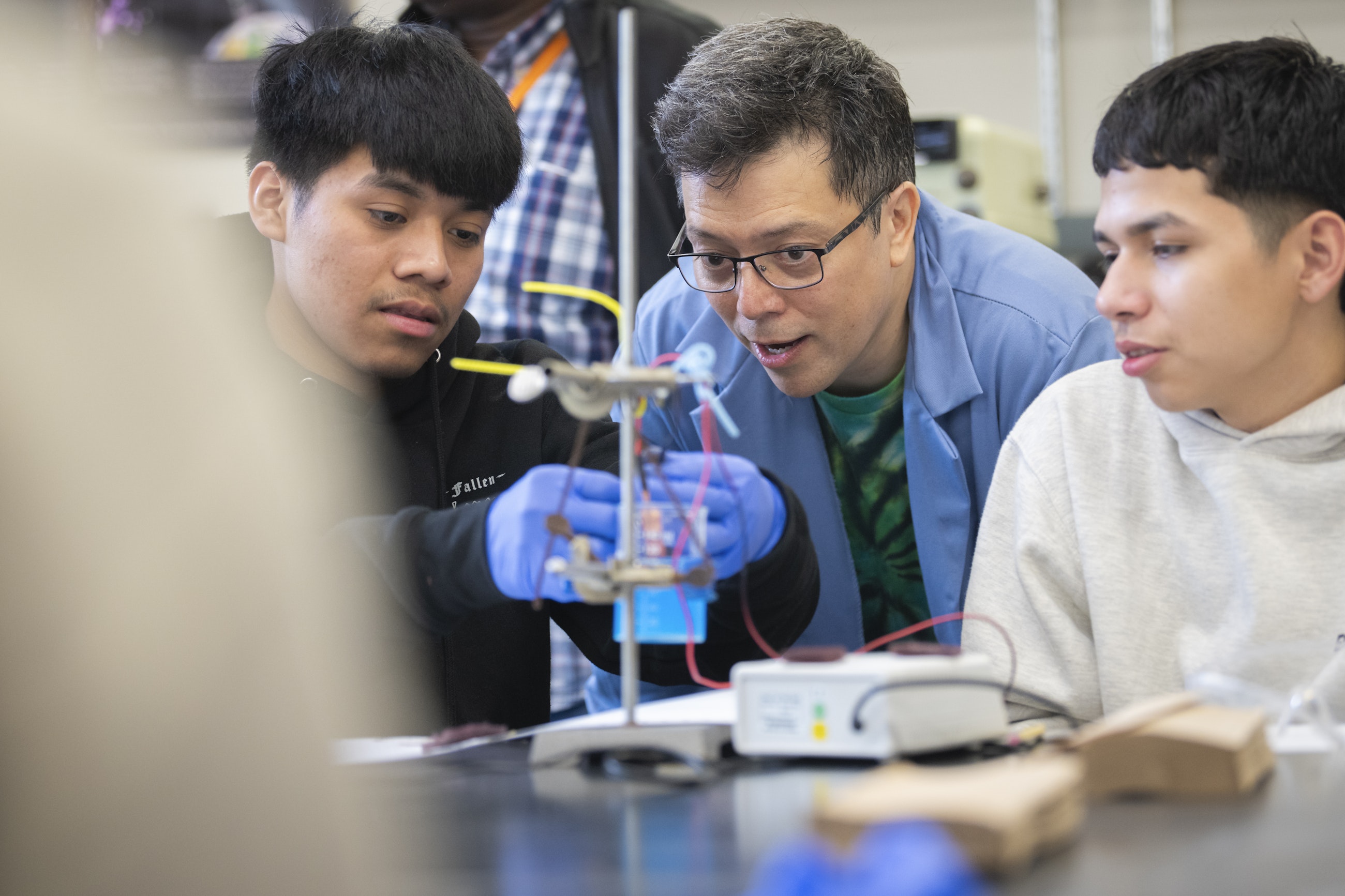
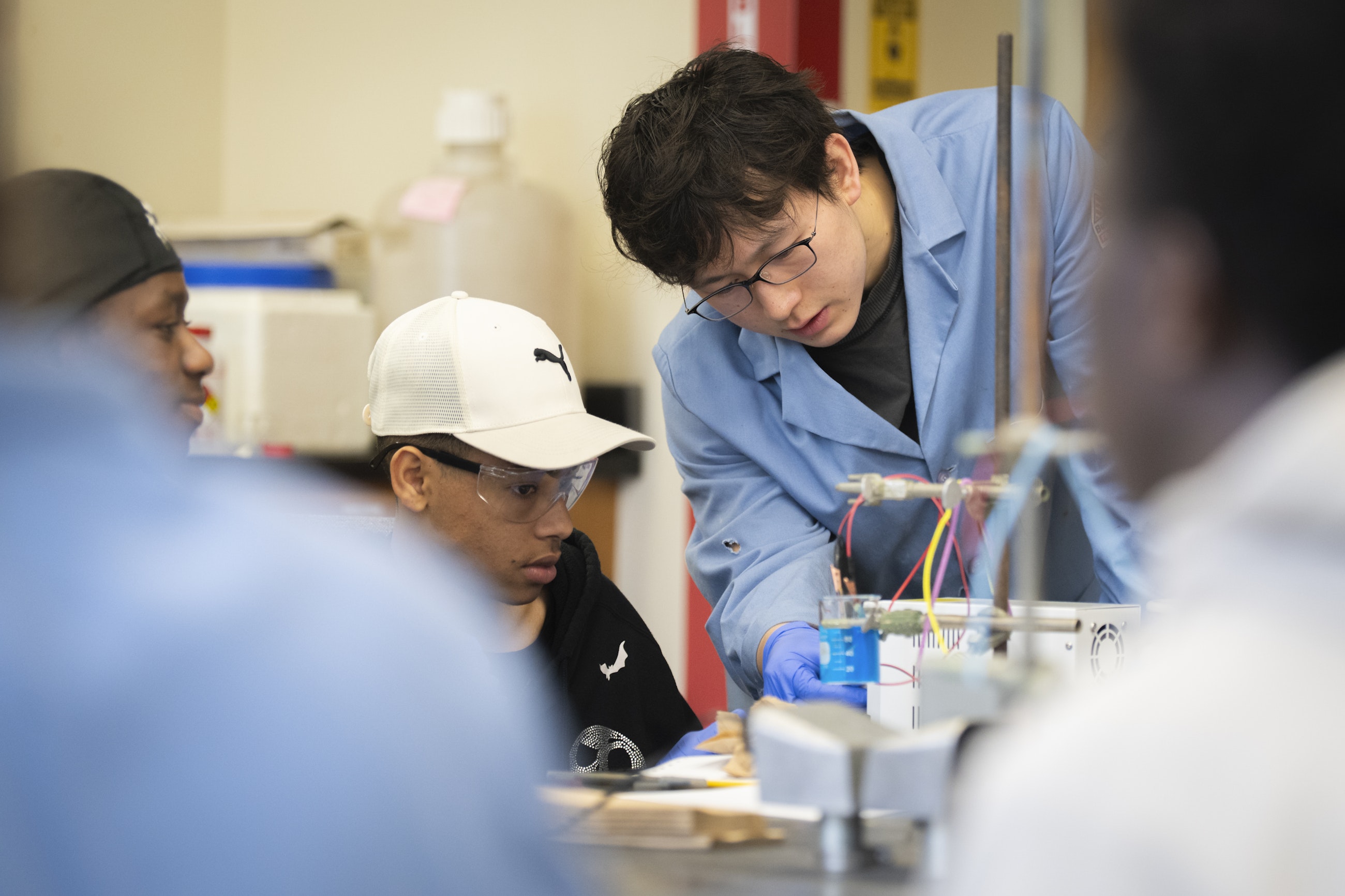
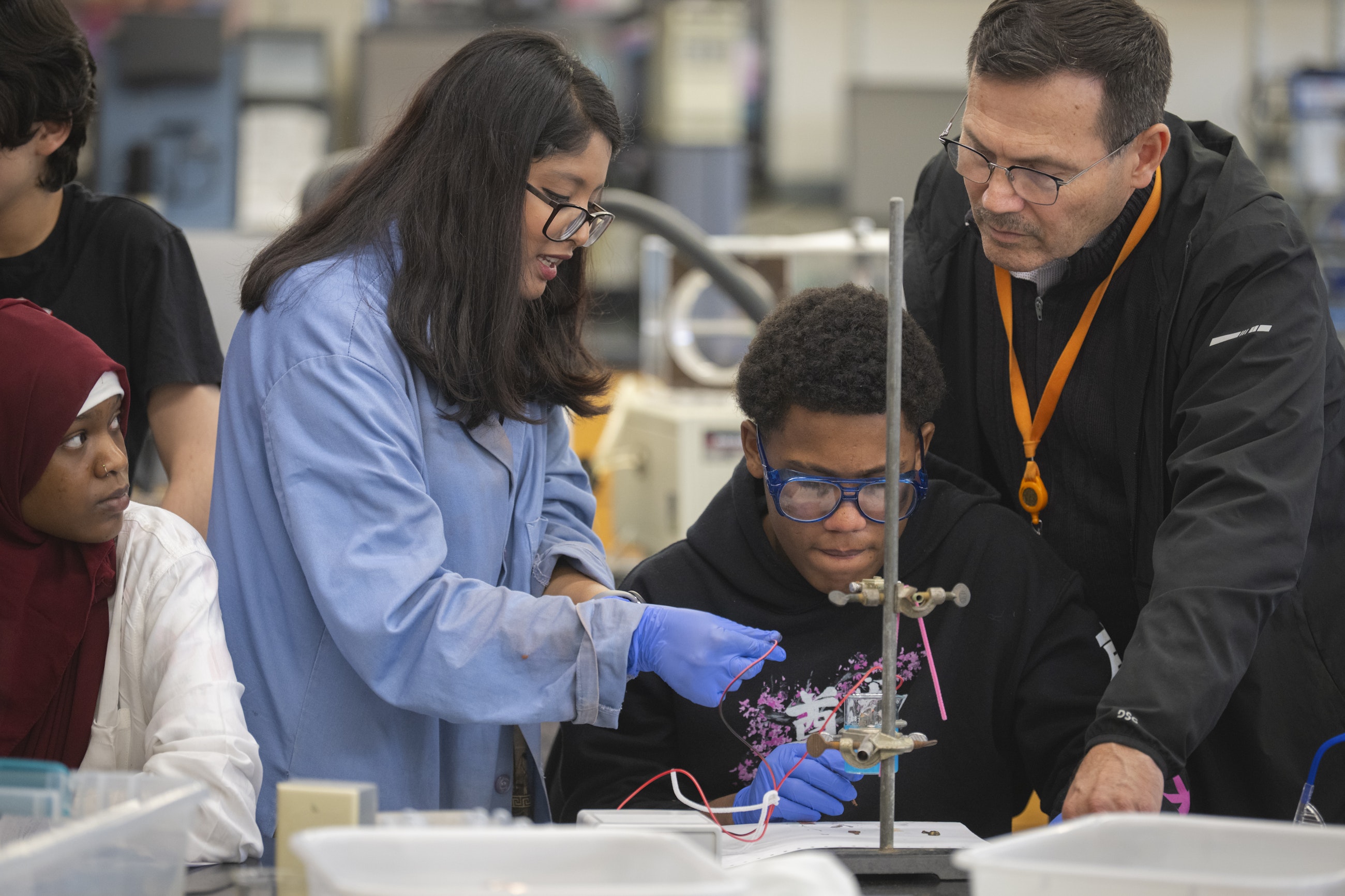
Meanwhile, since April, nearly 350 public high and middle schoolers from Worcester and nine other Massachusetts communities have visited Carlson School of Chemistry and Biochemistry labs to conduct hands-on experiments. They have deployed everything from lemons and milk to copper wires and colorful proteins from jellyfish to learn the chemistry behind building and powering batteries, making the creamiest ice cream, purifying proteins, and electroplating metals.
“Through hands-on discovery and meaningful engagement, grounded in the strength of our faculty’s innovative research and teaching, Clark is proud to inspire and prepare the next generation of scientists and engineers to tackle the challenges ahead.”
— jennifer hanselman
associate provost and dean of research
On May 6, Julio D’Arcy, the Carl J. and Anna Carlson Endowed Chair of Chemistry and Biochemistry, and Luis Smith, professor and outgoing department chair, welcomed nearly 40 middle and high schoolers from New Citizens Center Secondary in Worcester.
Members of D’Arcy’s lab — doctoral students Umama Akther, Ye Chen, Maham Khan, and Pedro A. Perez-Diaz; graduate students Avery Schwartz ’26, M.S. ’27, and Yiming Qin, M.S. ’27; and chemistry majors Cecilia Chaves ’28, Tatsuya Peralta ’27, and Emme Salisbury ’28 — assisted with experiments.
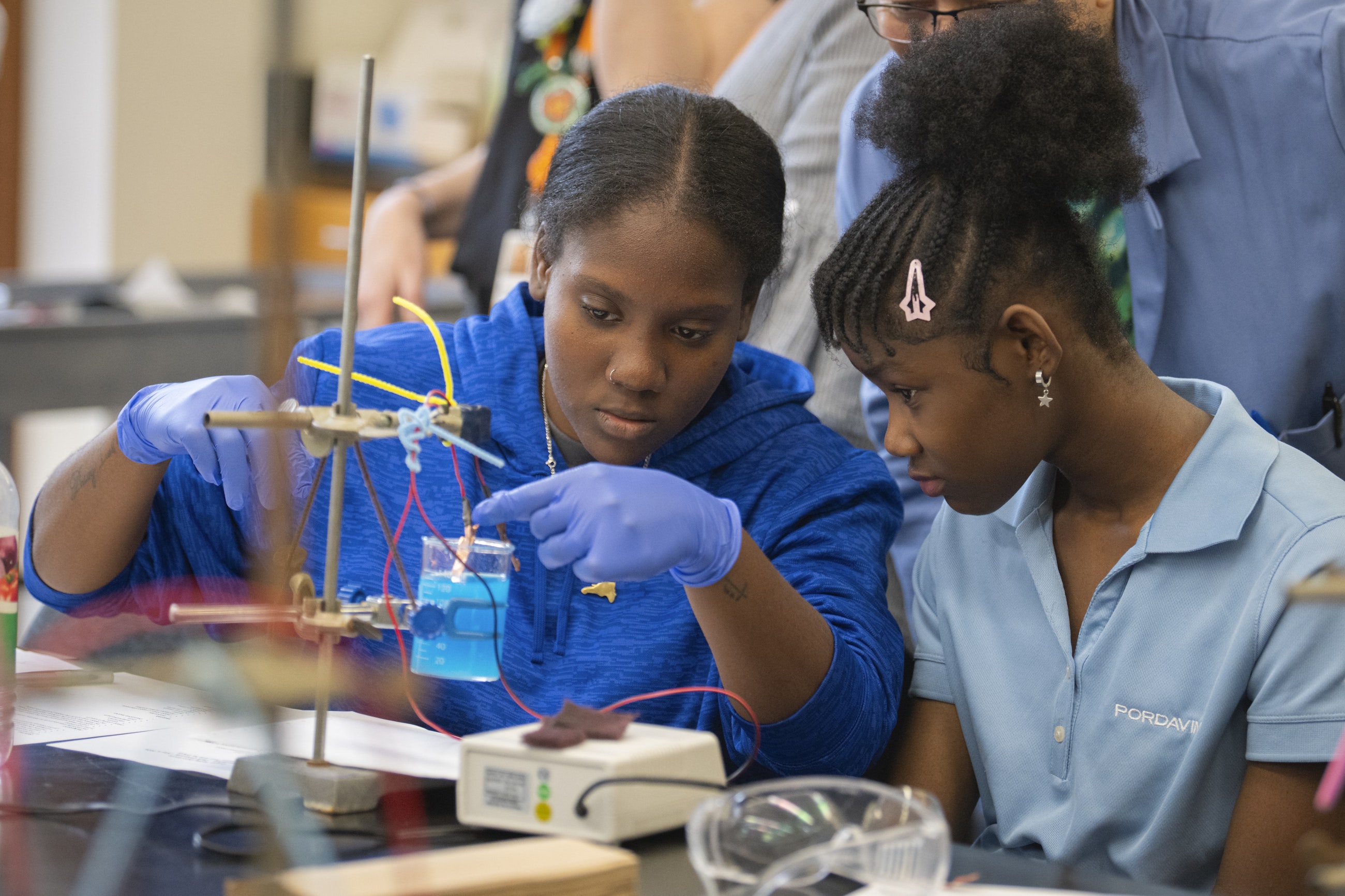
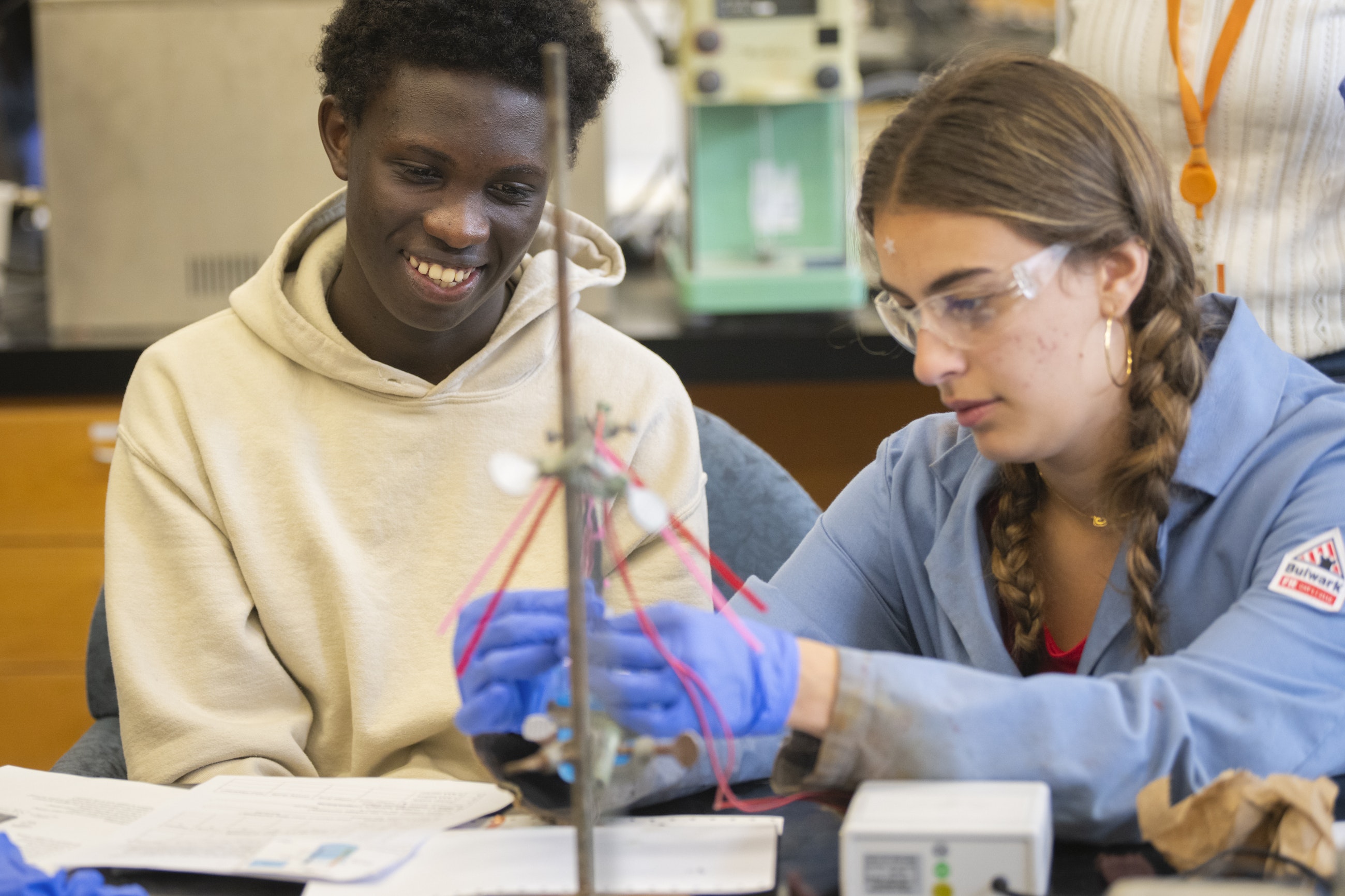
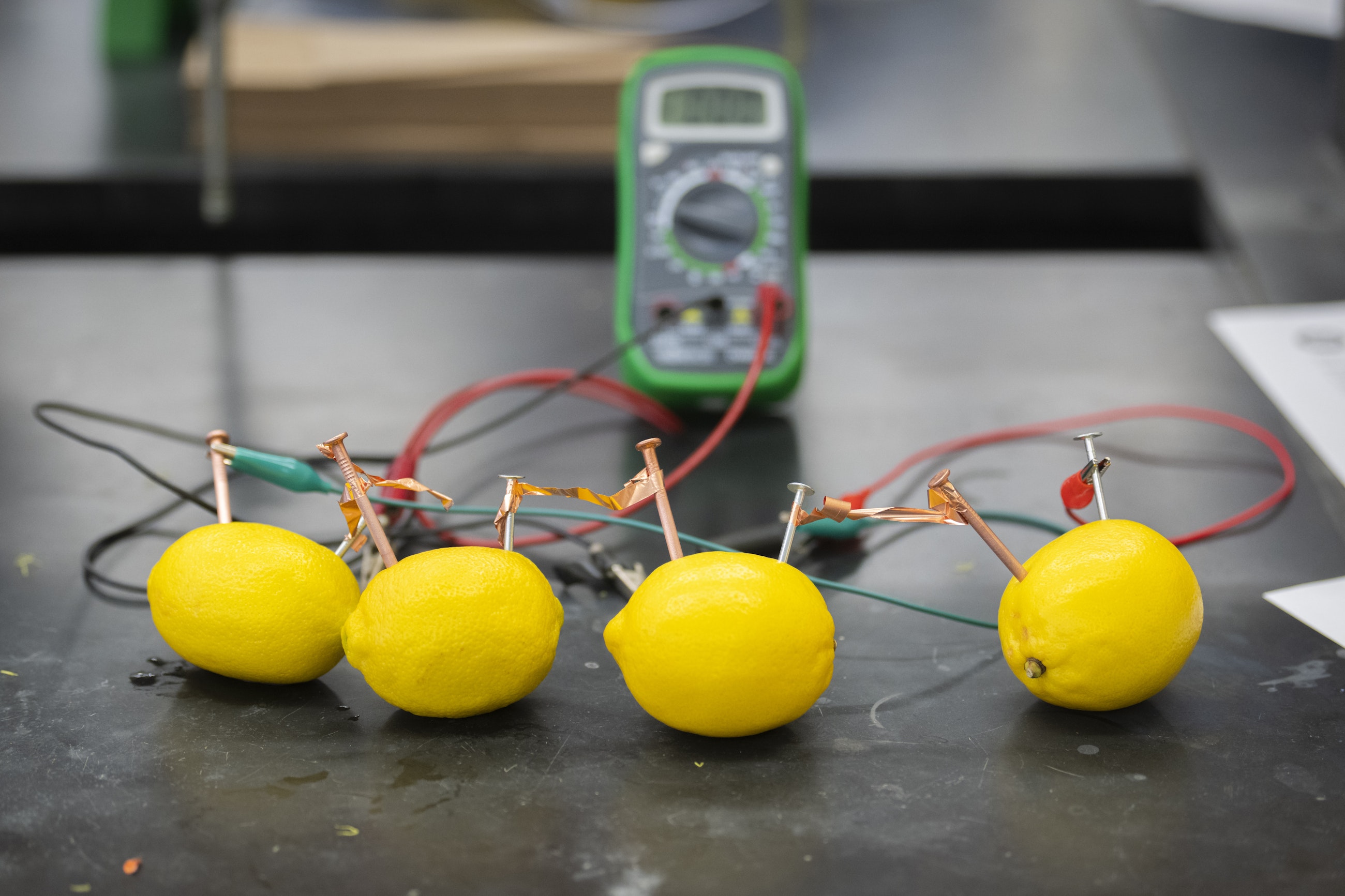
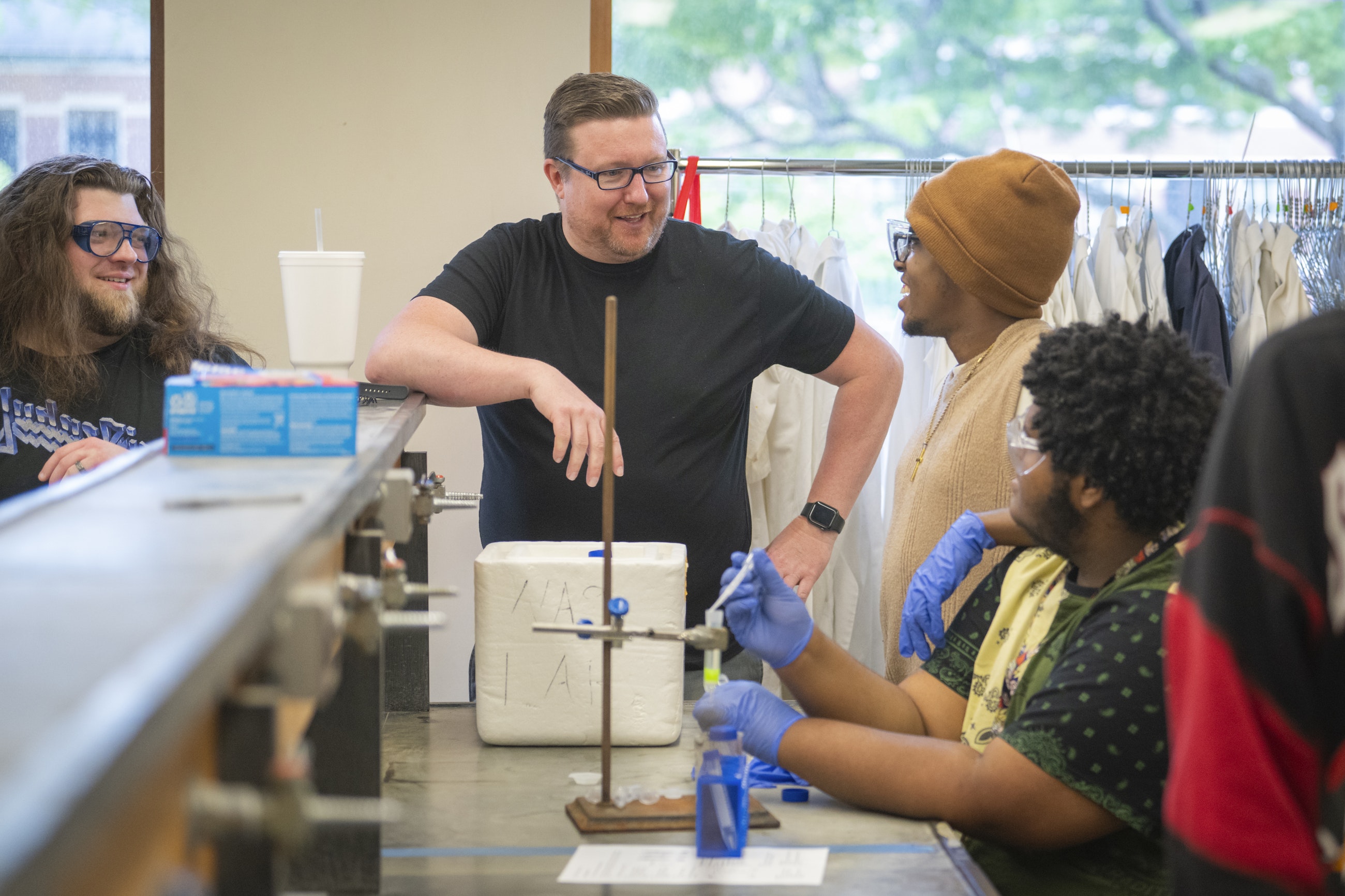
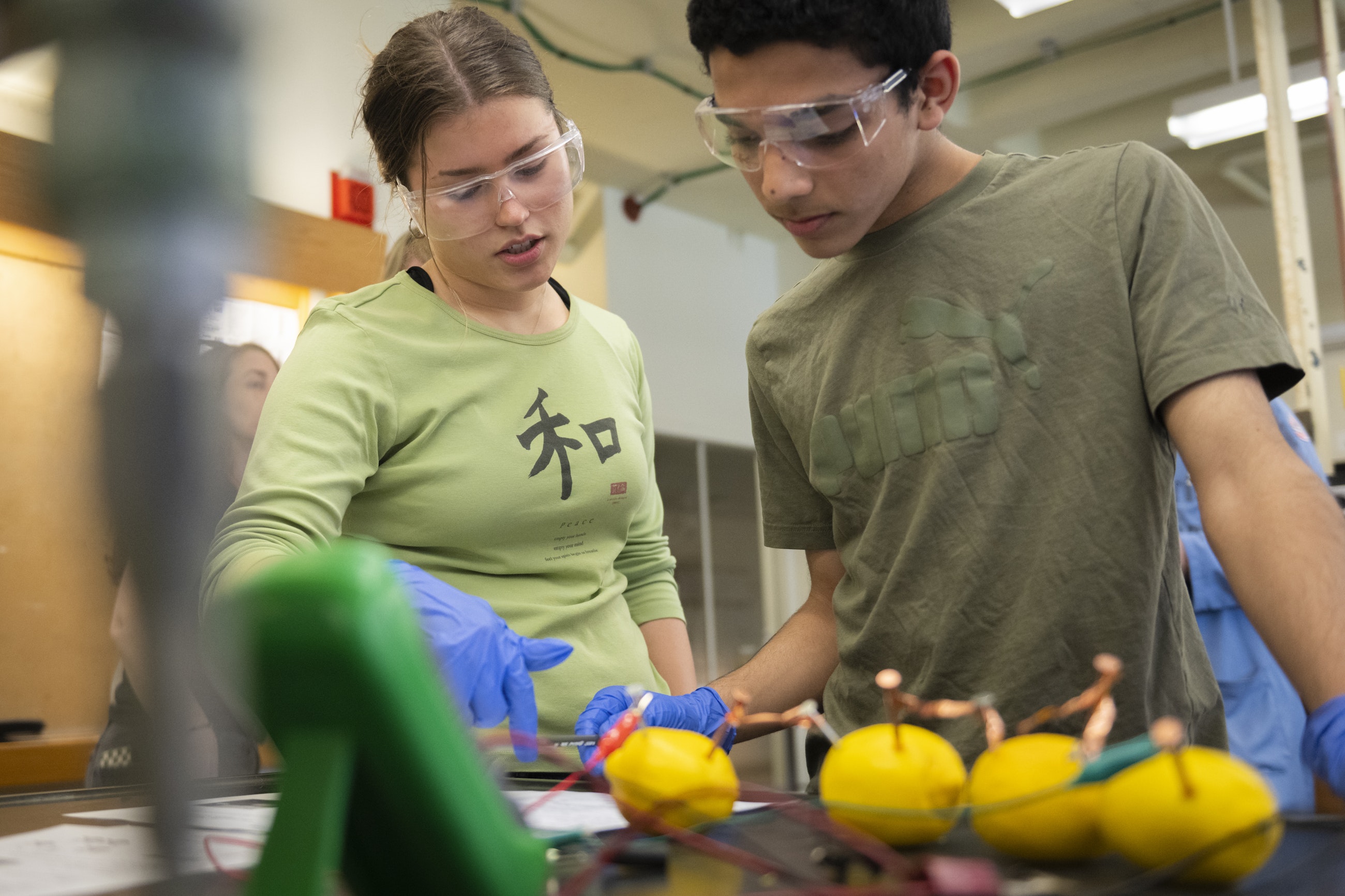
To build batteries, the middle and high schoolers inserted copper and galvanized zinc nails into lemons, then connected the nails via wires to a voltmeter for testing, and powered LED lights (photo at top, with Emme Salisbury ’28 assisting a student). They also conducted an experiment on electroplating.
D’Arcy’s lab has an ongoing partnership with the school’s science teacher and students, who last visited Clark’s chemistry labs in the winter.
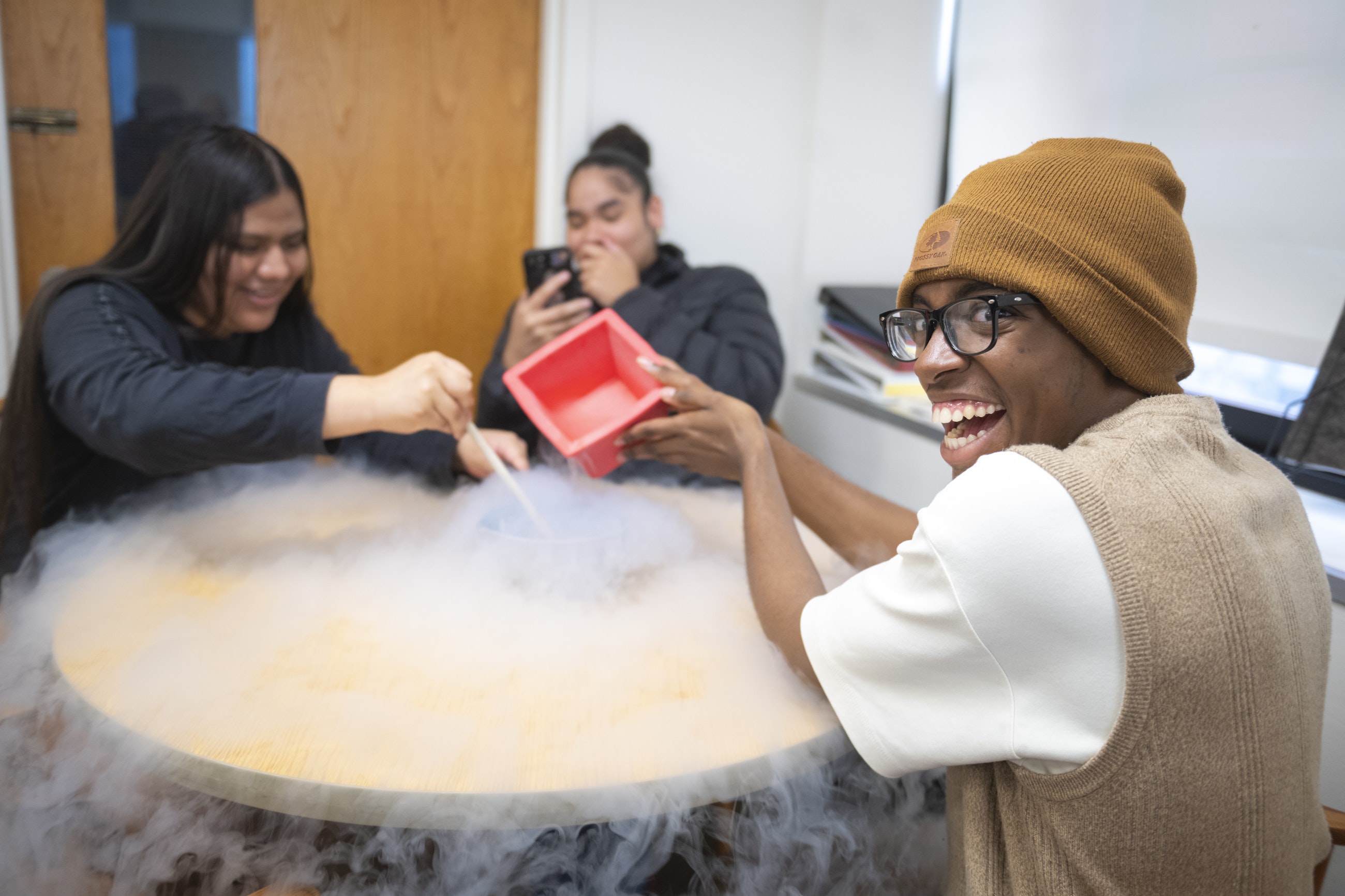
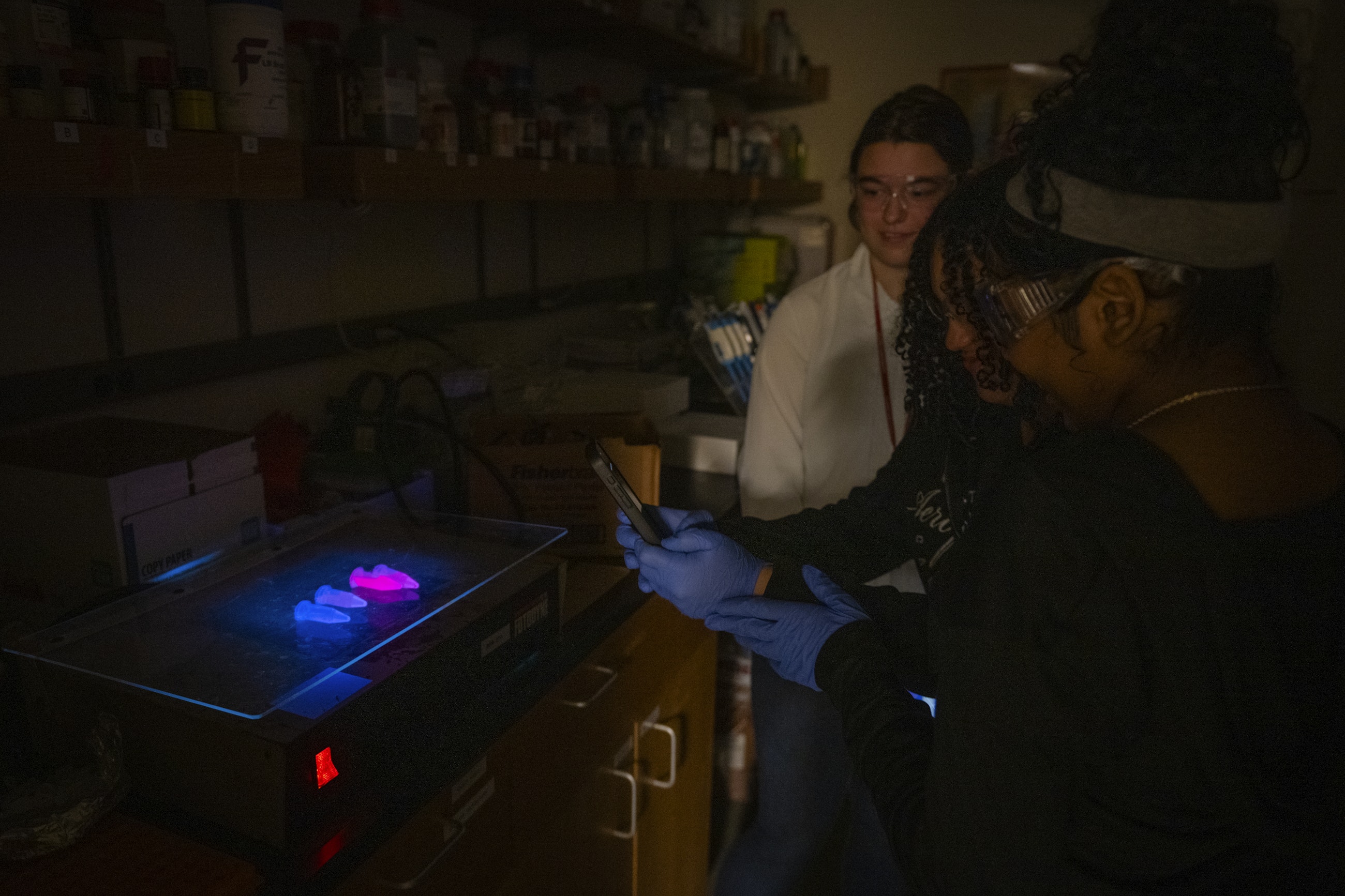
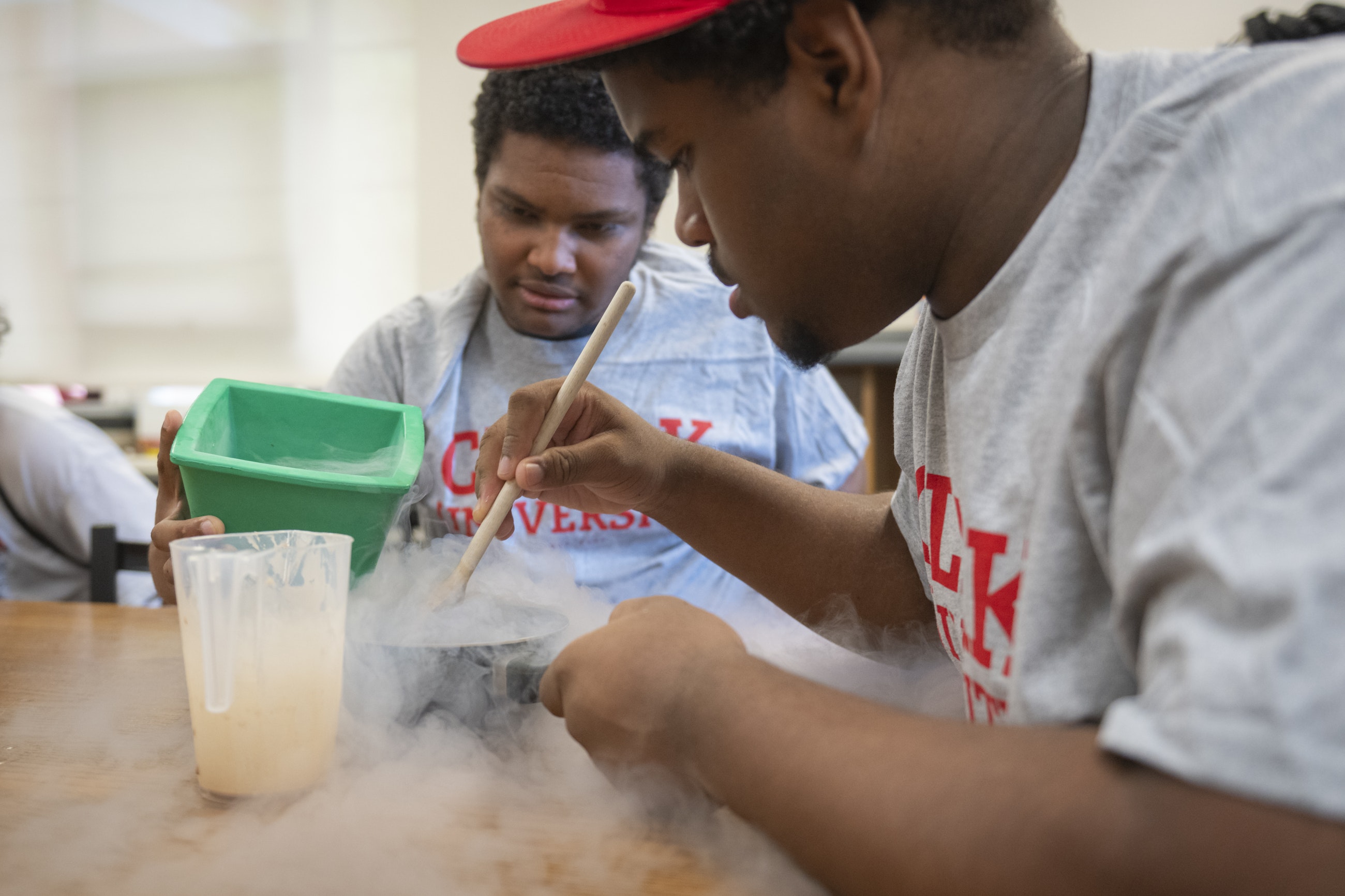
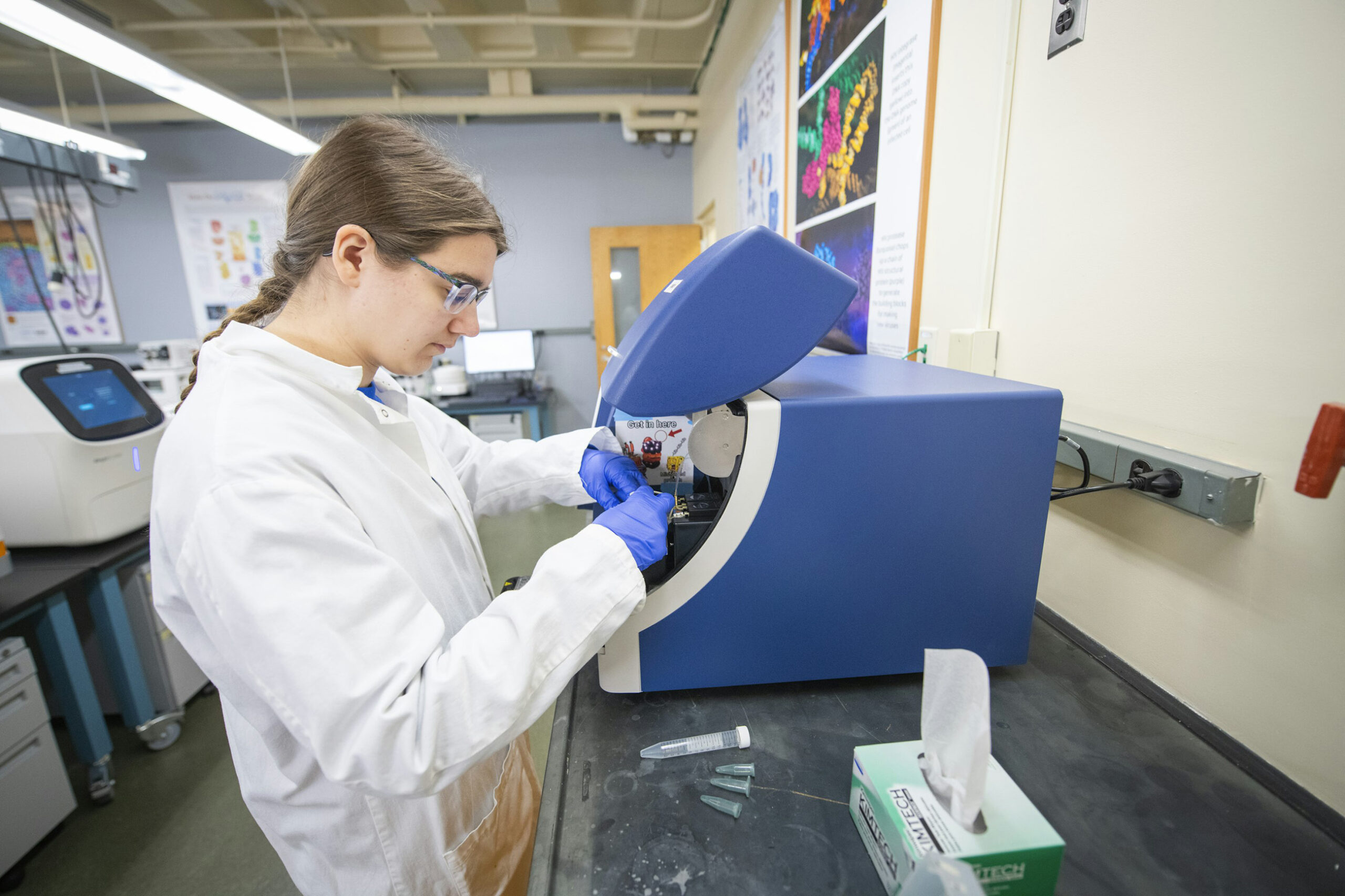
Since April 10, Chemistry and Biochemistry Professor and incoming Chair Don Spratt has offered 329 students from Worcester and other area high schools the chance to learn about protein purification, a key step in biotech research to develop new drugs, and a taste of the science behind making ice cream, an experiment used in Spratt’s popular Kitchen Chemistry class at Clark. The workshops also provided students with “soft skills” career development, he said.
The University provided free transportation, a pizza lunch, and swag bags with Clark t-shirts.
“One more school to go — Claremont Academy — this Monday!” Spratt said.
Assisting him were his chemistry colleagues Beth Bafaro and Efrain Castro Narro, as well as Tori Webber ’27, a biochemistry and molecular biology major who is conducting research in Biology Professor Deb Robertson’s lab via an Edwin A. Weiller Summer Science Fellowship.
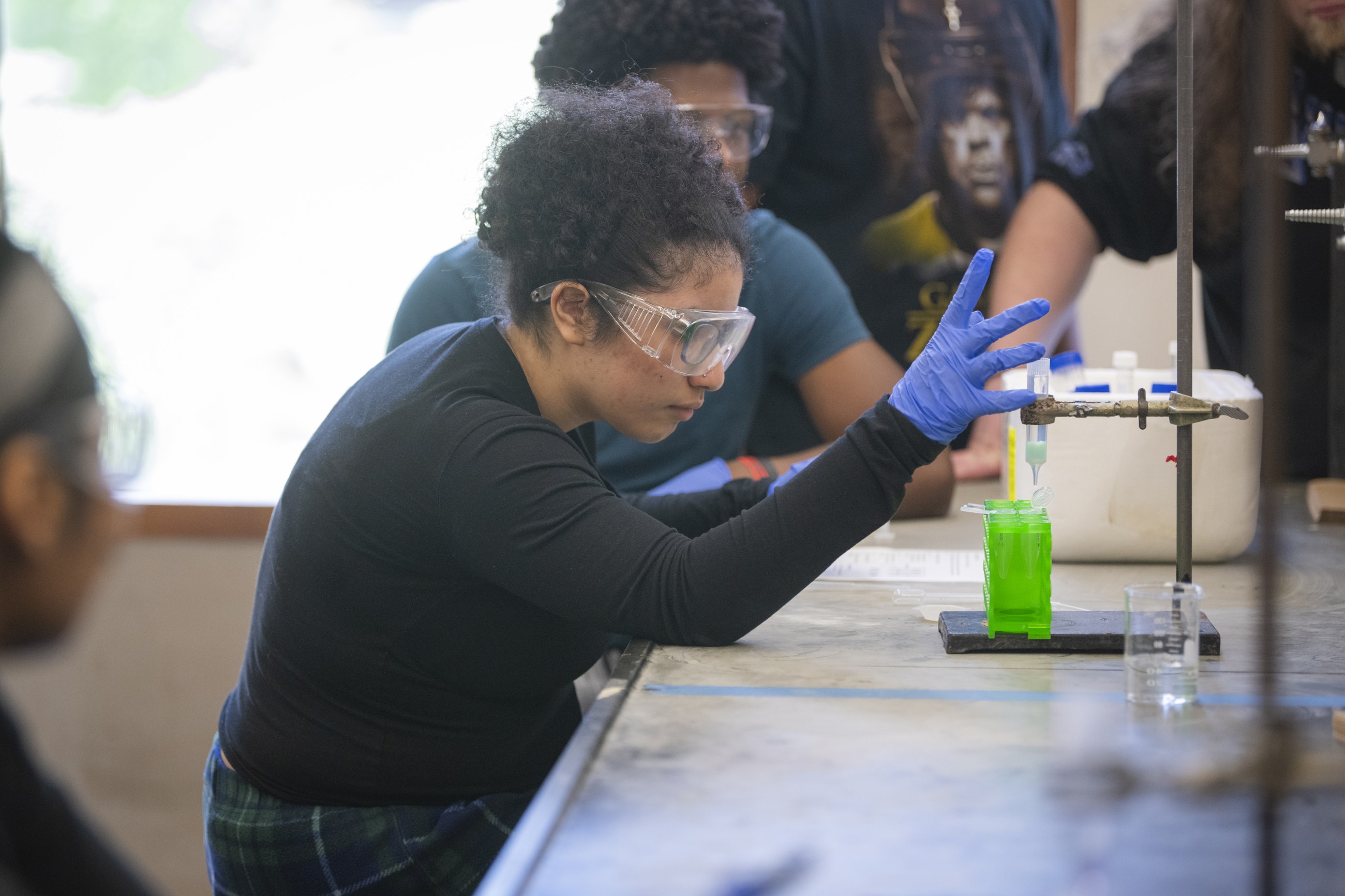
“The students purified jellyfish protein using a method called column chromatography,” Spratt said. From E. coli bacteria, they isolated a single “green florescent protein, or GFP, first discovered in a jellyfish called Aequorea victoria. It glows because it contains a special light-producing part called a chromophore. … GFP is widely used by scientists to track proteins in living cells.”
Besides coming from Claremont Academy and University Park Campus School in the Main South neighborhood near Clark, students have visited from the city’s Burncoat, North, and Worcester Technical schools, as well as public high schools in Auburn, Grafton, Leicester, Northborough, Shrewsbury, Spencer, Sutton, Upton, and Westwood.
“Through hands-on discovery and meaningful engagement, grounded in the strength of our faculty’s innovative research and teaching, Clark is proud to inspire and prepare the next generation of scientists and engineers to tackle the challenges ahead,” Hanselman said.