Students will probe themes of power and access in landscape paintings
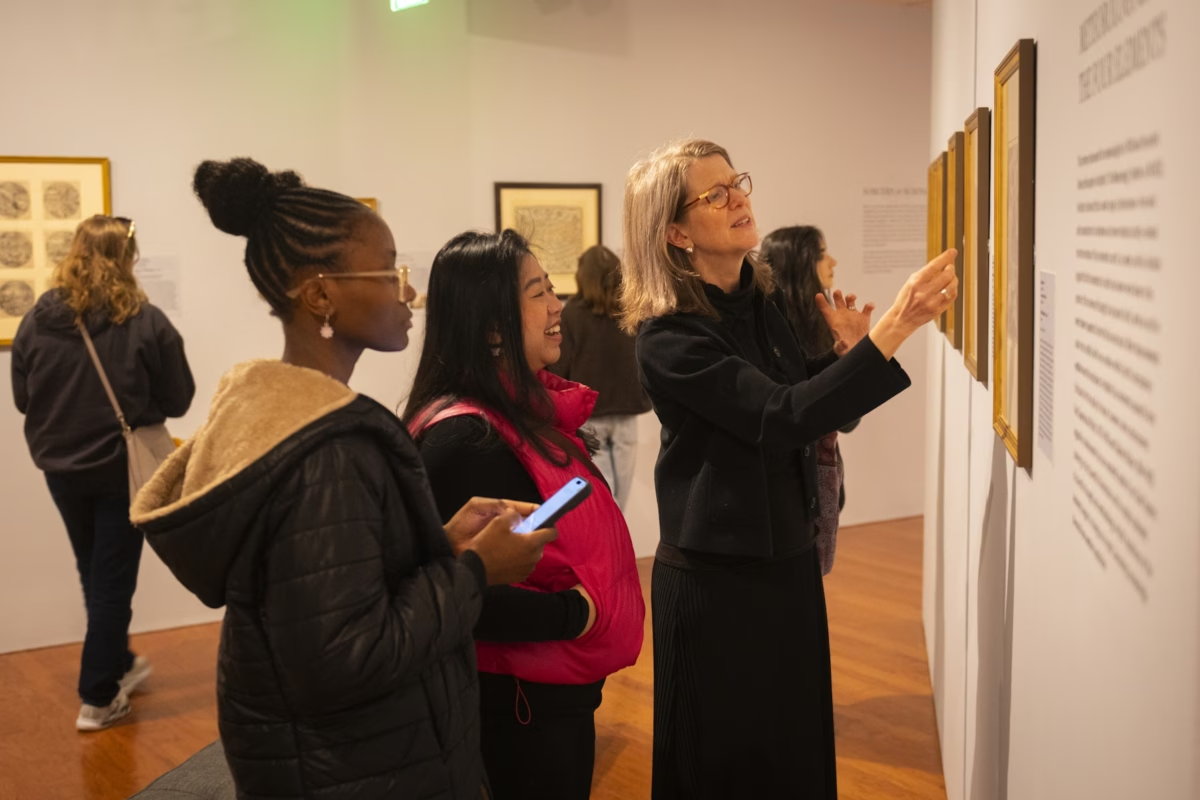
Two years ago, while teaching courses that examined many 19th-century works, Art History Professor Kristina Wilson noticed that her students were drawn to landscape paintings.
“They’re very intrigued by it as an avenue to explore critical issues in colonization and who has access to what spaces, how the landscape gets marketed,” says Wilson. “Landscape painting isn’t just boring and beautiful. It actually is wrapped up in very interesting questions of power and access and climate history.”
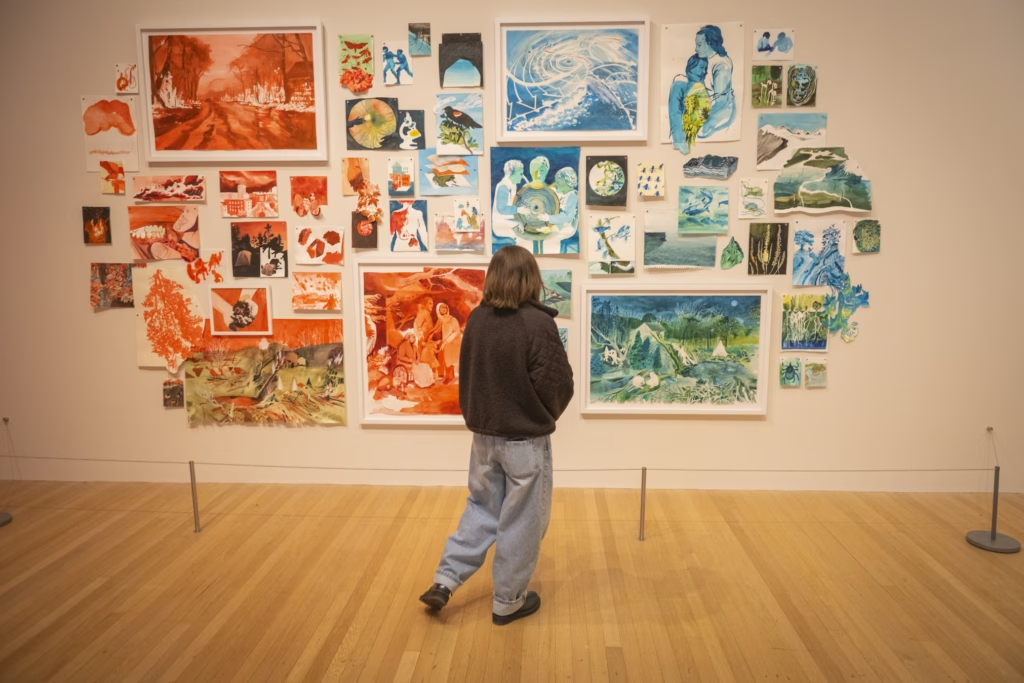
It gave Wilson an idea to create a new course. Art, Landscape, and the Environment will be offered for the first time in spring 2027 and designed around 19th- and 20th-century and contemporary art. The course is expected to draw interest from students studying in the Visual and Performing Arts, the School of Climate, Environment, and Society, and those with a concentration in environmental humanities. The class will likely take field trips to view relevant pieces in local collections.
“I’ve always loved landscape painting, and there’s scholarship that engages with different aspects of environmental history and climate history,” says Wilson.
An example is how impressionist Claude Monet depicts pollution and shifting qualities of light in paintings created in the late 19th century and early 20th century. The Worcester Art Museum has a Monet depicting the Waterloo Bridge in London that could illustrate this discussion for the class, Wilson says.
The course is expected to examine photography like that of Carleton Watkins, a 19th-century artist best-known for shooting western landscapes, especially Yosemite Valley. Watkins was among photographers of that time who captured images of mining in the United States.
“They’re creating a mythology about this untouched land — when of course people had been living on it for thousands of years — that kind of justifies Manifest Destiny and western expansion of the United States,” says Wilson. “But then those images become the tool for protecting the land when we get to Theodore Roosevelt and the establishment of the National Park Service.”
In July, Wilson participated in a week-long seminar on the topic of Ecology and Empire hosted by the Center for Historic American Visual Culture at the American Antiquarian Society. The seminar studied examples of nineteenth-century botanical prints, maps, children’s books, and tourist ephemera that offered insights into how human society has imagined its relationship to the land and oceans around the globe. Wilson plans to introduce her students to some of those objects in field trips next spring, giving students an opportunity to learn firsthand from historical sources.
Students taking Art, Landscape, and the Environment will ponder questions such as, “What is the role of the visual in creating knowledge?” and “How do we know our world?”
“We know it through what we see,” says Wilson, “so what we see in the art helps us to understand what we know about the world.”
While art is principally about expression, it is also about communication, says Wilson.
“Communication is fundamentally at the heart of what we do as human beings,” she says. “There are a lot of important technical challenges that we face as a society, but we cannot face them if we don’t have a fundamental sense of our ability to communicate, and to listen and empathize with one another. The skills for doing that really come from the arts and humanities.”
One theme this course will convey is that climate anxiety is not novel and has been depicted in various mediums for decades.
“For students, I don’t know if it is comforting or distress-inducing, knowing that these concerns are not new,” says Wilson. “The acuteness of the crisis feels very present, but, in fact, these worries are not new.”