
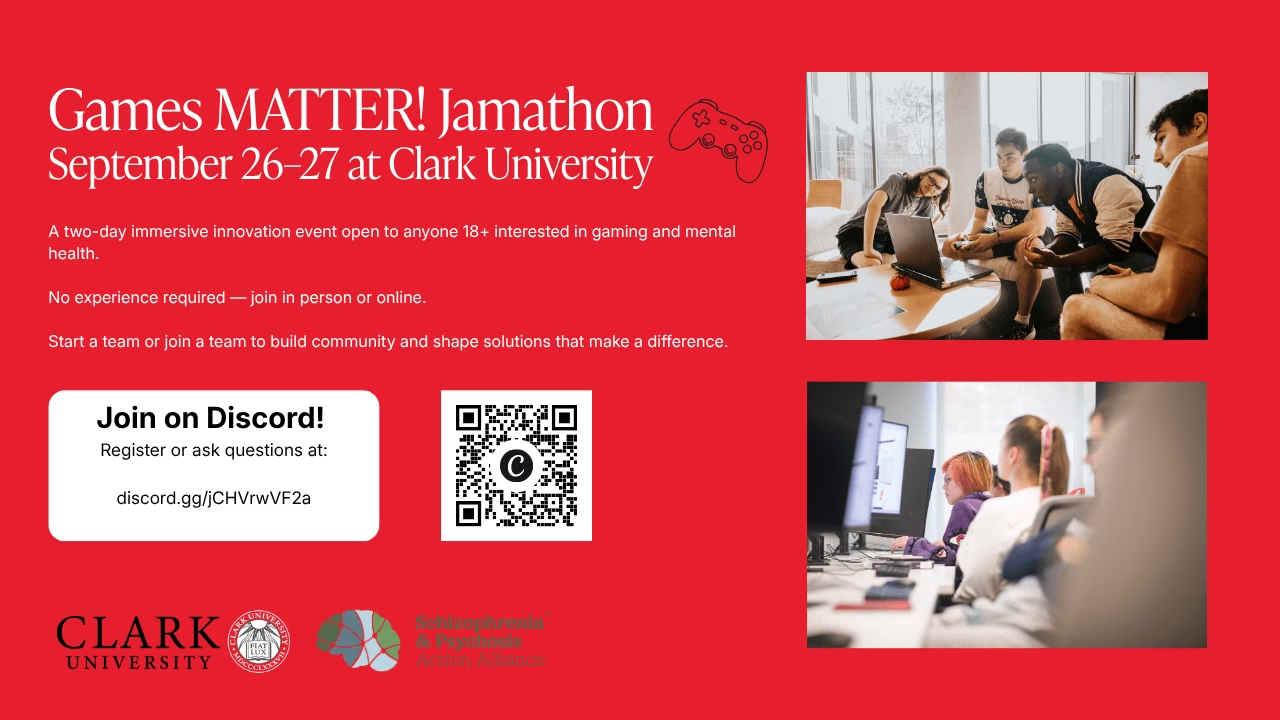
Games can help reduce loneliness, strengthen social connection, build empathy, and teach practical skills that support recovery. Through in-person collaboration, teams develop and prototype creative games of all varieties, including board games, card games, video games, and computer games.
Games MATTER! Jamathon
The Games MATTER! Jamathon is a two-day immersive event that partners student game designers with clinicians, mentors, people with lived experience, and others to create game concepts and digital tools that address real-world challenges faced by people living with psychosis and schizophrenia spectrum disorders.
WHO: The event is hosted by Clark University’s Becker School of Design & Technology and the Schizophrenia & Psychosis Action Alliance. Must be 18+ to participate.
WHERE: The Center for Media Arts, Computing, and Design at Clark University; or join online
All are invited to explore how thoughtfully designed digital experiences can foster connection, reduce isolation, and promote recovery.
Questions and answers
What is the Schizophrenia & Psychosis Action Alliance, or S&PAA?
The Schizophrenia & Psychosis Action Alliance is a national nonprofit organization dedicated to improving the lives of people affected by schizophrenia and psychotic disorders through education, support, advocacy, and research. Their mission is to reduce stigma, improve recovery outcomes, and help people reconnect with meaningful lives and relationships.
Why is this partnership with Clark University so important?
This partnership is groundbreaking because it brings together mental health advocates, people with lived experience, and game designers to tackle one of the biggest challenges in schizophrenia recovery: social isolation. It’s one of the first collaborations of its kind focused on using serious game design to help rebuild connection, communication, and confidence.
Why is social isolation such a major issue for people with schizophrenia and psychosis?
Many people living with schizophrenia experience stigma, fear of judgment, cognitive difficulties, or loss of social confidence. Over time, that can lead to deep isolation and loneliness. And isolation doesn’t just feel painful — it can actually interfere with recovery, motivation, employment, friendships, and day-to-day functioning.
How can video games possibly help with something this serious?
When designed intentionally, multiplayer and cooperative games can become safe environments for practicing real-world social skills. Games can help people work on communication, teamwork, emotional regulation, conflict resolution, and relationship-building in a lower-pressure setting.
So this isn’t about entertainment alone?
Exactly. These are what’s called “serious games” — games designed for social impact, education, training, or health outcomes. At Clark’s Becker School of Design & Technology, students are learning how games can become tools for empathy, recovery, and human connection.
What specifically are Clark students working on?
In the Spring of 2026, about 80 students worked in teams to develop prototype gaming concepts aimed at reducing isolation and improving social connection for people living with schizophrenia and psychosis. Students worked directly with S&PAA professionals and people with lived experience to refine their ideas and test concepts.
In the Fall of 2026, representatives from the S&PAA will be part of an FYI course developed and taught by Dr. Paul Cotnoir, Dean of the BSDT along with the BSDT Department Chair, Prof. Ulm, to introduce an additional 24 First Year Clark students to the principles and practices of working with content experts to create serious games with socially relevant purpose.
Also, the Fall of 2026 will see the hosting of Game Jam-a-thon, co-hosted by the S&PAA and Clark University.
What kinds of skills can games help strengthen?
Games can reinforce:
- communication
- cooperation
- turn-taking
- leadership
- emotional regulation
- problem-solving
- navigating social roles
Those are all skills that can translate into friendships, employment, education, and greater independence in everyday life.
Why are games sometimes easier than face-to-face interaction?
Games provide structure. The rules are clear, the goals are shared, and interactions happen gradually. For people struggling with anxiety, paranoia, or social withdrawal, that structure can make social engagement feel safer and more manageable.
What role is S&PAA playing in joint projects with Clark students?
S&PAA members come to campus, meet with students, explain the realities of psychosis and social isolation, and even co-host social gaming sessions, discussion sessions, a game jam-a-thon, and plans are in place for a Spring symposium to explore the role games can play in combatting the social isolation that often accompanies a diagnosis of schizophrenia or psychosis. Students are collaborating with S&PAA professionals throughout the semester to refine their designs.
What was the response from students and faculty?
By all accounts, the collaboration is incredibly successful. This is one of the best case studies our students have been involved with because students are able to apply their creativity and technical skills to a deeply human challenge.
Is this part of a larger movement in mental health care?
Absolutely. There’s growing recognition that recovery isn’t just about medication or clinical treatment — it’s also about rebuilding belonging, confidence, purpose, and social connection. This partnership explores how technology and digital spaces can become bridges back into community and everyday life.
What’s next for the partnership?
The collaboration is expected to continue into the next academic year with expanded initiatives, including:
- a campus-wide mental health hackathon in September
- additional game development projects through FYI classwork and Game Studio projects
- a second “Games for Good” symposium at Clark being scheduled for SP’27*
- broader conversations about digital tools for recovery and social connection
*Clark plans to host a symposium called Digital Tools to Reduce Isolation in Schizophrenia bringing together leaders in healthcare, research, technology, and lived experience.
What makes Clark University uniquely suited for this work?
Clark’s Becker School of Design & Technology is internationally recognized for game design and interactive media. The school approaches games not just as entertainment, but as tools for empathy, learning, and positive social impact.
What’s the big takeaway from this partnership?
The big idea is simple but powerful: human connection is essential to recovery. If thoughtfully designed digital tools and games can help people rebuild confidence, communication, and belonging, they can become meaningful steppingstones back into the real world.