

Innovative training for the next generation of school psychologists.
The Clark University M.Ed./Ed.S. in School Psychology prepares graduates to deliver comprehensive school psychology services that make a difference in the lives of ethnically, culturally, and linguistically diverse students.


Why Study School Psychology at Clark?
- Science-to-Practice Model: You will apply research findings in psychology and education to real-world school settings, employing scientific evaluation, problem analysis, and research methodologies to address student challenges.
- Comprehensive Integration of Components: You will grow in a curriculum that blends theoretical knowledge, research methodology, professional role development, and practical training, with an emphasis on cultivating strong problem-solving skills.
- Focus on Diversity and Inclusivity: You will develop skills for working effectively with diverse populations and understanding and addressing the needs of historically marginalized and underserved communities.
- At the forefront of Digital Mental Health: Our program integrates knowledge and skills required to understand, develop, and implement behavioral health technologies, enhancing your ability to deliver cutting-edge, effective school psychology services.
- Field-Based Experiential Learning: You will train through fieldwork in local schools, supervised by university and field professionals, as you integrate academic learning with hands-on experience.
- Professional Role Development: You will understand the evolving role of school psychologists through coursework that aligns with standards set by the National Association of School Psychologists (NASP) and the Massachusetts Department of Education.
- Sequential Cohort Model: Join a small, selective cohort that benefits from personalized mentoring, close relationships with faculty, and strong peer support throughout the program.
Gain knowledge, skills, and experience with your cohort peers through courses on campus and fieldwork in local schools and agencies, closely mentored by university and on-site supervisors.
Year 1, Fall Semester
- Introduction to School Psychology
- Psychoeducational Assessment I
- Statistics
- Child & Adolescent Psychopathology
Year 1, Spring Semester
- Professional Practice, Ethics, and Law in School Psychology
- Psychoeducational Assessment II
- School-based Consultation
- Diversity in Schools
Year 2, Fall Semester
- Psychoeducational Assessment III
- Counseling in School Psychology
- Data-Based Decision Making and Interventions within MTSS Framework I
- Practicum I
Year 2, Spring Semester
- Educational Research Methods & Program Evaluation
- Data-Based Decision Making and Interventions within MTSS Framework II
- Student-Selected Elective
- Practicum II
Year 3, Fall Semester
- School Psychology Internship
Year 3, Spring Semester
- School Psychology Internship
Clark is renowned internationally for its vital contributions to the field of psychology.
- Clark’s first president, G. Stanley Hall, founded the American Psychological Association
- Dr. Arnold Gessell – the first person in the United States to hold the title of “school psychologist” – was a Clarkie.
- Francis Cecil Sumner, the “father of black psychology,” was the first African-American in the U.S. with a doctorate in psychology, which he received from Clark in 1920
The growing mental health crisis among young people is felt acutely at primary and secondary schools across the United States. Yet according to the American Psychological Association, there is only one psychologist for every 1,127 K-12 students. Are you called to help fill this gap and foster the psychological well-being of all students? If so, take the next step by acquiring a unique combination of knowledge, skills, and experience at Clark.
The School Psychology program is pursuing National Association of School Psychologists (NASP) accreditation.
According to the Bureau of Labor Statistics, school psychologists holding an advanced specialist degree such as an Ed.S. earn on average between $65,000 and $81,000 annually and are employed across a range of institutions, including:
- Public schools
- Colleges and universities
- Charter schools
- Private schools
- Hospitals and medical settings
- Private practice
- International schools
- Departments of special education
Program leadership
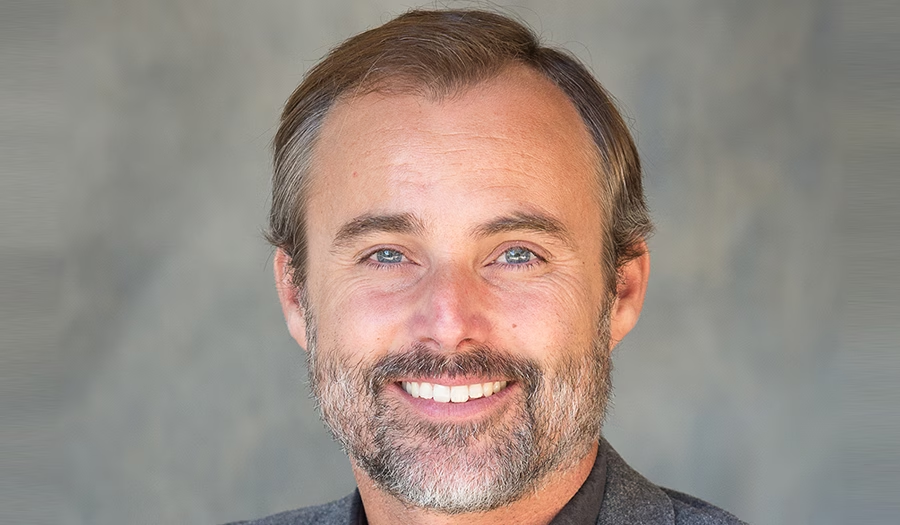
Aaron Haddock, M.Ed., Ph.D., NCSP
Director of Behavioral Health Initiatives, Mosakowski Institute for Public Enterprise
Associate Professor of Practice, Department of Education, Program Director, School Psychology Program
Aaron Haddock, M.Ed., Ph.D., NCSP is an Associate Professor of Practice in the Department of Education at Clark University. Dr. Haddock is a Nationally Certified School Psychologist. He has worked in school and community settings as a teacher, school psychologist, program evaluator, and consultant.
Learn more
His areas of expertise include digital mental health, social-emotional learning, child and adolescent behavioral health, and school-based prevention and intervention. He publishes and presents on these topics regularly.
By linking his extensive experience in multi-tiered systems of support, program evaluation, academic achievement, and education policy directly to issues of social justice and education, Dr. Haddock leverages the reciprocal relationship between research and practice to promote positive outcomes for all youth.

Nadia Ward, M.Ed., Ph.D.
Director of the Mosakowski Institute for Public Enterprise
Professor of Practice, Department of Education
Nadia L. Ward, M.Ed., Ph.D., came to the Mosakowski Institute from Yale University, where she served as Associate Professor of Psychiatry (Psychology) and the Deputy Director of Clinical Training in Clinical and Community Psychology, Yale School of Medicine, Department of Psychiatry; and the Director of Urban Education and Prevention Research and Senior Evaluation Consultant with YaleEVAL at the Consultation Center at Yale.
Learn more
Dr. Ward’s extensive work in the area of academic achievement for racial and ethnic minority students has spanned more than 20 years and has included training and consultation to universities, public school systems, and private organizations; curriculum development; program development; implementation; and community-engaged research and evaluation. She has worked extensively with high-risk as well as high-achieving urban youths and their families in a variety of capacities. She has designed and evaluated academic enrichment and competence-enhancing substance abuse and violence prevention programs in school and community settings.
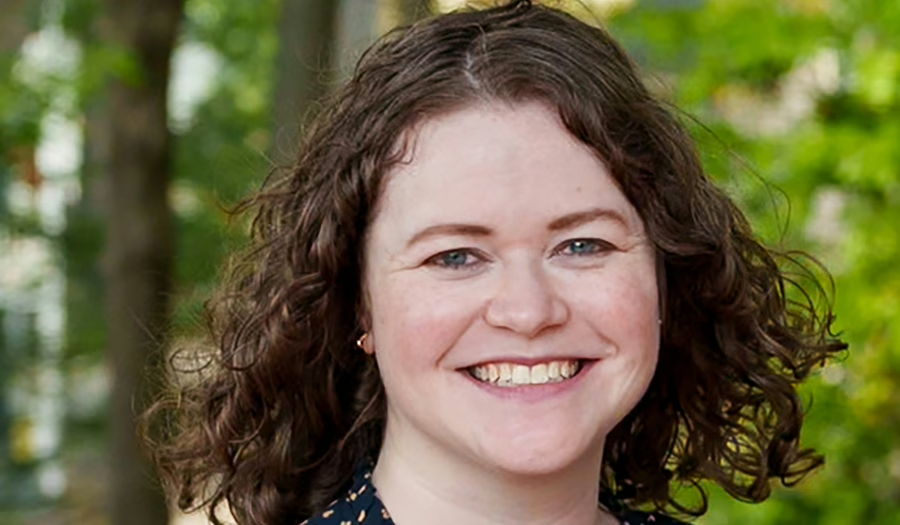
Kate Williamson, Ph.D., NCSP
Associate Professor of Practice, Department of Education
Director of Clinical Training, School Psychology Program
Dr. Williamson brings a wealth of experience as a school psychologist, educator, and program leader, and joins us from the University of Connecticut, where she served as an Assistant Research Professor.
Learn more
Her clinical background includes direct work with students in both Connecticut and Maryland public schools, where she specialized in supporting students with complex needs and led professional development initiatives for educators and school psychologists.
Academic Excellence. Global Reach. Career Success.
Join our supportive community of scholars. Ready to take the next step?