

Music, B.A.
Overview
Music is one of the most ancient and universal forms of human expression.
Music travels across cultures, adapts to new technologies, and builds communities. Studying music seriously means understanding all of that: not just how to play or compose, but how music works in the world and what it can do.
Why study music at Clark?
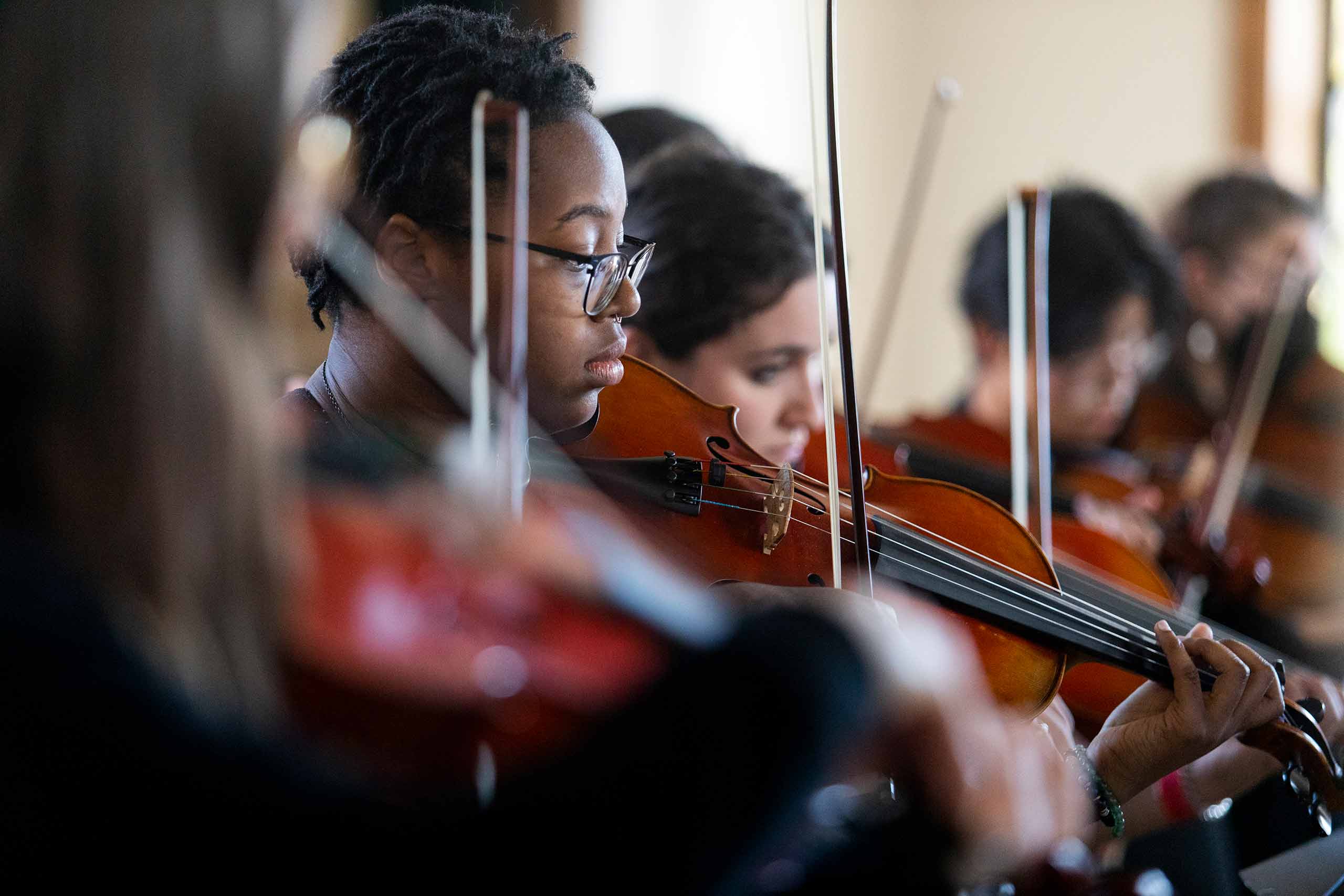
- You’ll play from day one. Clark’s ensembles — Concert Choir, Chamber Chorus, Concert Band, Jazz Workshop, Chamber Music Ensembles, and the Sinfonia string orchestra — are both academic courses and living musical communities.
- Private lessons in voice and a wide range of instruments are available with or without course credit, for majors, minors, and non-majors alike.
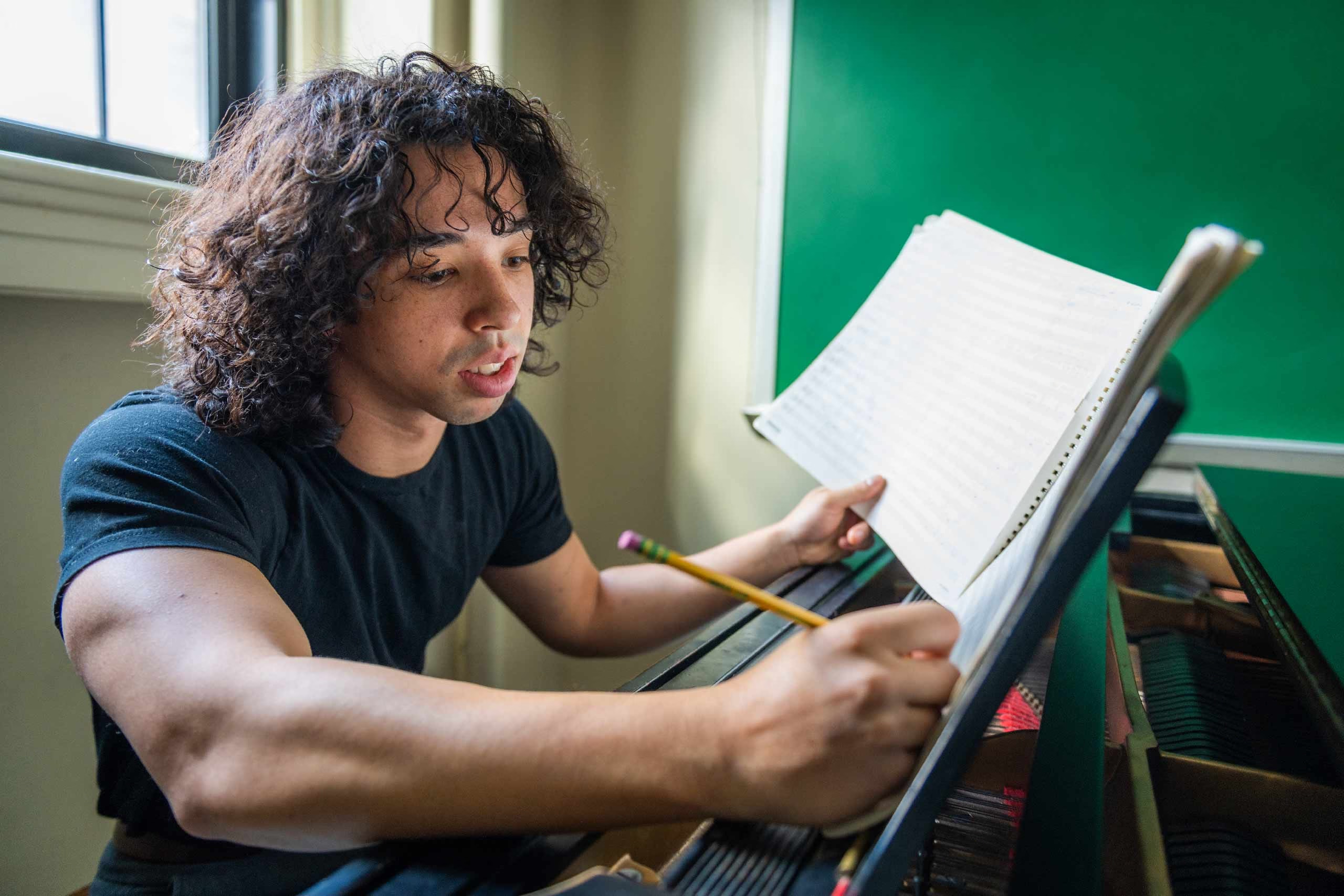
- Four tracks mean four genuinely different educations. Performance, composition and theory, musicology, and technology each have their own professional trajectories — and the curriculum is designed to let you go deep in the direction that fits you.
- Faculty are working scholars and practitioners who bring their own creative and intellectual work into the classroom.
- Worcester has a real music scene. Music Worcester, the Hanover Theatre, the Worcester Chamber Music Society, and numerous other venues offer discounted student tickets and, in many cases, connections to Clark faculty who perform and present there.
Frequently asked questions
Do I need to be an experienced musician to major in music at Clark?
You don’t need to have experience to study music at Clark. Each of the four tracks serves students with different backgrounds and goals. The core requirements build essential skills that all majors share, and private lessons and ensemble participation support your development from wherever you start. The best first step is to connect with the music program director, who can help you assess fit and plan your path.
Can non-music majors participate in ensembles and take lessons?
Yes — and this is one of the things that makes Clark’s music program genuinely open. All ensembles and most courses are available to non-majors. Private lessons are offered with or without course credit. Students who love music but are majoring in another field can participate fully in the musical life of the program, or declare a minor.
What is the difference between the four tracks?
The performance track is for students whose primary goal is developing as a performing musician. Composition and theory is for students who want to create music and understand its structural underpinnings. Musicology is for students drawn to the history, criticism, and cultural study of music. Technology is for students interested in recording, audio engineering, sound design, and music production. Many students combine elements of more than one track; the structure is a guide, not a rigid requirement.