‘This is where I belong. Right here.’
Dynell Bonner is an Army veteran from Hawaii who is most comfortable with a camera in his hand and a story to tell.
Dena Jones, from North Carolina, is a mixed-media artist who welcomes having her work critiqued from her “blind side.”
Anneli Skaar runs a book art studio in coastal Maine and is wary about getting “too comfortable” with her creative direction.
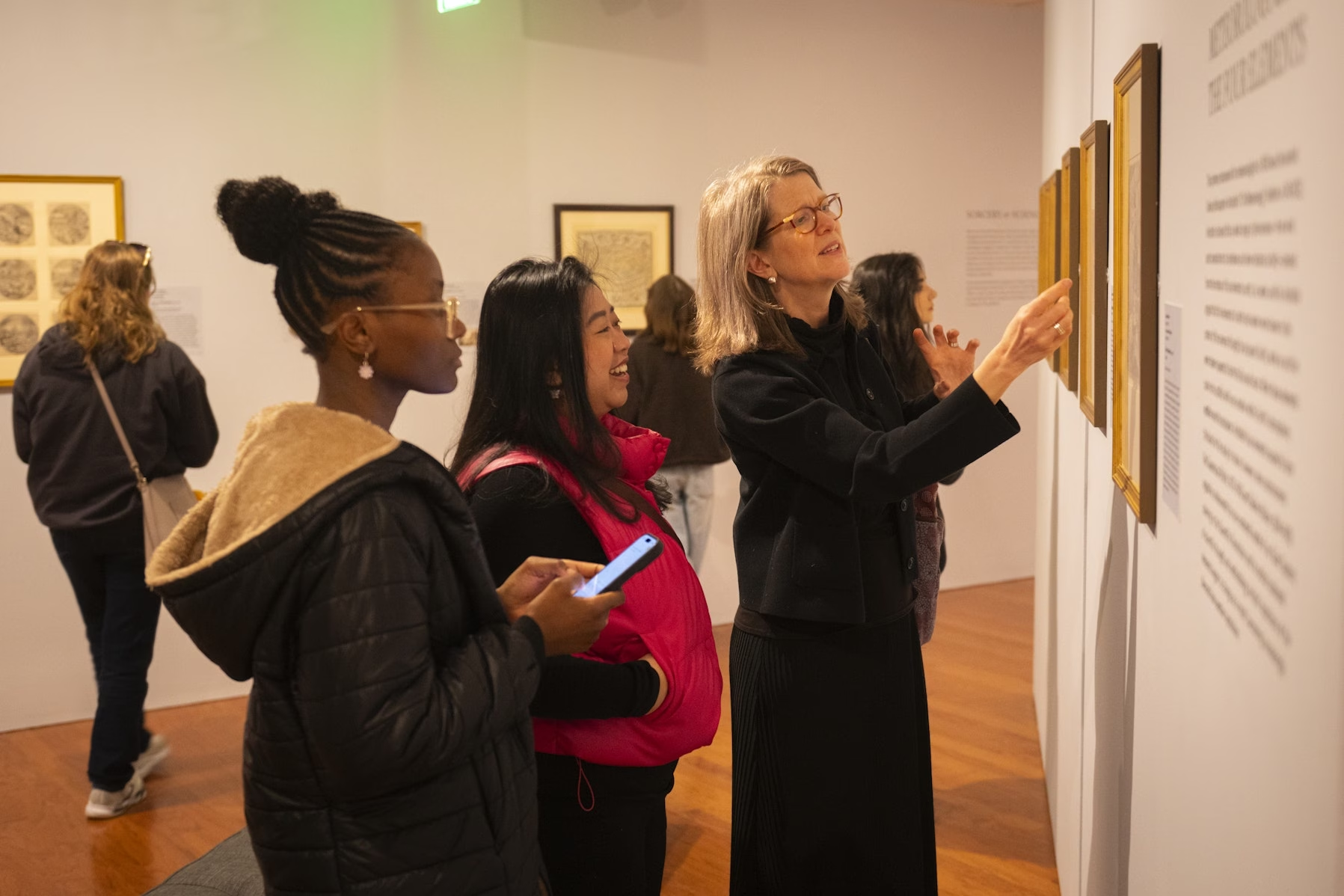
Their backgrounds and ambitions may diverge, and their geographies are certainly scattered, but these artists share a connection: the Clark University Master of Fine Arts in Visual Arts. The two-year program allows students to work on their art from their home studios, then convene for twice-a-year residencies, one at Clark each June and the other in January at the Massachusetts Museum of Contemporary Art (MASS MoCA) in North Adams. In both residencies, students learn from accomplished artists and creative entrepreneurs who are painters, sculptors, filmmakers, art critics, historians, curators, photographers, and interactive artists.
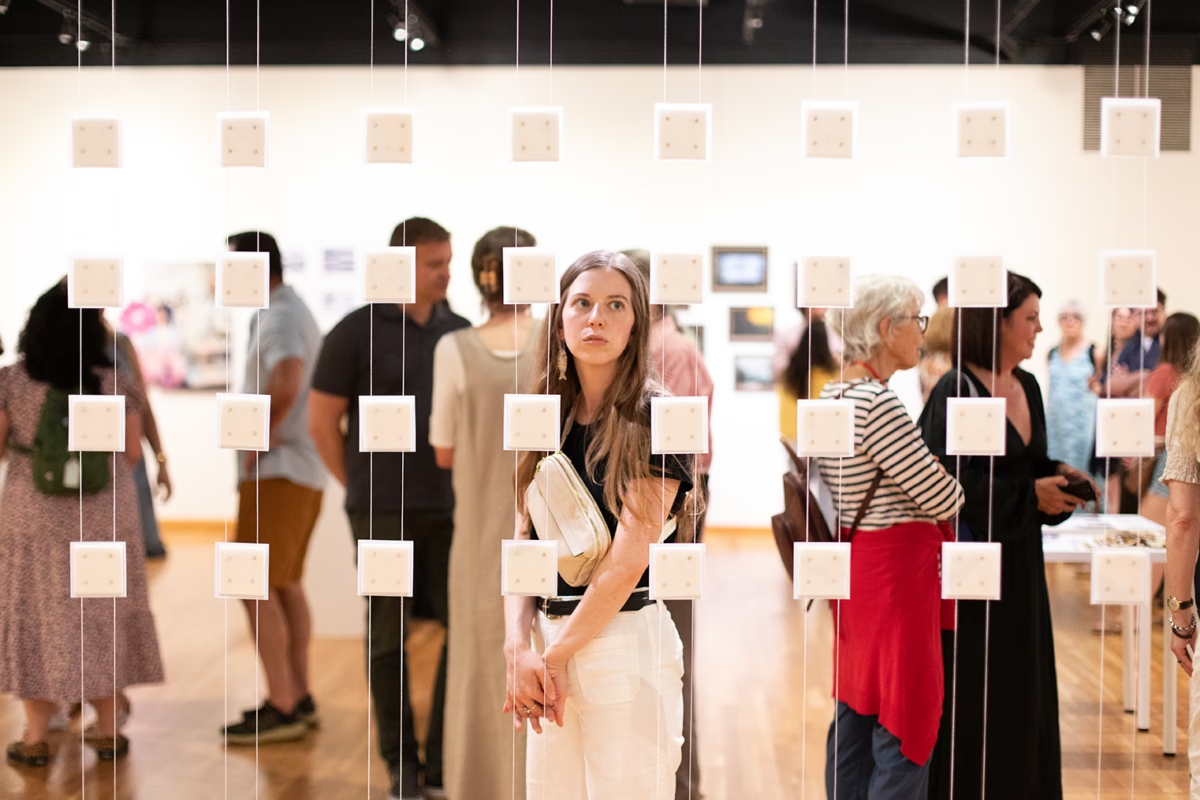
The program concludes with a residency where students defend their written thesis and present a professional artist talk. All graduates are included in an exhibition catalog and participate in a thesis show at MASS MoCA.
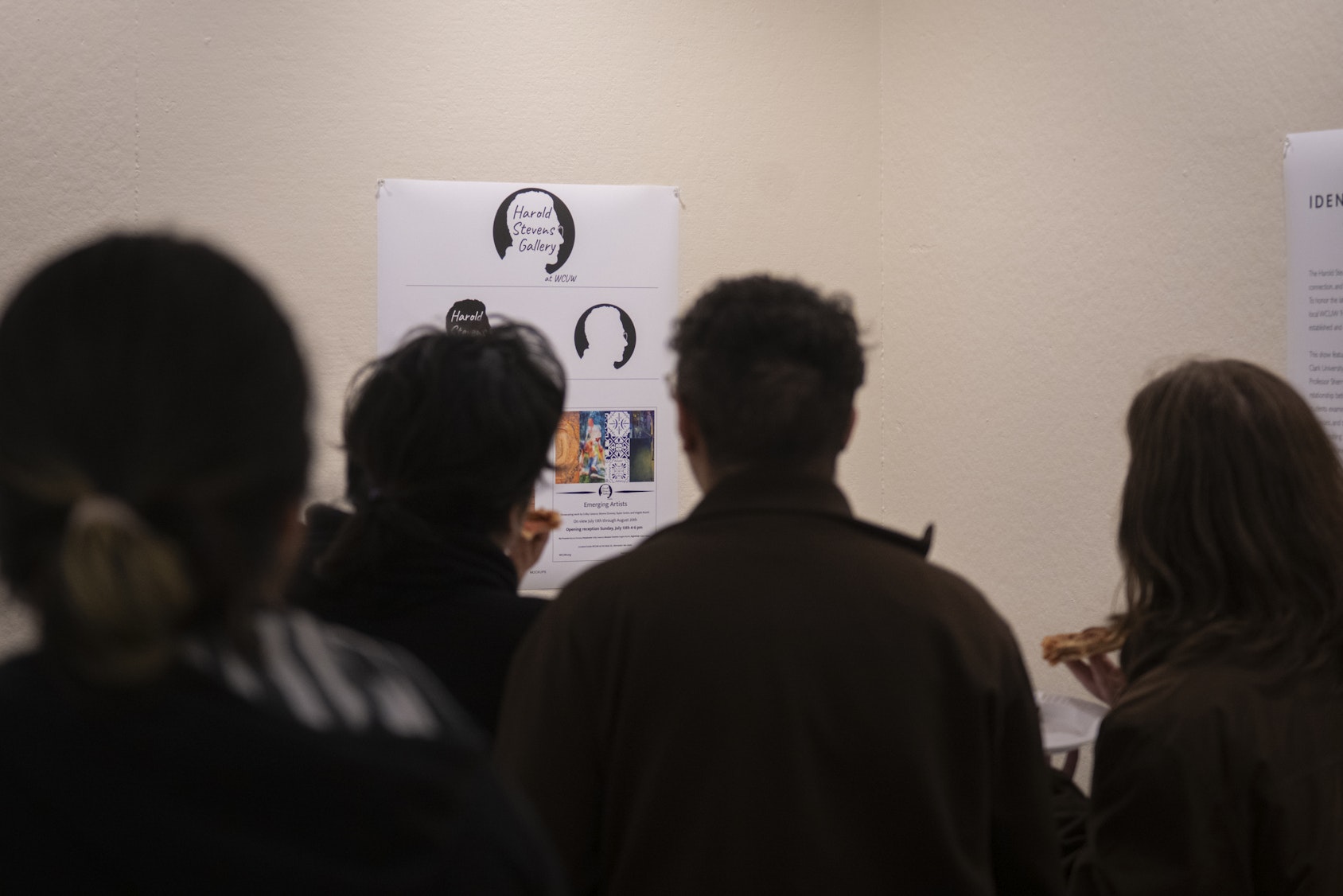
This past June, a cohort of 50 students, double the participation of the inaugural residency in 2024, participated in the 10-day immersive residency at Clark, which exposed them to renowned national and international artists, curators, and art professionals as presenters and mentors.
Program director Ben Sloat and the faculty have been teaching within this low-residency MFA program model for over fifteen years, beginning at the Art Institute of Boston, which transitioned to the Lesley College of Art and Design after moving to Cambridge. Sloat had been the MFA program director there since 2016, and brought the faculty, and MFA Assistant Director Rebecca Joy, with him when he started the Clark MFA in Visual Arts program in 2024.
“We want to be the top low-residency MFA visual arts program in the country,” Sloat says. “I’m very pleased with all of the national attention the program has been getting, which I think plays into the increased recognition of Clark as being a center for the arts.”
The access to MASS MoCA has been a boon to the program, Sloat notes. “MASS MoCA, for its size, is very hands-on and open. They’ve been very welcoming to our MFA community.
“We expose our students to the curatorial world, the museum world, and the art professional world during the program. It helps demystify those aspects of the art world and creates an opportunity for our students to show their work at an incredible scale at MASS MoCA for their thesis exhibition.”
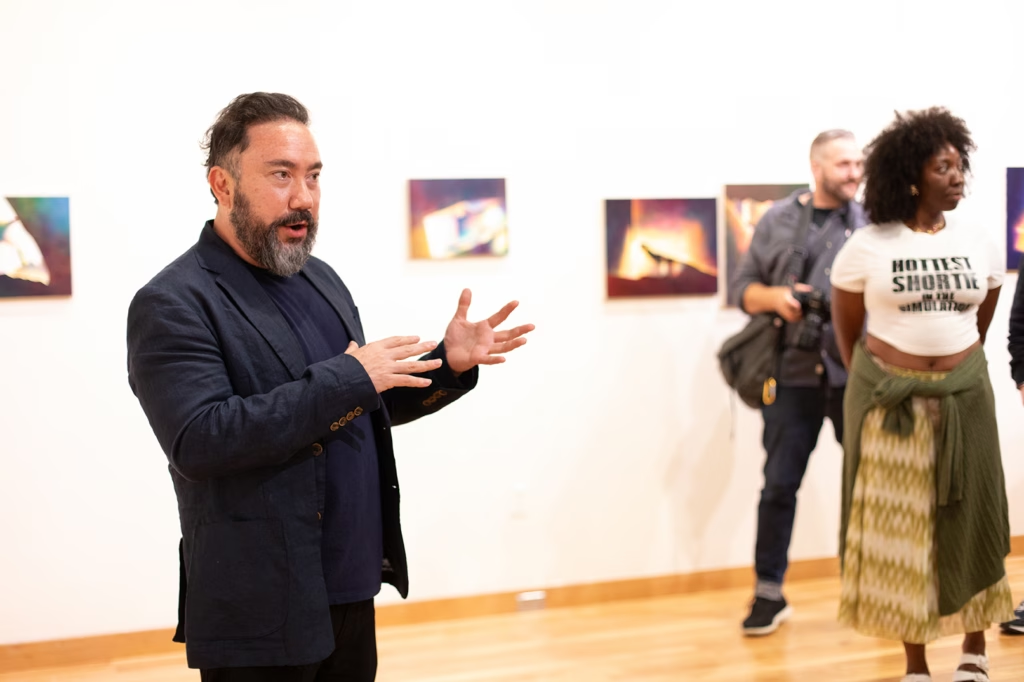
The “bread and butter” of the MFA are the critiques conducted by faculty and visiting speakers — assessments and encouragement “that you cannot reproduce anyplace else,” Sloat says. Speakers and guest critics in the recent June MFA residency on Clark campus, for instance, included Ian Alteveer, the chief curator of the Museum of Fine Arts in Boston, and Josephine Halvorson, the new assistant director of Graduate Studies in Painting/Printmaking at the Yale School of Art.
“To have this level of critique is so important,” Sloat says, “and you’re getting a whole variety of voices. People can sign up for between ten and twenty critiques during the residency, and they might hear from an art writer, a mixed-media artist, a painter, an art historian, and a curator.
“The question about critique is: How do you separate yourself from the work? How does the work communicate to the audience and live a life different from what you intended?”
MFA students have also interacted with faculty from other academic enterprises at Clark, like the Visual Arts program in V&PA, Master’s in Public Administration program, and the School of Climate, Environment, and Society.
Sloat says the program emphasizes “creative entrepreneurship” that fosters connections and develops skills needed to navigate the professional art world. The MFA’s thriving alumni community remains a touchpoint, “so people always have a home base where they can help each other and offer each other opportunities.”
Part of the skill-building is learning to persevere in the age of AI. Sloat has brought in speakers specifically to address the challenges and opportunities posed by artificial intelligence, as well as the opportunities for applying human-centric “soft” skills into the marketplace.
“Even AI companies want people with human skills; people who can be flexible with technology and be adaptive,” Sloat says. “I feel that artists have those skills. There are a lot of different kinds of futures for them, and I’m incredibly excited about that.”
MFA Student Snapshots
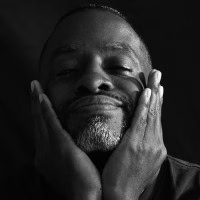
Dynell Bonner
Asked how long he served in the Army, Dynell Bonner gets granular.
“Twenty years and 12 days,” he says with a laugh (not that he’s counting). Retirement from the military has allowed Bonner to devote more time and attention to his photography, a passion that dates back to his days taking photos for his high school yearbook in Houston. He’s done substantial commercial photography work but wanted to find new avenues for expression when he applied to the Clark MFA program.
“They were in constant communication with me, which set them apart from other schools,” he recalls. Bonner’s first experience with Clark was the January 2026 residency at MASS MoCA, mingling with fellow artists in the former mill complex-turned-artists’ showcase. “It was like, ‘All right. This is where I belong. Right here.”
Bonner says that thanks to his intensive and energizing experiences with faculty mentors and fellow students, he wields his camera with a deeper and more nuanced appreciation for his subjects and his art. “I no longer see myself as just a photographer. I see myself as somebody who does his research, gets to know the people, captures the moment, and tells the story that needs to be told.”
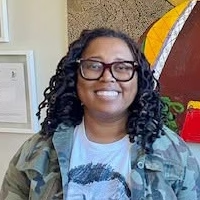
Dena Jones
Not everyone enjoys having their work critiqued, but Dena Jones welcomes it.
The mixed-media artist values the conversations with MFA faculty and students that have allowed her to see her art in ways that otherwise might have eluded her. “The critiques have been very good for me because I’ve been able to see somebody’s perspective from my blind side. When you have a blind side, you never know what you may be missing.”
A retired YMCA director and former curator of art at the Charlotte Douglas International Airport in North Carolina, Jones said she decided to enroll in the MFA program after enjoying a robust professional career and raising her four children. The ceramicist opted to experiment with collage that is focused on Black cultural experiences and incorporates archival photos into her work. “I really wanted to try something different, with guidance, and apply my storytelling to it,” she says, lauding the program’s low-residency structure, which gives students the ability to work within a flexible schedule.
“I’ve enjoyed the process,” says Jones, who is slated to graduate in 2028. “I’m meeting people from all over the country, which I find enriching because they come with different perspectives and experiences. I’ve been able to lean on some of that, and it’s been especially rewarding to get insight into how I can make my work better.”
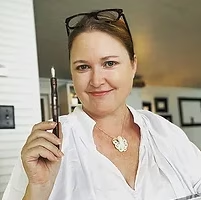
Anneli Skaar
A painter and book artist, Anneli Skaar decided it was time to explore fresh applications for her creative impulses.
“I really wanted to push myself a bit from where I was,” says Skaar, who is the faculty chair in the Book Art Studio at Maine Media. “It’s really easy to fall into this comfort area where you know what you’re doing, and you have your network. But I wanted to expand on some of my ideas, and when the opportunity for the Clark MFA came up, I said, ‘Okay, this is it.’ ” She attended her first residency at MASS MoCA and returned to campus for the June residency. “It was a very different experience, and I love the fact that it alternates,” she says.
Working with MFA faculty has provided her both the guidance and freedom to work with different media, like fabrics and metals, and create in three dimensions. “If someone had shown me what I would have been creating at the end of the semester, I wouldn’t have believed it because it’s so completely out of character for me. But that was sort of the point. You get great feedback, and you take what you need from it and decide how it fits with your vision.”