

Clark University
Clark University logo
Clark University
  • Academics
    • Degree programs
    • The Clark Experience
    • Undergraduate curriculum
    • Graduate Education
    • Advising
    • Honors Program
    • 4+1 Accelerated Master’s Degree
    • Schools and departments
    • More…
  • Admissions
    • Undergraduate admissions
    • Graduate admissions
    • Continuing education
    • International students
    • Tuition and fees
    • Financial aid
    • More…
  • Student Life
    • Housing and dining
    • Health and wellness
    • Athletics and recreation
    • Worcester
    • Involvement
    • Student Success
    • More…
  • Research
    • Highlights
    • Facilities and labs
    • Centers and institutes
    • Fellowships
    • More…
  • About
    • Facts
    • Mission
    • Campus
    • Leadership
    • Clark Inspired
    • Diversity and inclusion
    • More…

Bookmarks

  • Library
  • Academic calendar
  • Courses and schedules
  • ClarkYOU
  • People directory

Resources for:

  • Future students
  • Current students
  • Faculty
  • Staff
  • Families
  • Alumni
  • Visit
  • Apply
  • Request information
  • Ways to give

Apply

George Perkins Marsh Institute

  • About us
    • Director’s welcome
    • About George Perkins Marsh
  • People
    • Researchers
    • Steering committee
    • Administration
  • Research
    • Research projects
    • Jeanne X. Kasperson Research Library
  • Student opportunities
    • Geller Research Fellowships
    • Human-Environment Regional Observatory
  • News and events
    • Announcements
    • News stories
    • Seminar series
    • All events
  1. ClarkU
  2. George Perkins Marsh Institute
  3. Research-projects
  4. Research-projects
  • Coupled Prediction of Residential Fertilizer Use and Nitrogen Loads to Long Island Sound: An Integrated Targeting Tool for Nitrogen-Reduction Behavior Change Campaigns

    Non-point sources account for approximately 60% of nitrogen loading in Long Island Sound (LIS) and residential lawn fertilizer has been among the most difficult of these sources to reduce. In response, policymakers and other stakeholders have proposed behavior-change campaigns to promote lawn practices that reduce fertilizer use. However, the potential effect of these efforts on…

  • Reducing Non-Point Source Nitrogen Loads from Residential Septic Systems: Identifying Barriers and Opportunities for Large-Scale Water Quality Improvements

    Residential septic systems are a primary source of nitrogen loading to nearby water bodies which can negatively impact water quality. Collaborating with researchers at University of Connecticut, University of Maryland, and University of Miami, this interdisciplinary project will develop a generalizable framework and integrated, spatially-explicit economic-behavioral-hydrological model to inform the design and targeting of programs…

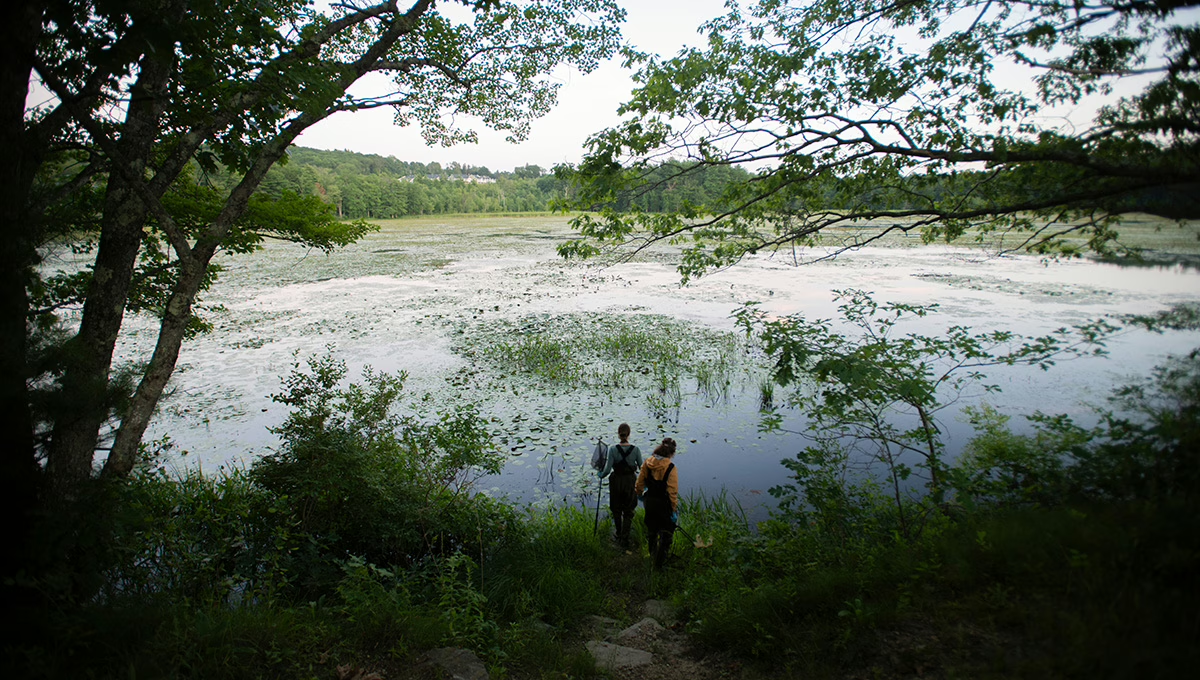
two students in marsh
Contact information

George Perkins Marsh Institute

Office location

Mailing Address:
950 Main Street
Worcester, MA 01610-1477

Visiting address:
Sackler Sciences Center
Rooms 342 – 350

1-508-751-4622

1-508-751-4600 FAX

Campus Map and Directions

Be a force for change.

Come study at a small research university with a strong liberal arts core.

  • Undergraduate
  • Graduate
Visit
Apply

Still curious? Request more information.

Inquire
Apply


Clark University logo

Invest in the next generation of Clarkies.

Ways to give

950 Main St, Worcester, MA, USA 01610 • 508-793-7711

  • Facebook
  • X
  • Instagram
  • TikTok
  • YouTube
  • LinkedIn
  • Threads

  • Report a concern
  • Careers
  • Privacy policy
  • Maps & directions
  • Campus safety
  • Office directory
  • Events
  • Website feedback

Website accessibility
Nondiscrimination policy

Copyright © 2026 Clark University