

Business Economics, B.A.
Overview
The business economics major enables students to grasp the intricacies of market operations at both micro and macro levels and develop skillsets to deliver solutions in rapidly changing business environments.


Why Choose business economics at Clark?
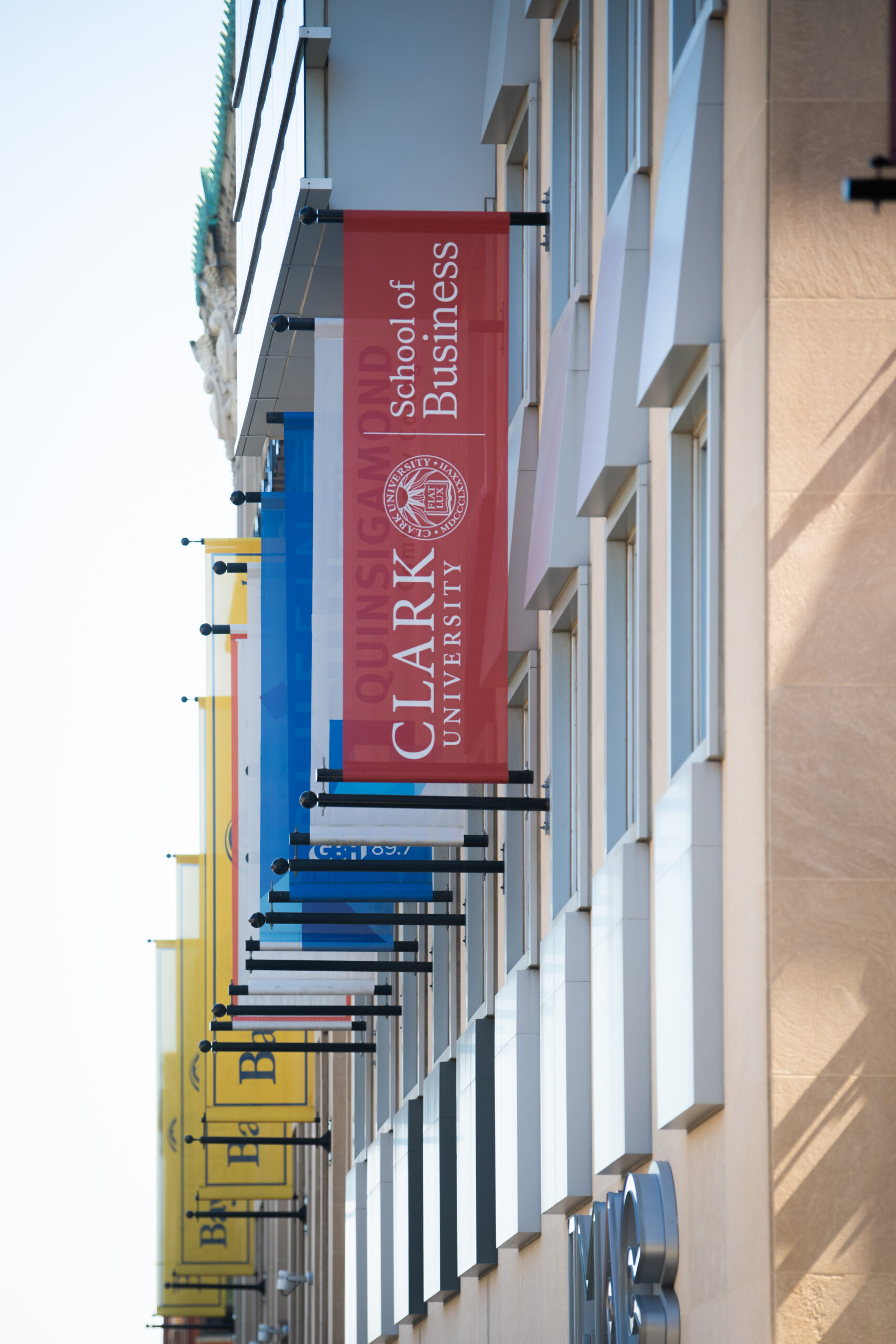
- Clark’s School of Business has been named by Princeton Review as one of the best business schools in America; ranking 16th on Forbes’ list of America’s Most Entrepreneurial Universities; and is among the fewer than five percent of the world’s business schools to receive AACSB accreditation.
- Share in our commitment to the Principles for Responsible Management Education (PRME), which integrates sustainability and social responsibility into our research and teaching.
- Learn from distinguished faculty who have extensive business experience, including serving as marketing consultants to brands like Gillette, L.L. Bean, and Godiva; as social entrepreneurs; and as advocates for sustainable business practices with foreign businesses.
- Connect classroom learning with community businesses and organizations through hands-on projects that let you make a real impact on important initiatives.
Frequently asked questions
How is business economics different from a traditional economics or business degree?
Business economics combines the analytical rigor of economics with the practical skills of business management. Unlike a traditional economics degree, which focuses on economic theory and policy, business economics applies these concepts directly to business decision-making, market strategy, and financial planning. Compared to a general business degree, this program emphasizes data analysis and economic modeling, giving you a strong foundation for solving complex business challenges.
What can I do with a major in business economics?
At Clark you’ll get more than a great education; you’ll also be prepared for a long, productive career and life of consequence. And once you’ve completed your degree, you can join other Clark alumni who have gone on to work for great organizations and attend some of the best graduate schools in the world.
By emphasizing careful thinking, analysis, and problem-solving, the economics major offers you skills that are highly valued in a number of careers and graduate programs, including banking, insurance, finance, and other business fields; planning and research in environmental and urban studies; international development; graduate study in law, public policy, and business administration; and economics as a profession, including teaching, research, and public policy.
What skills will I learn as a business and economics major?
- Gain a solid foundation in business, finance, management and accounting
- Learn the principles in the study of economics systems, theory, econometrics and statistical analysis
- Gain real-world experience through case studies, serving on internships, or working on a capstone project
Is a business economics degree good for an MBA?
Yes! A business economics degree provides an excellent foundation for an MBA by developing critical thinking, quantitative analysis, and strategic decision-making skills. Many Clark graduates continue their education in top MBA programs, leveraging their experience in data analysis, financial strategy, and business operations.