

Reading Venus: Unlocking the complexity of Renaissance allegory
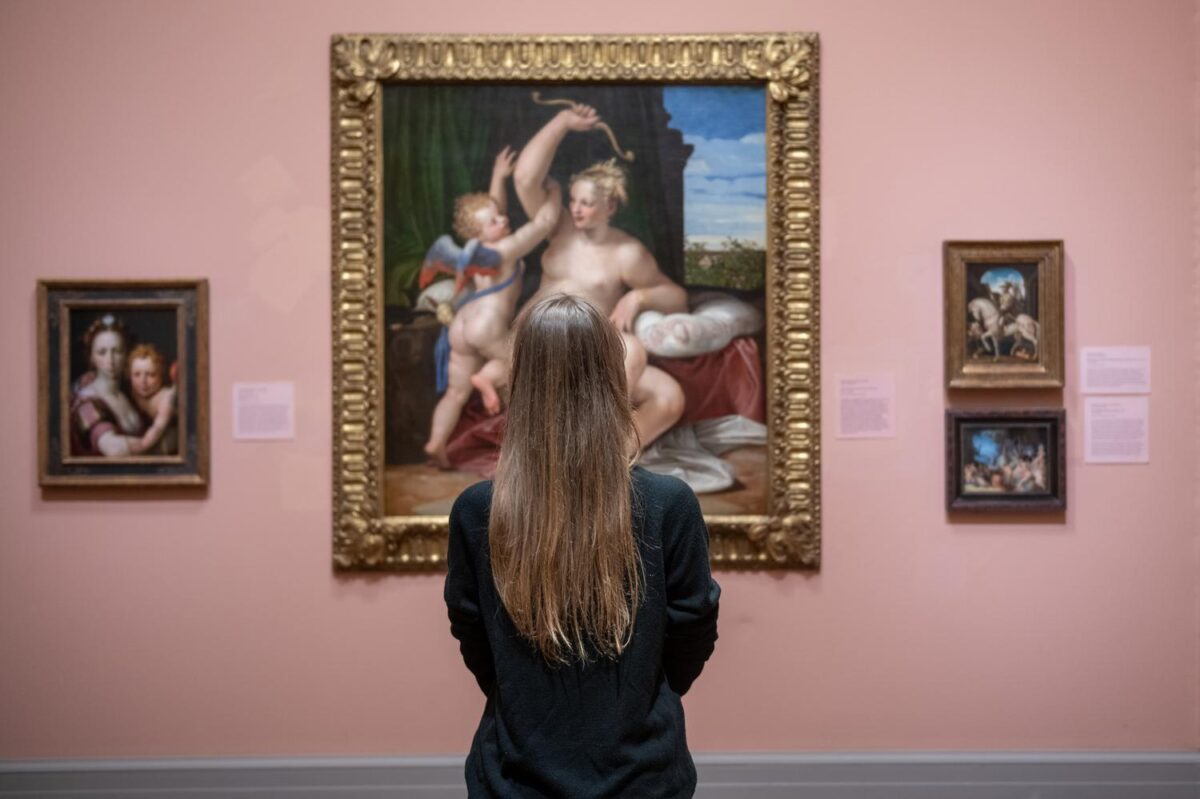
Emily Abney ’24 spent her senior year at Clark asking a scholarly question: how does the Venus who appears in Italian Renaissance painting compare to the Venus of Ovid’s original Latin texts, where the goddess is vengeful, complicated, and fully human?
Her thesis, “The Birth of a Venetian Venus: From the Page to the Painting,” required fluency in two distinct forms of evidence: literary analysis of classical texts and formal analysis of visual art. Working with Professor John Garton, Abney examined how the printing and publishing of Ovid’s work in 15th and 16th-century Venice created the conditions for allegorical nude portraiture to flourish as a genre.
Background research took her to Venice, Florence, and the Netherlands — studying works including the Ghent Altarpiece and the collections at the Uffizi, the Ca’ d’Oro, and the Gallerie dell’Accademia — and culminated in an acceptance to the Courtauld Institute of Art in London, one of the world’s leading centers for art historical research. “It’s fulfilling to see my work come to light,” she says, “and to uncover more about this understudied area of art history.”