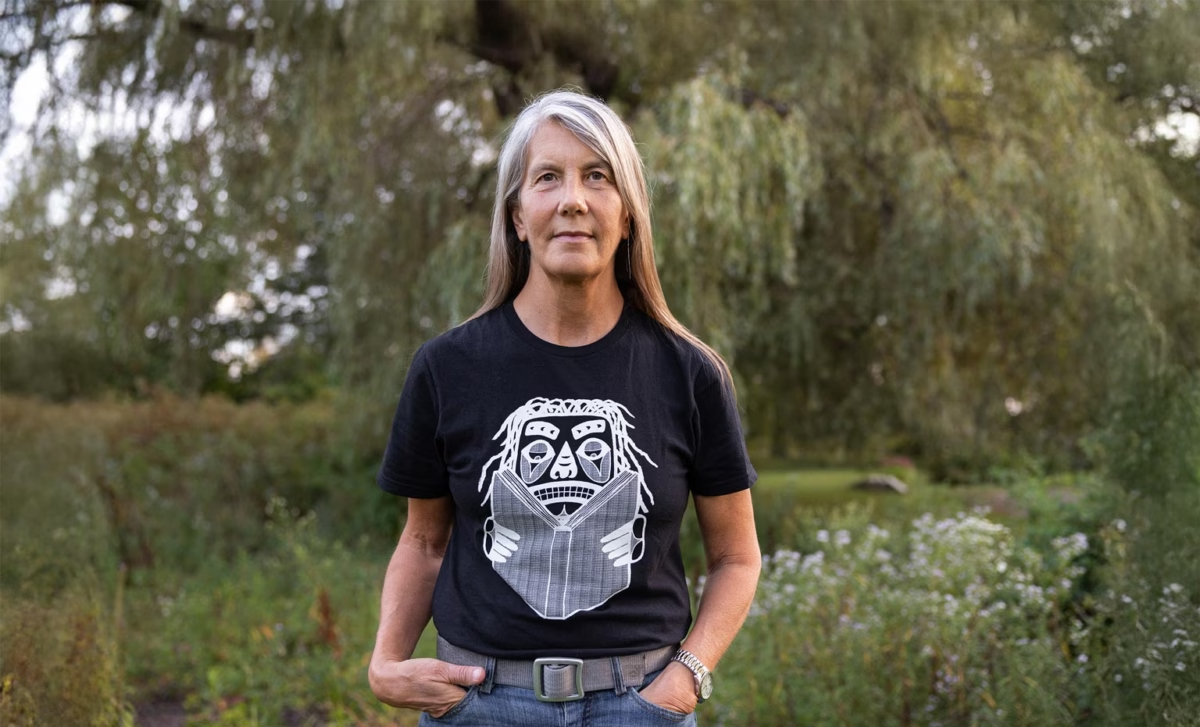
Cartographer Margaret Wickens Pearce, M.A. ’95, Ph.D. ’98, runs in the morning. The rhythmic cycle of feet hitting the ground is essential to clearing busy thoughts and making way for epiphanies.
“The run is extremely important to my mental and emotional health as well as my creative understanding of my work because all this stuff comes up,” Pearce says. “Running is essential to getting out of a rut because something about the state of mind that it puts me in is really helpful for understanding which direction is a good way forward and which ways are non-starters.”
Pearce is speaking by Zoom from Galena, Illinois, where she’s been stationed for months. She’s hard at work on the Mississippi Dialogues project, an intertribal collaborative public art project that reimagines possibilities for Mississippi River flood management through situated cartographic design while preserving the Indigenous knowledge and experience associated with the waterbody. Pearce, a Citizen Potawatomi Nation tribal member who lives and works on Penobscot traditional territory in Rockland, Maine, is mapping public testimonies about flooding in collaboration with the Nations whose homelands are along the river, including the Dakota, Ho-Chunk, Meskwaki, and Ioway peoples.
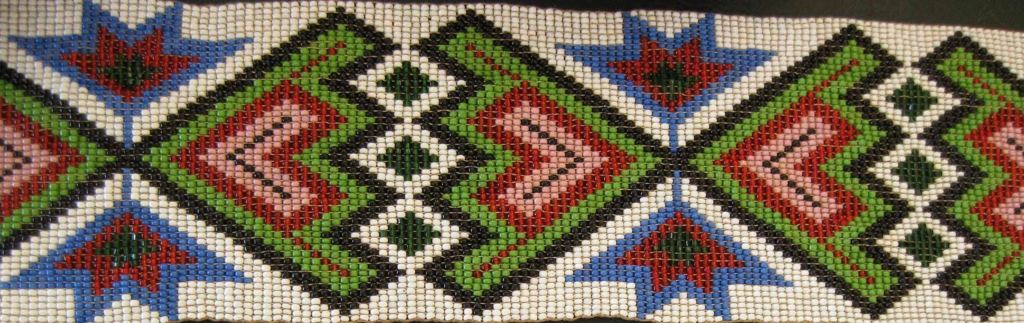
Meskwaki beadwork
Pearce is currently focusing on a 200-mile stretch of the Mississippi from the mouth of the Saint Croix River in Hastings, Minnesota, to the mouth of the Galena River. This fall, large-format map panels will be installed along the river, one at Colvill Park in Red Wing, Minnesota, and another in the Casper Bluff Nature Preserve in Galena. Both parks are free and accessible, places where people enjoy being with the river, walking their dogs, or throwing a Frisbee. One side of the panels will display wood artwork about the river by an Indigenous artisan. The other side will be a map by Pearce that elevates Indigenous place names along the river, interweaving traditional stories and Indigenous testimony from interviews Pearce has been conducting all year. Mississippi Dialogue will recapture the lost history of the area before Army Corps of Engineers projects of the 20th century altered the terrain.
“People have told me that they’re excited about the project and look forward to learning what the panels have to say,” Pearce says. “They believe it will be a welcome addition to public dialogue about the river, because everyone is so curious about the stories and the important Indigenous place names.
“People love this river — everybody does. I think Mississippi Dialogues brings in a whole other dimension of appreciation and understanding.”
Pearce’s body of work has drawn significant attention. She was recognized in the 2026 National Geographic 33 cohort, which honors people whom the magazine describes as meeting the most critical challenges of our time by promoting action and driving progress. Last year, Pearce was named a MacArthur “genius” fellow and in 2022 was the recipient of a National Geographic Wayfinder Award.
Pearce, who studied in the Graduate School of Geography, routinely collaborates with Indigenous communities to resurface their history, knowledge, and presence throughout North America and draws from a collection of archival materials.
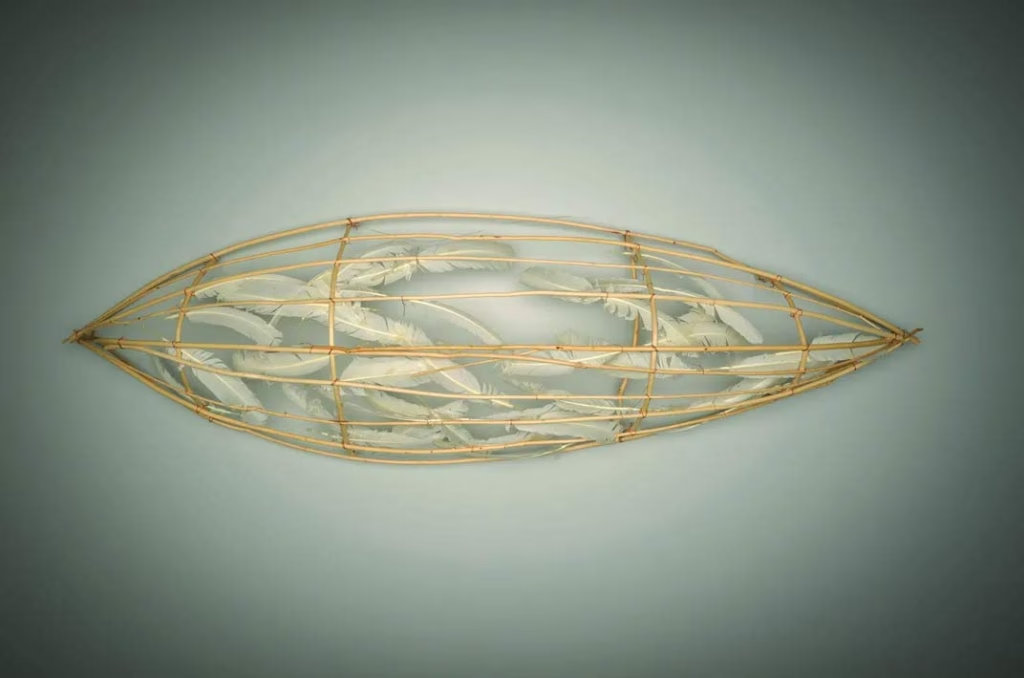
Mississippi Dialogues dates to 2019, when Pearce first visited river communities to collect stories. She returned at the end of 2023, visited again in 2024 and 2025, and has spent much of 2026 along the banks. Finding folks to interview and transcribing their conversations — without the assistance of any transcription tools to preserve the cultural property — is time-consuming.
“Twenty-thousand years of cultural memory, that in and of itself is a very powerful, completely different way of understanding the river from the way it’s now understood as a series of 20th century paving projects from the Army Corps.”
“We have a pledge not to use any kind of machine learning, and definitely not any AI, in transcription because it’s all cultural property,” she says. “A one-hour interview can turn into an entire afternoon of transcribing, and then understanding what to include, what the design should look like, how to work through permissions with the city of Red Wing, figuring out how to position the panels in such a way that it doesn’t interfere with people’s existing appreciation of the city or the river. We don’t want to interfere with how people are already enjoying the river but give them an additional experience.”
Indigenous place names and stories go back tens of thousands of years to when glaciers covered the continent, Pearce says.
“Twenty-thousand years of cultural memory,” Pearce says, “that in and of itself is a very powerful, completely different way of understanding the river from the way it’s now understood as a series of 20th century paving projects from the Army Corps.”
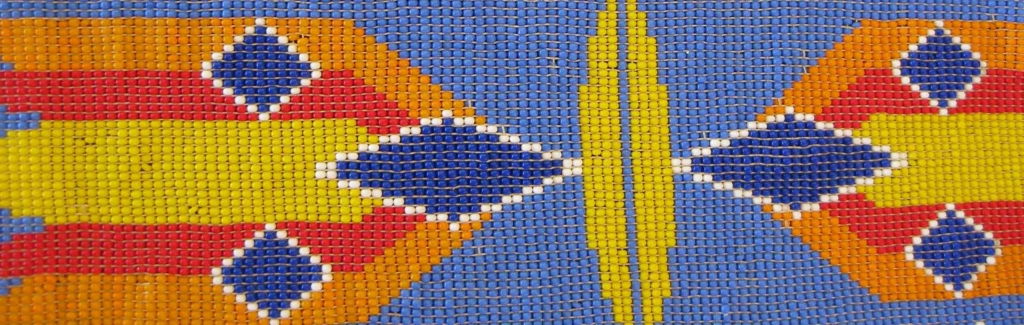
Meskwaki beadwork
The project was initially supported by a National Endowment for the Humanities grant awarded by Congress in 2025. The Department of Government Efficiency later terminated those funds. Pearce chose to direct her MacArthur grant funding to the project.
Mississippi Dialogues is Pearce’s seventh map project involving a collaboration with Indigenous communities. Sometimes these projects include familiar design elements, from colors to language to typeface. Other times, as is the case with this project, Pearce gets to experiment with something new.
“In Mississippi Dialogues, the stars are important,” she says. “What I have been hearing from my collaborators is that all the places on the river connect to the stars. I’ve never been asked or felt obligated for a map to include part of the sky. So, figuring that out has been a mind twist for me, which has been very pleasurable.”
This summer, Pearce and collaborators spent time imagining how a star field will be displayed as part of the public art installment.
Pearce’s dream is to place panels along the river’s entire length, roughly 14 installations.“I’m definitely on a crash course learning what it means to do public art,” she says. “If I can finish this project in my lifetime, I’ll be very lucky. I’m in it for the long haul.”