Millions of Americans have suffered under heatwaves this summer, but in “urban heat islands” — which lack trees and green spaces — the temperatures are even worse. In Massachusetts’ historic industrial cities, for example, central neighborhoods can be up to 20 degrees hotter than in leafier suburban areas just a few miles away.
“It just absolutely cooks” in inner-city, working-class neighborhoods, Geography Professor John Rogan of Clark’s School of Climate, Environment, and Society recently toldThe Boston Globe, which reported on the stark realities of life in urban heat islands. “Affluence and trees just go hand in hand in the Northeast,” Rogan added.
But over the past decade, undergraduate student researchers working each summer with Rogan and Geography Professor Deborah Martin have sought to counteract these forces.
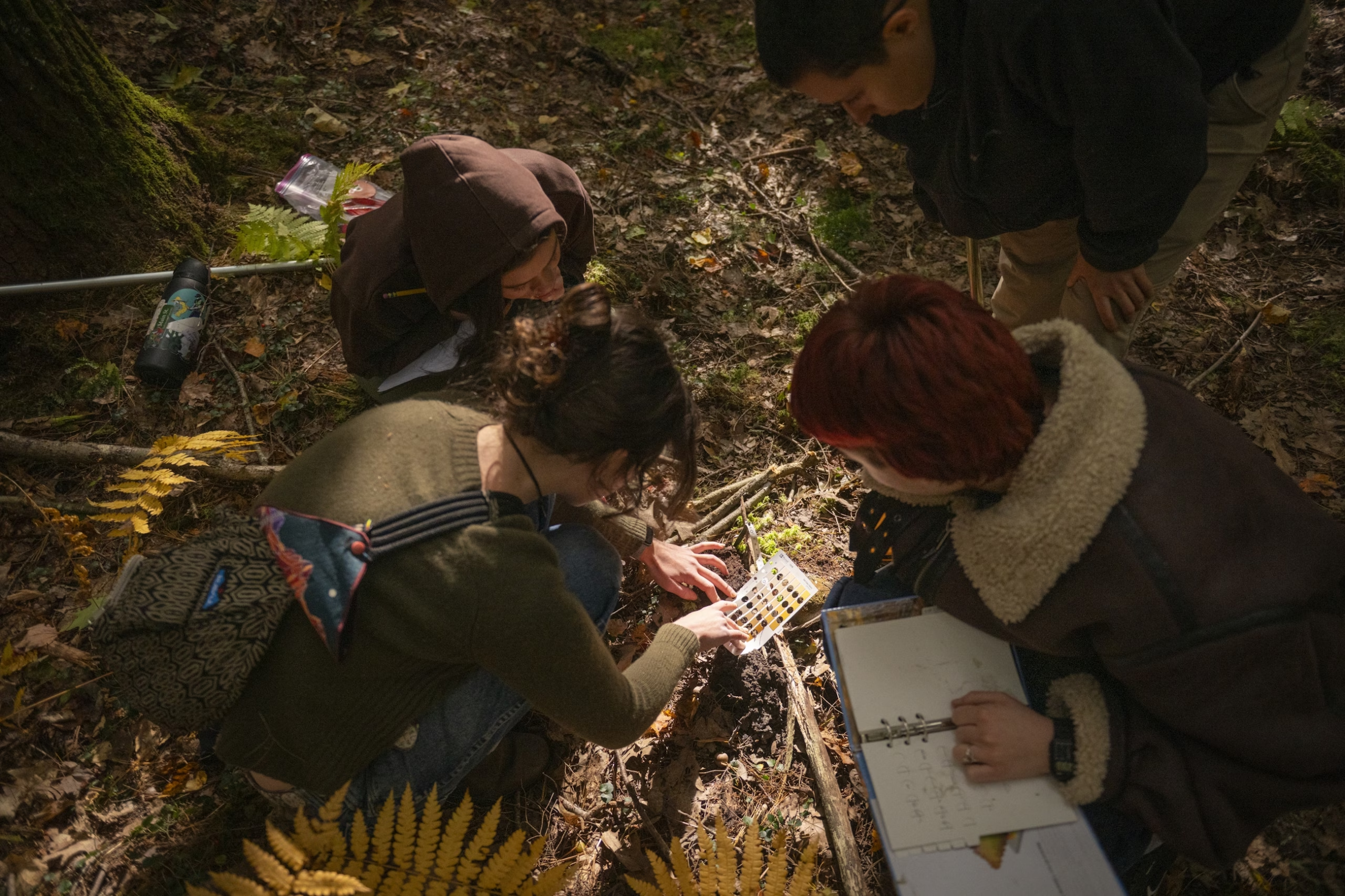
Through the school’s Human-Environment Regional Observatory (HERO) program, student research fellows have assessed the growth and vigor of trees planted through the Massachusetts Department of Conservation and Recreation’s Greening the Gateway Cities Program, which aims to cool off urban centers full of older housing stock and lacking extensive tree canopies. Students also have monitored temperatures in urban heat islands and conducted interviews with residents to determine the program’s impacts.
“Our data helps tell us what works and what doesn’t in urban forestry programs.”
— tatum choi ’28
HERO students have made a difference, according to Mat Cahill, community action and urban forester at the DCR.
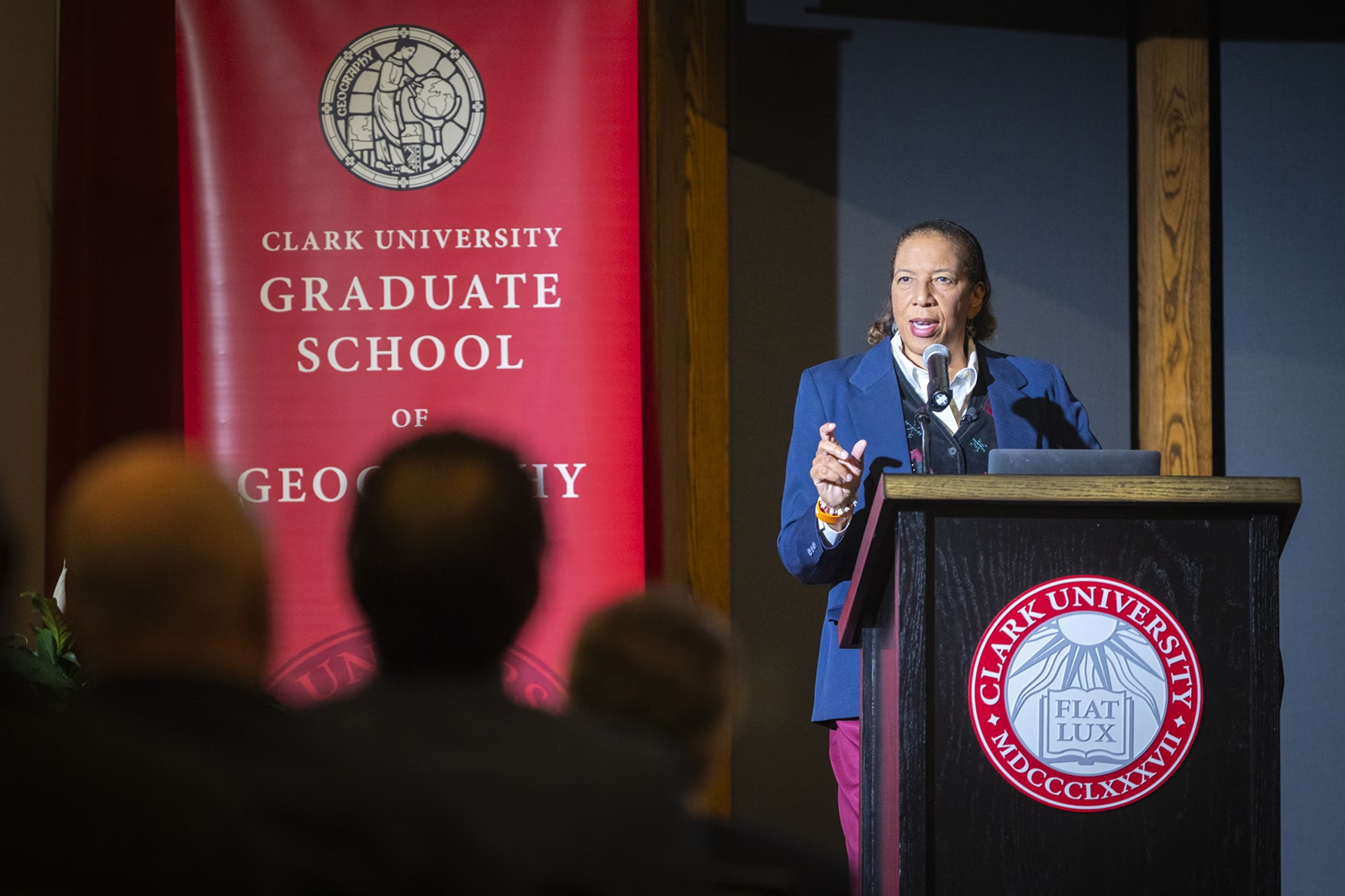
“Every year through this collaboration, we’ve brought all these solutions and ideas that you’ve presented back to the program, and it really helps,” Cahill told this year’s six HERO students, who presented their findings to a roomful of DCR staff and community members at Clark on July 16. “These trees are surviving and thriving.”
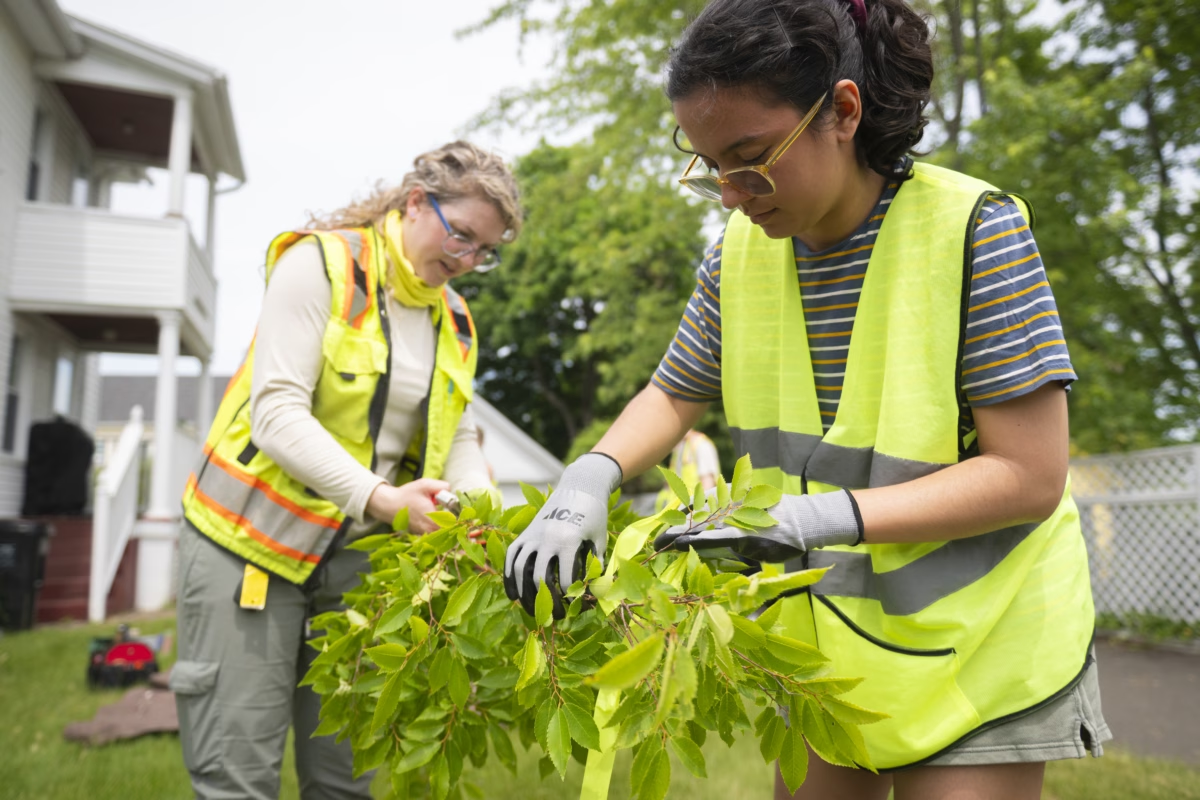
This year’s cohort included geography majors Tatum Choi ’28, Daisy Merkowitz ’27, Abby Seguin ’27, and Ada Silverman ’26 and data science and interactive media design double-major Gabriela de León ’27 (above with a DCR employee in Chicopee) and data science major Hadassah Ofosu-Amoani ’27. During the academic year, they will present their work at ClarkFEST and continue their individual research projects as part of the fellowship program.
“Knowing that the DCR is actually taking our data and putting it to use is totally satisfying,” de León said.
Choi embraced the responsibility of collecting and assessing the data. “We could say, ‘That is ours.’ And when it’s your data, it’s much easier to commit to getting the results and understanding the data.”
For Ofosu-Amoani, “it was nice when we were analyzing the data, and then we’d think, ‘Oh, that’s a tree that I measured’ or ‘That’s something I remember.’ ”
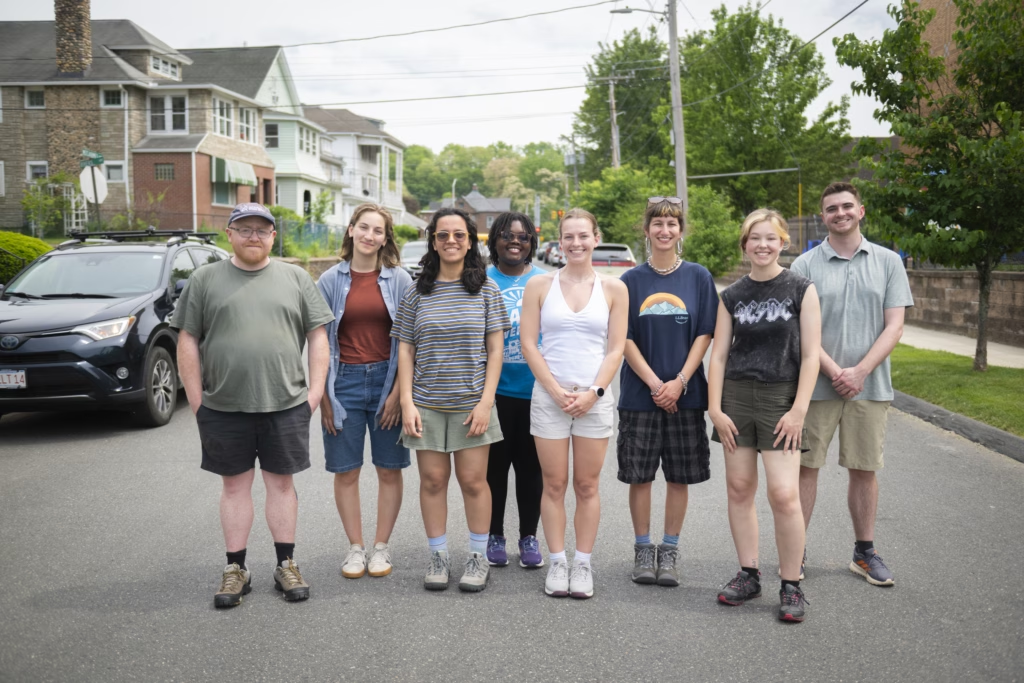
From left, Ph.D. student Robert Moore, Ada Silverman ’26, Gabriela de León ’27, Hadassah Ofosu-Amoani ’27, Abby Seguin ’27, Daisy Merkowitz ’27, Tatum Choi ’28, and Ph.D. student Aidan Caron.
Working with geography Ph.D. students Aidan Caron and Robert Moore over eight weeks this summer, the six undergraduates collected and analyzed data in Chicopee, Holyoke, and Lawrence — the first time a HERO cohort has collected data in that city, partnering with the DCR and a local nonprofit, Groundwork Lawrence. Past HERO cohorts have also conducted research in Chelsea, Fall River, Holyoke, Leominster, Pittsfield, Revere, and Worcester.
Among this year’s findings:
65.5 percent of trees planted in 2015-17 in Chicopee remain alive a decade later. Many of the trees determined to be stressed in 2018 had recovered by this year, demonstrating the resilience of urban trees when given time to establish.
HERO’s random sample of 1,276 trees (one-third of the total) planted from 2016 to 2025 in Lawrence showed that 68.5 percent remain alive.
Nationally, the annual survival rate of trees — representing the percent that survive each year — is estimated to be 95 percent. Trees in Holyoke (94.6 percent) and Leominster (95.9 percent) had similar survival rates, while the rates in Chelsea (93 percent) and Lawrence (91.6 percent) were lower.
Across all gateway cities in the DCR program, “high-performing” species that have survived and remained healthy include the honey locust, American elm, various maples (especially Freeman and red), and serviceberry.
“Underdog species” that have not been planted widely but have high survivorship and health across all cities include yellowwood, Amur maackia, American and silver lindens, and chokecherry.
Poor-performing species include the black tupelo, American hornbeam, various dogwoods, and Fraser fir.
The hornbeam is one of the top five species planted through the Greening the Gateway program but is prone to an emerging canker/leaf spot disease, which has been identified in seven states, including Massachusetts. No hornbeams in the program have yet been found to have the disease, according to the students’ surveys.
Besides the environmental impacts and improved aesthetics, residents interviewed in Chicopee and Lawrence enjoy the trees planted under the program for many other reasons. The residents said the trees encourage them to spend more time in their backyards; increase their property values; create privacy; improve the habitat, air quality, and mental health; and benefit their communities. Because three students spoke Spanish to residents in Lawrence — which is 83 percent Latino — they could more easily collect information, according to the HERO cohort.
In Holyoke, where the students collected data from 126 air-temperature sensors across the city, they found that air temperature is “highly variable over time and localized,” diverging substantially during heat waves. They observed cooler temperatures in areas with a higher density of DCR-planted trees.
“Our data helps tell us what works and what doesn’t in urban forestry programs,” Choi said.
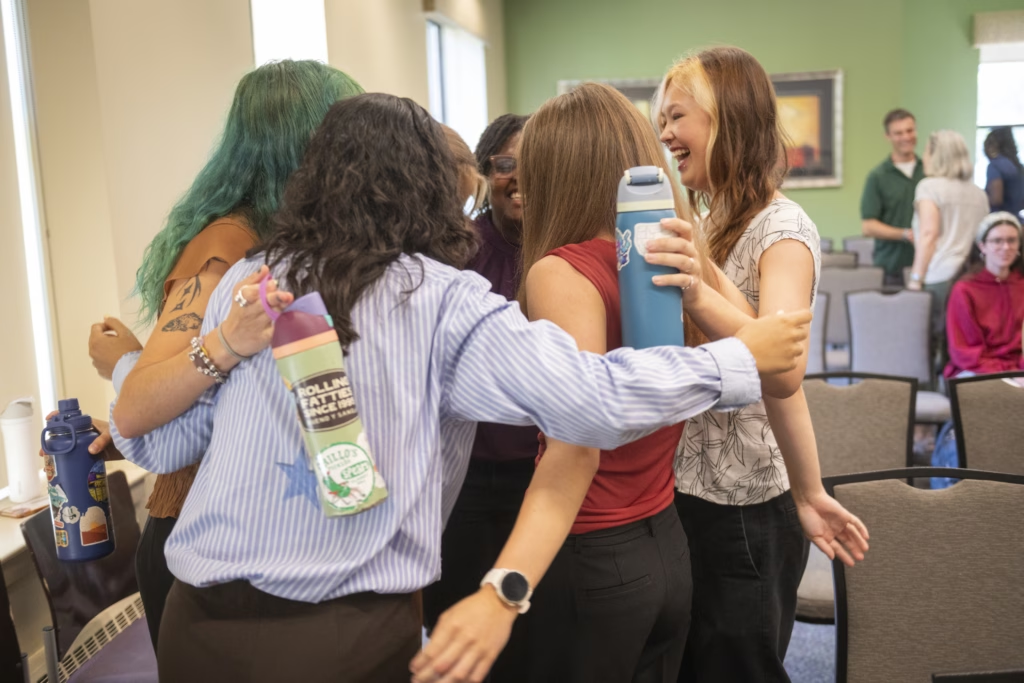
It was time for a group hug after HERO students finished their presentation to a room full of Massachusetts Department of Conservation and Recreation and Clark employees in July.