SPS students finish at top of datathon, innovation challenge
Data analytics students place first in datathon
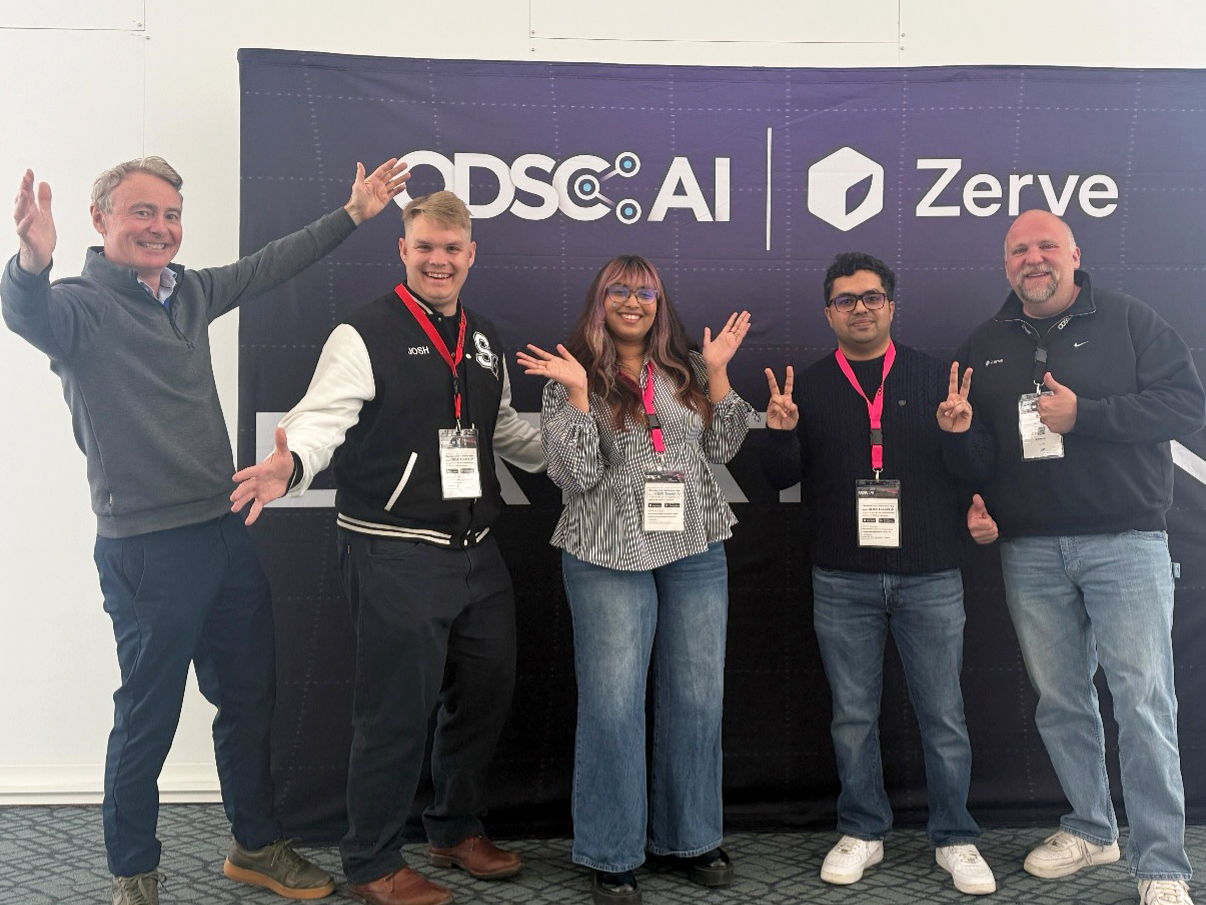
Sneha Lokesh and Aakash Balyan, master’s in data analytics students in the School of Professional Studies (SPS), took home first place at the recently held Zerve × ODSC AI Datathon, a 24-hour data science competition hosted by Zerve in collaboration with the Open Data Science Conference (ODSC). Using product data provided by Zerve, hey competed with more than 25 teams from across the United States on a real-world product analytics challenge.
Competing as the team “The Binary Duo,” the students applied their academic learning to the competition, which provided an opportunity to collaborate, think analytically, and solve problems under pressure.
The team received a real-world product analytics problem along with hints to support the analysis. During the process, they spotted a critical issue in the dataset: target leakage in several features. They made the tough call to remove these features, which allowed them to build a more reliable and practical model.
Throughout the competition, the students focused on understanding the business problem and developing practical insights to support data-driven decision-making. Their solution was a model that predicts the probability of user upgrades while analyzing user movement through the product funnel. Their approach helped their project stand out among the participating teams.
After advancing to the final presentation round, the students presented their findings to the judges. Their strong teamwork and analytical thinking ultimately earned them first place in the competition.
The Zerve × ODSC AI Datathon was a challenging and rewarding experience that showed students the importance of planning before modeling, understanding the business problem behind the data, and building solutions that are not only technically strong but also practical and actionable.
Clark students earn top prizes in Tech Innovation Challenge
Clark master’s students successfully completed the Tech Innovation Challenge 2.0, which built on the success of last year’s inaugural competition, this year’s challenge brought together students from multiple universities to develop innovative and scalable technology solutions.
Twenty of the 30 registered teams advanced to the final presentations held on April 30 at Clark. Teams presented projects spanning AI-assisted learning, civic technology, enterprise automation, productivity tools, and much more.
Throughout the six-week challenge, participants received mentorship and feedback from faculty, industry professionals, and judges from academia and industry. The event highlighted technical innovation, creativity, resilience, and entrepreneurial thinking.
We are incredibly proud of all participants for the effort and growth they demonstrated throughout the challenge.
First Place: LeetMotion (Visual DSA Learning Platform)
Sumanth Aitham, MSCS ’26, Clark University
LeetMotion is a visual learning platform designed to help students understand algorithms through interactive animations rather than memorization. The platform allows users to visualize concepts such as sliding windows, dynamic programming tables, stacks, and pointer movement in real time, making difficult concepts easier to understand and retain
Second Place: CLICK (Civic Intelligence Platform)
Clare Njoroge, Smith College
CLICK is a civic intelligence platform designed to help young people better understand laws, budgets, and public policy through simplified and actionable insights. The project was developed in response to Kenya’s June 2024 Finance Bill protests and focuses on increasing civic awareness and participation among youth.
Third Place: Siyona (AI Calling Assistant)
Harsha Vardhan Varma Kopanathi, MSCS ’26, Clark University
Siyona is a WhatsApp-based AI assistant that makes phone calls on behalf of users. The idea originated from the frustration of spending long periods navigating automated customer service systems for simple requests.
Featured Project: SAPIOR (AI-Driven Enterprise SAP Support)
Another project that drew strong interest from judges and attendees was SAPIOR (SAP Intelligent Operations & Resolution), developed by Satish Puttaraju, MSIT ’26. SAPIOR is an AI-powered platform designed to improve how enterprise SAP support teams manage issues, transactions, and operational knowledge. Drawing from his professional experience in SAP support environments, Satish developed the platform to address the challenges of navigating complex enterprise systems and resolving recurring operational issues using AI.