Leo Kerz ’26 has always loved nature. It’s in his genes. His grandfather served for decades on the Water District Board in Rocky Hill, Connecticut, and Kerz grew up watching his mother serve on Rocky Hill’s Wetlands Review Board.
“I would join her on public review visits, and there’d be a scientist with us talking about the boundaries of the wetlands, the trees, the frogs, the plants,” he says.
This past semester, Kerz interned for the Massachusetts Department of Environmental Protection, which monitors air and water quality, recycling and waste management, septic systems, wetlands and waterways protection, and contaminated-site cleanup. He was excited to apply for a position whose positive impact is tangible.
“As a kid, I would walk to this river behind my house and think, ‘Who is responsible for this?’ There was a landscaping company next to it that would dump waste in the river,” he recalls.
The geography major was tasked with building a database for the Watershed Planning Program that houses information about Massachusetts lakes and ponds, including depth, surface area, slope, nutrient characteristics, and chlorophyll levels. A typical day for Kerz involved coding and streamlining important data points for MassDEP watershed workers in the field. When Kerz wasn’t doing internship work, he was fine-tuning his thesis, titled “Acoustic Monitoring in Restored Cranberry Bogs: Soundscape Relationships to Restoration Age and Landscape Context in Plymouth, Massachusetts.”
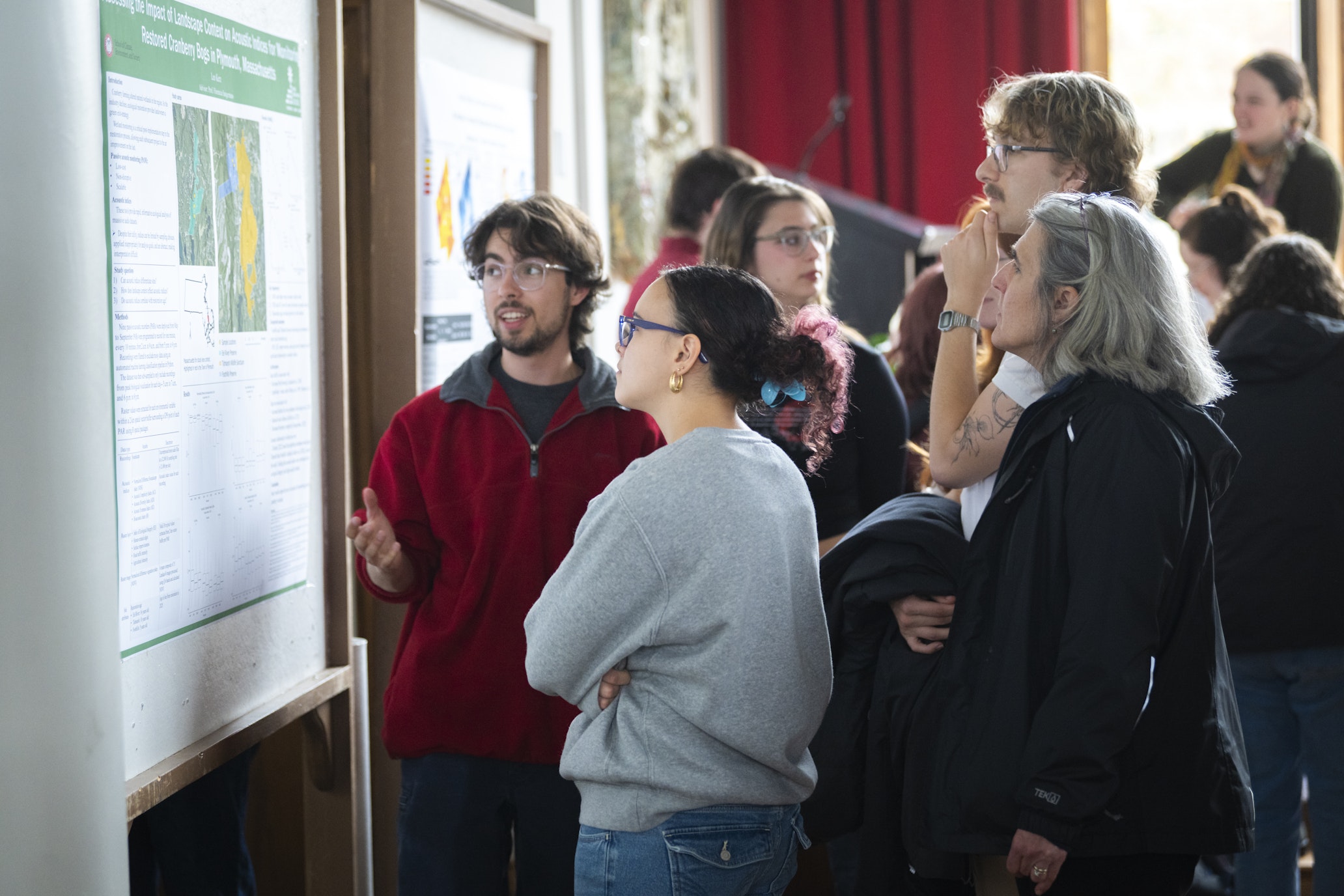
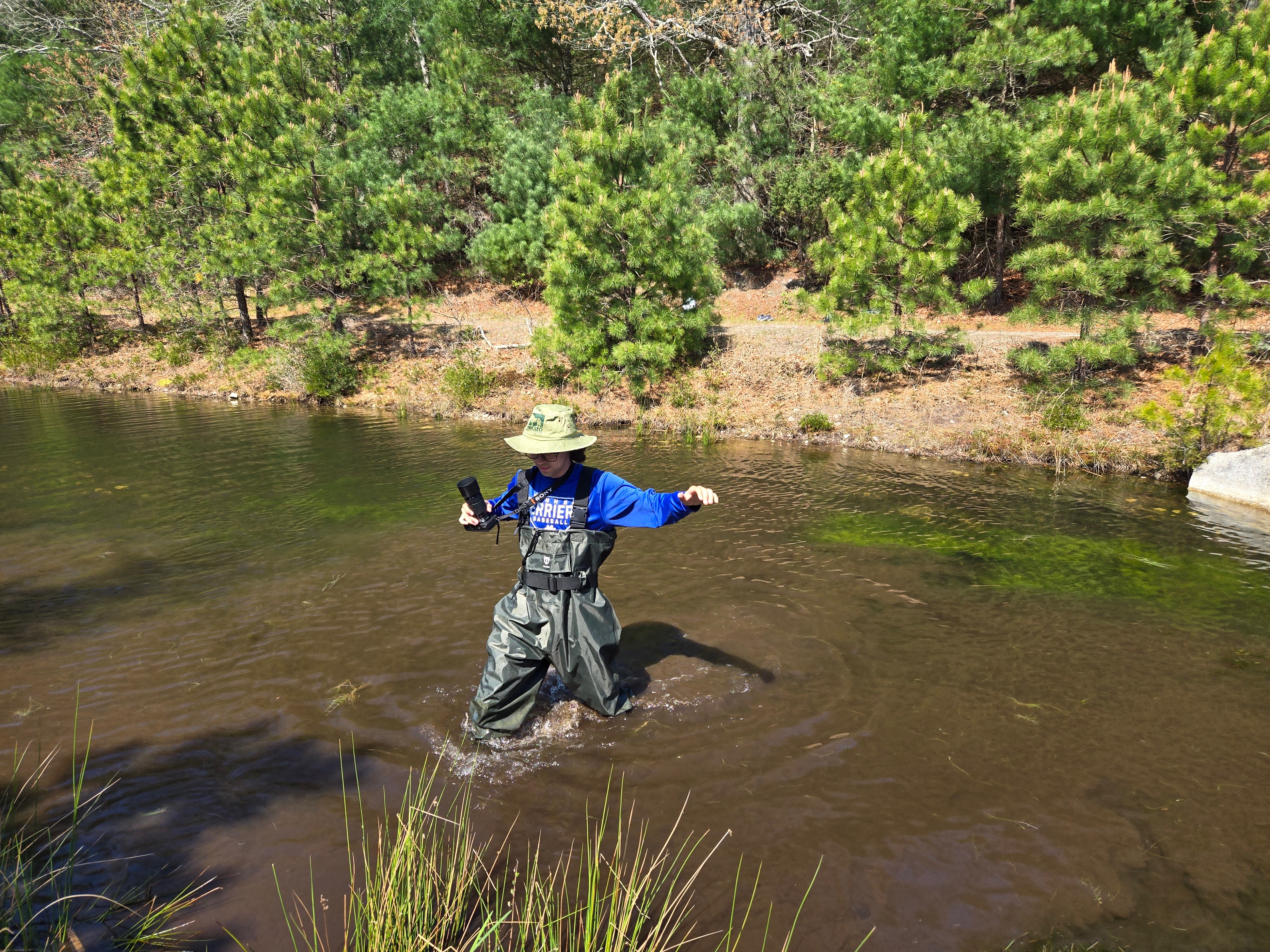
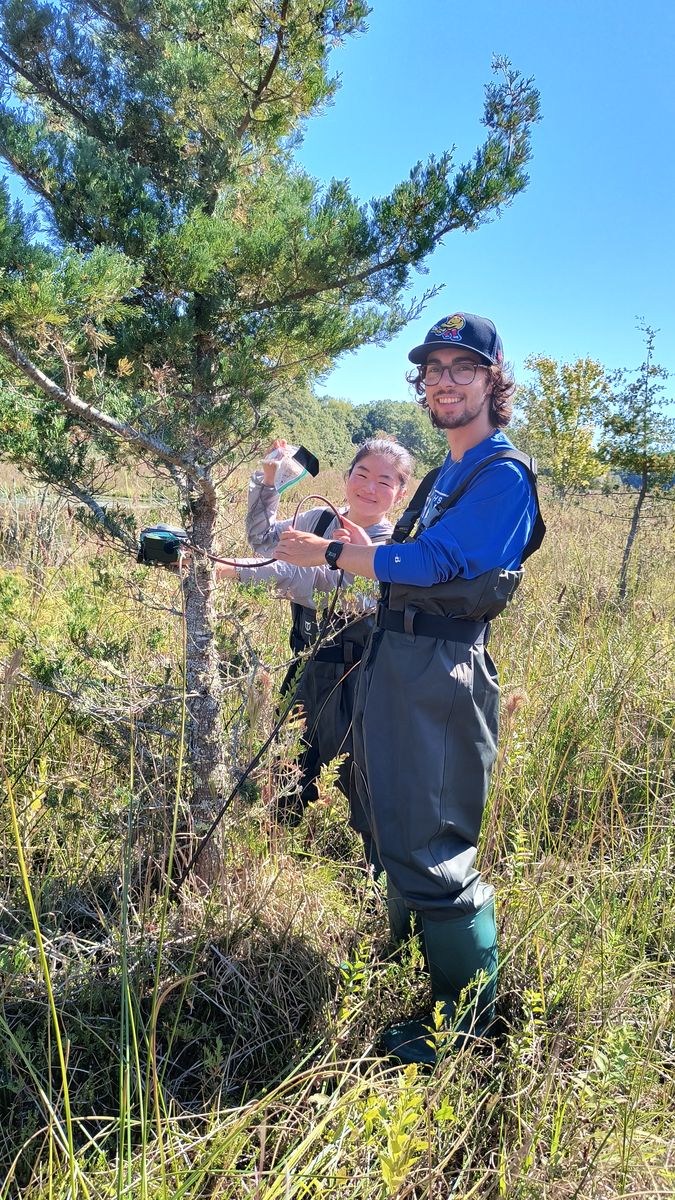
Kerz placed audio recording devices on trees in restored cranberry bogs to gather sounds of nature, such as birds, frogs, and insects, as well as human activity such as traffic. The devices netted 63,000 one-minute recordings. He presented his research at this spring’s ClarkFEST.
“It would be impossible to listen to them all,” he says, “so we used [programming languages] Python and R to do the automated data processing.”
The research came together with the help of fellow students in Geography Professor Florencia Sangermano’s lab, the nonprofit Living Observatory, and the town of Plymouth, which granted students access to protected wetlands. Throughout summer 2025, the microphones that Kerz and his peers placed throughout the landscape recorded wildlife activity without any human interference.
“Audio is great because it’s cheap, easy, and it doesn’t disturb the area. With our data, we could calculate the ratio of car noise with anthropogenic activity of birds, frogs and insects, which gives us a sense of how healthy the ecosystem is,” he explains.
The cranberry bogs varied in age and location — some were situated next to a highway or urban development site. Kerz’s thesis was focused on two primary questions:
- Are these bogs getting healthier?
- How many roads or forests are nearby, and do they impact the health of the ecosystem?
“The older bogs had richer soundscapes, more dominated by animal vocalization than human sound. The ‘edges’ — areas where human development meets natural ecosystems — had a strong correlation with the acoustics of the site. We saw less intensity, complexity, and variability of biological vocalization with increased edges,” he says.
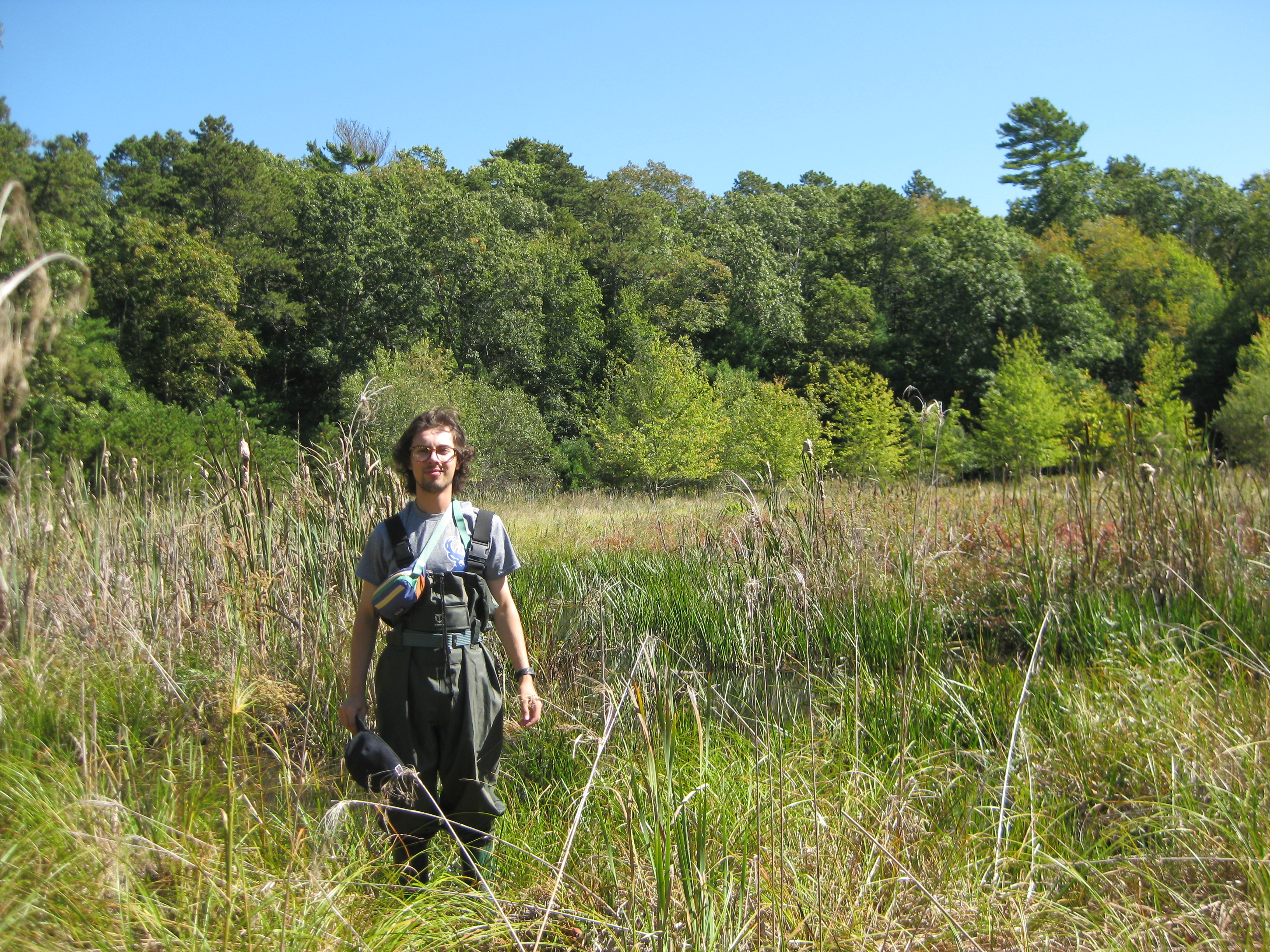
The longer the period of time since restoration, the healthier the ecosystem in the bog, Kerz says. This finding signals that, over time, variability and complexity of activity will increase, showing that these bogs can be revitalized. The presence of more roads and increased human interference negatively impacted local wildlife, he concluded.
With a minor in music, Kerz loves blending his passion for geography with audio technology.
“It made interpreting the data easier because I already knew what frequency bands were, for example. The data is analyzed using acoustic indices and math abstractions,” he says. Indices tell you how variable and complex a biological sound is. With math abstractions, the user inputs a recording and receives an output of a number that can represent different variables.
Kerz also utilized a resource called BirdNet, a software that can detail which, and how many, species of birds are represented in a recording.
“The most mundane part is actually writing the research, but the best part was putting the recorders out there,” he says. “Going to these places and scoping them out, hearing the animals, being able to listen to the recordings for the first time was invigorating. You click play and you’re transported.”
Prior to graduation, Kerz was the recipient of the 2026 NCGE Excellence in Scholarship Award, co-sponsored by the National Council for Geographic Education and the American Association of Geographers. This award is presented for excellence in geographic education.
Kerz says he is dedicated to environmental work because he wants everyone to be able to experience the beauty of nature. He is currently submitting his research for journal publication and plans to attend graduate school in the fall.