‘Our motivation is to raise the voice of this community’
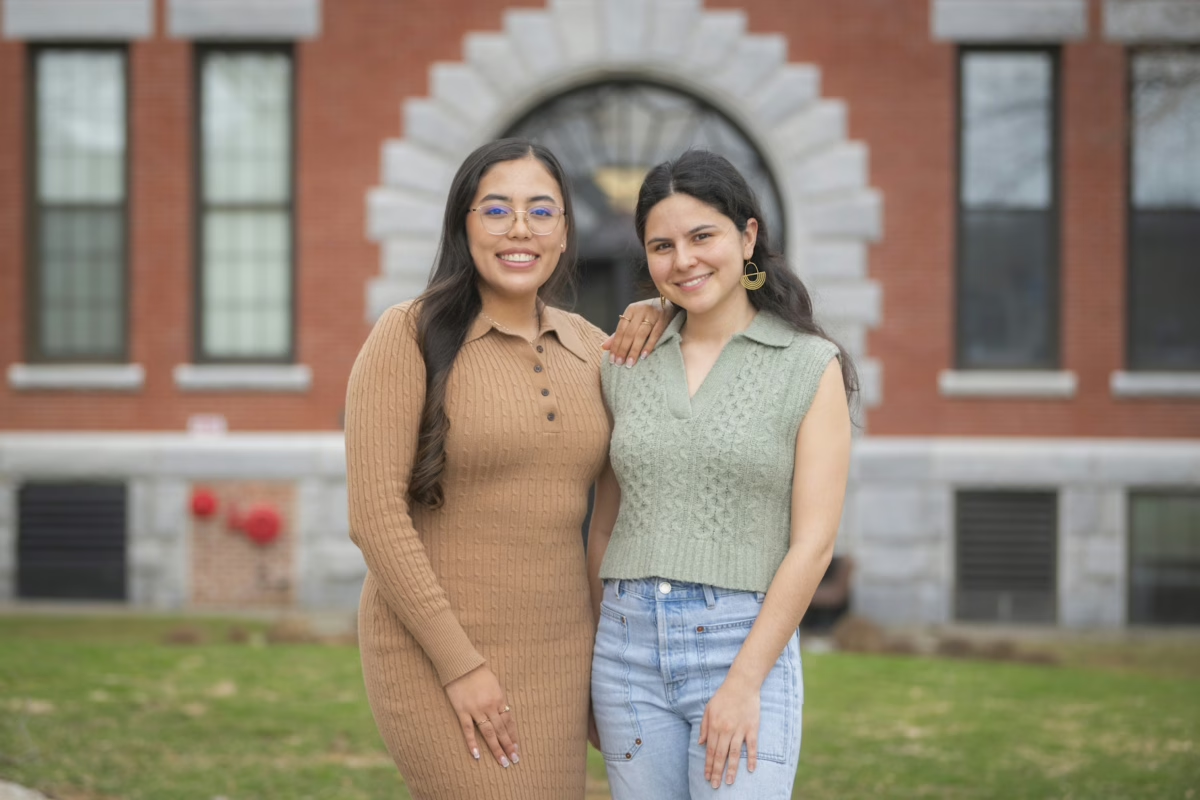
After six months conducting research and surveys in Mexico’s Valle de Bravo, Valeria Obregon Diaz, ES&P ’26, and Catalina Cuervo Maldonado, ES&P ’26, discovered pathogens and chemicals in the water and a lack of health insurance and air conditioning in a region with rising temperatures and notable heat-related illnesses.
The pair of international students in Clark’s Master’s in Environmental Science and Policy program — Cuervo Maldonado is from Colombia and Obregon Diaz is from Mexico — chose to carry out their research in Valle de Bravo because of its dichotomy. While the area is often a vacation destination for wealthy tourists, local residents struggle to access basic needs such as clean water. While in Mexico, the two worked as a team but also focused on individual research topics: Cuervo Maldonado on water quality and Obregon Diaz on health impacts of climate change.
As the two carried out their research, their personal passion kept them motivated even when the days were long and the stories from residents were heavy.
Water quality
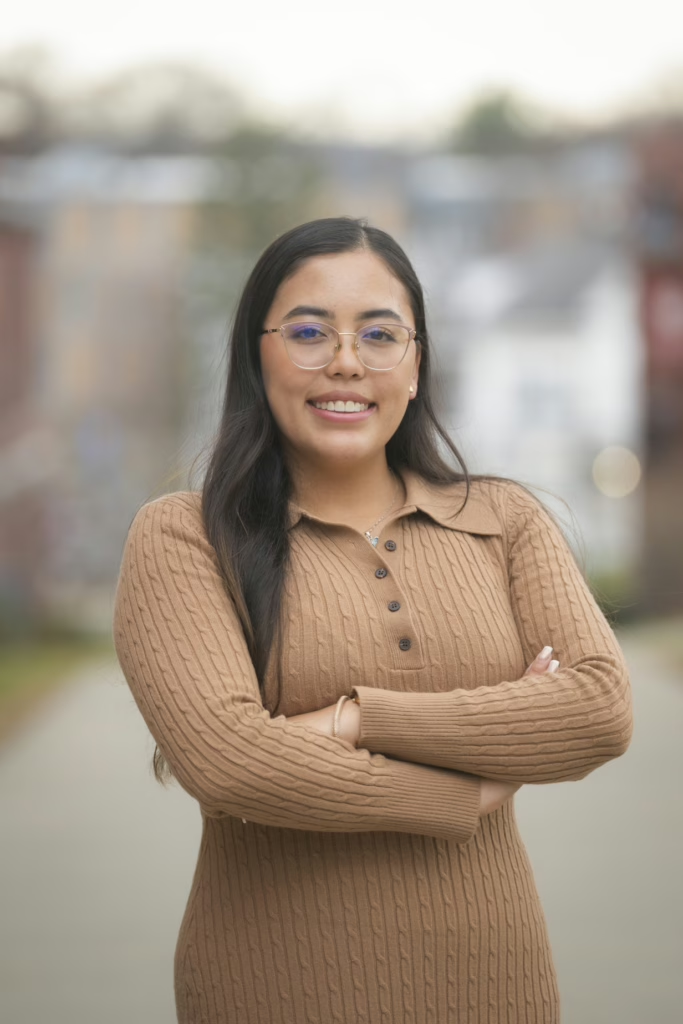
Cuervo Maldonado wanted to understand the water quality being supplied to the residents of Valle de Bravo, which is about two hours from Mexico City. A main source of the region’s water is the Cutzamala System, which accounts for 24% of the supply that serves the Central Mexico Valley. She was keen to investigate how certain factors have affected the water quality over the past 20 years, including climate change, water flow patterns, urban development, and land growth.
“What I’m doing is controversial,” Cuervo Maldonado says. “The government is disconnected from the community, but if you talk to locals, they don’t drink from the reservoir. When we were talking to citizens, they told us they have water two days a week at 3 in the morning. We have the privilege to go and use the bathroom right now. They don’t.”
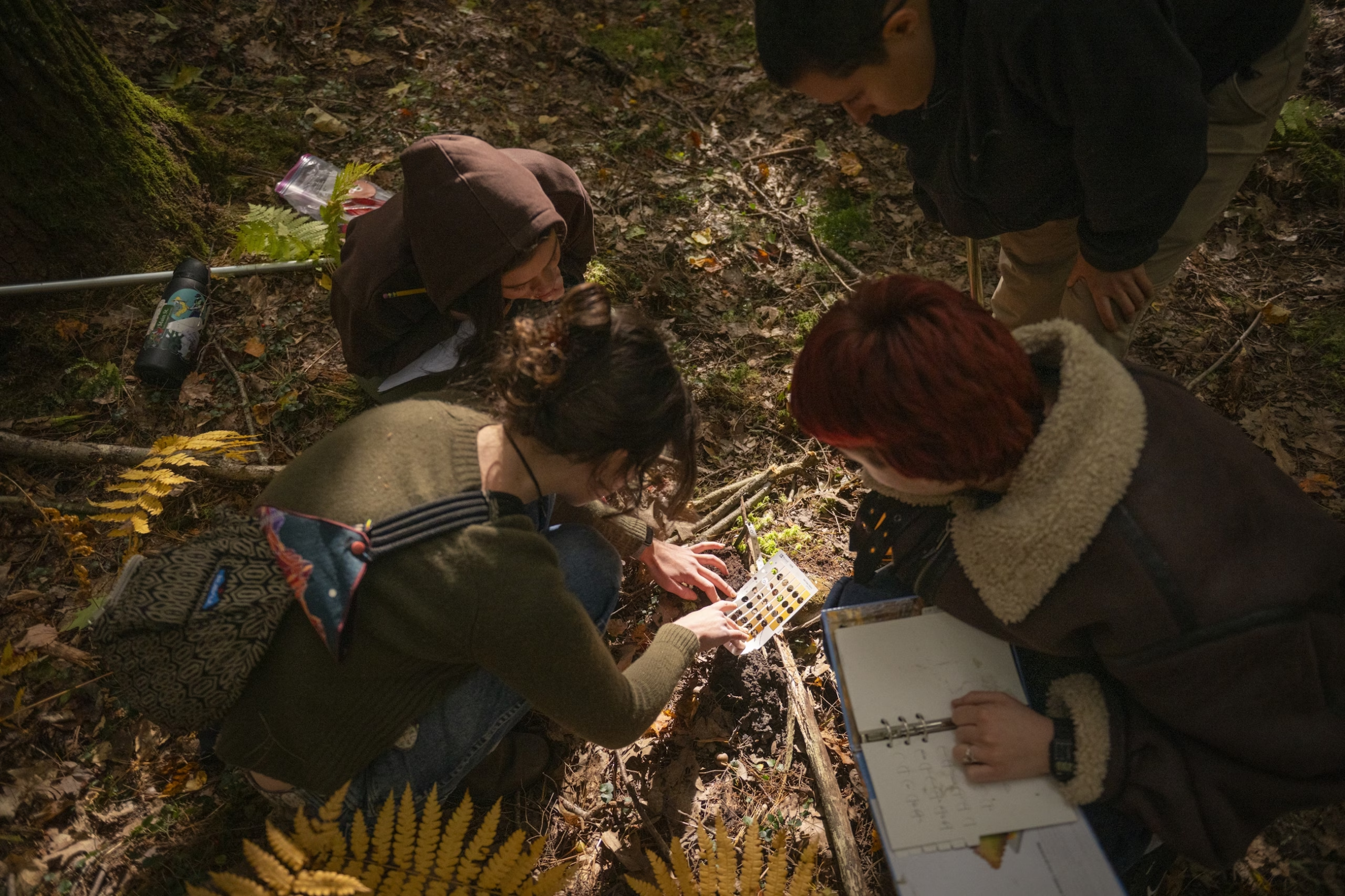
She analyzed datasets from many different organizations, including The National Water Commission, the National Institute of Statistics and Geography, and National Laboratory of Sustainability Science (LANCIS), and analyzed water samples collected at 12 points within the Valle de Bravo reservoir.
“We measured for E. Coli, E. Coli that is antibiotic resistant, and fecal coliforms,” she explains. “We measured the physical chemical parameters, like temperature, pH, dissolved oxygens, and more.”
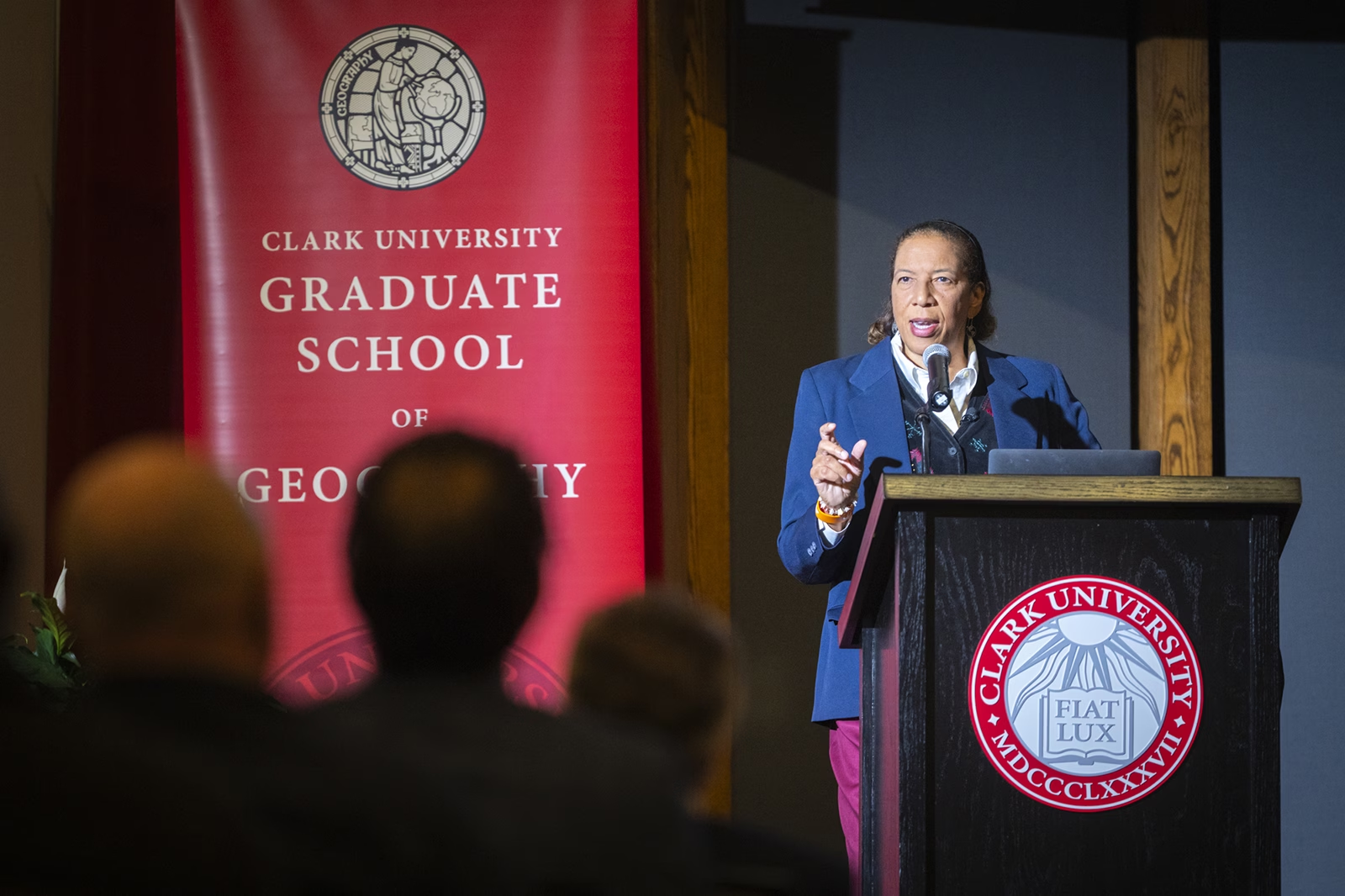
Cuervo Maldonado and Obregon Diaz presented their research to a Clark audience on April 7, displaying graphs that showcase the impacts of climate change on the water quality.
“Between 2004 and 2025, we have higher temperatures and higher evaporation rates. This can concentrate ion cells and other chemicals that can be toxic for aquatic life. There are fewer days with rain, but when it does rain it’s really intense. It moves all the nutrients towards the reservoir,” she explains.
Cuervo Maldonado notes that population density has also increased, straining the availability of farmland, water, food, and septic-processing capacity. Ultimately, she found four pathogens in the water supply, signifying that microorganisms are becoming more resistant to antibiotics.
“It’s a public health concern,” she says. “While we were monitoring, people said to us, ‘Oh, we fish here at the reservoir, and we eat that fish.’”
When speaking with residents during her research trips, Cuervo Maldonado found it difficult to hear people’s struggles and feel powerless to fix them. She emphasizes the importance of this research in the wake of the United Nations declaring “global water bankruptcy.”
“Our motivation is to raise the voice of this community. Sometimes people would look at us like, ‘you’re just extracting data and you’re going to leave.’ But we want to analyze it and give the data back to them, give them something to go to the government with to make a change,” she says.
While in Mexico, she also noticed the costs related to urban development, particularly during booming tourist seasons, as well as agricultural impact on the reservoir’s water quality.
“During holidays and vacations, they cut water from the community and give it all to the hotels, the private housing,” she says. “The amount of chlorine has increased from 2004 to 2025, which could be coming from private pools, disinfectants from condos and homes. The chemical fertilizers used in agriculture also are going into the water, and the wastewater has high levels of nitrogen.”
Cuervo Maldonado is in the process of submitting her research to journals for publication. She believes “casual” publications, such as infographics or flyers that showcase data in a digestible way, are equally important for sharing her research.
Cuervo Maldonado plans to monitor water quality in the Worcester area post-graduation.
Health impacts of climate change
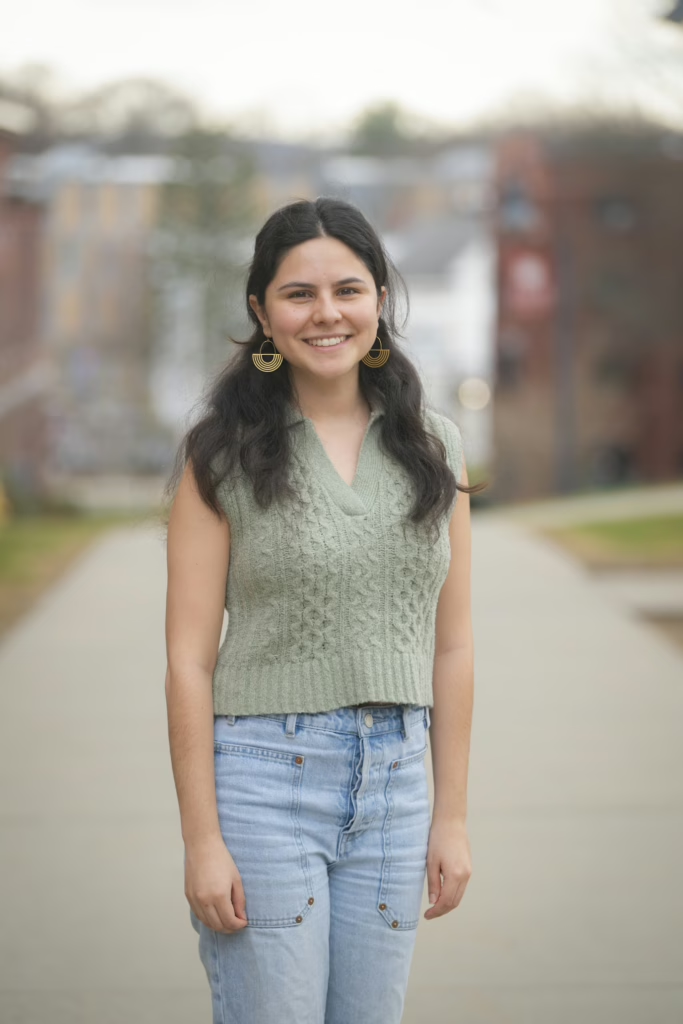
Obregon Diaz wanted to survey the locals in Valle de Bravo to understand how climate change was affecting their daily lives.
“Many of the rich and wealthy own second homes in Valle de Bravo – mansions. When you’re building all these mansions, you have to do it at the expense of somebody. The area is experiencing droughts and wildfires,” she says, explaining that people purposely light fires to clear the land for new development.
Her research is filling a gap in the climate studies of Mexico. Many people have created GIS maps or analyzed satellite data, but she wanted to understand how residents are adapting, readjusting resources, or suffering because of changes to climate. According to the World Health Organization framework about climate change outcomes, respiratory illness, water-borne disease, or malnutrition and food-borne disease are commonly seen impacts.
Some of the questions in her survey include, “Have you been to the doctor in the last six months?” or “How are you adapting to the heat?” Obregon Diaz and Cuervo Maldonado mainly collected data in public hospitals or local parks, though they also surveyed individuals at a private university, a public high school, and at a few small health centers. They collected demographic data as well: gender, age, level of education, and relationship to the head of the household.
In the end, they were able to collect 243 surveys, with a total survey population of 951 (participants were often from multi-person households).
“In response to the question, ‘Do you think the climate has changed or has become more unpredictable and extreme in the last 5 to 10 years?’ 96.7% of people told us yes,” she says, “and 86.4% of them said that human activity contributes to climate change.”
However, just 34.6% of participants said that they knew what the term “climate change” meant. Obregon Diaz says this means respondents are aware that the climate is changing but they don’t know the scientific terms or haven’t had formal education about climate change.
“This tells us that lived experience drives climate awareness more than formal education for the respondents of our survey, which challenges a deficit model that tells you that you need scientific knowledge to understand these changes that are happening,” she says.
Though the pair found many survey respondents in hospitals, they learned that 56% of their survey group have no health coverage at all. Obregon Diaz describes the environment inside the hospitals as eye-opening.
“We’d see people waiting at the hospital for three days in a row. One time, we heard a woman yelling that she had been waiting for a surgery for four months,” Obregon Diaz recalls. “I’d ask people questions about being malnourished and they’d say, ‘We’re not malnourished, we eat every day, even if it’s only tortillas.’”
Only 3.3% of participants reported having air conditioning, and 56.1% of people surveyed receive water every day. Obregon Diaz asked individuals about their family’s medical visits in the last six months.
Seventy-nine percent reported visits for respiratory illness, 75% for heat-related illnesses, 54% for water-borne diseases, 37% for mental/psychological stress, and 35% for cardiovascular diseases.
“Children account for nearly half of all the acute illnesses, but they are 27% of our participant population,” she says, noting that this is concurrent with literature that has found children to be more vulnerable.
“Our next group was women, who accounted for 60.8% of visits for respiratory illnesses, which could be linked to firewood cooking. Women accounted for 70.3% of all mental health visits, concentrated in the ages between 30 and 44,” she explains, with men accounting for 10% more of heat-related illness visits.
Obregon Diaz’s final finding was about the unrecognized mental burden extreme heat causes. When asked if climate change was affecting their mental health, 41.7% of people said yes, citing stress, irritability, anxiety, impact on their work, and productivity.
“People were saying the heat makes them tired, it puts them in a bad mood. Teachers said to us that when it’s hot, kids can’t focus and it stresses them out,” she says. “We asked, ‘How do you cope with it?’”
The main response was cooling off – showering, finding a spot in the shade, hydrating, changing their routine, or avoiding heat.
“Only 50% of them have water every day. So, what happens when your coping strategy is taking a shower, but there’s no water? Or you don’t have any air conditioning? These things become exacerbated based on how marginalized you are,” Obregon Diaz says.
She came away from the study with further questions and plans to find environmental work in New York City post-graduation.
Both women anticipate having their work published in research journals and hope their data will be published without a paywall. Accessibility is key, they emphasize, and they want their data points to give the people of Valle de Bravo tangible support.