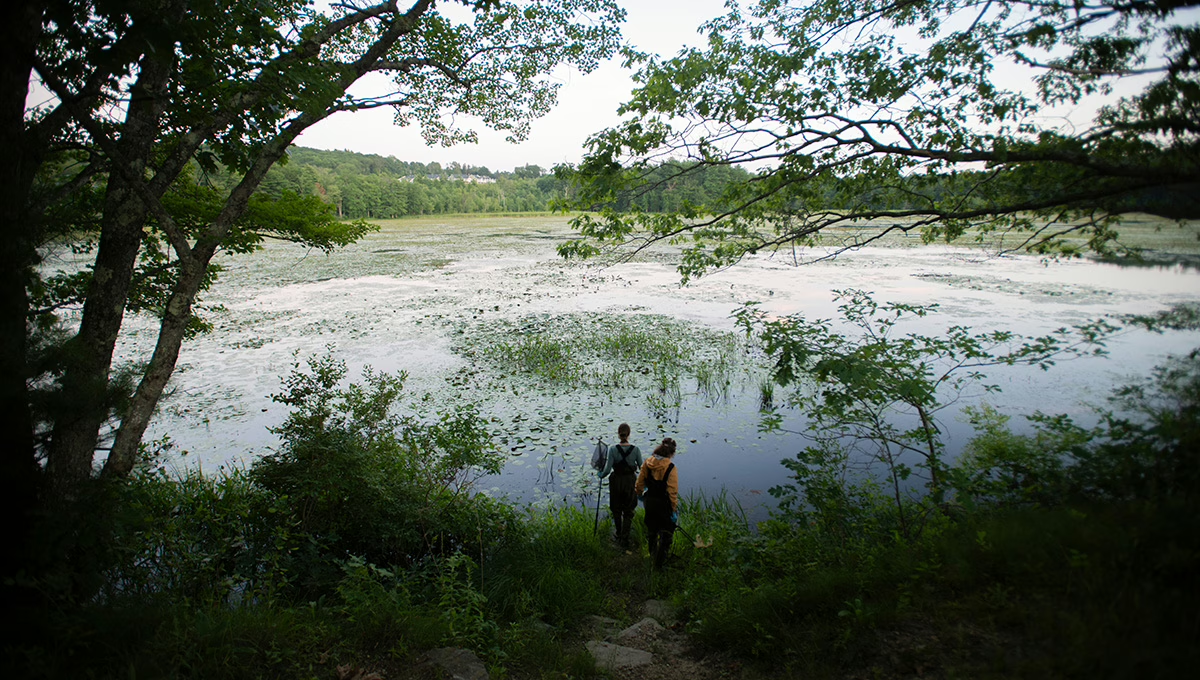

Research at the George Perkins Marsh Institute solves real-world problems and engages with partners from individual households to organizations and agencies working at national or global scales. Much of our work is interdisciplinary in nature, and conducted in large teams with collaborations among Clark researchers as well as with researchers at other institutions around the world. The scale of projects ranges from local neighborhoods to regional watersheds to whole countries and the entire globe. External support for research activities comes from federal, state, local and international grants, private donations, foundations, and other sources. Search the list below for current and past projects.
Collaborative Research: The Distributed Biological Observatory (DBO) – A Change Detection Array in the Pacific Arctic Region, 2025-2030
Karen Frey
National Science Foundation
The Pacific Arctic region (PAR) has had the most spatially extensive loss of seasonal sea ice of any of the Arctic marginal seas. The northern Bering and Chukchi Seas are among the most productive marine ecosystems in the Arctic and are important carbon sinks and seasonal sources of organic materials. The recent shifts in sea ice cover are having profound consequences for seasonal phytoplankton production as well as affecting upper trophic level species, including species harvested locally for subsistence. In short, many organisms (from microzooplankton to top predators) are changing their distribution, migration routes and foraging patterns. However, key uncertainties remain as to how the marine ecosystem will respond to seasonal shifts in the timing of spring sea ice retreat and/or delays in fall sea ice formation. This continuing long-term project will focus on the following questions: (1) Will an earlier sea ice retreat and changes in seawater hydrographic properties influence the composition of pelagic and benthic prey species, and how will that affect the resiliency of the system and upper trophic level organisms? (2) How do seasonal changes in hydrography (salinity, temperature, and nutrients) affect the distribution of primary production and export production to the benthos? (3) What will be the ecosystem responses to changes in environmental drivers, and can we forecast the biological response in the food web through ecological modeling? (4) How will biophysical changes in the PAR impact upper trophic level species and thereby disrupt food security for coastal communities?
Improving the Availability and Accessibility of Climate Data and Information for Users in Hawai‘i, American Sāmoa, and Guam
Abby Frazier
U.S. Geological Survey
Changes in Earth’s climate are increasingly affecting natural resources in Hawai‘i and on many other Pacific Islands and territories. Increasing temperatures, decreasing rainfall, and more intense droughts and severe storms are just some of the challenges faced by resource managers. Therefore, the need for high-quality reliable climate data and translated products that can be used to proactively plan for changing environmental conditions has never been greater. Working with partners through the Pacific Islands Climate Adaptation Science Centers (PI-CASC), this project is focused on the co-creation of several new datasets and knowledge products to be utilized by a wide range of users including researchers, resource managers, educators, and the community at large. The research addresses four primary objectives: 1) Analyze how participatory climate change scenario planning can be used to inform management plans; 2) Improve data availability in American Sāmoa and Guam including the development of high-resolution historical rainfall maps; 3) Develop cyber-infrastructure on the Hawai‘i Climate Data Portal (HCDP) to make Guam and American Sāmoa rainfall maps available for streamlined visualization and download; and 4) Work with local partners and community leaders in Hawai‘i, Guam, and American Sāmoa to develop climate knowledge products using a previously demonstrated co-production approach.
Country-Scale Field Boundary Mapping Using Advanced AI Models Applied to Multi-Source High-Resolution Satellite Imagery
Hamed Alemohammad
Lyndon Estes
National Aeronautics and Space Administration
Agriculture, one of the largest drivers of terrestrial habitat loss and climate change, is fundamental to human health and well-being, and plays a critical role in socio-economic development. However, tracking agricultural change is difficult because of the uneven availability and varying quality of data, particularly in Africa. To understand how agricultural systems are changing, it is necessary to map field boundaries at national to regional scales on an annual basis. This task requires remote sensing, which has recently seen tremendous gains in the ability to map individual fields, due to increasing availability of high-resolution imagery and advances in artificial intelligence. To improve the ability to map small fields over large areas, this research will: 1) examine whether field boundary labels developed on VHR (very high resolution) imagery improves a boundary-aware model’s ability to delineate in HR (high resolution) imagery, 2) quantify how many VHR-based labels are needed to optimize HR-based field boundary delineation, and 3) to demonstrate the ability of VHR-improved models to generate a seven-year series of country-scale field boundary maps in Ghana, Zambia, and Tanzania, and use them to analyze agricultural change. This project will improve methods for tracking and understanding the nature and impacts of widespread agricultural change.
Creation of an Open Global Field Boundary Dataset and Benchmark
Lyndon Estes
Taylor Geospatial Engine
To understand how agricultural systems are changing, it is necessary to map field boundaries at national to regional scales. This project will contribute to improving the understanding of the best approaches to modeling field delineation in areas that have been identified as low-performance areas in previous work, and will also support increasing global coverage through incorporation of additional data sources for case study benchmark testing.
Reducing Non-Point Source Nitrogen Loads from Residential Septic Systems: Identifying Barriers and Opportunities for Large-Scale Water Quality Improvements
Robert J. Johnston
New York Sea Grant
Residential septic systems are a primary source of nitrogen loading to nearby water bodies which can negatively impact water quality. Collaborating with researchers at University of Connecticut, University of Maryland, and University of Miami, this interdisciplinary project will develop a generalizable framework and integrated, spatially-explicit economic-behavioral-hydrological model to inform the design and targeting of programs to reduce Long Island Sound non-point source nitrogen loads from residential onsite wastewater treatment systems. This work will significantly advance public understanding of opportunities and barriers to reduction of nitrogen from residential parcels, provide a tool that predicts household adoption of alternative onsite wastewater treatment technologies under alternative programs and scenarios, and identify how programs can be optimally designed for cost-effective nitrogen-load reduction. The framework and tool will be illustrated via an application to coastal counties and municipalities within the Long Island Sound watershed, and will be generalizable to other regions.
Compound Climate Events in the Pacific Islands
Abby Frazier
Arizona State University
Extreme climate events, such as droughts and storms, have severe consequences in the Pacific Islands, particularly when multiple events co-occur either simultaneously or consecutively. Compound events are driven by a combination of multiple hazards and/or drivers, which can be in a single location or linked across large distances. Compound events can also result from interactions with environmental or non-climate hazards, or socioeconomic stressors. While compound event research has expanded greatly since first being introduced by the Intergovernmental Panel on Climate Change Special Report on Climate Extremes in 2012, few studies have examined these types of events in the Pacific Islands region. Working with collaborators at the University of Hawai‘i at Mānoa, NOAA, Arizona State University, and the East-West Center, this project will characterize compound events in Hawaiʻi and the US-Affiliated Pacific Islands and describe the implications for hazard prediction, impact assessment, and adaptation planning.
Urban-Based Domestic Land Investors and Rural Tree Cover Gain in Eastern Africa
Lyndon Estes
National Science Foundation (HEGS program)
Many developing governments state in their climate change mitigation pledges that they intend to use funding to benefit rural citizens; however, shifts in land markets may result in reduced land ownership by rural residents. Linkages between land markets and gains in planted tree cover need to be studied to mitigate such unintended policy consequences, which may in turn lead to migration and food insecurity. Collaborating with researchers at Middlebury College, this project examines factors that lead to the regeneration of forests in developing regions in Eastern Africa that have been deforested by people. In particular, the research examines the extent to which forest regrowth arises from the purchases of rural property by urban landowners, who may use the properties to cultivate tree crops. Using a combination of satellite imagery and ethnographic methods, researchers can discern the extent to which forest regrowth is attributable to these rural-to-urban land sales. An ethnographic analysis of landowner priorities further elucidates the determinants of tree cover gain across multiple spatial and temporal scales. This research contributes to the management and stewardship of forests in regions that are the focus of conservation efforts.
The Climate-Food-Urbanization Nexus and the Precursors of Instability in Africa
Lyndon Estes
U.S. Department of Defense/Minerva Research Initiative
Climate change is already disrupting economic security and livelihoods, increasing societal instability, and threatening global and national security. This is particularly true in Sub-Saharan Africa where climate change impacts come on top of rapid urbanization, economic growth, and transformation of the continent’s agricultural systems. Large investments in infrastructure and farming are changing rural labor markets and supply chains, altering the food system. In parallel, urbanization is altering both rural and urban labor opportunities, particularly among young people. These demographic change processes fundamentally link to food systems. Whether these changes have made agricultural and urban systems more vulnerable to climate change is a critical question. Predicting how this complex set of dynamics influences conflict and identifying potential points of intervention requires a detailed understanding of the climate-food-urbanization nexus. Clark University’s role in this project involves the use of remote sensing images and other available geospatial data together with machine learning to map infrastructure and agricultural change in Zambia and selected portions of Kenya and Tanzania.
Analysis of the Potential Social and Environmental Impacts of the Chancay Mega-Port and Large-scale Landscape Change in the Peruvian Amazon
Denise Humphreys Bebbington
John Rogan
Gordon and Betty Moore Foundation
The proposed development of the US$ 3.6 billion Chancay Multipurpose Port Project in Peru will establish the largest, deep-water port on South America’s Pacific Coast. This new mega-port will generate impacts in the surrounding city and adjacent areas due to increased economic activity. However, it is the capacity of the port to move massive amounts of bulk cargo—including from and across the western Amazon—that makes it imperative to identify and analyze broader risks and impacts. This project seeks to assess the implications of the Chancay mega-port project as a driver of habitat change in the Peruvian Amazon. A multi-disciplinary team of researchers, based in Peru and the US, will analyze access infrastructure and trade corridor development associated with the mega-port, identify legal and regulatory gaps, and inform decision-making processes. Research insights will be broadly disseminated to affected stakeholders through roundtables, seminars, publications, and social media. This project will contribute to regional efforts to improve transparency and strengthen infrastructure governance with the goal of preserving conservation areas and Indigenous territories in the Peruvian Amazon.
Resilient Worcester
Laurie Ross
UMass Memorial Hospital
Since launching the Worcester Youth Violence Prevention Initiative in 2015, gun and knife incidents involving young people under 25 have declined 31% in the city and arrests of young people have declined 68%. Despite these impressive accomplishments, youth gun and knife incident data that suggest Worcester’s work is not complete. Recognizing that cumulative experiences of trauma in childhood correlate with later risk behavior and poor health outcomes, the Governance Council has implemented three interventions to address the impacts of trauma as early and effectively as possible: Handle with Care, Youth Crisis Response Team, and the Hub. These strategies permit timely, age- and risk-level appropriate responses to violence and other traumatic incidents, the interruption of retaliatory violence, and the reduction in long-term negative impacts of trauma on child development and family wellbeing. However, four sets of reasons the downstream trauma responses are not functioning as intended have been identified. Referred to as ‘pain points’ these challenges indicate the need for an aligned, trust-filled, culturally responsive, coordinated upstream to downstream trauma response system. This project strives to create this system.
Integrating Locally-Weighted Meta-Regression and Machine Learning to Capture Spatial Complexity in Multi-Scale Benefit Transfers
Robert J. Johnston
U.S. Department of Agriculture
The USDA spends more than $5 billion per year on conservation to enhance environmental quality, ecosystem services and agricultural sustainability. The biophysical impacts of these programs (e.g., on soil retention and water quality) are relatively well understood and can be estimated using standard modeling approaches. Yet the economic benefits of these programs remain unknown, and credible information on non-market benefits is particularly lacking. Despite “a rich literature on valuation of non-market goods, the methods are often difficult or impractical to use. Large-scale, applied valuation of this type almost universally requires benefit transfer (BT); yet BT methods to support reliable large-scale valuation are inadequately developed, particularly for applications such as resource conservation and water quality improvements with widespread, diffuse impacts. USDA and its partners hence struggle to produce credible estimates of non-market conservation benefits. Addressing this major gap, this project will develop standardized BT procedures designed to support valid and reliable BTs for spatially heterogeneous, large-scale environmental changes due to resource conservation.
Evaluating Social, Economic and Environmental Outcomes of Community-Based Coastal Adaptation Engagements: An Integrated Economics and Machine-Learning Framework
Robert J. Johnston
National Oceanic and Atmospheric Administration
Coastal communities face compound hazards due to elements such as sea-level rise, increased frequency and intensity of extreme weather, flooding, changing morphology, heat, drought, and human development. Amidst these challenges, public and private organizations have developed public engagement and capacity-building programs to help support adaptation planning and implementation that meet community goals, support social welfare and equity, enhance ecosystems and services, reflect credible science, and engage a diversity of community groups. Despite common beliefs that engagement and capacity-building improve adaptation outcomes, there is a lack of systematic evidence on performance, including impacts on social, environmental and economic outcomes. This project will develop a novel analytical framework and quantitative approach to evaluate and predict the extent to which heterogeneous engagement and capacity-building activities enhance communities’ capacity to progress towards transformative adaptation. Results will be used in coordination with partners and stakeholders to provide guidance for effective engagement and capacity-building, targeted to community characteristics.
Rags to Rags: The Effects of the New Poor Law across Three Generations
Abby Frazier
Jon Denton-Schneider
Economic History Association
Budget cuts are common during times of fiscal austerity and often include substantial reductions in welfare spending. In developed economies, the withdrawal of income support for poor families can have wide-ranging consequences in the short run, including increasing poverty and criminal activity as well as worsening health and educational outcomes. However, our understanding of the long-run effects is generally limited to an assessment of those adults who were children when the programs began. Therefore, despite the prevalence of income support programs in the developed and developing worlds, we generally lack the data to study their effects on the health and well-being of the low-income population across its life course and into subsequent generations. The implementation of the Poor Law Amendment Act of 1834 in England and Wales offers a unique opportunity to fill this gap in our knowledge. This project uses historical data to examine the short and long run effects associated with the elimination of income support programs.
USAID Climate Adaptation Support Activity (CASA) Climate Risk Profile Updates
Abby Frazier
Cynthia Caron
Edward Carr
Morgan Ruelle
Yelena Ogneva-Himmelberger
U.S. Agency for International Development (USAID)
The Climate Adaptation Support Activity (CASA) program supports USAID/Washington and USAID Missions to implement the Agency’s ambitious Climate Strategy and the President’s Emergency Plan for Adaptation and Resilience (PREPARE) initiative. To support CASA, Clark University researchers, through a partnership with Tetra Tech ARD, will provide technical assistance and other support relating to climate risk, livelihoods, and food security impact analysis and analytics. This phase of the long-term project focuses on production of 39 updated country Climate Risk Profiles that will improve decision-making around climate adaptation needs and opportunities.
Assessing the Survivorship, Condition, and Growth of Trees Planted 2010-2014 in Worcester, Massachusetts
Deborah Martin
John Rogan
Commonwealth of Massachusetts
Over 17,000 trees were planted by Department of Conservation and Recreation (DCR) in Worcester in response to the Asian Longhorned Beetle (ALB) infestation in two phases between 2010 and 2014. During 2015 and 2016, the Clark University Human-Environment Regional Observatory conducted an inventory of over 1500 of the trees planted in the Burncoat and Greendale neighborhoods and reported those findings to the DCR. The first goal of this research is to revisit those cohorts of trees, and evaluate them for survivorship (alive, dead, or removed), condition (ranking 1-5 scale) and growth (diameter at breast height, tree crown width) over the 7-8 years since the trees were last surveyed. In order to better understand the impact of urban development on the tree cohort under investigation, the second goal of the project is to use remote sensing techniques to show change in land cover types (tree canopy cover, grass area cover, buildings, water, and impervious surface cover) from 2010 to 2023 with a specific focus in the context of proximity and overlap (if any) with the DCR tree cohort under investigation. This research will help DCR understand the most important ecological, biophysical, and anthropogenic factors that have influenced the Burncoat and Greendale tree cohort.
Multi-Temporal Analysis and Determination of Mangrove Cover in the Coastal Region of Ecuador
Florencia Sangermano
John Rogan
Ecuador Camara Nacional de Acuacultura
With growing global populations, demand for protein and more specifically seafood is expected to increase. As wild fisheries already face over-exploitation, aquaculture offers one solution to help meet growing demand while maintaining wild stocks and supporting healthy ocean ecosystems. However, in some cases, aquaculture can result habitat destruction, water pollution, the spread of diseases to wild populations, and a lower quality product. This project seeks to characterize the change in coastal mangrove habitat in Ecuador during a 23-year period (1999-2021) resulting from ongoing shrimp farming. The study will identify areas of mangrove gains and losses and propose potential regions for mangrove conservation.
How Do Bark Beetle Outbreaks, Tree Regeneration, and Climate Determine Fuel Treatment Longevity?
Dominik Kulakowski
U.S. Bureau of Land Management
As climate change continues, forests are increasingly affected by multiple types of disturbances over short periods. Notably, outbreaks of bark beetles have been widespread and affect fire regimes in complex ways. While much research has examined how susceptibility to outbreaks depends, in part, on the same attributes that are manipulated by fuel treatments, less attention has been placed on how those outbreaks, in turn, affect the long-term efficacy of fuel treatments. Conversely, fire severity (which is modulated by fuel treatments) also affects susceptibility to outbreaks. Importantly, full accounting of the interactions among fuel treatments, outbreaks, and fires under an altered climate is lacking, setting the stage for unpredicted outcomes. Using the montane forests of the Sierra Nevada Mountain Range as a case study, this project seeks to understand: (1) effects of fuel treatment and climate on fire severity; (2) how post-treatment fires and bark beetle outbreaks interact to determine longevity of fuel treatments; and (3) how fuel treatments, fires, and bark beetle outbreaks interact to determine cumulative tree mortality, regeneration, and vegetation conditions. The study will model interactions among fuel treatments, fires, and bark beetle outbreaks under climate change scenarios.
Collaboratively Restoring the Hardest Working River in America
Stefanie Covino
U.S. Environmental Protection Agency
The Blackstone River’s health and history are inextricably intertwined with its role as the birthplace of the Industrial Revolution. Plans at all levels prioritize restoration in this heavily impacted watershed. In addition, advocates have worked for decades to create fish passage, and there is finally traction with The Nature Conservancy creating permit-ready designs. However, without local capacity or training available, we lack practitioners to advance these complicated projects and there is little outreach or community buy-in to ensure lasting success. This project has two primary goals: (1) the Blackstone Watershed Collaborative will host a dam removal training workshop for ~150 participants, to share best practices, resources, and funding opportunities, and (2) the Collaborative will organize a series of technical stakeholder working group meetings for tribes, federal agencies, dam owners, and others working to advance fish passage.
Investigating Underutilized Traditional Crop Mixtures for Nutritional Yield, Climate Resilience, and Soil Regeneration
Morgan Ruelle
Rockefeller Foundation
Working with partners at The New York Botanical Garden, Cornell University, Addis Ababa University, and Wollo University, this project investigates the potential benefits of traditional crop mixtures, including (1) their contributions to the nutritional status of mothers and infants suffering from micronutrient deficiencies, (2) their ability to provide stable yields under an increasingly variable climate, and (3) their role in maintaining and enhancing soil quality. Through a combination of literature review and field research, Clark University’s role in the project focuses on farmers’ indigenous agroecological knowledge, including agronomic practices related to crop mixtures and their use in traditional foodways. Specifically, interviews with farmers in North and South Wollo, Ethiopia will examine their understanding of the role of crop mixtures in crop rotation, soil regeneration, and climate adaptation, and determine what farmers have learned about the performance and value of crop mixtures. The project includes cross-training of students among the partner institutions.
Jurisdictional Forest Carbon Support
Lyndon Estes
TerraCarbon
Nature-based solutions are important for addressing climate change, improving the availability and quality of freshwater, and protecting biodiversity. REDD+ provides a framework that governments can follow for reducing greenhouse gas emissions from deforestation and forest degradation, as well as increasing forest conservation, sustainable management of forests, and enhancement of forest carbon stocks. This project supports the development of the Cambodian REDD+ activity data for one of the world’s largest voluntary carbon markets program, the Verified Carbon Standard (VCS) Program. Project work includes the creation of a national forest regrowth dataset, the improvement of existing classifications in key regions, and the review of standard operating procedures developed by partner TerraCarbon, an advisory firm that helps develop carbon offset projects to fund nature-based climate solutions.
Pacific RISA: Building International Adaptation and Resilience to Changing Climate in the Pacific Islands
Abby Frazier
Center for Cultural and Technical Interchange Between East and West
This project will describe combined extreme events and the related implications for hazard prediction, impact assessment, and adaptation planning in Hawai’i and the US-Affiliated Pacific Islands (USAPI). The research entails an investigation of current knowledge through an examination of literature and interviews with stakeholders, and culminates in the writing of a review paper that contextualizes the compound and correlated extreme events for tropical Pacific Islands. This effort will catalog, characterize, and prioritize combined extreme events in Hawai’i and the USAPI. Specifically, it will identify and classify the various event types, explain the rationale, review key examples, and include a discussion of climate variables and their spatial and temporal dependencies. Events will be categorized geographically and by sector to help inform future research and application needs.
NFCMS Update and Carbon Assessment for Forest Conservation Planning and Action
Christopher Williams
Open Space Institute
Climate change can disrupt wildlife habitat and other natural amenities supported by land trusts and other conservation organizations. However, these organizations require good data upon which to base their land protection decisions. This project will update the National Forest Carbon Monitoring System (NFCMS) to establish a data timestamp for 2020, or the most recent possible date, in order to better represent contemporary carbon stocks and expected future sequestration. The project will ensure the dataset better represents present conditions viewed by users on the ground. Doing so will support greater applicability and build confidence from the user community. The project will also use the USGS LCMAP (Land Change Monitoring, Assessment, and Projection) dataset to identify areas of recent forest gain that were missed (and treated as non-forest) in the earlier version.
Culvert Assessment and Prioritization for Ecological and Social Resilience in the Blackstone Watershed
Stefanie Covino
Anonymous Foundation
This project will support the Blackstone Watershed Collaborative’s culvert training and assessment project that will assist local communities and organizations in the watershed to understand and assess road-stream crossings (culverts) replacement or removal/restoration that will improve ecological and social benefits. The project includes offering 2-day fieldwork trainings and organizing volunteer participants and key professionals to assess approximately 200 culverts in the Blackstone Watershed, with a focus on the high-quality habitat of coldwater fisheries located in the Douglas-Sutton-Northbridge region. The Collaborative will work closely with diverse organizations and municipal partners to prioritize top culvert management actions for ecological and social improvements, provide comprehensive outreach materials, and identify potential funding sources for implementation.
Irrigation as Climate-Change Adaptation in the Cerrado Biome of Brazil Evaluated with New Quantitative Methods, Socio-Economic Analysis, and Scenario Models
Gustavo Oliveira
Robert Gilmore Pontius Jr.
National Aeronautics and Space Administration
The Brazilian Cerrado is one of the most important and threatened ecosystems in the world in terms of carbon fluxes, water resources, biodiversity, and social diversity including indigenous and other traditional communities. Agricultural expansion has become central to the Cerrado’s regional development and global food security, with western Bahia state being one of the most active agricultural frontiers worldwide. However, climate change is altering the dynamics of agricultural production in the region whereby a hotter and drier climate is driving an increase in irrigation to guarantee the viability of large-scale commercial agriculture. Yet, researchers still poorly understand the manner and extent to which this form of adaptation is taking place. This project will investigate land change in the Cerrado biome region and has three main objectives: (1) develop generally applicable methods with accompanying software to quantify and analyze land change and its associated socio-economic drivers and impacts, (2) examine the expansion of irrigated agriculture as a form of adaptation to climate change, and (3) develop spatially explicit scenario models that inform policies concerning agrarian development, water use, and climate change adaptations for the Cerrado, with implications for other savannah and semi-arid biomes worldwide.
Coupled Prediction of Residential Fertilizer Use and Nitrogen Loads to Long Island Sound: An Integrated Targeting Tool for Nitrogen-Reduction Behavior Change Campaigns
Robert J. Johnston
New York Sea Grant
Non-point sources account for approximately 60% of nitrogen loading in Long Island Sound (LIS) and residential lawn fertilizer has been among the most difficult of these sources to reduce. In response, policymakers and other stakeholders have proposed behavior-change campaigns to promote lawn practices that reduce fertilizer use. However, the potential effect of these efforts on nitrogen loads in LIS is entirely unknown. Even if the number of households influenced by a campaign can be identified, not all households fertilize equally, not all fertilizer applications have the same impact on nitrogen loads, and not all households react similarly to behavior change-campaigns. Working with colleagues at University of Connecticut, University of Maryland, and University of Miami, and building on prior research efforts in LIS, this project will develop a model that links parcel-level behavioral predictions for residential fertilizer use with integrated nitrogen load models to accurately predict the nitrogen loading impacts of behavior changes, by household types, in specific coastal areas throughout Connecticut and New York. The team will also evaluate the ways in which targeted behavior-change campaigns for residential lawn care influence nitrogen loads to LIS areas proximate to environmental justice (EJ) communities, and whether fertilizer use by wealthier households might have disproportionate effects on EJ communities. Results will be used to provide actionable guidance for targeting behavior-change campaigns across the LIS watershed.
Unlocking the Power of NISAR for Mapping the Amazon’s Forest-Agriculture Interface
Lyndon Estes
NASA/Jet Propulsion Laboratory
NISAR is a joint Earth-observing mission between NASA and the Indian Space Research Organization (ISRO). Clark University researchers will collaborate with NASA’s Jet Propulsion Laboratory and its other sub-contractors to help guide development of the methods for participatory calibration and validation of the radar-based mapping efforts. Specific tasks will include: (1) developing reproducible Jupyter notebooks that can be used to develop calibration/validation samples for upload to CollectEarthOnline (CEO); (2) creating CEO samples, and preparing sampling tutorials/cheat sheets for sample interpreters; (3) working with the Amazonia Hub to guide CEO sessions with in-region participants; (4) curating collected samples and image datasets; and (5) calculating agreement between interpreters.
Equity from the Start: Data to Improve Community Conditions Shaped by Structural Racism
Jennifer Safford-Farquharson
Laurie Ross
Robert Woods Johnson Foundation
High quality early education and care (EEC) ensures “equity from the start” by allowing families to work while also providing infants and young children with enriching environments for brain, body, and social development. The Child Opportunity Index (COI) centers equity and makes structural racism visible by measuring and mapping the conditions and quality of resources at the neighborhood level. Three neighborhoods in Worcester (Vernon Hill, Bell Hill, and Main South) have Very Low COI scores as compared to other zip codes in the city and Massachusetts. These three neighborhoods also have the highest number of infants born and the largest waitlists for subsided EEC vouchers in Worcester, making them “EEC Deserts” and a clear racial and economic justice issue. Working with Together for Kids Coalition and Edward Street Child Services, this project seeks to answer the following questions: (1) What factors drive the persistence of EEC deserts in the Vernon Hill, Bell Hill, and Main South neighborhoods? (2) What resources do families in these neighborhoods rely on to take care of their young children? (3) What barriers do families face when attempting to access formal EEC? (4) What are the systemic barriers to providing EEC in these three neighborhoods? The resulting Data Dashboard will be used by Worcester’s Governance Council for Children, Youth, and Families and other stakeholders to: (1) link to statewide EEC advocacy efforts such as Common Start; (2) bring needed partners to the table; and (3) create solutions that fill EEC gaps in licensable and sustainable ways.
Centering Organizers in Power Building Evaluation for California Health Equity
Margaret Post
The California Endowment
The California Endowment supports programs that expand access to affordable, quality health care for underserved individuals and communities and promote fundamental improvements in the health status of all Californians. It is important that these programs are periodically evaluated to ensure goals are being met. Working with partners at Grassroots Solutions, this project will document the learning practices of community organizers and develop guidance for how funders and evaluators can transform their learning partnerships with organizers. Specifically, project team members will engage in data gathering and analysis including learning circle facilitation, literature review, and resource mapping, as well as conducting sensemaking workshops with organizers, funders, and evaluators. A final learning brief and reflection session will be shared with The California Endowment.
High Resolution Crop Analytics
Lyndon Estes
World Food Programme
Partnering with Cloud to Street PBC, a flood mapping and intelligence company, this project will use complex machine learning methods and advanced cropland analytics to generate 3-m high-resolution cropland datasets for the Republic of Congo. The work will initially focus on the Likouala, Cuvette, and Plateaux regions.
Blackstone River Urban Tree Planting to Enhance Bird Habitat and Communities
John Rogan
National Fish and Wildlife Foundation and Groundwork Rhode Island
This project engages community members and schoolchildren in learning about, establishing, and supporting urban bird habitat through hands-on tree and shrub plantings in environmental justice neighborhoods near the Blackstone River (an American Heritage River and National Heritage Corridor). Tree Equity Scores show that the cities of Central Falls and Pawtucket (Rhode Island) are significantly lower in urban tree canopy and will be increasingly burdened with the heat island impacts of climate change. Residents of these cities also have significantly less opportunities to be connected to nature. The project will plant 200 trees and dozens of additional shrubs to create 6-10 bird-friendly, highly visible demonstration sites (elementary schools, YMCAs, parks, private businesses) near the river, coordinate volunteer resident planting days, train high school students on tree planting and maintenance, and develop an urban bird habitat and restoration curriculum for schoolchildren in the two cities. Student researchers in Clark University’s HERO (Human-Environment Regional Observatory) program will also model other urban tree benefits (heat island, flooding, air quality) from the new bird demonstration plantings.
Planting Resilient Riparian Forests for Water Supply and Public Health in Under-Served Communities
John Rogan
U.S. Department of Agriculture and Groundwork Rhode Island
Working with several government, NGO, and community partners, this project will implement a science-based tree planting and forest restoration initiative along a 15-mile stretch of the Blackstone River, one of 14 American Heritage Rivers and home to several drinking water supplies for a downstream city. This initiative will significantly increase tree canopy cover in environmental justice areas of three Rhode Island communities adjacent to the Blackstone by leveraging new tree planting projects via volunteers supported by municipal efforts and NGO’s. The expanded tree canopy cover will reduce heat island impacts and improve public health via reduced air pollution and extreme heat as well as reduced stormwater pollution for drinking water supplies. A comprehensive approach which addresses both upstream and downstream forest canopy is needed including downstream tree planting and canopy retention and upstream resilient forestry practices for small, woodlots. Student researchers in Clark University’s HERO (Human-Environment Regional Observatory) program will conduct extensive modeling and monitoring that will help focus tree planting in areas for maximum reduction of heat island, flooding and stormwater impacts and will set up a monitoring system to document heat, air and water quality results. The initiative will serve as a demonstration project for many other landscapes where health equity, forest resilience, and water supply protection overlap.
LTER-PIE: The Impact of Changing Landscapes and Climate on Interconnected Coastal Ecosystems
Robert Gilmore Pontius Jr.
National Science Foundation
This project extends ongoing research at the Plum Island Ecosystems (PIE) Long Term Ecological Research (LTER) site. The overall objective of the long-term project is to develop a predictive understanding of the responses of a linked watershed-marsh-estuarine system in northeastern Massachusetts to rapid environmental change. Clark University’s role in the project is to create time series land cover maps for the coastal wetland and to analyze the maps concerning changes in geomorphology, vegetation, and wildlife habitat in the context of an urbanizing landscape and climate-induced sea-level rise. Previous work shows that advancements in remote sensing technology allows for finer spatial resolutions, providing more details concerning map patches at individual time points, but also causes challenges in characterizing changes over time because seasons, storms, and tides all cause fluctuations that are now captured by remote imagery. This project will address how to evaluate the configuration of landscape dynamics across various time intervals using newly developed methods and data available from the National Agriculture Imagery Program. The project will also develop new computer programs that allow for the application of these new methods to any landscape.
USAID Climate Adaptation Support Activity (CASA) – Planning Phase
Abby Frazier
Cynthia Caron
Edward Carr
Lyndon Estes
Morgan Ruelle
U.S. Agency for International Development (USAID)
The Climate Adaptation Support Activity (CASA) program supports USAID/Washington and USAID Missions to implement the Agency’s ambitious Climate Strategy and the President’s Emergency Plan for Adaptation and Resilience (PREPARE) initiative. To support CASA, Clark University researchers, through a partnership with Tetra Tech ARD, will provide technical assistance and other support to: (1) Increase actionable information that supports the design and implementation of impactful climate change adaptation approaches, interventions, and systems shifts; (2) Identify strategic and forward-looking climate change adaptation and resilience approaches that support sustainable, scalable, and innovative adaptation, monitoring, evaluation, research, and learning; (3) Expand and provide inclusive capacity strengthening, convening, and coalition strengthening that supports impactful climate change adaptation action; and (4) Support CASA programmatic planning and implementation. This initial planning project will contribute to CASA start-up activities and project deliverables detailing Clark University’s longer-term role within CASA.
Incorporating Underserved Voices to Improve Capacity and Structure in the Blackstone Watershed Collaborative
Stefanie Covino
Center for Large Landscape Conservation
With its headwaters located in Worcester, Massachusetts, the Blackstone River has a reputation as a heavily developed, urbanized river. The watershed includes 29 municipalities in Massachusetts and 10 municipalities in Rhode Island. The most heavily urbanized areas are located in Worcester, MA; Woonsocket, RI; Central Falls, RI; and Pawtucket, RI, all of which are also home to mapped Environmental Justice populations. The Blackstone Watershed is also the ancestral homeland of the Nipmuc Nation, recognized by the Commonwealth of Massachusetts as a sovereign people. The Blackstone Watershed Collaborative exists to improve the health and resilience of the Blackstone Watershed communities and help meet the increasing challenges to water quality resulting from urban growth and climate change impacts. This project will improve organizational capacity and allow the collaborative to deeply engage with under-represented populations in the watershed, including indigenous communities such as the Nipmuc Nation. Specifically, this project will inform establishment of an inclusive governance structure, creation of a 5-year fundraising plan, and establishment of a list of priority projects.
Co-creating Research and Education Capacities to Understand, Visualize, and Mitigate Climate-Change Impact Cascades and Inequities in Central Mexico
Timothy Downs
National Science Foundation
In a rapidly urbanizing and climate-changing world, inter-basin water supply megaprojects are on the rise, with huge energy, greenhouse gas, and water injustice implications. These projects are subject to perverse positive feedbacks such that they increase climate change, and thus increase the water scarcity used to justify them in the first place. This project uses a planned 3-fold-expansion water supply program for Mexico City as the urgent impetus to co-create a new frontier in climate-change impact science, policy analysis and education. Participatory GIS and collaborative System Dynamics Modeling are paired to make impact cascades (i.e., multiple climatic and non-climatic impacts occurring simultaneously and interacting across sectors and regions) and inequities spatially explicit, and then combined with eXtended Reality (XR) technology to visualize and compare alternative climate/development scenarios that diverse stakeholders can inhabit virtually. The project will also co-create research-based courses for U.S. and Mexico-based students, as well as enhance community engagement, to facilitate integration of the research with public education.
A Region-Wide, Multi-Year Set of Crop Field Boundary Labels for Sub-Saharan Africa
Lyndon Estes
Lacuna Fund
Smallholders in Africa often lack access to the inputs and information that can help boost their productivity and resilience to major sources of volatility including climate shocks. One key reason for this inadequacy of agricultural extension services is the absence of data that accurately map where croplands are and what they grow. Making such maps is challenging because it requires the ability to use satellite imagery to accurately map the boundaries of smallholders’ fields over large areas and accurately label these crop fields. This project will develop a crop field boundary label sample design covering two mapping regions (Western/Central Africa and Eastern/Southern Africa), develop and prepare the labelling platform for use, and provide technical support and guidance to project partners on how to use the platform.
Drought Early Warning and Response in Hawaii – Expanding and Enhancing Stakeholder-Driven Drought Products and Services
Abby Frazier
National Oceanic and Atmospheric Administration
The National Integrated Drought Information System (NIDIS) has worked collaboratively to build an important foundation for understanding drought in Hawai‘I and U.S.-Affiliated Pacific Islands (USAPI). The Pacific Drought Knowledge Exchange (PDKE) collaborative: (i) brings together relevant agencies and stakeholders for meaningful engagement and collaborations in the Pacific; (ii) explores knowledge co-production with land stewards and resource managers including the delivery of tailored climate data products; (iii) provides easier access to drought and climate information and data sources for a wide range of private, Native Hawaiian, Pacific Islander and agency based stewards and managers; (iv) enhances quality and scope of information available to users; (v) improves capacity for knowledge delivery and technical assistance; and (vi) fosters a more collaborative information transfer environment. This project will develop a formalized, centralized structure for drought research and knowledge exchange designed to support ongoing and future drought related work in Hawai‘i and USAPI; continue development and refinement of the Hawai‘i Rangeland Information Portal (HRIP) decision-support tool; formally launch the HRIP web application and disseminate this tool among the ranching community; update and improve upon methods for producing site-specific drought and climate products for stakeholders in Hawai‘i; and utilize knowledge and lessons learned in Hawai‘i to expand NIDIS efforts into the USAPI.
Impacts of Increased Light Transmittance on Ocean Heating, Primary Productivity, and Carbon Cycling Across a Pacific Arctic Continental Shelf Gradient
Karen Frey
National Science Foundation
Seasonal sea ice in the Pacific Arctic region has declined significantly, with large portions of this region becoming ice-free by mid-summer. This Pacific Arctic sector is also among the most biologically productive marine ecosystems in the world and acts as an important sink and perhaps seasonal source of carbon. Although sea ice is a dominant feature in these shelf environments at high-latitudes, we are only beginning to understand how changes in sea ice cover (through its influence on light, seawater temperature, salinity, and nutrient availability) will specifically affect ecosystems in these regions. This NSF RAPID project adds new optical measurements of light transmittance through the upper ocean water column across a continental shelf gradient to an existing suite of observations on the Synoptic Arctic Survey cruise to the central Arctic Ocean in the fall of 2022. The research will test the hypothesis that light transmittance increases with declines in sea ice cover and varies with light absorbing impurities in the water column, and utilize the optical measurements to elucidate questions surrounding vertical heat distribution in the water column, primary productivity, and the photodegradation of dissolved organic matter.
Remote Sensing of River Carbon Fluxes to the Ocean
Karen Frey
National Aeronautics and Space Administration
Working collaboratively with researchers at Northeastern University, this project will develop remote sensing data and LOADEST (Load Estimator software) modeling of dissolved organic carbon for rivers globally and across the Arctic.
Land Use Change, Ecosystem Resilience and Zoonotic Spillover Risk
Florencia Sangermano
National Science Foundation
Biodiversity loss is one of the most severe global environmental problems caused by habitat loss, leading to functional diversity changes and profound cascading effects on the abundance, composition, and ecology of fauna and flora. These changes affect species interactions and ecological function and services, with impacts that can reach human health and well-being, primarily through changes in disease regulation services. The Brazilian Atlantic Forest is a hotspot for biodiversity and rodent diversity, with most rodent species considered pathogen reservoirs or hyper reservoir species, making the area a hotspot for future emerging infectious diseases. This project (1) evaluates the effects of habitat loss on small mammals’ functional diversity (i.e., community composition and interaction network structure), and assesses their effect on pathogen spillover risk throughout the Brazilian Atlantic Forest; and (2) evaluates the effects of forest restoration on the recovery of small mammals’ functional diversity and reduction of spillover risk.
Avoided Deforestation as a Climate Opportunity in the U.S.
Christopher Williams
The Nature Conservancy
Forests are a globally-significant store of carbon, but this store is vulnerable to release from disturbance processes such as harvesting or fires that contribute to global warming. At the same time, intact forests serve as a major offset to rising CO2 concentrations as forest growth becomes stimulated by rising CO2 levels, enabling forests to absorb about one third of annual carbon emissions from fossil fuels and land use change. The balance of these processes is constantly changing and it varies widely from region to region. Expanding upon previous work in the New England states, this project will provide the data, scientific analyses, and communications needed for quantifying the full climate impacts (e.g., carbon emissions and forgone carbon sequestration) of potential forest loss in the conterminous US. This project will also extend the work to include the albedo-induced radiative forcing and associated CO2 equivalent emissions that would be caused by avoiding forest conversion (deforestation).
Advancing Green Infrastructure in the Blackstone Watershed: Identifying Municipal Priorities, Workshopping Solutions, and Mapping Implementation
Stefanie Covino
Narragansett Bay Estuary Program
U.S. Environmental Protection Agency
Nature-based solutions and green infrastructure, such as the planting of trees for cooling and the use of roadside vegetation to mitigate pollutant runoff, are nothing new. However, many Blackstone Watershed communities are still not including nature-based solutions as a priority for new developments at the scale or frequency of what is possible. This proposal seeks to build long-term relationships with community stakeholders to identify local goals that can be addressed through nature-based solutions and remove barriers to implementation. The Blackstone Watershed Collaborative will provide technical assistance and identify potential funding sources. The project will initially focus on two communities with significant environmental justice populations: Worcester, MA and Woonsocket, RI.
Translating Existing Model Results to Aid in Resource Management Planning for Future Precipitation Extremes in Hawai’i and Southeast Alaska
Abby Frazier
U.S. Geological Survey
The USGS Pacific Islands and Alaska Climate Adaptation Science Centers have supported the development of high-resolution future climate model projections for the steep-gradient watersheds of Hawai‘i and Southeast Alaska. However, these model results are currently not accessible to resource managers in user-friendly formats, and no clear descriptions of the data or uncertainty are available. In partnership with the University of Alaska at Fairbanks, University of Hawai‘i at Mānoa, and other stakeholders, this project will co-develop a joint Hawai‘i-Alaska website to make existing modeling results more accessible for resource managers who need to incorporate climate change projections into their planning and outreach efforts. The project will also co-produce new standardized hydro-meteorological products that will help address the uncertain future of precipitation extremes.
Next Generation Choice Experiment Architecture for Spatially-Explicit Agricultural Conservation and Ecosystem Service Valuation
Robert J. Johnston
U.S. Department of Agriculture
The USDA spends more than $5 billion annually on conservation programs to enhance environmental quality, ecosystem services and agricultural sustainability. Yet credible information on economic (and particularly non-market) benefits is often lacking, particularly for heterogeneous conservation practices that occur over large spatial scales. Current economic valuation methods are challenged by the individualized and spatially heterogeneous ways that people understand, use, and value ecosystem services over different spatial scales, posing questions for the validity and credibility of benefit estimation. This project will develop and evaluate next-generation tools designed to meet these challenges. To develop these methods, the project team will leverage advances in online, interactive map-based survey architecture, together with novel approaches for stated-preference survey design, Bayesian econometrics, and integrated assessment modeling. The approach will be demonstrated using a case study of conservation and aquatic ecosystem service improvements over the state of Virginia, but will be generalizable to other applications.
Community Change Evaluation Projects
Margaret Post
JPB Foundation and Innovation Network
Community Change is an organization that promotes racial justice and equity through education and advocacy programs. This ongoing project provides an outcomes-focused evaluation of Community Change’s economic justice initiative, which is funded through grants from the JPB foundation. The evaluation includes: interviews with key informants knowledgeable about the state of the national conversation on poverty and economic justice; case studies to delve deep into local initiatives and success factors; and evaluation and learning support for strategy development. As Senior Researcher on the evaluation team, Dr. Post will provide overall leadership and shaping of the project design and implementation.
Methods and Software to Understand and Build the MapBiomas Data
Robert Gilmore Pontius Jr.
Instituto Humanize
MapBiomas is a multi-institutional initiative involving NGOs, universities, think-tanks and tech companies dedicated to developing the most advanced, complete, and detailed time series of annual land cover and land use change maps in Brazil that support and advance sustainable management and conservation of natural resources. Map data accuracy derives from various decisions concerning the selection of legend categories and the steps used to process the remotely sensed images. MapBiomas has developed various temporal and spatial filters applied as a post-classification process to eliminate temporal differences derived from data error; however, these filters have various influences on the data and we need a better understanding of these influences. This project will develop new ideas and methods (software and publications) to explain transitions among land cover categories, whether the explanation concerns processes on the ground or errors in the data.
Scaling up the Hawai‘i Drought Knowledge Exchange
Abby Frazier
U.S. Forest Service
Collaborations among scientists and managers is needed to effectively address drought in Hawai‘i. The Pacific Islands Climate Adaptation Science Center’s Hawai‘i Drought Knowledge Exchange (HDKE) project piloted three sets of formal collaborative knowledge exchange between researchers and managers to co-produce customized, site specific drought data products to meet the needs of each partner. This project will expand the HDKE project to include additional stakeholders and collaborations to meet the needs of a larger number of resource managers across the state. Objectives include: (1) streamlining the process of drought knowledge co-production and exchange to support an expanded group of stakeholders; (2) continuing to demonstrate good aspects of a knowledge exchange (e.g., easier access to drought and climate information and data sources; better and more comprehensive information; improved technical assistance; and more collaborative information transfer); and (3) co-produce site-specific climate syntheses. This project will improve the capacity of managers to learn from each other in planning for climate change, variability, and drought.
Routine Monitoring of Climate in the State of Hawai‘i: Establishment of State Climate Divisions
Abby Frazier
National Weather Service (NWS)
Basic climate summaries and historical climate analyses produced by the National Centers for Environmental Information (NCEI) do not include the state of Hawaii, largely because Hawaii is the only state that does not have assigned climate divisions. This project will develop the analytical approach to produce climate divisions for Hawaii with regional groupings analogous to the contiguous United States’ climate division records. Rainfall in Hawaii exhibits a number of extremes that include some of the wettest locations on earth, and short-term extreme events that rival national extreme values. Extreme drought events also regularly affect the state. Given the strong spatial climate gradients in Hawai‘i, careful analysis is needed to develop appropriate climate regions that characterize the state’s spatial and temporal variability. This information is required to better understand climate variability and change, and to include Hawai‘i within NCEI’s suite of state and national climate products. The production of climate divisions for Hawaii will support development of a robust monitoring and forecasting framework, enhancing seasonal forecasting at NWS and monitoring through NCEI.
Enabling Crop Analytics at Scale: AGData Acceleration Facility
Lyndon Estes
Farmerline/TetraTech
Smallholders in Africa often lack access to the inputs and information that can help boost their productivity and resilience to major sources of volatility including climate shocks. One key reason for this inadequacy of agricultural extension services is the absence of data that accurately map where croplands are and what they grow. Making such maps is challenging because it requires the ability to use satellite imagery to accurately map the boundaries of smallholders’ fields over large areas, and the ability to collect, on an annual basis, precisely geo-referenced ground-truth observations that detail which crops are growing within a large sample of those mapped field boundaries. This project will provide the cropland and crop type mapping capabilities that will allow provisioning of new agricultural extension services to farmers in Ghana, and demonstrate the ability to extend such services to Tanzania.
Conservation Incentives and the Socio-Spatial Dynamics of Water Sustainability
Dana Marie Bauer
Robert J. Johnston
National Science Foundation
Disputes over scarce water resources are common worldwide and there is a growing interest in voluntary incentives (e.g., payments offered to water users) as a strategy for reducing conflicts. Incentive-based programs hold promise, but uncertainties remain regarding how state and non-state environmental organizations may implement them. Efficient and effective implementation requires strategic allocation of financial incentives across space and time. Collaborating with colleagues from multiple institutions (University of Oklahoma, Florida International University, George Mason University, Oklahoma State University, and Texas A&M), this project investigates how interactions among social, hydrological, and biological spatial dynamics affect the sustainability of human-freshwater systems operating under incentive-based conservation. Integrated socio-ecological modeling will be used to investigate sustainability dilemmas typical of water-limited river basins worldwide, leading to a set of key insights for understanding and managing these systems. The focus of this project is on water systems in areas with extensive agricultural use, but the findings have the potential to transform understanding of the ways in which conservation incentives might enhance the sustainability of a wide range of integrated human-natural systems.
Evaluating the Base Building and Birth Justice Components of the Robert Wood Johnson Foundation Community Power to Build Health Equity Initiative
Margaret Post
Center for Evaluation Innovation
Community power is the ability of communities most impacted by inequity to act together to voice their needs and hopes for the future and to collectively drive structural change, hold decision-makers accountable, and advance health equity. The Robert Wood Johnson Foundation (RWJF) supports community power organizations and advocacy networks that engage in grassroots organizing, particularly with people who are low-income, of color, and/or youths. This research project, in collaboration with the Center for Evaluation Innovation and Social Insights Research, will conduct a 40-month evaluation of RWJF’s Community Power to Build Health Equity Initiative that is focused on elevating the voices of communities of color and building a broad constituency that promotes local racial equity and maternal/birth equity. As senior researcher, Dr. Post will contribute to the overall leadership and shaping of the project design and implementation; advise and co-develop data collection and analysis plans; report and present results; and participate in meetings with RWJF and other stakeholders to discuss the evaluation.
Equity from the Start: Latino/a/x Families’ Experiences with Tele-Education and Telehealth due to COVID-19
Jie Park
Laurie Ross
American Education Research Association
With COVID-19, home visiting programs for young children and their caregivers have shifted to telehealth and tele-education – a shift that has exacerbated the psychosocial, education, and mental health disparities in poor communities of color, but also highlighted the resilience and adaptive capacity of Latino/a/x families. This transition involves fundamental shifts in how families perceive and approach the care they receive, and how providers create meaningful interactions with families and young children. Yet organizations and providers are unsure of how families are experiencing telehealth and/or tele-education, leading them to make decisions that are not informed by data or responsive to families’ strengths and needs. Using data from focus group conversations with Latino/a/x caregivers who have participated in telehealth and/or tele-education, this project will improve our understanding of Latino/a/x families’ uses of and experiences with telehealth and tele-education, targeting not only barriers to access, but also families’ strategic leveraging of services. In addition, the project will support the development of practice and policy guidelines that will be disseminated to the Together for Kids Coalition’s 50+ partner organizations and agencies.
Greening the Gateway Cities
Deborah Martin
John Rogan
Commonwealth of Massachusetts/University of Massachusetts Amherst
Urban areas experience higher temperatures than surrounding non-urban areas due to substantial differences in land-cover, especially impervious surfaces. During times of peak annual temperature, heat waves result in large amounts of energy being expended for home cooling which has implications for greenhouse gas emissions and increased utilities bills for citizens. Due to the cooling properties of vegetation, the presence of an urban tree canopy can regulate and counteract these elevated land surface temperatures, thus reducing energy usage especially during summer peak energy load periods. The Greening the Gateway Cities Program, created by the MA Executive Office of Energy and Environmental Affairs in 2014 and managed by the MA Department of Conservation and Recreation (DCR), is designed to reduce household heating and cooling energy use by increasing tree canopy cover in urban residential areas and has a goal of increasing canopy cover by 5%–10% in select neighborhoods featuring lower tree canopy, older housing stock, higher wind speeds, and a larger renter population. Using student fellows of the Human-Environment Regional Observatory (HERO) program, this project will conduct a tree health mortality assessment of trees planted in 2014 in three Gateway Cities: Chelsea, Revere, and Holyoke. Results will inform current and future DCR tree planting operations.
Revitalizing the Hadwen Arboretum, Columbus Park Neighborhood
Abby Frazier
John Rogan
Commonwealth of Massachusetts
Department of Conservation and Recreation
In collaboration with the Worcester Tree Initiative, Tower Hill Botanical Garden, and Columbus Park Neighborhood Residents Association, this project will embark on a revitalization of the Hadwen Aboretum in Worcester, Massachusetts. Historically, the site was home to over 100 different tree varieties, including 15 different varieties of Magnolia trees. Despite the significance of the Arboretum to tree experts and local residents, the site lacks tree tags and proper signage, and contains numerous invasive species and a large cohort of mature overstory trees, some of which are dying or dead. After years of neglect, a new forest management plan calls for tree tagging, brush removal, new tree plantings, new trail development, and improved signage and access for visitors. The project will connect student classroom training with on-the-ground experience in forest management practices by engaging students in revitalization activities. Results of the project will be shared via online maps, a public website, and community events, and will inform long-term goals for the Arboretum.
Spatially Explicit Ecosystem Service Benefit Transfer for Policy Evaluation: An Integrated Biophysical and Meta-Analytic Approach
Abby Frazier
Robert J. Johnston
US Department of Agriculture
The USDA spends over $5 billion annually on conservation programs to enhance ecosystem services that promote agricultural sustainability, often targeting benefits such as water quality and aquatic ecosystem services. While the biophysical impacts of these programs can be estimated using established models, the economic benefits are generally unknown. Addressing this shortcoming requires practical, reliable and cost-effective benefit transfer methods explicitly designed for large-scale ecosystem service valuations (ESVs). Meta-regression models (MRMs) are increasingly used in benefit transfers, and these models can be specified to link directly to biophysical models that predict policy outcomes. Despite this promise, further methodological advances are required if MRMs are to be used widely for large-scale (ESVs). This project will develop and evaluate an integrated biophysical and meta-analytic benefit transfer model designed to estimate spatially explicit ecosystem service benefits from large-scale agricultural conservation policies, while addressing limitations of prior benefit transfer approaches. The new approach will be demonstrated using case studies of conservation programs that enhance aquatic ecosystems.
Creating Open Agricultural Maps and Ground Truth Data to Better Deliver Farm Extension Services
Lyndon Estes
Gates Foundation
Smallholders in Africa often lack access to the inputs and information that can help boost their productivity and resilience to major sources of volatility including climate shocks. One key reason for this inadequacy of agricultural extension services is the absence of data that accurately map where croplands are and what they grow. Making such maps is challenging because it requires the ability to use satellite imagery to accurately map the boundaries of smallholders’ fields over large areas, and the ability to collect, on an annual basis, precisely geo-referenced ground-truth observations that detail which crops are growing within a large sample of those mapped field boundaries. This project will generate ground-truth data and accurate maps of where croplands are and what crops are grown.
SCI Climate Science
Natalia Hasler
The Nature Conservancy
The Nature Conservancy’s (TNC) Climate Science team uses climate information and climate risk assessments to inform and support conservation and adaptation planning that promotes resilience for people and nature. To help this effort succeed, global maps that enable consistent avoided forest conversion carbon accounting are needed. Avoided forest conversion offers the second highest climate mitigation potential (behind reforestation) of the 20 natural climate solution pathways. Importantly, avoided forest conversion could deliver over forty percent of total emissions reductions at < $10 per ton CO2e. Low cost solutions are critical for the rapid transition to the low-carbon economies needed to meet climate goals. This project will improve upon prior approaches to forest conversion carbon accounting by incorporating albedo (the amount of energy absorbed by the Earth’s surface) impacts on local and global climate in generating estimates. The new and improved data will be incorporated into TNC’s naturebase.org website, a publicly available natural climate solution web platform.
Mapping Potential Hunting Pressure in Santa Margarita Ranch
Florencia Sangermano
Santa Margarita Ranch
Santa Margarita Ranch, located in Southern Arizona’s Altar Valley watershed, is bordered by the Baboquivari Mountains and Tohono O’odham Nation Reservation to the West, Mexico to the South, and the Buenos Aires National Wildlife Refuge to the East. The region is home to approximately 700 species, including the endangered black-footed ferret and the vulnerable southern long-nosed bat. Large predators including cougars, bobcats, and coyotes, as well as large game species such as javelina, mule deer, and white-tail deer, are present in the area. The region is open for recreational access under the landowner compact land rules (Arizona Game and Fish), and recreational hunting is used as a management tool to control populations of deer. This project will assess potential hunting pressure in Santa Margarita Ranch through the generation of accessibility maps considering access from motorized vehicles, on horseback, and foot. Preferred hunting habitats will be integrated to identify areas that hunters commonly frequent for peccary and deer hunting. Access with and without proposed closed access and commission-approved closures will be produced to identify the spatial impact of those measures.
Avoided Forest Conversion as a Climate and Conservation Opportunity in the United States
Christopher Williams
Open Space Institute
Avoiding forest conversion contributes to biodiversity conservation and climate change mitigation, with substantial benefits to wildlife and human sustainability. This project aims to support measurable positive impacts by identifying and mapping hotspots of deforestation (forest conversion), linking these hotspots to drivers of land use change, developing a forest loss tracking interface, and examining the efficacy of different kinds of measures being taken to avoid forest conversion. Specifically, the work will develop robust methodologies for measuring, monitoring, and calculating avoided forest conversion impacts and related carbon emissions.
Eradicating the Disease of the Empty Granary: Health, Structural Transformation, and Intergenerational Mobility in West Africa
Jon Denton-Schneider
United Nations University
Although structural transformation – the movement of workers from agriculture into manufacturing and services in cities – is a key component of economic development, its microeconomic foundations are not well-understood. However, recent empirical work has shown that scientific breakthroughs such as genetically engineered soybeans or massive irrigation infrastructure projects can lead to structural transformation by increasing agricultural productivity. Notably, however, these examples relied on developments that are likely beyond the capabilities of many of the lowest-income countries. This project seeks to answer the question: Are there more cost-effective national-level interventions that can increase agricultural productivity and thus accelerate structural transformation in developing economies? The question will be answered through a case study analysis of the (near) eradication of dracunculiasis (Guinea worm disease) in West Africa beginning in 1990.
Safe and Successful Youth Initiative 2025
Jennifer Safford-Farquharson
Laurie Ross
City of Worcester
The City of Worcester was awarded funding from the Commonwealth of Massachusetts’ Safe and Successful Youth Initiative (SSYI) to continue providing services that support young men and women aged 17-24 who are likely to be perpetrators or victims of serious violence. The Worcester Department of Health & Human Services, Worcester Police Department and other partners will use the funds to strengthen and expand programs that aid in outreach, case management, education, behavioral health, employment, and job skills. Clark University is the project’s research partner who will: (1) analyze data from the SSYI CRM system to generate data reports for partner organizations, (2) facilitate monthly case manager meetings to review data reports, address challenges, and establish and monitor performance goals, and (3) ensure state reporting compliance.
Studying How 501(c)(3)-(c)(4) Hybrid Organizations Build Community Leadership and Strengthen Democratic Processes that Improve Community Well-Being
Margaret Post
Robert Woods Johnson Foundation
Establishing and sustaining locally-rooted, civic institutions that equip community members with civic skills and the power for effective participation in the policy arena can promote a healthier democracy. However, little attention has been paid to the multi-entity nonprofit form, including a focus on how their governance structures and activities produce outcomes consistent with their missions of widening civic participation and generating changes that benefit local communities. This project seeks to fill the gap in what is known about the structure, function, and impacts of those organizations that combine nonprofit structures to achieve these goals by adding capacity for advocacy, lobbying, and other forms of political and civic engagement. Specifically, the research examines how 501(c)(3)-(c)(4) hybrid organizations: a) mobilize grassroots participation, b) impact policy, and c) influence economic and governing structures through the engagement of communities that have experienced chronic disinvestment, economic inequality, and isolation. The project’s goal is to explain how this form of a nonprofit organization with related entities can advance public good and community well-being by fostering community leadership and engaging with governing bodies.
Applied Science to Catalyze Natural Climate Solutions
Christopher A. Williams
The Bezos Earth Fund
The Nature Conservancy
Climate change is a global problem that will require both reductions in new greenhouse gas emissions and removal of existing gases from the atmosphere. This project’s aim is to provide the data and decision support tools needed for quantifying the albedo component of assessments evaluating climate change mitigation opportunities from reforestation and agroforestry, avoided deforestation, and possibly also improved forest management. The project draws upon on prior research in the U.S. and Canada, refining the methods as necessary to expand the analysis to a global scale. The research will sample a global atlas of satellite-derived surface albedos defined for specific land cover types, combine these with climatology data on snow cover, solar radiation, and radiative kernels to compute the global scale radiative forcing that would result from forest to non-forest conversions representative of deforestation and reforestation opportunities in a given area (e.g., evergreen needleleaf forest loss to or gain from grassland), and relate these radiative forcings in terms of Global Warming Potential. Datasets will be delivered to The Nature Conservancy for integration into products, tools, and/or web platforms, and the project team will aid in integration and associated communications. Scientific findings will inform the identification of areas of opportunity where changes in forest cover or forest composition are expected to yield net climate benefits.
Boston Children’s Collaboration for Community Health
Jennifer Safford-Farquharson
Laurie Ross
Boston Children’s Hospital and The Community Builders
The Community Builders (TCB) is a nonprofit developer, owner and manager of affordable and mixed-income housing. Through engagement with property management and staff, health providers, and residents, this project will implement the Boston Children’s Collaboration for Community Health and facilitate the efforts of TCB and its partners to improve the quality, timeliness, and holistic care of crisis intervention, longer-term mental health services, and housing stabilization support for TCB children and families.
Background Research in Support of NYDF Assessment Report 2020
Denise Humphreys Bebbington
The New York Declaration on Forests (NYDF) is a voluntary and non-binding international declaration calling for action to halt global forest loss. Since it was first endorsed at the United Nations Climate Summit in 2014, support for the NYDF has grown to include national and subnational governments, multinational companies, indigenous organizations, and nongovernmental organizations around the world. NYDF produces an annual Assessment Report to monitor progress towards its ten goals. This project will conduct research on progress related to Goals 3&4, in preparation of the NYDF Assessment Report 2020.
Bringing Forest Carbon into Focus: Improved Estimates of Carbon Benefits from Avoided Forest Conversion in New England and New York
Christopher A. Williams
U.S. Climate Alliance and The Nature Conservancy
Climate change is a global problem and limiting global warming below the 2°C threshold set by the Paris Climate Agreement will require both reductions in new greenhouse gas emissions and removal of existing gases from the atmosphere. Natural Climate Solutions (NCS) is a portfolio of conservation, restoration, and improved land management actions that increase carbon storage or avoid greenhouse gas emissions across forests, wetlands, grasslands, and agricultural lands. This project’s aim is to assess the climate change mitigation potential of NCS opportunities in the northeastern U.S. The work will refine and tailor methods developed in previous studies, including more detailed and quantitative assessment of the albedo-induced radiative forcing and associated CO2 equivalent emissions that would be caused by the avoidance of forest conversion (deforestation), by expanded forest cover (afforestation), or by actively increasing the deciduous component of forest species composition in select regions of New England and New York.
Assessing Forest Clearing Rates Near Pellet Mills in Southeastern US Forestlands
Christopher A. Williams
Doris Duke Foundation/Southern Environmental Law Center
Wood pellets are increasingly used in many European countries as a renewable fuel source for power stations. Pellet mills in the southeastern United States are supplying much of this cross-Atlantic demand. While the pellet industry claims they are using low-grade trees and wood waste products as inputs to pellet production, environmentalists claim they are using whole hardwood trees resulting in loss of valuable wildlife habitat. This project will compute and test whether current forest clearing rates and temporal trends are significantly different between mill regions and non-mill reference areas. The primary goal of the project is to determine whether the wood pellet industry has altered forest clearing rates in North Carolina and Virginia.
Collaborative Research: The Distributed Biological Observatory (DBO) – A Change Detection Array in the Pacific Arctic Region, 2019-2024
Karen Frey
National Science Foundation
The Pacific Arctic Region (PAR) is experiencing major reductions in seasonal sea ice and increases in seawater temperatures. A key uncertainty is how the marine ecosystem will respond to these shifts in the timing of spring sea ice retreat or delays in fall sea ice formation. Recent observations of reduced sea ice extent and duration and seawater warming are linked to shifts in species composition and abundance, as well as northward range expansions in higher trophic predators (e.g. gray and humpback whales, and commercially harvested fish). There is also direct evidence of negative impacts on ice-dependent species such as walruses. Some distribution shifts may be driven by changes in lower trophic level productivity that directly cascade into higher trophic levels. Spatial changes in carbon production and export to the sediments—as indicated by macrofaunal community composition and biomass, changing sediment grain size, and range extensions for lower trophic levels—are additional observations that have grown out of recent sampling efforts. An international consortium of scientists has implemented a coordinated Distributed Biological Observatory (DBO) that undertakes selected biological measurements at multiple trophic levels, simultaneously collected with hydrographic surveys and satellite observations. The DBO approach provides multiple repeat sampling each year and new, more seasonally continuous data on the status and developing trends for the PAR ecosystem. This continuing project will focus on the following research questions: (1) Will an earlier sea ice retreat and changes in seawater hydrographic properties (salinity, temperature, and nutrients) influence the composition of pelagic and benthic prey species, and how will upper trophic organisms be affected? (2) What is the impact of seasonal changes in hydrography on the lateral and vertical distribution of primary production and export production to the benthos? (3) What will be the ecosystem responses to latitudinal changes in environmental drivers and can we forecast the biological response to components of the food web through ecological modeling?
Measuring Temperature Sensor Data in Massachusetts Gateway Cities
John Rogan
Commonwealth of Massachusetts/University of Massachusetts Amherst
Urban areas experience higher temperatures than surrounding non-urban areas due to substantial differences in land-cover, especially impervious surfaces. The presence of an urban tree canopy can regulate and counteract these elevated land surface temperatures, thus reducing energy usage especially during summer peak energy load periods. The Greening the Gateway Cities (GGC) Program, created by the MA Executive Office of Energy and Environmental Affairs, is designed to reduce household heating and cooling energy use by increasing tree canopy cover in urban residential areas. This project will collect and analyze daily-monthly-annual air temperature and humidity data from a network of HOBO weather stations in three GGC cities to assess differences among tree planting zones. Additionally, the project will employ a three-dimensional microclimate model (ENVI-met), calibrated using the HOBO data, to simulate the impact of tree planting on microclimate using four different scenarios: (1) no new tree cover; (2) current GGC tree cover; (3) idealized GGC tree cover (i.e., trees in all available open spaces); and (4) micro-climate conditions under future climate.
Unlocking the Power of Active Remote Sensing for Ecosystem Services Modeling in the Amazon’s Forest-Agriculture Interface
Lyndon Estes
NASA/Jet Propulsion Laboratory
The last decade has experienced a dramatic improvement in the extent and consistency of tree cover and gross deforestation products from optical imagery. These optical-based datasets are capable of tracing forest clearings made for plantations and pastures, but they suffer from cloud cover and may lump mature forest, secondary forest, and plantations into a single ‘forest’ class. This project augments existing deforestation monitoring systems by filling two important knowledge gaps: (1) characterization of landscapes beyond binary forest / non-forest classification – required in order to strategize zoning, monitoring, and enforcement; and (2) identification of the commodities that potentially replace forest stand once deforestation is detected. Characterizing these production systems is crucial for decision makers who manage land tenure systems, improve monitoring, and design conservation strategies within the context of global commodity markets. The project will: (1) expand land cover maps by identifying oil palm and cacao plantations and secondary forests; (2) develop a prototype tool that utilizes plantation maps to assess compliance by farmers enrolled in Zero Deforestation Supply Chain initiatives; and (3) transfer knowledge and technology to end-users while addressing locally-relevant questions.
Benefits and Costs of Non-market Value Methods for Environmental Management
Robert J. Johnston
Australia Research Council
Environmental programs and policies cost billions of dollars per year and environmental policy makers and managers can be assisted in their decisions on the allocation of public resources to environmental investments by information on the community’s preferences for environmental outcomes and actions. Ideally, this information will be expressed as monetary values (i.e. nonmarket values expressed as willingness to pay or willingness to accept) as this allows comparison of benefits and costs of environmental projects, and comparisons of alternative environmental benefits which would otherwise be incommensurate. Examples of these “non-market” benefits, include existence values for threatened species, the amenity value of an urban wetland, and recreation in natural places. Recognizing the need to quantify these and other non-market benefits, environmental economists have devoted considerable effort to the development and application of a range of non-market valuation (NMV) techniques. These have varying strengths and weaknesses and different techniques are suited to estimating different types of non-market values. This project will develop a rigorous framework for selecting the most appropriate approach to handling NMV information gaps for particular management or policy decisions. The aim of this research is to assist decision makers in three ways: (i) by demonstrating quantitative analyses to support a range of decisions about NMV methods; (ii) by developing heuristics about when particular methodological choices are more likely to be preferred; and (iii) by assisting decision makers to think through these decisions in a more sophisticated and complete way.
Land Conversion and Misallocation across Cities in China
Junfu Zhang
Lincoln Institute of Land Policy
China is experiencing rapid urbanization whereby large amounts of farmland at the urban edge is being converted to urban use. This is taking place in a unique institutional context in which the central government specifies the total amount of land to be converted each year and allocates quota among different provinces, which in turn is distributed to lower level governments. While some of this land is used to build infrastructure and public facilities, the use rights of the rest are leased to developers and businesses for very long terms (40, 50, or 70 years depending on the use type). Over the years, local governments have increasingly relied on land lease revenue to finance public spending. Whereas this land quota system is arguably the most important government policy shaping urban development in China, little is known about the details of land conversion at the city level and still less is known about the consequences of this policy. Collaborating with Shihe Fu, Professor of Economics at Xiamen University, this research addresses two primary research questions. First, what are the important characteristics of land conversion and land finance at the city level in China? Second, does the land quota system efficiently allocate newly converted urban land across cities in China?
What can a 39-million-year-old coastal ecosystem tell us about climate and earth history?
Deborah Woodcock
National Geographic Society
Mangrove ecosystems are rarely represented in the fossil record because the dynamic nature of the coastal environment is not conducive to preservation of organic remains or shelly material. The Piedra Chamana Fossil Forest in northern Peru was preserved 39 million years ago when a volcanic eruption buried coastal mangroves and nearby forests in volcaniclastic deposits. The unusual circumstances of preservation underscore the potential of the site to provide a multi-proxy record that will (1) provide a uniquely detailed picture of late middle Eocene mangrove and lowland tropical forest ecosystems, (2) contribute to our understanding of the history of the New World tropical forests and development of tropical biodiversity, (3) allow for comparison and evaluation of paleoenvironmental proxies (leaves versus woods, marine versus terrestrial, geochemical versus biological) that do not generally co-occur, and (4) serve as a rich baseline reference of the vegetation and environment in the New World tropics at a time of considerable global warmth. The project also supports interpretation and education efforts related to conservation and protection of the fossils and fossil site.
Translating Forest Change to Carbon Emissions/Removals Linking Disturbance Products, Biomass Maps, and Carbon Cycle Modeling in a Comprehensive Carbon Monitoring Framework
Christopher A. Williams
National Science Foundation
Forests are a globally-significant store of carbon, but this store is vulnerable to release from disturbance processes such as harvesting or fires that oxidize forest carbon, releasing it to the atmosphere as CO2 and contributing to global warming. At the same time, intact forests serve as a major offset to rising CO2 concentrations as forest growth becomes stimulated by rising CO2 levels, enabling forests to absorb about one third of annual carbon emissions from fossil fuels and land use change. The balance of these processes is constantly changing and it varies widely from region to region. This project aims to quantify how much carbon is being released and taken up by each process over the entire United States, providing a new method for US reporting to the United Nations Framework Convention on Climate Change.
Historical forest clearing is responsible for about one third of all human-caused carbon emissions to date, with the rest coming from the combustion of fossil fuels. Avoiding further losses and protecting carbon uptake are both critical components of mitigating climate change. National and international policies aimed at protecting forest carbon storage rely heavily on high quality, accurate reporting (called “Tier 3”) that earns the greatest financial value of carbon credits and hence incentivizes forest conservation and protection. But methods for Tier 3 Measuring, Reporting, and Verification (MRV) are still in development.
This project will offer a new approach to Tier 3 MRV, involving a combination of direct remote sensing, ground based inventorying, and computer modeling methods to track forest carbon emissions and removals at a 1 km scale across the US. Few existing approaches seek to combine all of these sources of information. Another major advantage of our approach is its specificity about the underlying processes driving carbon flows. This enables the framework to be used as a decision support tool to help test the relative benefits of various land management strategies and to examine how today’s carbon sources and sinks will trend over time.
Tools to Bridge the Gap between Static CMS Maps, Models, and Stakeholders
National Aeronautics and Space Administration
From its inception, the NASA Carbon Monitoring System (CMS) has largely been organized around two activities: observation-based mapping of biomass and model-based estimation of carbon flux. Although there has been significant progress in both biomass and flux activities at various scales, several challenges hinder the use of biomass products to inform flux modeling. Challenges include biomass maps are often static or local scale, uncertainties are difficult to render and incorporate into models, and map products are not designed with the needs and format standards of modelers in mind. To help address these challenges, this project will develop new tools to facilitate broader use of CMS data products by (a) converting static maps of aboveground biomass and land cover to dynamic yearly maps, and (b) collaborating with modelers and stakeholders to build a convenient interface that will facilitate their use of the dynamic map results. This will add significant value to the CMS program by thoughtfully and deliberately connecting the results from various disparate projects to each other and to modeling and accounting frameworks that provide a more integrated view of carbon dynamics.
Applied Science to Catalyze Natural Climate Solutions
Christopher A. Williams
The Nature Conservancy
Climate change is a global problem and limiting global warming below the 2°C threshold set by the Paris Climate Agreement will require both reductions in new greenhouse gas emissions and removal of existing gases from the atmosphere. Natural Climate Solutions (NCS) is a portfolio of conservation, restoration, and improved land management actions that increase carbon storage or avoid greenhouse gas emissions across forests, wetlands, grasslands, and agricultural lands. This project’s aim is to assess the climate change mitigation potential of NCS opportunities in Canada. The work will refine and tailor methods developed in previous studies, but now with a specific focus on identifying opportunities across Canada. One of the major improvements relative to prior work is to include more detailed and quantitative assessment of the albedo offsets to potential climate benefits of forest pathways. The project will deliver quantitative assessments of the albedo-induced radiative forcing and associated CO2 equivalent emissions that would be caused by the avoidance of forest conversion (deforestation), by expanded forest cover (afforestation), or by actively increasing the deciduous component of forest species composition in select regions across Canada.
Urban Resilience to Extreme Weather Related Events
Rinku Roy Chowdhury
National Science Foundation
Urban areas are vulnerable to extreme weather related events given their location, high concentration of people, and increasingly complex and interdependent infrastructure. Recent disasters demonstrate not just failures in built infrastructure, they highlight the inadequacy of institutions, resources, and information systems to prepare for and respond to events of this magnitude. This interdisciplinary project will develop a diverse suite of new methods and tools to assess how infrastructure can be more resilient, provide ecosystem services, improve social well-being, and exploit new technologies in ways that benefit all segments of urban populations. The primary research question is how do social, ecological, and technological systems (SETS) interact to generate vulnerability or resilience to extreme weather related events, and how can urban SETS dynamics be guided along more resilient, equitable, and sustainable trajectories? Specifically, this project will analyze the spatial structure and land cover components of vulnerability to climate-driven extreme events in Miami and comparatively across other urban sites, and entails particular attention to spatially differentiated patterns of urban exposure, sensitivity and adaptive capacity in the face of extreme events such as hurricanes, floods and droughts. This work will enable characterizing how communities in Miami and the other chosen urban sites exhibit differential vulnerability to extreme events, and their resilience or adaptive capacity in the face of such events.
FCE III — Coastal Oligotrophic Ecosystems Research
Abby Frazier
Rinku Roy Chowdhury
American Education Research Association
National Science Foundation
The Florida Coastal Everglades (FCE) Long-Term Ecological Research (LTER) site seeks to understand how global climate change and shifting approaches to water management affects the Florida Everglades and the 6 million residents in the region. By conducting extended-duration research in freshwater wetlands, mangrove swamps, and shallow seagrass communities of Florida Bay, the FCE LTER employs long-term datasets to determine how the amount and quality of fresh water flowing through the Everglades influences ecological processes in the coastal zone. Coupled socio-economic studies reveal how decisions about Everglades restoration influence — and are influenced by — the human history of dependence on local natural resources. This project recognizes the importance of understanding the role of water in the sociopolitical environment, and addresses how and why land and water use in South Florida has changed. Specifically, this project identifies the sources of sociopolitical conflicts over freshwater distribution and evaluates how solutions that improve inflows to the Everglades mediate the effects of sea level rise on freshwater sustainability in the coastal zone.
Collaborative Research: Alternative Ecological Futures for the American Residential Macro System
Rinku Roy Chowdhury
National Science Foundation
An apparent, but untested, result of changes to the urban landscape is the homogenization of cities, such that neighborhoods in very different parts of the country increasingly exhibit similar patterns in their road systems, residential lots, commercial sites, and aquatic areas; that is, cities have now become more similar to each other than to the native ecosystems that they replaced. This research examines the ecological homogenization of the American Residential Macrosystem (ARM) and specifically investigates factors that contribute to stability and/or changes in the ARM. The aim is to determine how factors that effect change (e.g., shifts in human demographics, desires for biodiversity and water conservation, regulations that govern water use and quality, and dispersal of organisms) will interact with factors that contribute to stability such as social norms, property values, neighborhood and city covenants and laws, and commercial interests. The project will determine ecological implications of alternative futures of the ARM for the assembly of ecological communities, ecosystem function, and responses to environmental change and disturbance at parcel (ecosystem), landscape (city), regional (Metropolitan Statistical Area), and continental scales. Five types of residential parcels as well as embedded semi-natural interstitial ecosystems will be studied, across six U.S. cities (Boston, Baltimore, Miami, Minneapolis-St. Paul, Phoenix, and Los Angeles).
Trauma and Housing Stability
Jennifer Safford-Farquharson
Laurie Ross
Blue Cross Blue Shield Foundation
The Community Builders
The Community Builders (TCB) is a nonprofit developer, owner and manager of affordable and mixed-income housing. Community Life is TCBs place-based model that provides stable and healthy housing as a platform for residents and neighborhoods to address some of the most significant challenges facing low-income populations through six key practice areas: youth development, education, workforce development, health, asset building, and community engagement. Through engagement with property management and staff, health providers, and residents, this project will facilitate the efforts of TCB and its partners in understanding the connection between stable and healthy housing and trauma and gaps in mental health services, and recommend future steps for implementing TCB’s Worcester Beyond Healthcare program.
Shannon Community Safety Initiative: Worcester Local Action Research Partner
Jennifer Safford-Farquharson
Laurie Ross
Massachusetts Executive Office of Public Safety and Security
The Senator Charles E. Shannon Community Safety Initiative (Shannon CSI) supports regional and multi-disciplinary approaches to combat gang violence through coordinated programs for prevention and intervention. These multi-disciplinary approaches include, but are not limited to, law enforcement initiatives such as anti-gang task forces and targeting of enforcement resources through the use of crime mapping; focused prosecution efforts; programs aimed at successful reintegration of released inmates and youth from juvenile detention; and programs that provide youth with supervised out-of-school activities. Working in partnership with the City of Worcester, the Worcester Police Department, the Boys and Girls Club of Worcester, Straight Ahead Ministries, the Worcester Community Action Council, and the Worcester Youth Center, Ross and Safford-Farquharson serve as the Shannon CSI Local Action Research Partner for Worcester, providing strategic research support and program evaluation of city-wide gang violence prevention and intervention.
Greater Kilby-Gardner-Hammond Neighborhood Gang Violence Reduction Initiative
Ellen Foley
Laurie Ross
Yelena Ogneva-Himmelberger
Main South Community Development Corporation
U.S. Department of Justice (Byrne JAG Program)
The Byrne Criminal Justice Innovation Justice Assistance Grant (BCJI – JAG) program was created to develop and implement place-based, community-oriented strategies to transform distressed communities into communities of opportunity. The Greater Kilby-Gardner-Hammond neighborhood of Worcester is perceived to be “gang territory” by area youth. Over 40% of the population is under the age of 24, unemployment is high, and median income is low. Only 13.7% of the population has obtained a college degree and 34.6% have not obtained a high school diploma. The public school system is also met with challenges including language access barriers and low reading levels. In collaboration with the Main South CDC, the Worcester Boys and Girls Club, the Worcester Police Department (WPD), and the City of Worcester, this project will develop, implement, monitor, and evaluate a plan, based on the evidence-based Office of Juvenile Justice and Delinquency Prevention Comprehensive Gang Model, to reduce gang-related criminal activity while addressing the needs of disengaged youth in the Greater Kilby-Gardner-Hammond neighborhood.
Safe and Successful Youth Initiative (SSYI) Project East
Laurie Ross
City of Worcester
Worcester, Massachusetts — the second largest city in New England with a population of 183,000-exhibits many established risk factors for youth and gang violence. The goal of the Safe and Successful Youth Initiative (SSYI) Project East is to reduce gang violence and prevent gang initiation among high-risk youth ages 12-17 in Worcester’s Eastside neighborhoods. By focusing on Worcester’s Eastside neighborhoods and on youth ages 12-17, this project addresses a major geographical, age, and programmatic gap identified in Worcester’s Youth Violence Prevention Initiative — which was the result of a comprehensive community gang assessment and citywide strategic planning process. SSYI Project East will bolster Worcester’s Comprehensive Gang Model to direct outreach workers and case management to up to 50 youth who live on the city’s Eastside, attend Worcester East Middle School, North High School or one of the city’s alternative school programs, and are on the Worcester Public Schools Gang Protocol List. Clark University will be the project’s research partner, developing and managing a data tracking system, as well as sharing best-practice research with the rest of the project team.
Tree Planting for Cooler Summers and Cleaner Air in Partnership with a Community Hospital, Outpatient Center and Land Trusts to Improve Health Conditions for High Risk Populations in Two Small, Low-income Cities
Deborah Martin
John Rogan
Opacum Land Trust
USDA Forest Service
The Massachusetts communities of Ware and Southbridge have significantly above average incidence of respiratory conditions among their populations and low existing tree canopy cover. In a unique partnership among cities, community health care facilities, grassroots neighborhood centers, and regional land trusts, this project will focus on cost-effective and spatially-strategic community tree planting to cool low income neighborhoods, shade walking routes, and filter pollution near schools. In so doing, it meets several high priorities for Massachusetts’ Forest Action Plan. As an extension of their ongoing research in Massachusetts Gateway Cities, Clark University HERO Fellows will be responsible for the placement and maintenance of temperature and air quality monitoring equipment, as well as data analysis and reporting.
Spatial Analysis of East Africa Crude Oil Pipeline (EACOP) and Potential Risks to Livelihoods in Uganda and Tanzania
Florencia Sangermano
John Rogan
Oxfam America
Significant discoveries of oil and gas in East Africa in the last decade have ushered in a wave of foreign investments by major multinational companies. The construction and operation of a crude oil pipeline carries significant risk of environmental and socio-economic impacts and the process often leaves out the perspectives of those most affected. This research assesses the extent to which the East Africa Crude Oil Pipeline (EACOP) is likely to affect natural resources and territories that support livelihoods in Uganda and Tanzania. This research seeks to visualize areas along the proposed pipeline route that can be considered to be at low, medium, and high risk from potential impacts, with a specific focus on populated areas, agricultural lands, grazing lands, and water resources. The analysis will be used by Oxfam America to identify priority areas for deeper investigation.
LTER: PIE: Dynamics of Coastal Ecosystems in a Region of Rapid Climate Change, Sea-level Rise, and Human Impacts
Robert Gilmore Pontius Jr.
National Science Foundation
Over the last 30 years, surface seawater temperatures in the adjacent Gulf of Maine have risen at three times the global average, rates of sea-level rise have accelerated, and precipitation has increased. Coupled with these changes in climate and sea level are substantial changes within the rapidly urbanizing watersheds that influence water, sediment, and nutrient delivery to the marsh and estuary. The Plum Island Ecosystems (PIE) Long Term Ecological Research (LTER) site is developing a predictive understanding of the response of a linked watershed-marsh-estuarine system in northeastern Massachusetts to rapid environmental change. This large-scale, interdisciplinary project will test how internal feedbacks within the marsh-estuary ecosystem influence the response of geomorphology, biogeochemistry, and food webs to three major drivers: climate, sea-level rise, and human alteration of the watershed. It will address three critical questions. How will the geomorphic configuration of the marsh and estuary be altered by changes in the watershed, sea-level rise, climate change, and feedbacks internal to the coastal system? How will changing climate, watershed inputs, and marsh geomorphology interact to alter marsh and estuarine primary production, organic matter storage, and nutrient cycling? How will key consumer dynamics and estuarine food webs be reshaped by changing environmental drivers, marsh-estuarine geomorphology and biogeochemistry? Cross-system comparisons with other LTERs along gradients of temperature, species composition, tidal range, and sediment supply will further our understanding of long-term change in coastal ecosystems.
Generative Urbanization in Emerging Africa? The Case of Konza Techno City
James Murphy
Regional Studies Association
Africa is experiencing an urban transition that raises significant questions as to whether its economies are being transformed structurally. In Kenya, the prospects seem particularly high as the country has experienced steady growth and urbanization since the early 2000s. In response, the country’s leaders are constructing Konza Technopolis, a “smart” urban development project that aims to establish industrial clusters in the information-communication technology (ICT), life sciences, and engineering sectors that will foster innovation, attract FDI, and create knowledge spillovers and other positive externalities to position Kenya favorably in high-tech industries globally. This research is examining the design and on-going development of Konza in order to assess whether such a project might spur industrial transformation in Kenya. This research will determine whether outcomes such as innovation, labor market development, industrial diversification, and urban sustainability are possible and what challenges need to be addressed to ensure Konza’s success. The research will advance geographical conceptualizations of the links between urbanization and development and provide key insights for policymakers and planners.
Collaborative Research: The Scale of Governance in the Regulation of Land: Community Land Trusts in the Twin Cities
Deborah Martin
James DeFilippis
Joseph Pierce
National Science Foundation
This research examines relationships between individuals and institutions, including multiple levels of government, with regard to land and property through an exploration of Community Land Trusts (“CLTs”) in the Twin Cities region of Minnesota. CLTs are private, not-for-profit organizations which own residential land in trust for a community defined by membership and geographical boundaries at varying scales, from the sub-neighborhood to the urban region. They offer long-term renewable leases for the use of that land to members, who in turn own the homes built on that land. Using voluntary, contractual mechanisms that are compatible with existing legal frameworks, CLTs disrupt the often taken-for-granted direct relationship between individual landowners (whether corporations or citizens), their properties, and regulatory agencies / governments. CLTs offer an institutional structure that allows individuals to “opt out” of certain parts of the land market–reconfiguring the homeowner relationship to property and governments–in exchange for a long-term commitment to participate in an organization which owns and thus possesses many controlling rights to the use of the land around and under individual homes. By examining the legal and social dimensions of CLT-governed common property in a major metropolitan area, the research highlights how the meanings of community and property can be negotiated through public and private institutions at multiple scales. Through a combination of archival research, semi-structured interviews and roving interviews, this research explores the following question: What are the relationships between the geographic scale of a Community Land Trust, its engagements in regional land governance (including interactions with other non-profit and government agencies), and its geographical identity?
Targeted Conservation Contracts To Enhance Agricultural Best Management Practices: Incorporating Heterogeneity and Predicting Additionality
Robert J. Johnston
US Department of Agriculture
This project is a coordinated effort involving researchers from Clark University and the University of Delaware, and funded by Agriculture and Food Research Initiative Competitive Grant no. 2016-67023-21757 from the USDA National Institute of Food and Agriculture. The U.S. spends billions on state and federal policies encouraging farmers to implement best management practices (BMPs) through conservation contracts. BMP programs seek agricultural objectives, such as increasing crop prices by reducing production, and environmental objectives, such as providing wildlife habitat. A vibrant area of social science research explains BMP adoption, largely as a function of monetary payments and farmer characteristics. Yet existing research provides little insight on the design of more flexible BMP contracts that capitalize on farmer differences and desires to enhance cost-efficiency and agri-environmental outcomes. The goal of this project is to improve the cost-effectiveness of policies used to promote best management practices on farms in the United States. The research will inform the development of targeted, more cost effective conservation contracts that can be used by governmental agencies to incentivize agricultural best management practices. It will produce information to enable the design of flexible conservation contracts that can be used to optimize environmental benefits, farmer adoption, or acres enrolled. These innovative contracts will help U.S. agriculture remain competitive while balancing production and sustainable agri-environmental benefits.
The targeted conservation contracts will be derived from a specially designed survey of farmer preferences with respect to one best management practice-cover crops-as a case study. A series of surveys and actual planting decisions will be combined to derive a model of farmer participation and preferences. There are six research objectives. First, the researchers will develop revealed/stated preference models of cover crop program flexibility/adoption to provide insight into relationships between program design and farmers’ decision-making. Second, the researchers will design and implement innovative preference models to estimate tradeoffs among conservation contract attributes for different types of farmers across multiple regions in two states. Third, the researchers will characterize current cover crop patterns by coordinating cover crop adoption data from government programs, observational data (transect survey), and an adoption survey. Fourth, the researchers will validate (using collected transect survey and linked cover crop adoption data) and apply the revealed/stated preference model to forecast cover crop adoption and land cover change under innovative contract designs. Fifth, the researchers will compare contract fiscal efficiency under various conditions and developing an additionality analysis to control for enrolled land planted in cover crop regardless of contracts. “Additionality” occurs when policy incentivizes adoption that farmers would not otherwise provide. Sixth, the researchers will design targeted cover crop contracts that account for farmers’ tradeoffs, nonadditionality, and fiscal inefficiency to inform more optimal and cost-effective conservation contract designs. This project directly responds to USDA goals by focusing research at the nexus of agricultural land use, management, and conservation, and providing methodological advances to inform incentive-based polices and improve agricultural profitability.
Multi-scale Coupled Natural Human System Dynamics of Nitrogen in Residential Landscapes
Robert J. Johnston
National Science Foundation
This $1.6 million project is a multi-year, interdisciplinary partnership between institutions including the George Perkins Marsh Institute at Clark University, the City University of New York (CUNY), Cornell University, the U.S. Forest Service Northern Research Station, the University of North Carolina, Florida Atlantic University, the University of Rhode Island, and others. Urban, suburban and exurban ecosystems are increasing in area across the U.S. There is significant concern and uncertainty about the environmental performance of these ecosystems, especially the extent to which they export nutrients to receiving waters, and how this net export is related to human behavior. Challenges are especially evident in the management of residential landscapes dominated by grass lawns. This project will apply social science theories related to institutional and behavioral change along with formal economic models of household behavior to address questions about human decision-making related to management of residential ecosystems at multiple scales (parcel, neighborhood, watershed, and municipality). These social investigations will be formally predicated on explicit results from biophysical studies of nitrogen and water fluxes. The project will address questions about how flows of information between biophysical and social science domains, either alone or in combination with other policy changes, can promote or constrain the adoption and effectiveness of measures to improve the environmental performance of urban ecosystems at these multiple scales. Results will help public and private decision-makers better understand how to manage the often negative environmental impacts of lawns.
Linking Coastal Adaption Portfolios to Salt Marsh Resilience and Ecosystem Service Values
Dana Marie Bauer
Robert J. Johnston
National Oceanic and Atmospheric Administration
This project is an international and interdisciplinary collaboration led by Marsh Institute researchers, with collaborators at the Virginia Institute of Marine Sciences and Monash University in Melbourne, Australia. Tidal marshes are one of the most common natural features used for coastal adaptation (protecting the coast from flooding and storms), and are frequently promoted for their ability to support coastal resilience and valued ecosystem services. However, marsh resilience depends on the complex interplay of natural dynamics and human actions. The preservation of marsh transgression zones is among the most critical of these actions; transgression zones are undeveloped coastal areas that allow marshes to migrate inland as sea levels rise, hence promoting marsh resilience. Yet the effect of these zones depends on uncertain sea level rise (SLR) and natural dynamics, which determine how, when and where marshes migrate. These uncertainties and dynamics imply that diversified portfolios of adaptation actions (e.g., preserving different types of transgression zones in different areas) are best able to ensure the resilience of marsh areas and resulting social values. This project will develop tools that address a central coastal adaptation question: Considering the influence of SLR and other uncertain factors on tidal marsh resilience, how can information on biophysical dynamics and economic benefits and costs be coordinated to identify optimal, diversified portfolios of adaptation actions that best sustain marsh resilience and ecosystem service values? The project will develop and illustrate the methods and resulting insights using data from multiple Long Term Ecological Research (LTER) sites.
Exploring the Trends, the Science, and the Options of Buffer Management in the Great Bay Watershed
Dana Marie Bauer
Robert J. Johnston
National Estuarine Research Reserve System
The Nature Conservancy
The US EPA recently designated New Hampshire’s Great Bay Estuary (GBE) as an impaired waterbody, which exhibits classic symptoms of nitrogen pollution. Sixty-eight percent of this nitrogen load originates from nonpoint sources including stormwater runoff, fertilizers, and septic systems—all of which could be mitigated through the coordinated use of buffer zones in the GBE region. Managing buffer zones wisely is also a recognized way of protecting (or avoiding) infrastructure in areas currently, or projected to be, impacted by sea level rise, coastal surge, and riverine flooding. This project is a partnership between a large number of organizations seeking better understanding of the natural and social dimensions of riparian buffer management. The goal is to enhance stakeholder capacity to make informed decisions related to the protection and restoration of buffers around GBE. In support of this goal, the project will conduct an Integrated Assessment focused on the following policy question: What are the potential regulatory and non-regulatory options for addressing the challenges to effectively protecting and restoring buffer zones around New Hampshire’s Great Bay? The project will explore the ecosystem functions, services, and associated values that arise from protecting buffers. To the extent possible, the team will quantify the benefits of retaining these services and map where they are likely to provide the greatest value. They will couple this watershed scale analysis with an assessment of the regulatory and social context of Great Bay communities. Marsh Institute researchers are leading the economic component of this interdisciplinary effort, applying cutting-edge methods in meta-analysis to predict the value of riparian buffer enhancements in the GBE region, based on a systematic review and analysis of prior studies in the ecosystem services literature. The project draws on Johnston and Bauer’s internationally recognized expertise in economic valuation and benefit transfer.
Estimation of Spatially Explicit Water Quality Benefits throughout River Systems: Development of Next Generation Stated Preference Methods
Robert J. Johnston
US Environmental Protection Agency
Stated Preference (SP) methods are survey-based methods to calculate the economic value of environmental improvements, and provide the only means to measure total use and nonuse willingness to pay (WTP) for water quality change. Yet water quality has multiple characteristics that pose challenges for WTP estimation: water quality can vary spatially and temporally, the role of small streams is often under-appreciated, and water quality benefits are often realized through direct and indirect effects on other ecosystem services valued by different user and nonuser groups who may use and interpret indicators differently. Current methods are often stretched to their limits when faced with the heterogeneous and temporally/spatially explicit ways that aquatic ecosystem changes affect different user and nonuser groups. This large, multi-year interdisciplinary project will develop and evaluate a next generation approach to SP valuation, Free-form Choice Experiments (FCEs). FCEs restructure the way that WTP is elicited and estimated, hybridizing traditional survey methods with online labor pool survey techniques and Bayesian econometrics. The approach is developed to estimate use and nonuse WTP for linked water quality and ecosystem service improvements across river networks, but easily extends to other applications. The project intends to revolutionize the methods used by government agencies and others to calculate the benefit of water quality improvements to society. The project is led by Marsh Institute director Robert Johnston, with collaborators from the University of New Hampshire, Virginia Tech, and Abt Associates.
Eliciting and Modeling Residential Lawn and Landscape Practices: Systematic Information to Assess Knowledge, Explicit Behavior, and Inform Management across the Long Island Sound Watershed
Robert J. Johnston
National Sea Grant
NOAA
There is significant concern about the environmental impact of residential lawns, especially the extent to which they export nutrients and how this export is related to human behavior such as lawn fertilizer use. Despite past research seeking to characterize residential lawn care, there is no clear understanding of the most effective means to influence lawn care practices across the Long Island Sound watershed. Past research has focused on general attitudes and socio-economic factors associated with residential land management, including behaviors such as fertilizing, irrigating and mowing. However, this literature has been unable to inform plans that are effective at influencing lawn care practices, because it has not produced a satisfactory explanation for the variation in practices that influence nitrogen export and stormwater runoff, or evaluated the extent to which specific programs or policies can influence these practices moving forward. Hence, lawn care and its impacts remain an unresolved challenge emphasized by Long Island Sound strategic planning. This interdisciplinary research project, with collaborators from City University of New York and Florida Atlantic University, will adapt and extend existing integrated models, experimental designs, and survey instruments to model the dynamics of lawn care behaviors across the Long Island Sound watershed.
The Economics of Marine Plastic Pollution: What are the Benefits of International Cooperation?
Robert J. Johnston
Plastic pollution is a global phenomenon with significant impacts on the marine and coastal environment. Since plastic is resistant to degradation, it is expected to persist in the environment in some form over geological timescales, meaning that damages accrue over very long periods of time. However, the physical form of marine plastic changes over time, so that the type of damage from any given export of plastic is not temporally constant and the detailed processes behind the spatial distribution and fate of macro and micro plastic in the marine environment is poorly understood. The transboundary nature of marine plastic pollution reduces the incentive for any single country to reduce its emissions of plastic waste into the marine environment or to clean up plastic debris once it has entered the oceans. The physical properties and uncertainties associated with marine plastic, combined with the transboundary nature of the problem and a lack of international markets for control, has led to a lack of effective global actions to address the challenge of marine plastic despite increasing worldwide recognition of the problem. The fundamental aim of this international research project is to bring new insights to bear on the economic damages associated with marine plastic, the costs of reducing this pollution problem, and the net benefits of international coordination over reductions in marine plastic. The project is organized around four research questions, focused on a case study area of the North Atlantic: (1) What is the probable spatial distribution and movement of marine plastic and what are the associated ecological impacts? (2) What are the economic damage costs associated with marine plastic, for a range of North Atlantic countries? (3) What are the costs of reducing both the stock and the flows of plastic into and within the marine environment of the North Atlantic? (4) What are the economic benefits of different levels of international cooperation in emissions reductions, and what does this imply about incentives to cooperate?
Coastal Hazards and Northeast Housing Values: Comparative Implications for Climate Change Adaptation and Community Resilience
Robert J. Johnston
National Oceanic and Atmospheric Administration
Northeast Sea Grant consortium
Chief among the information needed to enhance coastal hazard adaptation are assessments of economic outcomes and policy implications. This project will combine coastal hazards, property value and other data with economic models to answer three questions central to Northeast coastal adaptation: (1) How do property values and tax bases in Northeast communities respond to coastal hazards, and do these responses create incentives to build/rebuild in risk-prone areas or undertake private adaptations? (2) How do property values and tax bases respond to adaptation actions undertaken by states, municipalities or homeowners/developers? (3) What do results imply for future scenarios of property values and tax bases in Northeast communities, under alternative SLR and hazard projections? The project will develop and apply rigorous social science methods that, when integrated with natural science data and projections on coastal vulnerability, will enable stakeholders and policymakers to evaluate property value and tax base impacts of climate change adaptation across Northeast states and communities. The result will be heretofore unavailable information quantifying the economic consequences of coastal vulnerability and adaptation. The project will be implemented in coordination with partners and communities involved in Northeast coastal adaptation including the Wells National Estuarine Research Reserve (NERR), Great Bay NERR, Waquoit Bay NERR, and Nature Conservancy in Connecticut. Beneficiaries of the project include coastal adaptation work groups and government organizations; target communities; project partners seeking to better inform coastal adaptation; and policymakers/stakeholders. Project results will enhance the ability of communities to choose adaptations with intended and desirable economic consequences. First, results will enable policymakers and the public to understand the effects of current hazard vulnerability on property values and the tax base, replacing unsupported claims with reliable empirical evidence. Second, the project will provide information that policymakers can use to forecast property value and tax base implications of alternative adaptation measures. Third, future scenarios mapping will provide information to support community dialogue and visioning. The project builds upon extensive prior work of the investigators coordinating natural/social science data to forecast economic outcomes and using results in partnership with stakeholders and policymakers to inform management.
Coastal SEES Collaborative Research: A Cross-site Comparison of Salt Marsh Persistence in Response to Sea-level Rise and Feedbacks from Social Adaptations
Robert J. Johnston
National Science Foundation
Nearly half of the world’s population lives within 100 km of the coast, the area ranked as the most vulnerable to climate-driven sea-level rise (SLR). Projected rates of accelerated SLR are expected to cause massive changes that would transform both the ecological and social dynamics of low-lying coastal areas. It is thus essential to improve understanding of the sustainability of coupled coastal human-environment systems in the face of SLR. Salt marshes are intertidal habitats that provide a buffer for coastal communities to SLR and are also valued for many other ecosystem services, including wildlife habitat, nutrient cycling, carbon sequestration, aesthetics, and tourism. They are highly dynamic systems that have kept pace with changes in sea level over millennia. However, projected rates of SLR and increased human modification of coastal watersheds and shorelines may push marshes past a tipping point beyond which they are lost. Developing realistic scenarios of marsh vulnerability demands an integrated approach to understanding the feedbacks between the biophysical and social factors that influence the persistence of marshes and their supporting functions. This project will examine the comparative vulnerability of salt marshes to SLR in three U.S. Atlantic coastal sites that vary with respect to sediment supply, tidal range and human impacts. The research team will also address how feedbacks from potential adaptations influence marsh vulnerability, associated economic benefits and costs, and practical management decisions. Additional broader impacts include incorporating research results into curriculum used at local schools, an on-line cross-disciplinary graduate course, and on-going teacher-training programs, as well as training one postdoctoral researcher, four graduate students, and eight undergraduate researchers. This project is supported as part of the National Science Foundation’s Coastal Science, Engineering, and Education for Sustainability program – Coastal SEES.
This project leverages the long-term data, experiments and modeling tools at three Atlantic Coast Long-Term Ecological Research sites (in MA, VA, GA), and addresses the broad interdisciplinary question “How will feedbacks between marsh response to SLR and human adaptation responses to potential marsh loss affect the overall sustainability of the combined socio-ecological systems?” The goals of the project are to understand: (1) how marsh vulnerability to current and projected SLR, with and without adaptation actions, compares across biogeographic provinces and a range of biophysical and social drivers; and (2) which marsh protection actions local stakeholder groups favor, and the broader sustainability and economic value implications of feasible adaptation options. The biophysical research uses historical trends, “point” and spatial models to determine threshold and long-term responses of marshes to SLR. Social responses to marsh vulnerability are integrated with biophysical models through future scenario planning with stakeholders, economic valuation of marsh adaptation options, and focus groups that place the combined project results within a concrete policy planning context to assess how marshes fit into the larger view of coastal socio-ecological sustainability. This integrated approach at multiple sites along gradients of both environmental and human drivers will allow for general conclusions to be made about human-natural system interactions and sustainability that can be broadly applicable to other coastal systems.
Advancing Southern New England Shellfish Aquaculture through an Engaged Public and Next Generation Tools
Dana Marie Bauer
Robert J. Johnston
National Sea Grant
NOAA
Marine aquaculture plays an important role in producing domestic seafood. The largest sector of the U.S. marine aquaculture industry is molluscan shellfish (e.g. oysters, clams and mussels) which accounts for more than 50% of total production. A large number of shellfish operations are concentrated within the states of Connecticut, Rhode Island and Massachusetts where significant growth potential exists and in which stakeholder-based efforts are being implemented to support and expand this important U.S. food production sector. One of the most significant challenges facing future growth of the shellfish aquaculture industry in this region is siting new or expanding existing aquaculture operations in the face of negative public perceptions and mounting concerns highlighted by the media about potential environmental impacts and human use conflicts. Although in some cases these perceptions may be grounded in personal experience or accurate information, in other cases they may be motivated by a misunderstanding of the science or a past inability of aquaculture stakeholders to speak to the concerns that are most relevant to the public. This project will examine public values and support for prospective shellfish aquaculture expansion programs that could be enacted region- or state-wide, as determined by the explicit outcomes (e.g., facility siting, local seafood production, economic impacts, environmental impacts) resulting from alternative development strategies. The analysis will also consider the systematic effect of different types of information on this support, and how values and perceptions differ across resident groups. The purpose is to characterize how state and regional efforts to promote shellfish aquaculture can be designed and communicated in ways that best match residents’ preferences—and hence optimize public support and value.
Assessment and Scoping of Infrastructure and Extractive Industries in Relation to Deforestation – Part 2
Anthony Bebbington
Denise Humphreys Bebbington
John Rogan
Climate and Land Use Alliance (CLUA)
Large-scale infrastructure and extractive industry projects have attracted significant private and public investment, with direct and indirect synergies between them. However, while the effect of roads on deforestation has been widely studied, the extent to which extractive industry affects forest cover and forest-dependent livelihoods is less clear. Although the actual footprint of operations is modest in absolute terms, the footprint of pollutant-based externalities can be far larger. In addition, the drivers of these different processes are multiple and complex. With a focus on three regions (Brazil, Mexico/Central America, and Indonesia), this project: (i) describes the recent geography of infrastructural and extractive industry investments; (ii) assesses the current state of knowledge regarding the impacts of these investments on forest cover and quality, and the rights, organizations and livelihoods of forest dependent communities; (iii) examines the work different organizations are already doing on the relationships among infrastructure, extractives and forests including what their successes and failures have been with different types of strategy; and (iv) identifies feasible strategies for CLUA.
Forecasting Armed Civil Conflict under Alternative Climate Change and Socioeconomic Scenarios
Elisabeth Gilmore
US Department of Defense
The impact of climate change on conflict is complex as the pathways are likely indirect and conditional. Changing weather patterns and other physical processes associated with climate change can amplify common drivers of armed conflict, such as economic underperformance, food insecurity, and human displacement, but these effects will vary because the immediate and long-term impacts of climatic shocks depend on the affected societies’ resilience and adaptive capacity. This project investigates the joint role of socioeconomic and climate change for forecasts of future armed conflicts. Currently, migration as an indicator of social stress, which may then lead to social unrest and violence in both receiving and originating communities, is being evaluated by eliciting experts’ mental maps of the potential pathways.
Engaging Students in Science for International Decision Making
Elisabeth Gilmore
National Science Foundation
Addressing global environmental issues involves working at the intersection of science and decision making. Graduate students and early career researchers who engage in environmental research, however, have few meaningful opportunities within academia to gain the knowledge and training on how their research can be employed for social innovation and collective impacts. This project provides an innovative and immersive three-part experience for students on communicating science for decision making through student-led presentations and outreach at a meeting on international environmental issues. First, a three-day university-based workshop will convene students from multiple institutions and provide intensive training by experts in environmental negotiations and science policy. Students will also work together to develop team presentations on their science research for delivery at a decision-making body. Second, at the UN Framework Convention Conference of the Parties (COP25) in Santiago, Chile, the students will present at an official event for the delegates and an event for the public, conduct media outreach, and participate in daily debriefs led by faculty to link the training at the workshop to the COP agenda. Finally, the students will develop materials stemming from their presentation and experience, such as blogs, press releases and reports. By coupling training and authentic, real world engagement, students will learn how to navigate environmental issues in decision making, gain intercultural and diplomacy skills, and build professional networks.
Observing and Understanding the Impacts of a Thinning and Retreating Sea Ice Cover on Light Propagation, Primary Productivity, and Biogeochemistry in the Pacific Arctic Region
Karen Frey
National Aeronautics and Space Administration
The Arctic sea ice cover is undergoing tremendous changes. There has been a pronounced decrease in the summer sea ice extent, an overall thinning of the ice, a lengthening of the summer melt season, and a fundamental shift to a primarily seasonal sea ice cover. Some of the greatest changes in the sea ice cover have been observed in the Chukchi and Beaufort seas, where there has been substantial loss of summer ice in recent decades. These changes in the physical system are profoundly affecting biological and biogeochemical systems as well. Results from the NASA-sponsored Impacts of Climate on the Eco-Systems and Chemistry of the Arctic Pacific Environment (ICESCAPE) program demonstrated how physical changes in the sea ice impact primary productivity and biogeochemistry by altering sunlight availability. Massive phytoplankton blooms in the water column were found directly beneath a melting, yet fully consolidated, sea ice cover in the central Chukchi Sea in July of 2010 and 2011. Unexpectedly high levels of transmitted sunlight through the ice cover into nutrient rich waters below enabled these blooms to occur. Furthermore, subsequent laboratory experiments have demonstrated that this available sunlight is also sufficient for significant photodegradation of chromophoric dissolved organic matter (CDOM) in the water column beneath the ice, which has important implications for the absorption of sunlight and heat balance of the upper ocean. The overarching goal of this proposed work is to determine the impact of physical changes in the sea ice cover of the Chukchi and Beaufort seas on biological productivity and biogeochemical cycling in waters beneath and associated with this ice cover. We propose an interdisciplinary and multi-methodological approach to address this goal, with integration of field observations, satellite remote sensing, process studies, and large-scale modeling. Our geographic domain is focused in the Chukchi and Beaufort seas of the Pacific Arctic region, where replacement of multiyear sea ice with seasonal sea ice has taken place over recent decades. Because of the interdisciplinary nature of this work, we plan to integrate this research with several ongoing projects including leveraging various observations from previous and ongoing field programs. Furthermore, we plan a strong educational component to this research, which includes the training of two Ph.D. students, multiple undergraduate students, and comprehensive student involvement in research subcomponents at all involved institutions (Clark, Dartmouth, CRREL, University of Washington, and NASA GSFC).
Collaborative Research: The Distributed Biological Observatory (DBO)-A Change Detection Array in the Pacific Arctic Region (Phase 2)
Karen Frey
National Science Foundation
Within the Pacific Arctic region, the northern Bering and Chukchi Seas are among the most productive marine ecosystems.Recent shifts in seasonal sea ice cover are having profound consequences for seasonal phytoplankton production as well affecting intimately linked upper trophic level species, including those harvested locally for subsistence. Many organisms are changing their distribution, migration and foraging patterns. However, key uncertainties remain as to how the marine ecosystem will respond to seasonal shifts in the timing of spring sea ice retreat and/or delays in fall sea ice formation. The internationally-coordinated Distributed Biological Observatory network provides a change detection array that allows for consistent sampling and monitoring of productivity hotspots by all participants. The overarching goal of this continuing project is to use coordinated south-to-north observations as a “space for time” strategy in which a suite of physical, biochemical, and biological measurements evaluate ecosystem change both seasonally and inter-annually over the spatially diverse latitudinal gradient. Specific questions for Phase 2 include: (1) Will an earlier sea ice retreat and changes in seawater properties influence the composition of pelagic and benthic prey species that can cascade to upper trophic organisms? (2) How will plankton and the benthos change on the Pacific Arctic continental shelves with reduced sea ice persistence over a south-to-north latitudinal basis, both seasonally and temporally? (3) What is the impact of seasonal changes in hydrography (salinity, temperature, and nutrients) on the lateral and vertical distribution of primary production and export production to the benthos?
Collaborative Research: The Distributed Biological Observatory (DBO) — A Change Detection Array in the Pacific Arctic Region, 2019-2024
Karen Frey
National Science Foundation
The Pacific Arctic Region (PAR) is experiencing major reductions in seasonal sea ice and increases in seawater temperatures. A key uncertainty is how the marine ecosystem will respond to these shifts in the timing of spring sea ice retreat or delays in fall sea ice formation. Recent observations of reduced sea ice extent and duration and seawater warming are linked to shifts in species composition and abundance, as well as northward range expansions in higher trophic predators (e.g. gray and humpback whales, and commercially harvested fish). There is also direct evidence of negative impacts on ice-dependent species such as walruses. Some distribution shifts may be driven by changes in lower trophic level productivity that directly cascade into higher trophic levels. Spatial changes in carbon production and export to the sediments—as indicated by macrofaunal community composition and biomass, changing sediment grain size, and range extensions for lower trophic levels—are additional observations that have grown out of recent sampling efforts. An international consortium of scientists has implemented a coordinated Distributed Biological Observatory (DBO) that undertakes selected biological measurements at multiple trophic levels, simultaneously collected with hydrographic surveys and satellite observations. The DBO approach provides multiple repeat sampling each year and new, more seasonally continuous data on the status and developing trends for the PAR ecosystem. This continuing project will focus on the following research questions: (1) Will an earlier sea ice retreat and changes in seawater hydrographic properties (salinity, temperature, and nutrients) influence the composition of pelagic and benthic prey species, and how will upper trophic organisms be affected? (2) What is the impact of seasonal changes in hydrography on the lateral and vertical distribution of primary production and export production to the benthos? (3) What will be the ecosystem responses to latitudinal changes in environmental drivers and can we forecast the biological response to components of the food web through ecological modeling?
Collaborative Research: The Distributed Biological Observatory (DBO) — A Change Detection Array in the Pacific Arctic Region (Phase 1)
Karen Frey
National Science Foundation
Several regionally critical marine sites in the Pacific Arctic sector that have very high biomass and are focused foraging points for apex predators, have been reoccupied during multiple international cruises. The data documenting the importance of these ecosystem “hotspots” provide a growing marine time-series from the northern Bering Sea to Barrow Canyon at the boundary of the Chukchi and Beaufort seas. Results from these studies show spatial changes in carbon production and export to the sediments as indicated by infaunal community composition and biomass, shifts in sediment grain size on a S-to-N latitudinal gradient, and range extensions for lower trophic levels and further northward migration of higher trophic organisms, such as gray whales. There is also direct evidence of negative impacts on ice dependent species, such as walruses and polar bears. To more systematically track the broad biological response to sea ice retreat and associated environmental change, an international consortium of scientists are developing a coordinated Distributed Biological Observatory (DBO) that includes selected biological measurements at multiple trophic levels. These measurements are being made simultaneously with hydrographic surveys and satellite observations. The DBO currently focuses on five regional biological “hotspot” locations along a latitudinal gradient. The spatially explicit DBO network is being organized through the Pacific Arctic Group (PAG), a consensus-driven, international collaboration sanctioned by the International Arctic Science Committee. This project will be a U.S. contribution to the DBO effort in the Pacific Sector, and the scientific needs to be met are consistent with research needs identified in the US National Ocean Policy planning effort, and the NOAA strategic plan. The implemented project will serve as a contribution to the US-led Arctic Observing Network and will improve international cooperative efforts for evaluating ecosystem impacts from high latitude climate change. Identifying and collecting key prey-predator biological data in the context of high priority physical and chemical measurements will allow for integration of these data into scientific community analyses and ecosystem modeling efforts. Outreach to local communities and media will ensure that both those immediately impacted and the broader public will be made aware of changes going on in this sensitive area of the Arctic.
Developing Remote Sensing Capabilities for Meter-scale Sea Ice Properties
Karen Frey
US Office of Naval Research
An increasing array of higher resolution commercial satellite assets has created the opportunity to directly track meter-scale sea ice properties over large areas. These high resolution satellite assets provide panchromatic optical, multispectral optical, and synthetic aperture radar (SAR) capabilities at high enough resolution (0.5-2.0m) to directly resolve features like melt ponds, floe boundaries, and individual ridges. These features have not been resolved by most earlier space-based remote sensing assets but are of substantial geophysical importance. Collecting imagery of the sea ice using these assets and applying this imagery to track these meter-scale processes at carefully chosen, regionally-representative sites will provide an important set of data products for modeling and process studies, and permit a newly comprehensive assessment of the processes driving ice loss in the Arctic. Throughout the program we will focus on disseminating both data and techniques developed to ensure the broadest possible impact of the work. The work will directly address a particular focus of the 2013 ONR core program solicitation by contributing to “the development of sea ice and ocean products derived from remotely sensed data.”
Understanding Cross-Scale Interactions of Trade and Food Policy to Improve Resilience to Drought Risk
Lyndon Estes
National Science Foundation
Food security in regions affected by drought is influenced by a complex set of interactions between hydrological, agricultural, and social systems. Previous models examining the impact of drought on food security have not incorporated food trade and food movements at fine spatial scales, yet these components are critical parts of regional food systems. In sub-Saharan Africa droughts and floods account for approximately 80% of fatalities and 70% of the economic losses that are due to natural hazards. This project’s goal is to understand the effect of drought hazards in subsistence agriculture using a novel integrative framework that merges data, models, and knowledge of drought risk and crop production; their interactions with the dynamics of trade-based and aid-based responses; and their effect on household food security and consumption. With collaborators at Princeton University, this project addresses three questions: (1) What are the spatio-temporal scales of drought risk across Zambia and how does risk transfer into agricultural impacts? (2) What is the role of trade and domestic food policy on food security at local to national levels? (3) Can drought impacts be more effectively reduced by integrating an understanding of policy and food transfers into an agricultural drought early warning system?
Linkages and Interactions between Urban Food Security and Rural Agricultural Systems
Lyndon Estes
National Science Foundation
Meeting urban food demand due to population growth, the changing nature of food consumption patterns, and the vulnerability of both local and regional food production to environmental variability presents future challenges. Globalization and international flows and trade of food and commodities are key aspects of how urban areas will meet future food demand. But urban areas exhibit different levels of connectivity to international, regional, and local food systems. Additionally, most urban food security research has focused on large metropolitan areas, despite the reality that significant numbers of urban residents live in small to moderate sized urban places. Given complex patterns of urbanization and their differential engagement with global, regional, and local food supply chains, new research is needed to understand what types of urban places are most vulnerable to impacts of local and regional crop production, and what type of urban agglomerations can mitigate those impacts through food imports from distant areas. This project evaluates the impacts of environmental variability on rural agricultural production and how this affects urban food security, and, in turn, how urban population growth affects the demand for local and regional agricultural production, as measured through food trade and other flows. This large-scale interdisciplinary research partnership involves collaborators from University of Arizona, University of California Santa Barbara, and University of Illinois at Urbana-Champaign. Clark researchers are responsible for characterizing rural agricultural production using remote sensing and modeling the land use impact of different urbanization scenarios.
Integrating Crowdsourcing, in situ Sensing, and Spaceborne Observation to Understand the Sustainability of Smallholder Agriculture in African Wet Savannas
Lyndon Estes
National Aeronautics and Space Administration
Livelihoods in Sub-Saharan Africa (SSA) rely heavily on small-scale farming. This dependence could deepen as SSA’s wetter savannas will be increasingly farmed to meet growing food demand, while economic growth strategies promote the expansion of smallholder farming. This large-scale, smallholder-based agricultural development in a region with a highly variable climate raises two important sustainability questions: (1) Do strategies for increasing smallholders’ productivity increase or decrease their resilience to climatic variability? (2) Will productivity gains minimize the amount of new land needed for agriculture? This project will use a novel approach that integrates crowd-sourcing, in situ environmental sensing, and Earth Observing satellites to achieve three main objectives: (1) identify patterns of cropland change in smallholder farms; (2) identify landscape-scale trends in smallholder productivity; and (3) understand the relationships between changes in crop productivity, land cover, and climatic variability. The project focuses on maize farming in Zambia, a bellwether for regional agricultural development that has seen recent maize yield increases and farmland expansion.
Impacts of Agricultural Decision Making and Adaptive Management on Food Security
Lyndon Estes
National Science Foundation
Despite significant attention from governments, donor agencies, and NGOs, food security remains an unresolved challenge in the context of global human welfare. Both technical and conceptual limits have prevented the collection and analysis of rich empirical datasets with high temporal frequency over large spatial extents necessary to investigate how changes to seasonal precipitation patterns are affecting food security. Working with collaborators at UC Santa Barbara and Indiana University, researchers will integrate physical models of hydrological and agricultural dynamics with real-time environmental data obtained from previously-developed novel cellular-based environmental sensing pods and real-time reports of farmer decision making submitted via cell phones. The research addresses three critical research questions: (1) How do intra-seasonal dynamics of both the environment and social systems shape farmer adaptive capacity? (2) To what extent does intra-seasonal decision making enable farmers to adapt to climate uncertainty? (3) How can intra-seasonal data improve the ability to model, predict, and improve adaptation to climate variability in ways that enhance food security?
Developing and Scaling Up the Mapping Africa Active Learning Platform
Lyndon Estes
Omidyar Network
This need for both growth and reform of agriculture is particularly urgent in Sub-Saharan Africa (SSA), where populations are expected to double and economies quintuple by 2050, leading to a tripling of food demand. Existing agricultural maps for SSA fail to quantify even the most basic agricultural characteristics (where and how much cropland there is), and must become much more accurate at much finer resolutions if we are to adequately solve agriculture’s challenges.
This project refines and tests a methodology for a scalable, fast, and cost-effective land cover mapping platform based on active learning, a next generation computer vision/machine learning algorithm that directs human mappers (based in SSA) to collect training data over the most difficult to classify locations, iterating until maximal accuracy is achieved. Active learning produces maps that are more accurate across a broader range of agricultural types than conventional classification methods. The maps will not only distinguish agricultural from non-agricultural areas with unprecedented accuracy, but will go beyond pixel-based classifications to map individual fields. The platform will be tested in Ghana.
Linking Gender Based Violence, Gendered Forest Governance, and Forest Outcomes
Cynthia Caron
Denise Humphreys Bebbington
Edward Carr
Sheila Onzere
World Resources Institute
This project will explore the connection between different levels of women’s participation in forest governance and forest outcomes. Gender-based violence emerges as a means by which households and communities discipline women and therefore shape their participation in forest governance, producing different levels of participation. A small number (2-3) case study communities in will be selected based on differences in the level of women’s participation in forest governance. Using remotely sensed forest cover data and Humanitarian Response Development Lab (HURDL) Livelihoods as Intimate Government (LIG) ethnographic approaches, an understanding of the connection, if any, between these differing degrees of women’s participation and differences in forest outcomes will be developed. Results from this work will support calls for future work on changing/improving women’s participation in forest governance.
Toward a Learning Agenda: Generating Knowledge and Evidence for Climate Information Services (CIS) Design and Implementation
Edward Carr
Robert Goble
Sheila Onzere
Mercy Corps
USAID
Climate information services (CIS) involve the production and use of climate knowledge in climate-smart decisions, planning, and policy-making. Easily accessible, timely, and relevant scientific information can help society cope with current climate variability and limit the economic and social damage caused by climate-related disturbances. The goal of this project is to increase the efficiency and effectiveness of future investments in CIS delivery, and ultimately increase the number of users of CIS who will benefit through livelihood practices. Through literature reviews, analyses of existing CIS systems, and a pilot evaluation program using the Humanitarian Response and Development Lab (HURDL) Livelihoods as Intimate Government (LIG) approach, this project will (1) increase understanding of, and access to, knowledge on the effectiveness of current CIS programming, (2) expand the current understanding of how CIS systems function in the context of broader social, cultural, and institutional systems within which they operate, (3) increase evidence on the degree of effectiveness of CIS on livelihoods, and (4) escalate dissemination and uptake of new knowledge.
Belmont Forum Collaborative Research: Migration, Transformation and Sustainability
Anita Fabos
Edward Carr
Belmont Forum
National Science Foundation
There is currently unprecedented concern over involuntary migration globally affecting insecurity and human rights. However, both domestic and international migration has enormous transformative potential for individuals and societies. Existing theories of transformation fail to recognize both positive and negative impacts of the movement of people. This gap limits explanations and intervention strategies for sustainability. The objective of this research is to expand knowledge of transformations to sustainability by incorporating specific migration dynamics including: the impact of aggregate flows of people on sustainability; the individual life course dimensions of sustainability; and the governance of migration and sustainability. This project will develop a comprehensive migration-sustainability model and identify insights on sustainability strategies at local, national, and international scales. As part of a large interdisciplinary social-science led consortium from Europe, North America, Asia and Africa, this research will build global capacity of social science to explain and engage with migration dimensions of transformations to sustainability.
Preparation of Land Sector Policy Papers
Cynthia Caron
Global Land Alliance/Millennium Challenge Corporation
The Millennium Challenge Corporation (MCC) works with developing countries to promote sustainable economic growth and reduce poverty. The objectives of MCC’s land investments include improved land tenure security and access to land for investment purposes to boost economic activity and growth, as well as to support improved use and productivity of land. In an effort to support decisions on land policy and legal reform actions in Sri Lanka, this project will produce a policy paper investigating the benefits of co-ownership of permits/grants and joint titling between spouses of land and inheritance reform in order to increase land productivity, reduce poverty, and promote gender equity. The research will address the following questions: (1) How will greater gender equity in land rights and inheritance of land benefit the economy and social stability in rural areas? (2) Does the evidence of effects on the economy support a Government of Sri Lanka initiative for changes in policy, law, and implementation?
Navigating the Trade-off between Pest Management and Pollinator Conservation
Dana Marie Bauer
US Department of Agriculture
Originally introduced in the mid-1990s, neonicotinoid insecticides (‘neonics’) experienced an exponential rise in use on farmland over the past two decades and are now the most widely used insecticides in the world. Unfortunately, the attributes that make neonics versatile and powerful pest management tools also make non-targeted insects vulnerable to their effects. Specifically, neonics have been implicated as a factor in sudden die-offs of managed honeybee hives and long term declines in native bee populations. Thus, farmers growing pollinator-dependent crops, which represents a large fraction of all fruits and vegetables, are confronted with a potential trade-off between two competing aspects of crop production: effective pest suppression and successful pollination. The overarching goal of this $3.6 million, 5-year project is to develop holistic pest-pollinator joint management regimes that are effective, profitable, and sustainable. Specifically, this project will: identify insecticide management strategies that simultaneously optimize pest suppression while minimizing non-target exposure to pollinators; determine the consequences of neonic exposure for honey and wild bee health; and assess the ecological and socioeconomic trade-offs among pollinators, pests, crop yield, and farm profitability resulting from alternative pest management regimes. This interdisciplinary research partnership involves collaborators from the George Perkins Marsh Institute at Clark University, Purdue University, Michigan State University, Ohio State University, and the University of New Hampshire. Marsh Institute assistant director Dana Bauer is leading the economic analysis of grower preferences, profitability, and decision-making.
Conserving Small Natural Features with Large Ecosystem Functions in Urbanizing Landscapes
Dana Marie Bauer
National Science Foundation
Many landscapes have small natural features whose importance for biodiversity or ecosystem services belies their small size. Management challenges for these areas include: uncertainties over their location and contributions to ecosystem services; tensions between private property rights and public rights to environmental protection; and the spatial mismatch between the broad, regional accrual of beneficial services and the concentrated, local costs of protection. Conservation strategies are undermined by limited scientific knowledge, especially of mechanisms that link ecological and social processes. In the forested landscapes of the Northeast, small, seasonally inundated wetlands (vernal pools) emerge as an excellent model system to study the dynamics of small natural feature management. This project brings together a team of ecologists and economists from multiple sub-disciplines and institutions to: (1) explore the biophysical and socioeconomic components of one type of small natural feature, vernal pools, as a coupled-systems model for management of these features; (2) improve strategies for conserving vernal pools and other small natural features with large significance; and (3) share results with local and state-level stakeholders and policy makers.
Informing Conservation Program Targeting for Cost-Effective Integrated Pollinator-Pest Management
Dana Marie Bauer
US Department of Agriculture
Pollinator-dependent crops–mostly fruits, vegetables, and nuts–tend to be high-valued, high-nutrition food and shortages in the availability of pollination services could be devastating from both nutritional and economic perspectives. Recent declines in both managed and wild pollinators have been attributed in part to habitat loss and pesticide exposure. Growers of pollinator-dependent crops are thus confronted with potential on-farm tradeoffs between effective pest control and successful pollination and their decision making is further complicated because pollinators and pesticides often cross property boundaries. However, growers differ in their knowledge of both the pollination services provided by insects as well as impacts of pesticide exposure on such services. They also differ in their willingness to adjust management practices to address these impacts, and these differences likely depend on the particular cropscape (i.e., the land-use patterns and specific crops grown) within which the grower operates. This research project will first develop an integrated pollinator- pesticide cropscape typology that places each county in the continental U.S. along a pollinator risk-reward gradient. The research will then conduct grower surveys in select cropscapes to answer the following questions: (i) How aware are growers of the different pathways through which pollinators are exposed to pesticides? (ii) Will provisioning of information regarding the damages of pesticides and the benefits of pollinator habitat offer enough private incentive for growers to change their management practices or are additional policies or programs, such as payments for habitat conservation or pesticide abatement, warranted? (iii) How do differences among growers and cropscapes vary across the U.S. and how can we use this information to guide cost-effective spatial targeting of federal, state, and local pollinator conservation programs?
I-Choose: Building Information Sharing Networks to Support Consumer Choice
Jing Zhang
Impacts of Disturbance History on Carbon Fluxes and Stocks in North America
Christopher A. Williams
G. James Collatz (NASA GSFC)
Jeffrey G. Masek (NASA GSFC)
Carbon Dioxide and Water Flux Response to Extreme Weather and Climate Anomalies: A Fluxnet Syntheses
Christopher A. Williams
Albedo Trends Related to Land Cover Change and Disturbance: A Multi-sensor Approach
Christopher A. Williams
Crystal Schaaf (Boston University Geography)
Feng Gao
Jeffrey Masek (NASA GSFC Biospheric Sciences)
Yanmin Shuai (Earth Resources Technology)
Landscape Resilience-Vulnerability in the Southern Yucatán Peninsular Region: Land Cover/Land Use Change
B.L. Turner II
J. Ronald Eastman
John Rogan
The Vulnerability and Adaptive Capacity of Coupled Human-Environment Systems in the Southern Yucatán Peninsular Region: A Transition Effort
B.L. Turner II
HERO: Human-Environment Regional Observatory Network
B.L. Turner II
Infrastructure to Develop a Human-Environment Regional Observatory (HERO) Network
B.L. Turner II
Systems of Integrated Research, Assessment & Decision Support for Global Environmental Change SUST
Abby Frazier
B.L. Turner II
American Education Research Association
Land-use and Land-cover Change in the Southern Yucatan Peninsular Region (LCLUC-SYPR)
B.L. Turner II
American Education Research Association
Center for Integrated Study of the Human Dimensions of Global Change Project (CIS-HDGC)
B.L. Turner II
Pilot Study on Fishing and Related Activities and Environmental Justice Issues in the Northeast
Seth Tuler
Demonstrating a Risk-Based Approach to Rapid Vulnerability Assessment in New England Fishery Communities
Colin Polsky
Seth Tuler
Tom Webler
Surface Biogenic Carbon Flux Priors: Providing Priors, Analyzing Error Structures, and Reducing Parameter Uncertainties
National Aeronautics and Space Administration
Better estimates of greenhouse gas sources and sinks are needed for climate management and for prediction of future climate. Atmospheric Carbon and Transport — America conducts airborne campaigns across three regions in the eastern United States to study the transport and fluxes of atmospheric carbon dioxide and methane, and to measure how weather systems transport these greenhouse gases with the overall objective of enabling more accurate and precise estimates of the sources and sinks of these gases. Biogenic surface carbon flux prior estimates are a necessary component of the regional atmospheric inversion framework utilizing aircraft data. These surface flux priors should represent realistic spatial and temporal errors in the biological fluxes emerging from parameter uncertainty, be unbiased, and encompass the truth. This project delivers surface carbon flux priors to support regional inversions centered on aircraft campaigns and analyzes prior and posterior surface carbon fluxes to identify a reduced set of model parameters that are most consistent with the aircraft data.
FCE III — Coastal Oligotrophic Ecosystems Research
Rinku Roy Chowdhury
National Science Foundation
The Florida Coastal Everglades (FCE) Long-Term Ecological Research (LTER) site seeks to understand how global climate change and shifting approaches to water management affects the Florida Everglades and the 6 million residents in the region. By conducting extended-duration research in freshwater wetlands, mangrove swamps, and shallow seagrass communities of Florida Bay, the FCE LTER employs long-term datasets to determine how the amount and quality of fresh water flowing through the Everglades influences ecological processes in the coastal zone. Coupled socio-economic studies reveal how decisions about Everglades restoration influence — and are influenced by — the human history of dependence on local natural resources. This project recognizes the importance of understanding the role of water in the sociopolitical environment, and addresses how and why land and water use in South Florida has changed. Specifically, this project identifies the sources of sociopolitical conflicts over freshwater distribution and evaluates how solutions that improve inflows to the Everglades mediate the effects of sea level rise on freshwater sustainability in the coastal zone.
Systems of Integrated Research, Assessment & Decision Support for Global Environmental Change SUST
B.L. Turner II
Redressing the Shortcomings of Science by Assessing Public Health Studies
Octavia Taylor
The Application of a Nuclear Risk Management Toolbox to a Consortium of DOE Site Communities
Octavia Taylor
Type 2: Cycling in the Environment: Regional-Scale Modeling of the Linkages and Feedbacks Among Atmospheric, Terrestrial, Aquatic, and Socio-Economic Processes that Influence Climate at the Decadal Scale
Jennie Stephens
Collaborative Research: Smart Grid: An Analysis of How Socio-Political Contexts Shape Energy Technology Development and Policy
Jennie Stephens
RAPID: Collaborative Research: Post-Sandy Discourse about Energy Infrastructure and Security
Jennie Stephens
Diffusion of Emerging Energy Technologies
Jennie Stephens
Plan and Development Study of Renewable Energy Education and Outreach
Vulnerability Assessment of Mangrove Forests in the Americas
Rinku Roy Chowdhury
Collaborative Research: Ecological Homogenization of Urban America
Rinku Roy Chowdhury
Action Research on a Collaborative, Multi-pronged Approach to Prevent and Reduce Youth and Gang Violence in Worcester, MA
REU: Mapping Beetles, Trees, Neighborhoods, and Policies: A Multi-Scaled, Urban Ecological Assessment of the Asian Longhorned Beetle Invasion in New England (HERO)
Deborah Martin
John Rogan
Verna DeLauer
Geographic Analysis of the Territorial Overlap between Extractive Industries and Livelihoods in Honduras
John Rogan
Nick Cuba
Ecosystem-level Response to Large Scale Disturbance in Southern Yucatan
John Rogan
Social Constituencies for Adirondacks Ecologies
Dianne Rocheleau
Determining the Vulnerability of Populations to Mercury
Samuel J. Ratick
Assessment and Development of Census View
Colin Polsky
Samuel J. Ratick
LTER: PIE: Interactions between External Drivers, Humans and Ecosystems in Shaping Ecological Process in a Mosaic of Coastal Landscapes and Estuarine Seascapes
Robert Gilmore Pontius Jr.
Integrated, Ecological-Economic Modeling of Watersheds and Estuaries at Multiple Scales
Robert Gilmore Pontius Jr.
H.E.R.O. REU Site: Research Experience for Undergraduates
Robert Gilmore Pontius Jr.
Forest Futures
Robert Gilmore Pontius Jr.
Suburbanization, Water-Use, Nitrogen Cycling and Eutrophication in the 21st Century: Interactions, Feedbacks and Uncertainties in a Massachusetts Coastal Zone
Colin Polsky
Robert Gilmore Pontius Jr.
REU Site: Land Change and Vulnerability Studies in New England: The Human-Environment Regional Observatory (HERO)
Colin Polsky
Verna DeLauer
Pathways for Reducing the Vulnerability of Water Resources to Climate Change and Urbanization Through Land-use Planning: Comparisons Across Portland and Phoenix Metropolitan Areas
Colin Polsky
Decision Center for a Desert City II: Urban Climate Adaptation
Colin Polsky
Continued Support of the Undergraduate Component of the HERO Program
Colin Polsky
The Socio-spatial Aspects of Industrial Change in Bolivia: Manufacturers, Regions, and the Prospects for Global Value Chain Integration
James Murphy
The Role of Information-Communication Technologies in Enterprise Development and Industrial Change in Africa: Evidence from South Africa and Tanzania
James Murphy
RCN-SEES: Sustainable Energy Systems
Abigail Mechtenberg
Legalizing Community: Lawyers and Citizen Activism in Neighborhood Disputes
Deborah Martin
Wildfire and Mountain Pine Beetle Outbreaks in Subalpine Forests
Dominik Kulakowski
Collaborative Research: Spruce Beetle and Wildfire Interactions Under Varying Climate in the Rockies
Dominik Kulakowski
Sustainability Science: From Knowledge into Action
Roger Kasperson
Encouraging the Use of Risk Concepts in Performance-Based Building and Fire Regulation Development
Roger Kasperson
Industrial Restructuring & Corporate Risk Management
Roger Kasperson
Wayne Gray
Sustaining Coastal Landscapes and Community Benefits: Developing an Interdisciplinary Model for Enhancing the Impact of NERRS Science
Robert J. Johnston
Verna DeLauer
Research Conference: Integrated Economic Analysis of Ecosystem Services for Agricultural and Rural Sustainability
Robert J. Johnston
Public Transit Design for Smart Growth: Using Choice Experiments to Quantify Tradeoffs, Values and Funding Implications
Robert J. Johnston
Long-Term Health Effects, Risk/Risk Perceptions, and Implications for Agricultural Product Markets: Modeling Consumption Patterns for Aquacultured Seafood
Robert J. Johnston
Improved Valuation of Ecological Benefits Associated with Aquatic Living Resources: Development and Testing of Indicator-Based Stated Preference Valuation and Transfer
Robert J. Johnston
Economic and Social Science Tools for Ecosystem-based Management
Robert J. Johnston
DNREC Economic Analysis of the Delaware Bay Shoreline
Robert J. Johnston
Climate Change Adaptation and Ecosystem Service Resilience in Northeast Coastal Communities: Quantifying Economic Values and Tradeoffs for Regional Decision Support
Robert J. Johnston
EcoTarium Clean Energy
Scott Jiusto
Risk Analysis for Developmental Effects of Chlorpyrifos
Dale Hattis
Work with the Department of Public Health (DPH) to evaluate differences in pharmacokinetic handling of chemicals between children and adults
Quantitative Analysis of Empirical Data on Age-related Susceptibility to Carcinogenesis from Non-mutagenic Carcinogens
PBPK Model Development and Use in Support of the IRIS Assessment for Acrylamide
Dale Hattis
Methods for Evaluating Human Interindividual Variability and Uncertainty in Health Risk Assessment of Particulate Pollutants
Interspecies Differences and Human Inter-individual Variability in Tissue-level Pharmacokinetic Parameters
Dale Hattis
Evaluate Human Interindividual Variability & Uncertainty in Health Risk Assessment of Particulate Pollutants
Dale Hattis
Evaluate the Differences in Pharmacokinetic Handling of Chemicals between Children and Adults
Dale Hattis
Dosimetry
Dale Hattis
Evaluate Differences in Pharmacokinetic Handling
Dale Hattis
Comparison of Carcinogenic Potencies in Animals and Humans: Pilot Project for Developing and Validating Methodology
Dale Hattis
Age-related Differences in Susceptibility to Carcinogenesis
Dale Hattis
Why Do Plants Comply with Environmental Regulation? The Importance of Enforcement Activity, Abatement Costs, and Community Pressures
Wayne Gray
Environmental Regulation and Productivity Benefits in the Paper Industry
Wayne Gray
Determinants of Environmental Compliance
Wayne Gray
Visitor Risk in the National Parks
Dominic Golding
A Comprehensive Study of Visitor Safety in the National Park Safety
Dominic Golding
Nuclear Risk Management for Native Communities
Robert Goble
Highly Uncertain Risks: Prospects for Improved Assessment and Management
Dale Hattis
Robert Goble
Roger Kasperson
Seth Tuler
Community Based Hazard Management
Octavia Taylor
Robert Goble
Seth Tuler
Biologically-based Risk Modeling with a Focus on Cellular Repair Mechanisms for Radiation-induced Damage
Robert Goble
Pixeling the Social: Using Remotely Sensed Information in Social Science Models NASA/New Investigator Program
Jacqueline Geoghegan
Multiple Scattering Within Snow and Ice and Its Implications for Elevation Retrievals From ICESat-2 Data
Alex Gardner
Satellite Observations of Sea Ice Variability and Primary Production in the Pacific Sector of the Arctic Ocean
Karen Frey
The Potential Impacts of Sea Ice Decline and River Discharge Shifts on Biological Productivity in the Chukchi and Beaufort Seas
Karen Frey
The Polaris Project: Rising Stars in the Arctic
Karen Frey
An Interdisciplinary Study of Recent Ice Sheet Melt, Sea Ice Decline and Enhanced Ocean Biological Productivity Along the Amundsen Coast, West Antarctica
Karen Frey
Impacts of Sea Ice Variability and Polynya Formation
Karen Frey
Collaborative Research: Pacific-Arctic Carbon Synthesis – Transformations, Fluxes, and Budgets
Karen Frey
Collaborative Research: A Workshop to Draft the Implementation Plan for the Arctic in Rapid Transition (ART) Initiative – Winnipeg, October 2010
Karen Frey
Collaboration to Develop Community-Based Capabilities for Civil Societies
Dick Ford
Bridging Barriers: Meeting Youth Immigrant and Refugee Health Needs in Worcester, MA
Ellen Foley
AIDS2031: Social Drivers of the Epidemic’s Cluster
William Fisher
Greening of Industry
Kurt Fischer
Cooperative Agreement to Disseminate Information, Build Awareness and Stimulate Emerging Industrial Strategies for Sustainable Development
Kurt Fischer
Shared Worlds 2015
Anita Fabos
Mining FDI, Corporate Social Responsibility and Sustainable Development
Jody Emel
A Study of the Effects of Environmental Organizations on the US Gold Mining Industries
Jacque Emel
Spatial Monitoring of Trends in Biodiversity through Time Series Analysis of High Temporal Resolution Remotely Sensed Imagery
J. Ronald Eastman
Land-use Modeling and Prediction for Biodiversity Conservation in the Andes
J. Ronald Eastman
Gypsy Moth Risk Mapping for Uninfested Portions of the United States
J. Ronald Eastman
Differential Effects of ENSO over the Southern Africa Region: Physical and Socioeconomic Manifestations
J. Ronald Eastman
Analysis and Interpretation of Hyperspectral Imagery for Mapping Distributions of Fraxinus Species and Emerald Ash Borer Host Trees
J. Ronald Eastman
Strengthening Vulnerable Communities in the Worcester Built Environment
Laurie Ross
Timothy Downs
National Children’s Study
Timothy Downs
Yelena Ogneva-Himmelberger
Estimating Sustainable Limits of Incidental Mortality for Data-poor Marine Wildlife
Peter Dillingham
Understanding Ecosystem Health to Advance Marine Ecosystem Based Management in the Gulf of Maine
Verna DeLauer
Piscataqua Region Estuaries Partnership (PREP): Local Decision-Makers’ Conceptualizations of Municipal Water Resource Management
Verna DeLauer
Introduction to Qualitative Research for Coastal Training Program Coordinators at National Estuarine Research Reserve (NERRS) sites
Verna DeLauer
Indicators for Ecosystem Health in New England
Verna DeLauer
Ecosystem Based Roadmap
Verna DeLauer
Communicating the Science of Ecosystem Services to Policymakers and Managers: A Communication Training
Verna DeLauer
Biodiversity of the Gulf of Maine
Verna DeLauer
Governing to Maintain Legacies: Urban Governance, Policies and the Long-term Impacts of the Olympics
Mark Davidson
Pathways to Climate Smart Agriculture in Africa
Edward Carr
Climate Smart Agriculture (CSA) Uptake
Edward Carr
Emergence of an Institution for Sustainable Development: Cross-country Study of the Global Reporting Initiative
Halina S. Brown
Research and Knowledge Mobilization on the Extractive Industries: Institutionalizing a Cross-Regional Network
Anthony Bebbington
Mapping Overlaps between Extractive Industries, Water and Agriculture in Ghana and Peru
Anthony Bebbington
John Rogan
Extractive Industry, Decentralization and Development: An Andean Comparative Study
Anthony Bebbington
Extractive Industries, Conflict and the Possibilities of Development in the Andes
Anthony Bebbington
Organizational Dynamics of the U.S. Logistics Industry: The Impacts of Inter-firm Networks, Technologies, and Globalization
Yuko Aoyama
The Global Shift in R&D Alliances: Multinational Enterprises (MNEs) and the Quest for the ‘Base of the Pyramid’ (BOP) Markets
Yuko Aoyama
Energy and Materials Intensity of Investment in the Cement Industry
David Angel
Shannon Community Safety Initiative: Massachusetts Statewide Research Partner
Jennifer Safford-Farquharson
Laurie Ross
Massachusetts Executive Office of Public Safety and Security
The Senator Charles E. Shannon Community Safety Initiative supports regional and multi-disciplinary approaches to combat gang violence through coordinated programs for prevention and intervention. These multi-disciplinary approaches include, but are not limited to, law enforcement initiatives such as anti-gang task forces and targeting of enforcement resources through the use of crime mapping; focused prosecution efforts; programs aimed at successful reintegration of released inmates and youth from juvenile detention; and programs that provide youth with supervised out-of-school activities. Working in partnership with the City of Worcester, the Worcester Police Department, the Boys and Girls Club of Worcester, Straight Ahead Ministries, the Worcester Community Action Council, and the Worcester Youth Center, Ross and Safford-Farquharson serve as the Local Action Research Partner for Worcester, providing strategic research support and program evaluation of city-wide gang violence prevention and intervention.
The Global Shift in R&D Alliances: Multinational Enterprises (MNEs) and the Quest for the ‘Base of the Pyramid’ (BOP) Markets
Yuko Aoyama