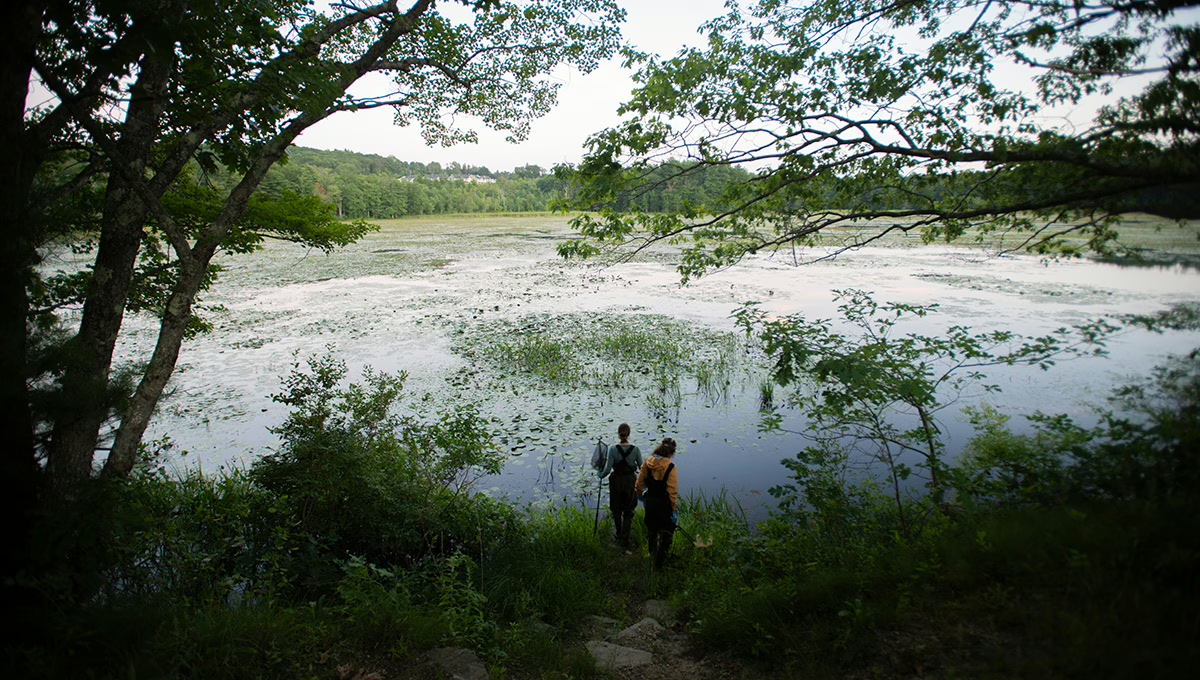

Conserving Small Natural Features with Large Ecosystem Functions in Urbanizing Landscapes
Many landscapes have small natural features whose importance for biodiversity or ecosystem services belies their small size. Management challenges for these areas include: uncertainties over their location and contributions to ecosystem services; tensions between private property rights and public rights to environmental protection; and the spatial mismatch between the broad, regional accrual of beneficial services and the concentrated, local costs of protection. Conservation strategies are undermined by limited scientific knowledge, especially of mechanisms that link ecological and social processes. In the forested landscapes of the Northeast, small, seasonally inundated wetlands (vernal pools) emerge as an excellent model system to study the dynamics of small natural feature management. This project brings together a team of ecologists and economists from multiple sub-disciplines and institutions to: (1) explore the biophysical and socioeconomic components of one type of small natural feature, vernal pools, as a coupled-systems model for management of these features; (2) improve strategies for conserving vernal pools and other small natural features with large significance; and (3) share results with local and state-level stakeholders and policy makers.