

Programs of study
Whether you’re strengthening your written skills in a language you grew up speaking, connecting with people from other countries, or exploring literature across linguistic traditions, you’ll develop the intercultural competency and intellectual agility to tackle challenges in our local and global communities.

Concentrations and interdisciplinary programs





Study abroad
Studying abroad not only accelerates your language learning, it expands the way you view, experience, and think about the world.
Our faculty and the team in the Study Abroad Office will help you identify programs that align with your academic and professional goals.
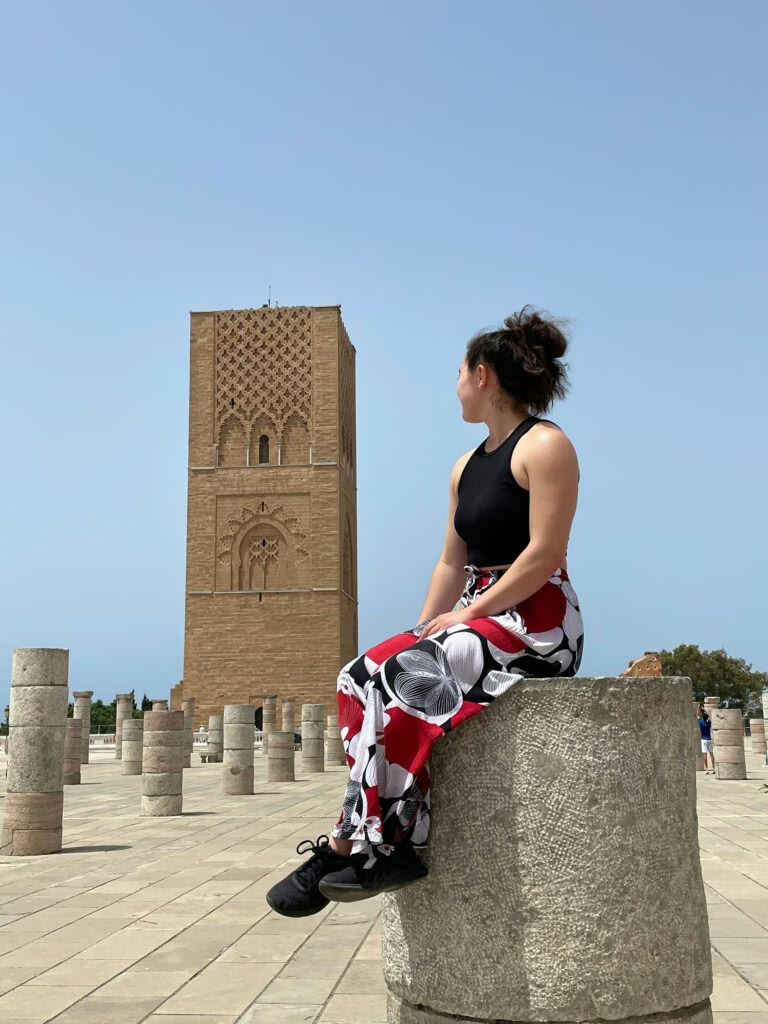
Students at Clark are highly competitive in prestigious national awards for study abroad, including the U.S. State Department Critical Language Scholarship and the Benjamin A. Gilman International Scholarship Program. Above: Funded by a Critical Language Scholarship, Lia Tang ’23, M.A. ’24 attended the Arab American Language Institute in Morocco (AALIM).
Frequently asked questions
Does Clark have a language requirement?
No, but every student is expected to take at least one course that deals with the interrelation between language and culture. This is called the Language and Culture Perspective, or “LP” for short.
The Language and Culture Perspective is one of the perspectives courses that all students take to fulfill the requirements for the Clark Core. Although all elementary and intermediate language courses, as well as some that are more advanced, offer Language and Culture Perspective credit, students may also satisfy the requirement by taking courses offered periodically in English — for example, certain courses in communications — that examine how language reflects and complements culture.
In your course selection materials, you’ll find a list of courses that fulfill the requirement. Our department offers the LP in Chinese, French, German, Hebrew, Japanese, Latin, and Spanish.
Most courses offer the LP for one semester’s work. Please note, however, that for beginning language courses, designated as 101-102, students are required to complete two semesters in order to receive credit.
How many students are there in a typical language class?
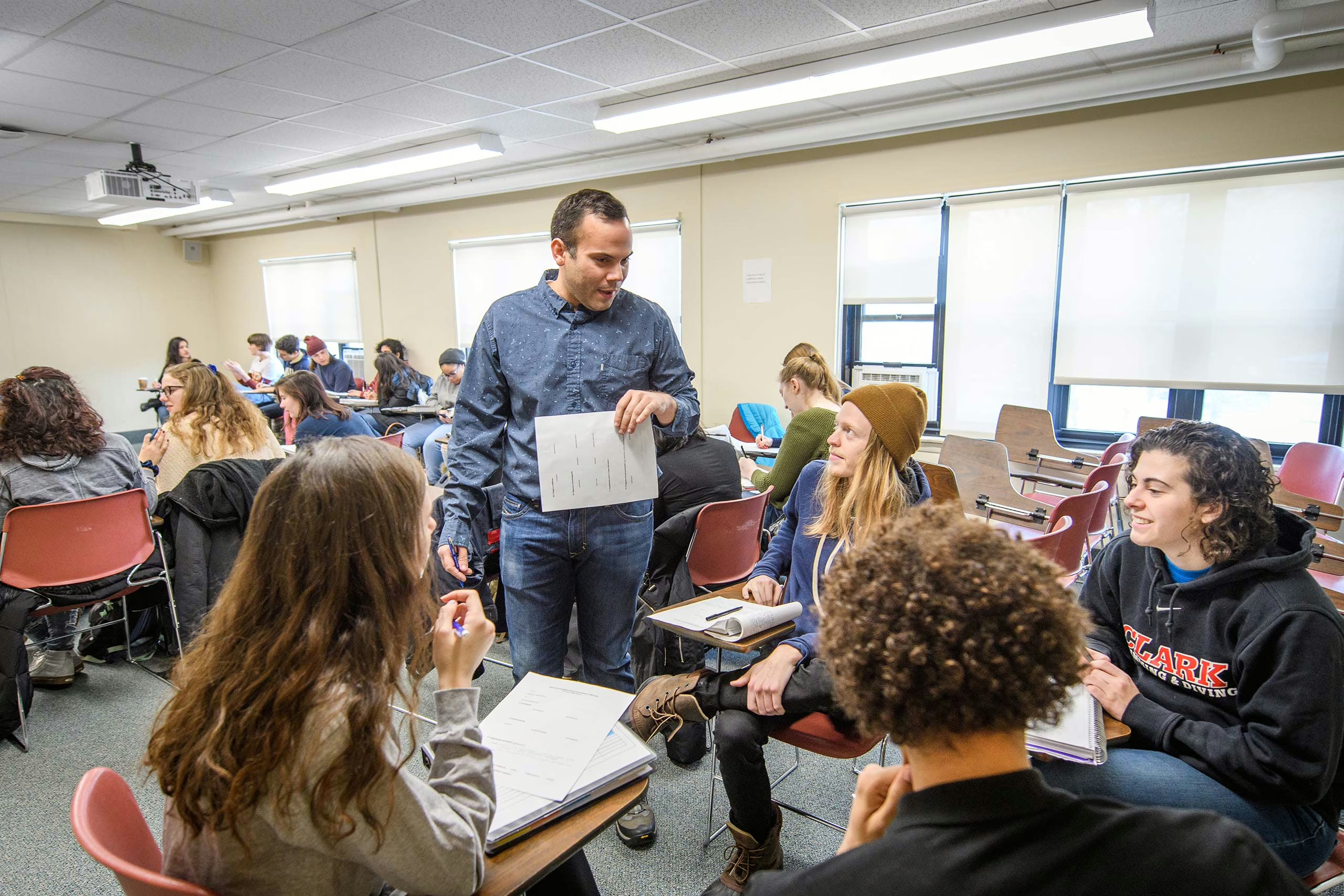
The official capacity for a language class is 20. Actual enrollments may vary from seven to 20.
Our goal is to present language in an active engagement with students so they have the maximum opportunity to develop linguistic skills. Small classes are ideal for this purpose. Most language classes also have discussion sessions with teaching assistants; these are either native speakers or language majors who have spent time abroad.
How do I know if a language course is right for me?
Online course listings have an LP designation and a Comments/Prerequisite space with each course. Language levels are determined by previous years of study as outlined in the language placement guidelines. The University reviews high school transcripts to make sure students are not over-qualified for a class. Consult the faculty coordinator of the particular language for any additional questions.
Learn more about language placement at Clark
Do I have to be a combined languages or Spanish major to study abroad?
Study Abroad options are available in Chile, China, Japan, France, Spain, Germany, the Dominican Republic, Senegal, and Vietnam. You do not need to be a language major to participate in any of these programs, but you do need the appropriate level of language background.
Language majors are required to complete at least two units of study abroad, but other students regularly sign on, as well, including language minors, Asian studies majors and minors, and others who want to have a competitive advantage when entering the job market in their discipline. Students studying business, political science, international development, geography, psychology, or any other field in which knowledge of another language is helpful may also choose to study abroad.