
Diverse scholarship
Our faculty are actively involved in research, which includes publishing, writing grants, presenting at national and international conferences, and mentoring graduate and undergraduate students. Their scholarship is diverse both in theory and in method — a mark of distinction and strength both within and across our three programs in clinical psychology, developmental psychology, and social psychology.
Across all psychology faculty at Clark University, research focuses on social identities and social issues, mental health and intervention, and development across the lifespan. Faculty investigate how identities (race, gender, sexual orientation, culture) shape experiences, well-being, and group relations in order to address urgent social issues, such as mental health, violence and inequality, and inequity and conflict in education and families. Faculty collaborate across areas and work with communities to understand and address real-world problems with attention to improving outcomes for marginalized groups. Faculty research balances rigorous theoretical development with practical applications and policy relevance.
Clinical psychology research
-
Diverse families and sexualities
Abbie Goldberg’s research examines diverse families, including LGBTQ-parent families and adoptive-parent families, as well as the experiences of marginalized groups such as trans youth. A central theme of her research is the decentering of any “normal” or “typical” family, sexuality, or gender, to allow room for diverse families, sexualities, and genders. For the past 20 years, she has been conducting a longitudinal study of lesbian, gay, and heterosexual adoptive families. In addition, she is currently conducting several studies examining the effects of state and federal legislation (e.g., regarding LGBTQ rights, reproductive rights) on LGBTQ people and families.
-
Child and family research group
Our lab is interested in studying the influence of social structures such as class and racial structures on young children’s mental health and development. We are interested in how children think about their and others’ social identities, how they understand the function of these identities within social structures, and how others (parents, teachers, and peers) socialize children with respect to their identities. All of these questions are motivated by an interest in the downstream impacts of identity beliefs and socialization on children’s emotional and social functioning. Recent work in the lab has focused on critical consciousness as a protective factor for children who are socially marginalized. Other recent work examines anti-racist and anti-classist parental socialization of young children with racial and/or class privilege.
-
Mental health, culture, and community research program
In the United States, well-documented mental health care disparities disproportionately affect individuals from low-income and cultural minority backgrounds. Our lab’s mission, carried out by faculty, as well as graduate and undergraduate students, is to help reduce these scientific and service utilization gaps through a combination of basic and applied research that focuses on urban, cultural minority children, adults, and families. The research conducted by lab members covers a range of areas relevant to mental health care disparities, including developmental psychopathology, treatment-seeking services research, and intervention development.
-
Center for couples and family research at Clark University
The Center for Couples and Family Research at Clark University is a team clinical research effort consisting of faculty, doctoral, and undergraduate students. Our goal is to produce cutting-edge research on intimate relationships and on the development of focused interventions to promote relationship and marital health.
-
Emotion regulation lab
Kathleen Palm Reed directs this research group of graduate and undergraduate students in examining the role of emotion regulation (e.g. distress tolerance, psychological flexibility) in psychopathology and substance use disorders. Some of the lab’s ongoing and future projects include research on reducing stigma related to substance use disorders, and developing prevention programming for sexual assault and interpersonal violence among sexual and gender minorities.
-
Masculinities and mental health
This group, led by Dr. Addis, examines intersections between the social construction and social learning of masculinities and the mental health of people of all genders. Current studies focus on depression, sexual scripts, emotional silence and invisibility, fathering in the African context, and the development of critical awareness of masculinity.
Developmental psychology research
-
Learning, Language, and Cognition Lab
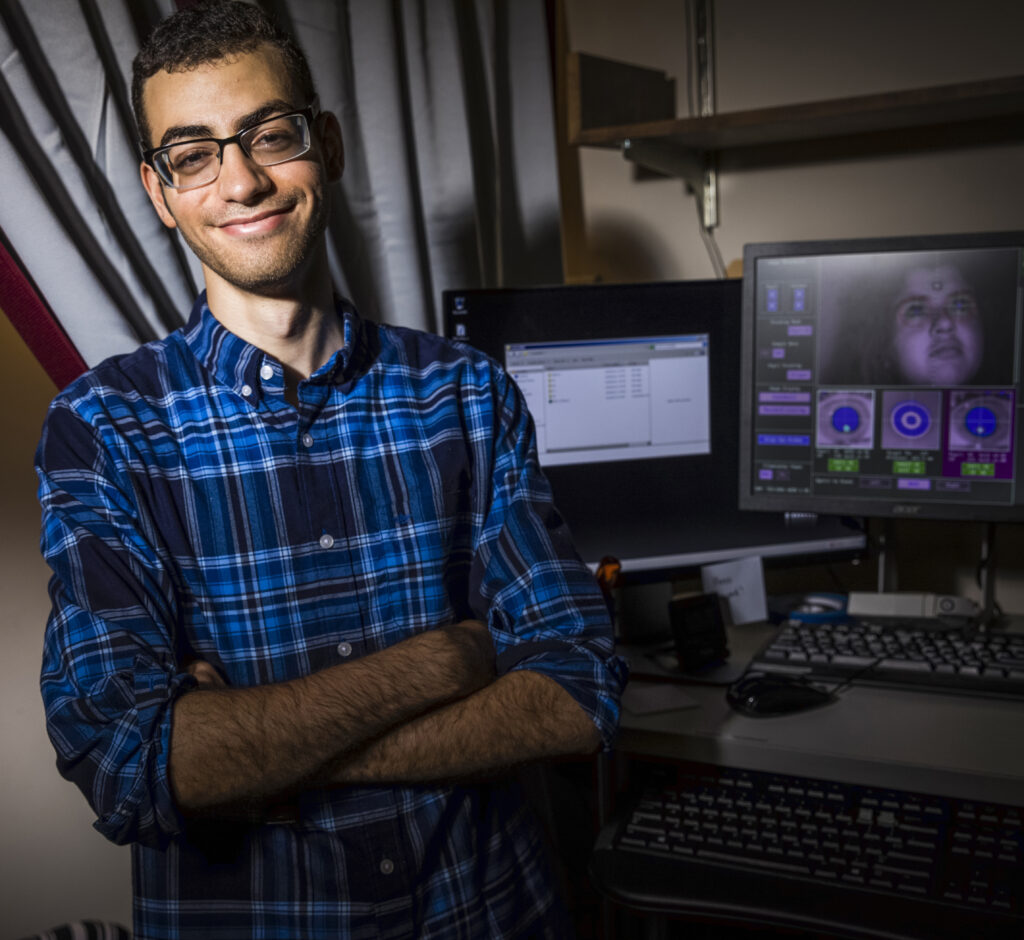
Our research group examines cognitive development, particularly in school-aged children in school contexts. We examine the malleable factors influencing learning and subsequent academic achievement, especially for minority race and language students as well as those growing up in poverty. A context of focus is bilingual education. Within these contexts, we examine how children organize semantic knowledge and build a knowledge base both within and across lessons with the long-term goal of informing educational policy and practice. This investigation entails examining the encoding and manipulation of semantic memory as well as conceptual representation across languages. The work is inherently interdisciplinary and we work with others in the departments of education and language and culture. We use a variety of methods, including experimental behavioral studies, observation, and eye-tracking. Our work takes place in the laboratory, in the community, and in collaborating classrooms.
-
Research in Child Development Across Context
Our research, led by Ana Marcelo, examines the influence of risk and protective factors on child development across diverse ecological contexts with particular emphases on culture and adversity. Our first line of research examines children’s pretend play, creativity, and emotional expressiveness as related to their socioemotional and academic adjustment in different contexts (e.g., school, peers, home). Our second line of research focuses on children’s experiences related to their ethnicity, race, and culture. We are interested in examining ethnic-racial identity in early childhood and its influence on children’s encounters with bias and discrimination and if and how these experiences may vary across different contexts. We use different methods, such as behavior observation, quantitative measures, and qualitative interviews, and examine across different informants, such as teachers, caregivers, and children.
-
Developmental Forum
The developmental forum meets regularly during the academic year to examine theory and research in developmental psychology. All members of the developmental program (including all developmental graduate students and faculty in residence) and others (graduate students, faculty, and visitors from other programs and institutions) gather to discuss current theoretical and methodological issues, share updates on ongoing and upcoming projects, present and receive feedback on future talks, grant proposals, and manuscripts. The goal of the developmental forum is to collectively learn from one another and provide a support network to help strengthen the work of all members of the Clark community interested in developmental inquiry.
-
Narrative Practices in Identity
Our research group focuses on theoretical issues central to identity research such as agency, difference, and change. We approach them from a qualitative (narrative) perspective, and we apply them to empirical phenomena such as adolescent and post-adolescent identity formation, close friendship, transition into work (for college students and refugees), fatherhood (including incarcerated fathers), and elderly women’s encore careers. Our investigations explore how these phenomena are understood from the perspective of those who experience and live through them. Current projects include a Handbook on Identity, as well as volumes in Bamberg’s book series, Studies in Narrative. Students are invited to join the editing process to gain professional experience.
-
Higher Education Research Group
Our research group, led by Nancy Budwig, examines learning and development in both formal and informal learning contexts, with a focus on ways engagement in communities of practice contributes to the gradual construction of meaning systems. Prior work of the group studied the role of language in the construction of culturally relevant meaning systems as well as how different cultural meaning systems impacted successful entry into school. More recently, focus has shifted to examining ways that higher education also can make better use of socio-cultural approaches to learning and development. We study college student and faculty perspectives on designing environments to foster better learning and well-being, and the implementation of curricula that aim to prepare students to successfully transition into college, as well as successfully transition into the world of work and civic life. We also create tools to evaluate and improve learning and development on college campuses.
Social psychology research
Faculty research stories


Editorial roles
Below are the journals for which Clark psychology faculty have editorial roles.