CUSB Student Participates in Global Youth Festival in Paris
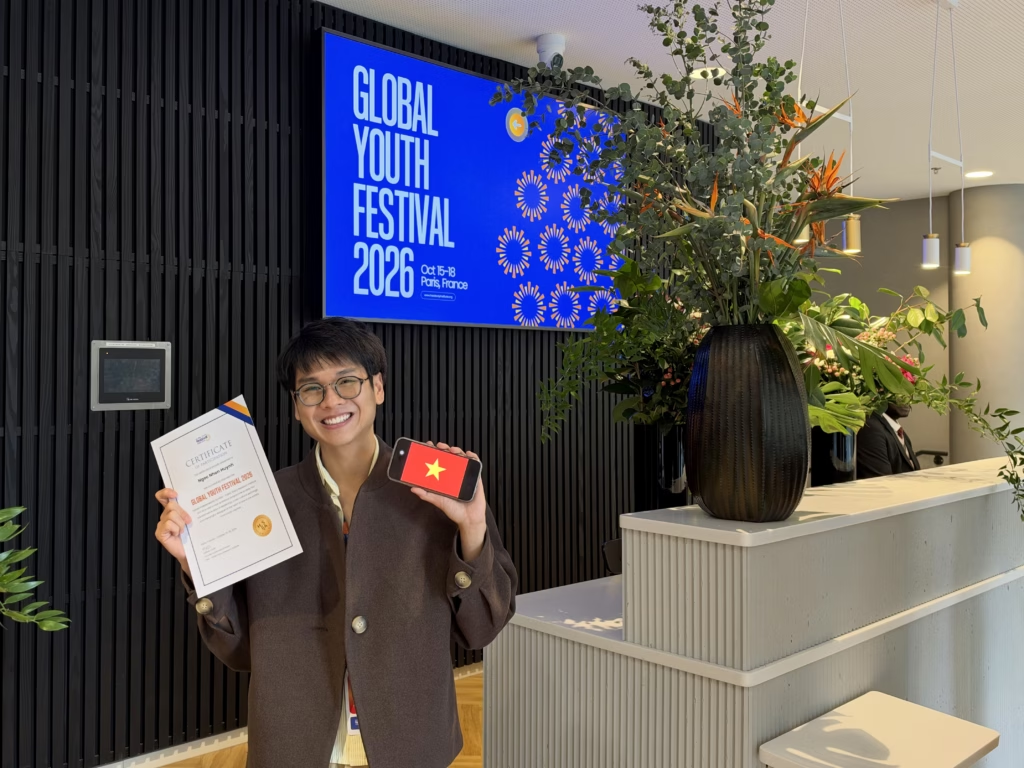
For decades, fashion has borrowed from Asia’s rich cultural traditions. The question is whether it has given anything back. From Victoria’s Secret’s “Sexy Little Geisha” to Vietnam’s Biti’s controversy, fashion’s cultural borrowing has become a global reckoning. “The world currently misjudges this by confusing one-way commercial extraction with “cultural appreciation,” treating this as matters of “taste” rather than economic justice, dismissing fundamental human rights,” shared Ngoc Nhon Huynh, Clark University School of Business’ second-year MBA student, who was selected to participate in the Global Youth Festival in Paris. Nhon presented an overview of research he conducted during his Responsible Management course with CUSB, which examined cultural appropriation in Asia through the lens of the SDGs.
Nhon was selected from a highly competitive international evaluation process and went through two rounds of application essays and video submissions before being offered a partially funded scholarship to take part in this exciting opportunity. According to the Headway Institute of Strategic Alliance (HISA), the Global Youth Festival (GYF) brings together “emerging leaders, students, professionals, innovators, entrepreneurs, and changemakers from over 120 countries for four days of leadership engagement, international dialogue, cultural exchange, and global networking.”
“Attending the Global Youth Festival in Paris has been a transformative milestone in my academic and professional journey.”
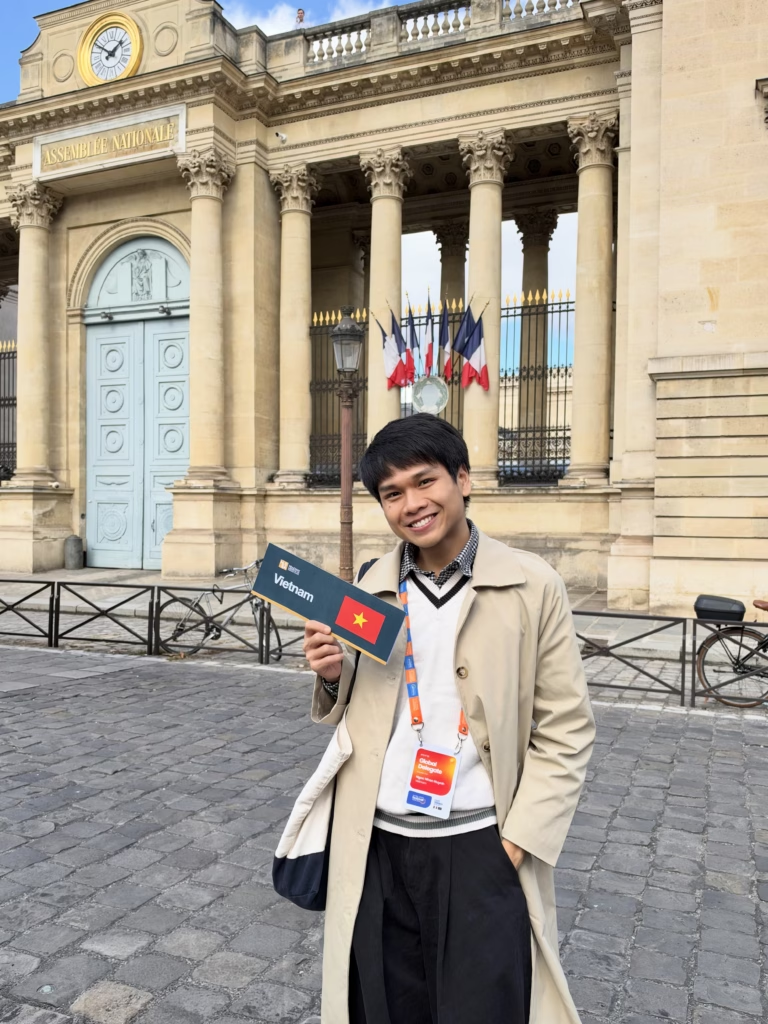
After an extensive online search for global opportunities, Nhon found this program that sounded like the right forum for him to exchange insights and explore emerging trends in sustainability. Nhon shared, “As a marketer specializing in brand innovation and sustainable marketing, participating in this interdisciplinary event significantly broadened my perspective beyond traditional business frameworks. Integrating insights from public policy, ethical messaging, and global development trends from different social aspects has equipped me with future holistic approach that balance business performance with authentic societal impact.”
Nhon was able to network with global delegates including policymakers, environmentalists, and diplomats. This opportunity allowed Nhon to engage in interactive workshops focused on narrative strategies in digital media, societal impact, and ethical public messaging. “Hearing keynote speeches from representatives of the UN and UNICEF offered invaluable clarity into how international institutions approach, research, and execute projects centered on the Sustainable Development Goals (SDGs),” said Nhon.