
Learning in community
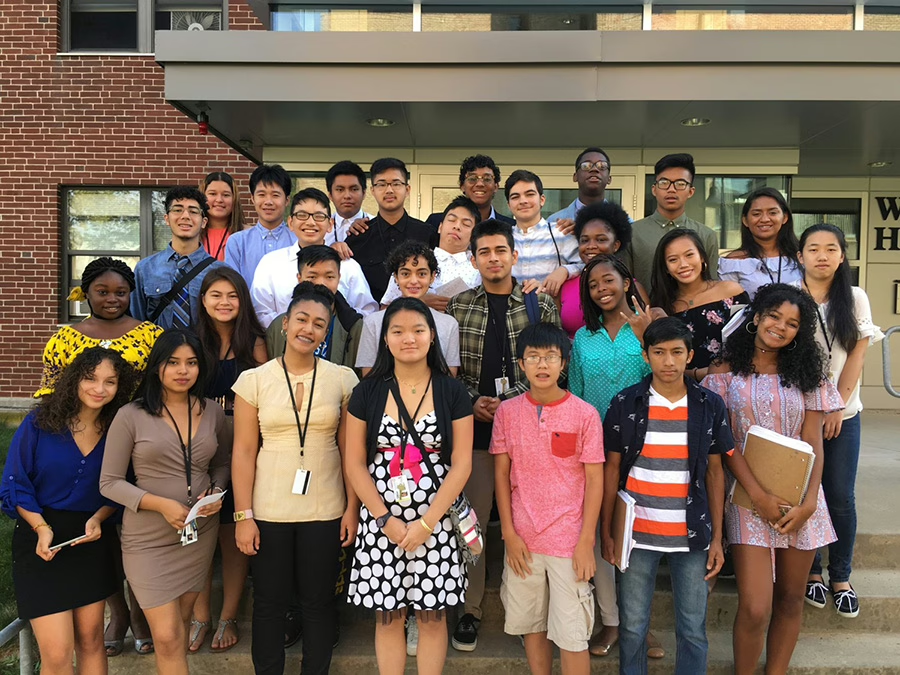
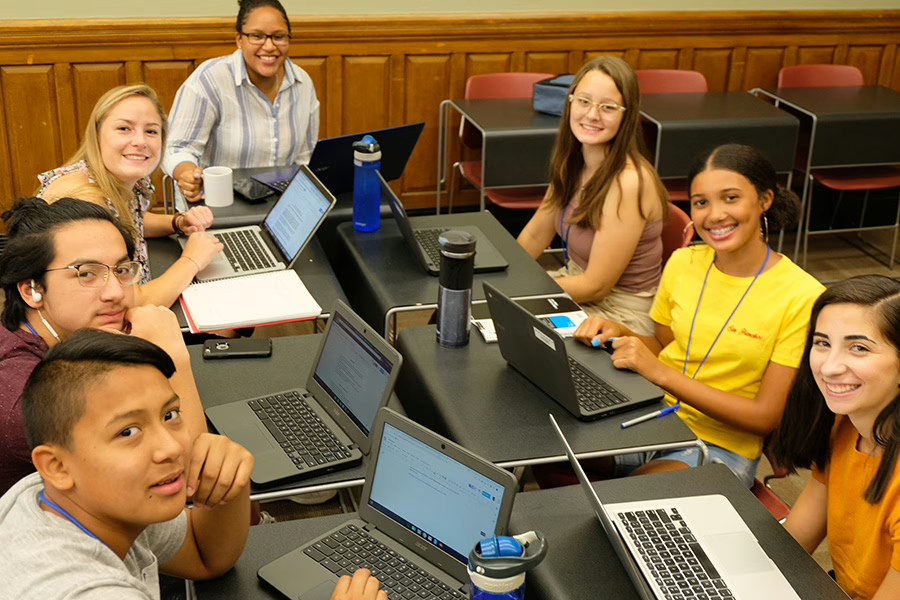
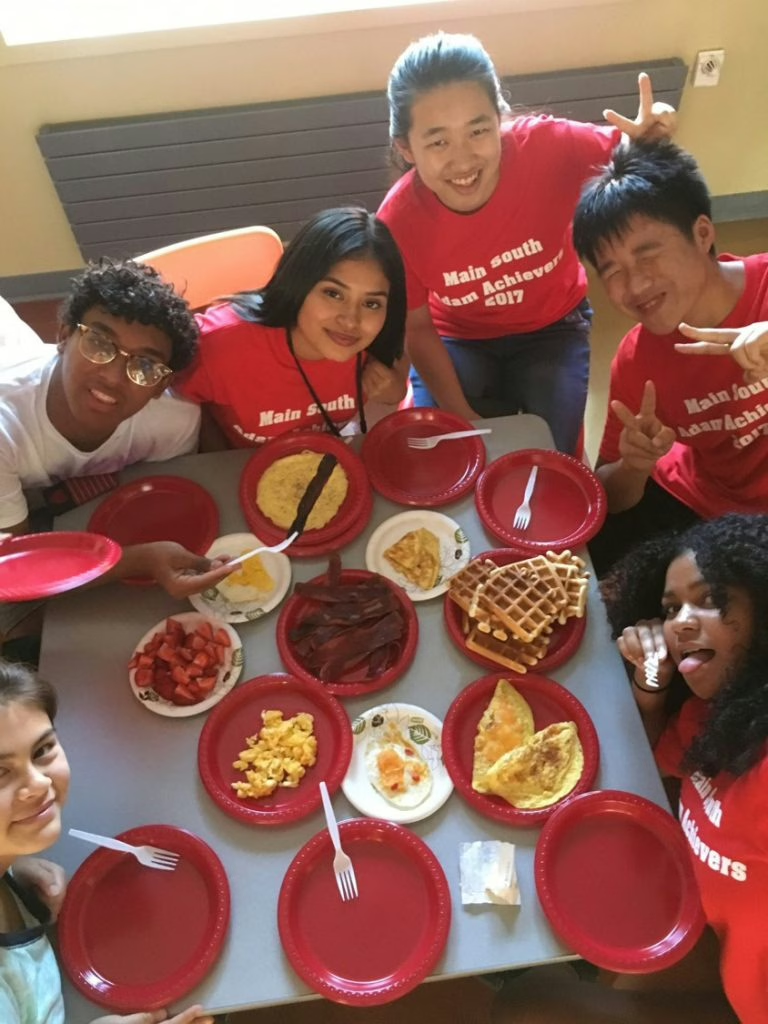
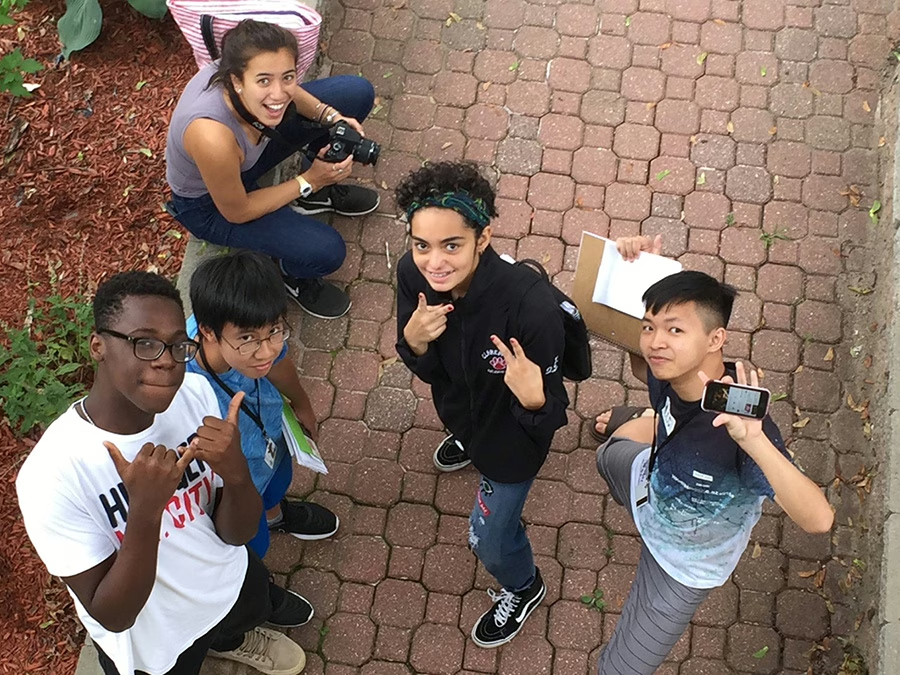
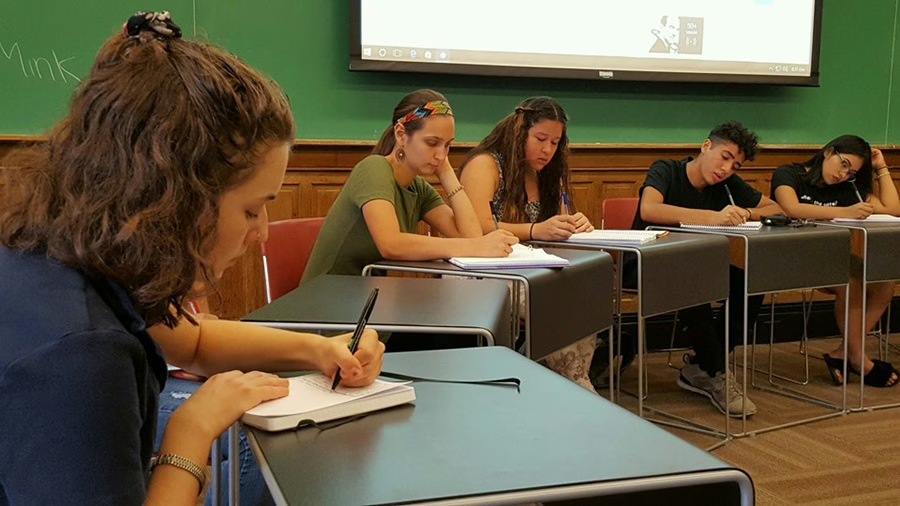
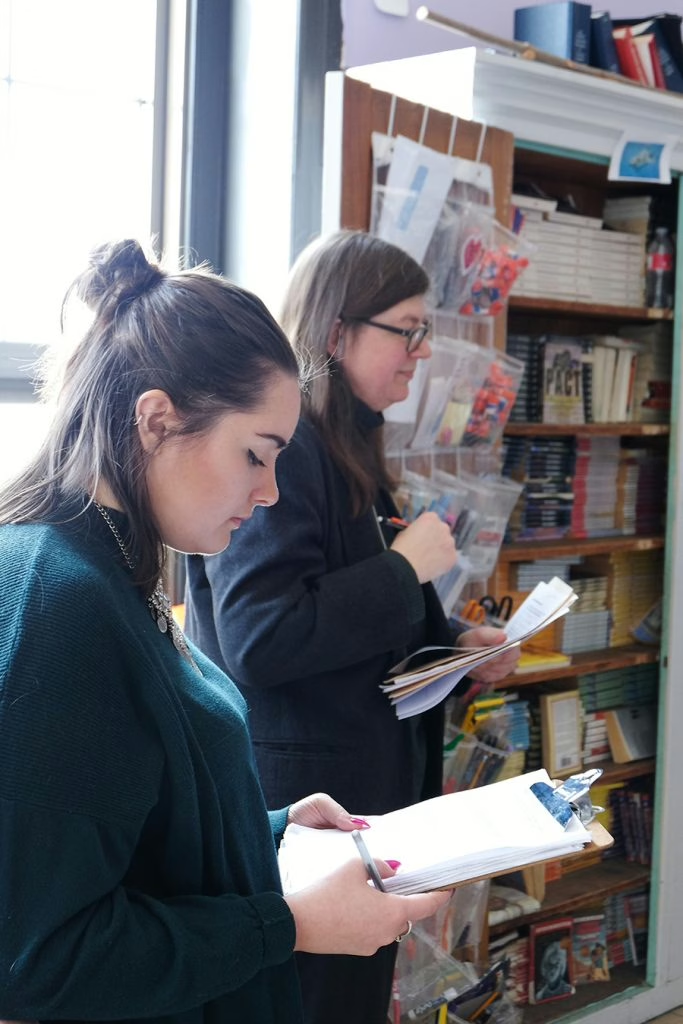
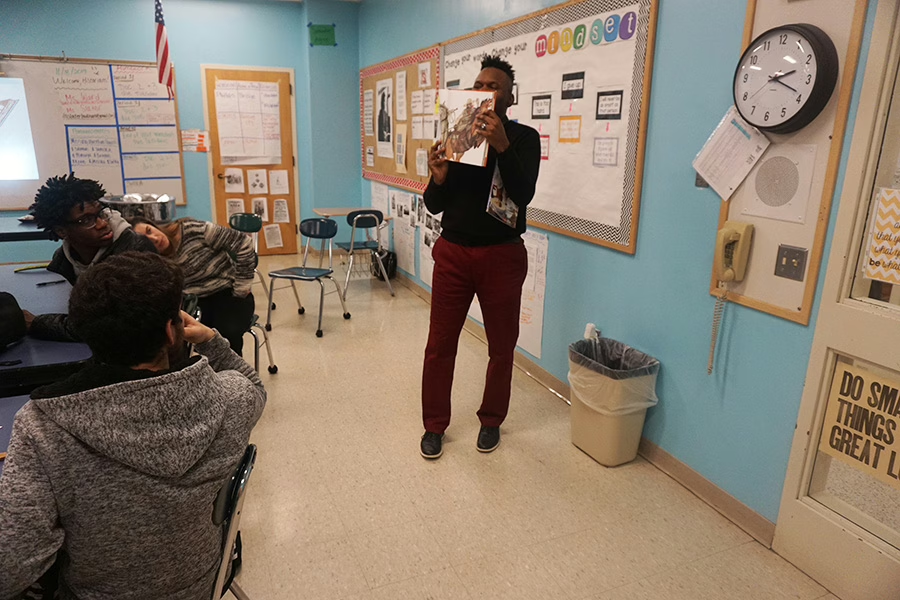
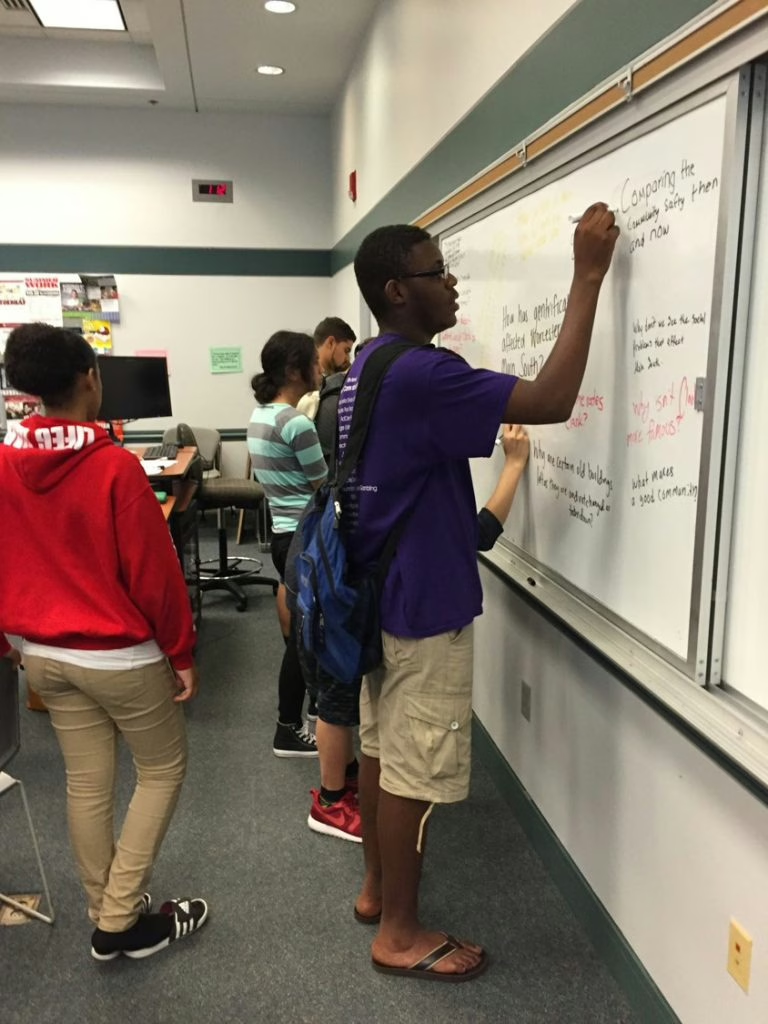
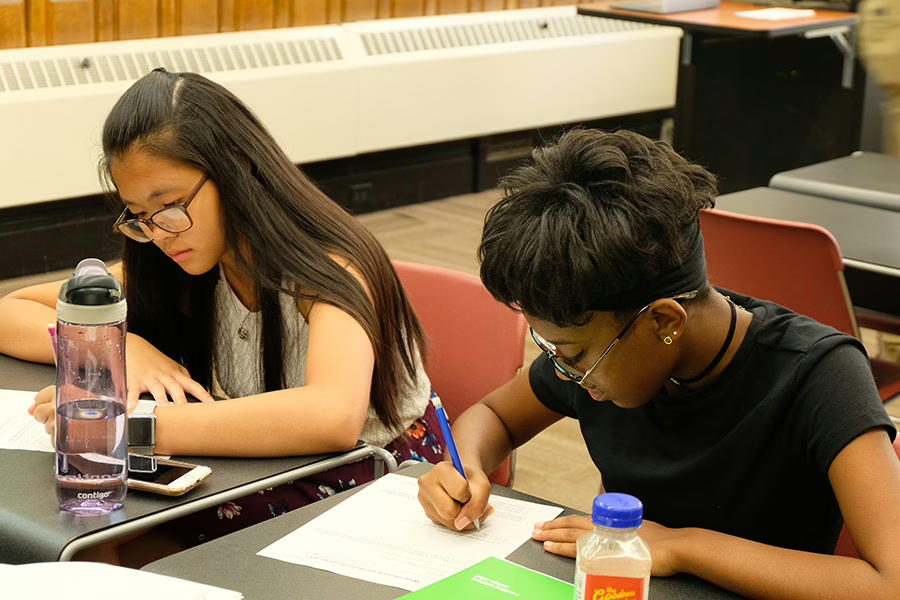
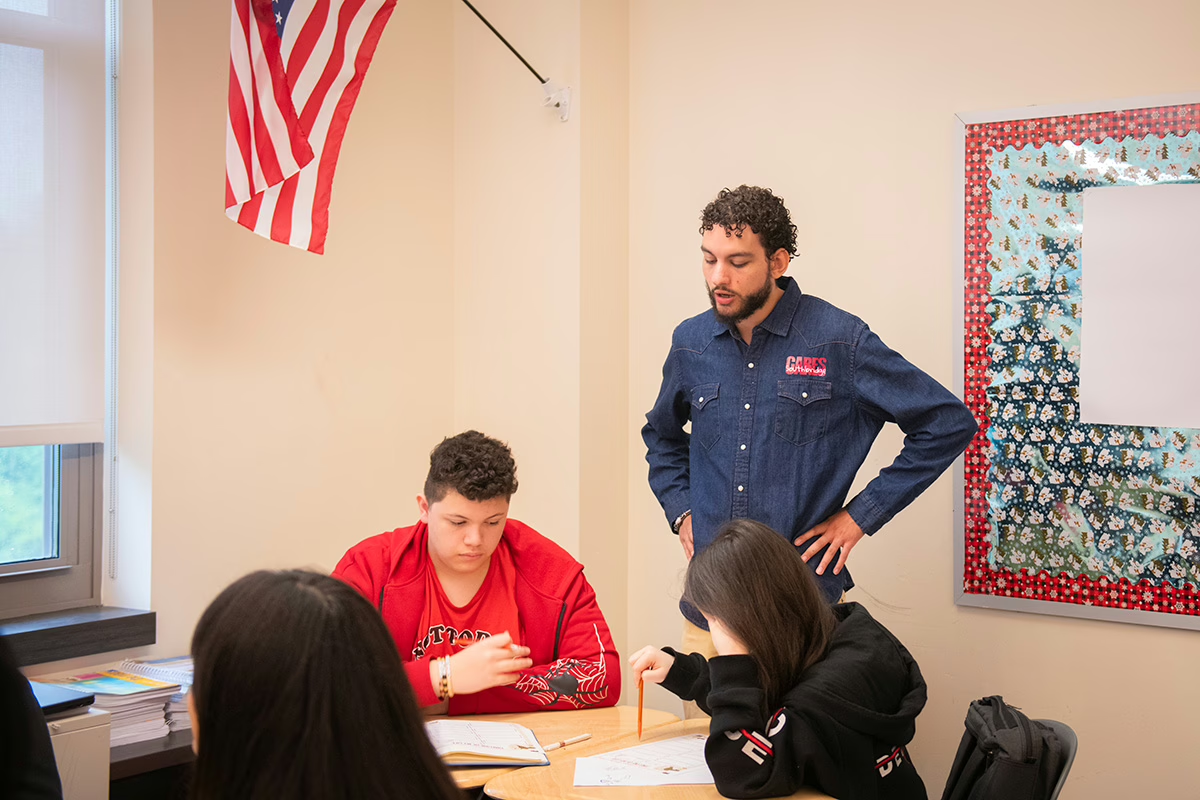
The Adam Institute is a broad-based learning community of teachers, faculty, and public school as well as University students, embedded locally in and across neighborhood partner schools. This learning community is home to various programs, in particular the Main South school partnership and the Master of Arts in Teaching (MAT) program. All are widely recognized.
Master of Arts in Teaching Program: Approval with distinction
Our Master of Arts in Teaching program has been granted “approval with distinction” by the Massachusetts Department of Elementary and Secondary Education.
Additional programs and initiatives
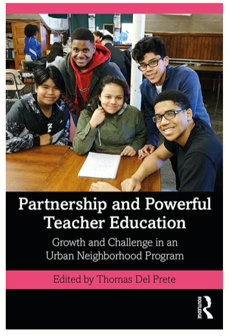
Our Book: ‘Partnership and Powerful Teacher Education’
Published in 2019 and written with voices of university faculty, school educators, program graduates, and students from partner schools, our collaborative book, “Partnership and Powerful Teacher Education: Growth and Challenge in an Urban Neighborhood Program,” offers an in-depth portrait and valuable reference for the development of clinical or school-embedded partnerships in teacher preparation by drawing on the decades-long partnership between a university and set of schools in an urban neighborhood.
In the midst of a national movement toward partnership-based clinical teacher education, this book explains and illustrates the roles, commitments, and collaborative practices that have evolved.
The book is edited by Adam Institute Director Thomas DelPrete.
Read more about our book on ClarkNow
Critical praise for our book
“A very thought provoking account of the continuing development over more than twenty-five years of one of the most interesting school-university partnerships in teacher education in the U.S. that is focused in an urban neighborhood in Worcester, MA. This book, written by both school and university teacher educators, deals with both the successes and challenges of doing this difficult work and is essential reading for those who are interested in creating a new more democratic future for university teacher education.”
Ken Zeichner
Boeing Professor of Teacher Education Emeritus, University of Washington
“In this incredible book we all take a long and fascinating journey in coming to understand how the building of community between higher education, schools, and students in an urban neighborhood develops. In my fifty years in education, this story is the first I have ever read that documents…how a true partnership in an urban community gets built over time. This is a must read for all who care about the important possibilities of what it takes to educate great teachers who represent their communities and their students in a genuine partnership.”
Ann Lieberman, Senior Scholar, Stanford Center for Opportunity Policy in Education, emerita professor from Teachers College, Columbia University, author of Teaching, Learning, and Living: Joining Practice and Research (Routledge)
“This highly masterful book, informed by a quarter century of experience and reflection, paints a picture of the craft and complexity of developing high quality teachers while galvanizing a university, an urban school system and a disadvantaged neighborhood to make common cause for children. The authors, who speak from their experience on the front lines of urban education, provide very useful guidance not only on refining the practice of teaching and teacher development but on using the vehicle of partnership to enrich teaching and learning for all involved.”
Paul Reville, Francis Keppel Professor, Harvard Graduate School of Education; Founding Director of the Education Redesign Lab; former, Massachusetts Secretary of Education
“‘Partnership and Powerful Teacher Education’ provides a vision of university and partner schools working in community to deepen and strengthen learning for local students and for teachers. Educators, policy makers, school administrators, and teachers, as well as community leaders, interested in working in partnership will find this work not only motivating, but also refreshingly practical.”
Karen Hammerness, Director of Educational Research and Evaluation, The American Museum of Natural History, co-editor of “Inspiring Teaching: Preparing Teachers to Succeed in Mission-Driven Schools”
Summer Cubs
The “summer slide” is a challenge for educators. When students leave school in the spring and return in the fall having lost ground in both reading and math, teachers must adjust their curriculum and re-teach the previous year’s work in order to get students ready for the new academic year.
Summer CUBS (Comprehension and Understanding Bring Success) provides engaging learning experiences for students at one of our partner schools, Woodland Academy, aimed at helping them maintain academic progress they have made through the school year. The Adam Institute and the Worcester Area Mission Society collaborate with the school to make the program possible.
Learn more about Summer CUBS
Summer CUBS runs for 18 days from late June through mid-July. We start at 8 a.m. and end at 2 p.m., aligning with typical school day hours. We incorporate daily learning experiences in literacy, math, science, art, and outdoor play. Students interact with Worcester Public School teachers, University faculty, Master of Arts in Teaching students and a cadre of volunteer mentors who encourage new learning while also having fun!
Each elementary MAT spends one week working intensely with a veteran Worcester Public School teacher, a graduate of the MAT program, who will also co-teach their teaching math course in the fall semester. The MATs benefit from modeled instruction, time working with small groups of children, and coaching as they prepare their own lessons for small groups of students.
Our data indicates that the CUBS program is achieving its primary goal. Over the past two years, 80% of our students have either maintained or gained on their reading comprehension test scores between the end of school in May and when they start again in the fall. Principal Patty Padilla actively seeks out students to apply and enroll in this free of charge program each spring. As the program continues to emerge, we use feedback from the teachers, MATs, mentors, and Woodland staff to fine-tune the CUBS experience.
Teacher Rounds Program
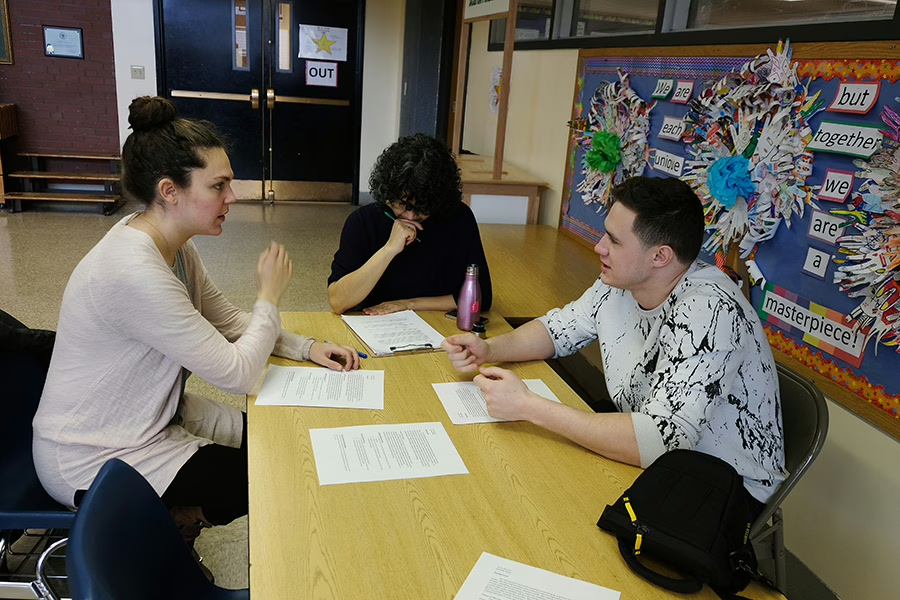
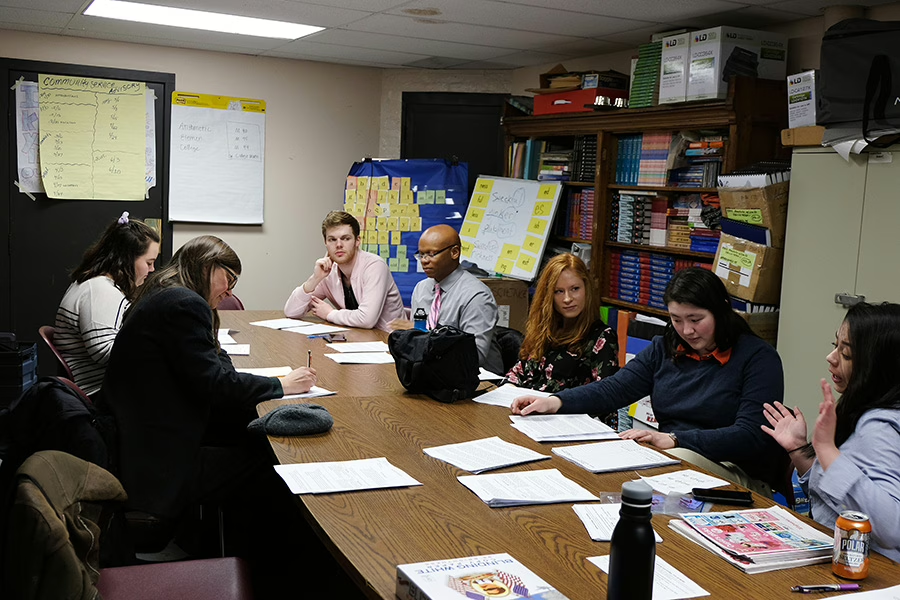
Teacher Rounds are a signature collaborative learning practice in the Master of Arts in Teaching (MAT) program and in partner schools. Drawing on the concept of a “round” in medical practice, Teacher Rounds bring together small groups—for example, MAT students, teachers and education faculty—for focused observation, inquiry, and reflection in classrooms. Teacher Rounds aim to share and make teaching practice transparent, cultivate habits of reflection and inquiry, develop mutual understanding of student learning and teaching, and build learning communities grounded in the work that teachers and students do every day.
Learn more: The Rounds Model of Professional Development (PDF), by Thomas Del Prete (See also Del Prete, T. 2013. Teacher Rounds: A guide to collaborative learning in and from practice. CA: Corwin).
Adam Teacher Fellow Program
The Adam Teacher Fellow Program supports a partner-school teacher full- or part-time to contribute to the Master of Arts in Teaching (MAT) Program and the development of the community of practice within his or her own school or across schools. Teacher Fellows embody the Adam commitment to the development of teacher expertise and leadership.
Testimonies from Adam Teacher Fellows
“It was a great privilege to be an Adam Teacher Fellow. To be able to continue to teach students while also helping train new teachers was an ideal opportunity for me. Being able to reflect on my teaching alongside new teachers was not only enjoyable, but informative for both them and me. I know I learned a great deal and am very grateful I was able to participate in such a valuable experience.”
— Kate Shepard, Mathematics Teacher, Claremont Academy
“Serving in the role of teaching fellow has meant the opportunity to nurture new teachers and join in their learning, allowing me to reflect on ways to challenge and improve my own practice. It has meant connecting with other Main South teachers and Clark professors, and maintaining ties with student teachers who have moved on to other districts, creating a dynamic community that offers resources and inspiration. It has meant support to maintain faith in the work that I believe in.”
— Leann Ledoux, English teacher, South High School
“For me, the best part of this job is being able to work with new and experienced teachers, being a part of both the high school and graduate school worlds, and having the opportunity to become a part of other schools and work with new groups of students, all while remaining a part of my own school and continuing to teach my own students, which is very important to me. I’m constantly thinking and working with people (kids and adults), and I feel at home in an increasing number of places.”
— Kyle Pahigian, Mathematics Teacher, University Park Campus School
“Being an Adam Teacher Fellow at Clark was a remarkable experience for me. During that time I was able to work firsthand with students in their process of becoming teachers…and [be part of] a partnership which focuses on a well-balanced, yet extremely challenging program. At the grand finale, e-folios were evidence of the incredible year of every student and a testimony to the requirements and success of the program.”
— Anne Marie Morrissey, Spanish teacher
Professional Learning Communities
The Adam Institute develops and supports professional learning communities within and across its Worcester partner school network. These professional learning communities share a common goal of fostering powerful and equitable teaching and learning. The Adam Institute’s local partner school professional learning community plays an integral role in supporting the Master of Arts in Teaching program.
Learning Teams and Collaborative Practices Supported by the Adam Institute
- Collaborative learning teams, such as the Mathematics and Science Curriculum Teams, join teachers from different partner schools and Adam Institute faculty together, for purposes that include deepening understanding of subject matter, disciplinary learning, and developing and sharing powerful curriculum models; developing teaching practice; and assessing student work and development as writers, readers, and thinkers in a particular discipline.
- Reflective practice and inquiry groups — for example, teacher teams at Claremont Academy partner school or Master of Arts in Teaching disciplinary teams — cycle through a series of complementary learning experiences, in particular, lesson-planning workshops, teacher rounds, and close examination of student work.
- Teacher Rounds are a collaborative learning practice that takes place in a classroom, joining together small groups of teachers, faculty, and/or MAT students to inquire, observe, and reflect, based on a set of questions developed by the host teacher (See Del Prete, T. 2013. Teacher Rounds: A guide to collaborative learning in and from practice. CA: Corwin). Listen to author Tom Del Prete explain what teacher rounds are and discuss the benefits they can provide to support collaborative teacher learning as a reflective and inquiring process.
- Co-taught graduate-level courses, including summer institutes for teachers and MAT students, include both Adam Institute faculty and partner teacher-leaders.
- MAT program collaborators, who, in addition to serving as mentors in the MAT program, join with Adam faculty as instructors in the MAT program and/or host Teacher Rounds for MAT interns. Their classrooms, in effect, serve as case studies of practice.
Selected awards and praise
From the Society of Education Professors
2007 Richard Wisniewski Award for Innovation in Teacher Education
High School of Commerce, Springfield, Mass.
“We are incredibly grateful to have had the opportunity to work with the Adam Institute and its partner schools. During our yearlong urban school redesign, we were able to visit both University Park Campus School and Claremont Academy several times. The powerful models of teacher collaboration, the strong relationships between students and staff, and the creation of individualized learning opportunities we saw, have been tremendously influential in creating our own school culture and vision of personalized pathways to career and college readiness for all students.”
— Chris Buckland, Director of Personalized Pathways
From the University of Applied Sciences and Arts Northwester Switzerland, School for Teacher Education, Institute for Secondary Education
“We were overwhelmed at the generosity of your colleagues from Clark and the University Park Campus School, who gave up a number of hours to talk to us, and were extremely impressed by the close co-operation between your university and your partner school.”
—Jürg Marti, Annamarie Ryter, Lynn Williams
From the Urban Teacher Education Program, University of Chicago
“I can speak for the whole contingent from the University of Chicago’s Urban Teacher Education Program when I say that our time at Clark was one of the richest professional development experiences we’ve ever been involved in. The chance for members of our group to see Rounds at both the elementary and high school levels underscored what a valuable tool it is for pre-service and in-service teacher growth. And let’s not forget its value for the teacher educators themselves.”
—Marv Hoffman, Associate Director
“The dynamic opportunities for learning and teaching going on in the university and district partnerships are just the kinds of innovations teacher education programs need. The opportunities to enact a praxis cycle of theory and practice push teacher candidates to make sense of what they’re learning in ways that will clearly help them to become great urban teachers.”
—Bill Kennedy, Urban Teacher Education Program
From Mills College
“It is incredibly exciting to witness the partnership work and to see the impact of Clark/Adam/Hiatt work on the school . . . . The work you’ve shared with us is such a great model and inspiration for all of us.”
—Kathy Schultz, Dean of Education
From Teachers College, Columbia University
“…thank you for hosting the Urban Teacher Educators Network meeting…those two days were the most productive for me as a university-based teacher educator as any I have spent in my 17 years as a professor of teacher education. Our discussions…were stimulated by the Rounds you hosted…I had the most nuanced and deep discussions about teaching and learning that I have ever had in over 32 years as an educator.”
—Dr. Celia Oyler, Director, Programs in Inclusive Education
From Brandeis University
“The Clark visit was an exceptional occasion for good learning and stimulating dialogue…Participating in ‘Rounds’ at the Hiatt Elementary school, and having ‘meta-conversations’ about Rounds, both at the school and back on campus, was particularly rewarding. This practice that you’ve established is clearly a powerful intervention in the cultures of teaching and learning to teach.”
—Dirck Roosevelt Director, Master of Arts in Teaching
From Roger Williams University
“Our visit to Clark University was inspiring. The faculty is enthusiastic and our time in the schools gave us many ideas for developing school partnerships at our university.”
—Dr. Madge Thombs, Associate Professor
“I’m very impressed with Clark’s PDS model. It truly bridges the theory and practice of teaching through in-depth collaboration between the Clark’s teacher preparation program and local K-12 schools. The full support from the university administration is essential for the program’s success.”
—Dr. Li-Ling Yang, Assistant Professor
“I am impressed by the commitment to urban schools that is evidenced in Clark’s program. We know immersion in school settings work, and Clark is model for this important component of teacher training.”
—Dr. Kerri Ullucci, Assistant Professor
“The level of meaningful integration within and between urban public schools and Clark University is nothing short of astounding. Our visit to Clark’s PDS partnerships was more a powerful and inspiring learning experience than several days I spent at a national PDS conference!”
—Dr. Kelly Donnell, Assistant Professor
From the School of Social Work at Rhode Island College
“I have been reflecting on our visit and the kindness and generosity that you and your colleagues displayed to us. The story of your relationship with the neighborhood and its schools was fascinating. Seeing and experiencing the results of that partnership were more than enriching to me. It helped to put some reality into a future we have been trying to imagine. The relationships displayed in the classroom and with staff and students at the University Park Campus School were so impressive—there were none of the distinctions I thought would be there between the university’s presence and the school, or between university faculty and school faculty. I know that part of that is about the passage of time, but most of it was about the relationships and trust you have built.”
“Thank you again for allowing us to visit and to see that change is not only possible, it is absolutely necessary.”
— Sue Pearlmutter, PhD., Dean and Professor
From Ankara University Faculty of Educational Science
“I visited you when I was at Teachers College for a sabbatical stay…[and] participated in your round practice and I was impressed. Now I am back in Turkey…this term we are going to introduce [the] rounds model to our pre-service teachers in their teaching practice course.”
— Associate Professor and Vice Dean Dr. Fatma Bikmaz
Selected report and publication citations
Partnering on Prep: A Toolkit for Building Strong District-Teacher Preparation Program Partnerships (2018)
Identifies strong partnerships, synthesizes lessons learned and implementation strategies, and includes a series of tools and artifacts directly from the field. The Clark Adam Institute partnership is one of the featured examples.
Carroll, Thomas G., Fulton, K., and Doerr, H., Eds. (June 2010
Team up for 21st century teaching and learning: What research and practice reveal about professional learning. National Commission on Teaching and America’s Future.
Faces and places of the Adam Institute