
Media, Culture, and the Arts, B.A.
Overview
We live in an era saturated by images nd sounds, both analog and digital. The questions they raise are consequential for both creators and audiences: Who controls the story? How does culture shape what we see, hear, and believe? How does meaning shift in the context of its environment? The world needs people who can think critically about the intersections between culture and the media it produces.
Why study media, culture, and the arts at Clark?
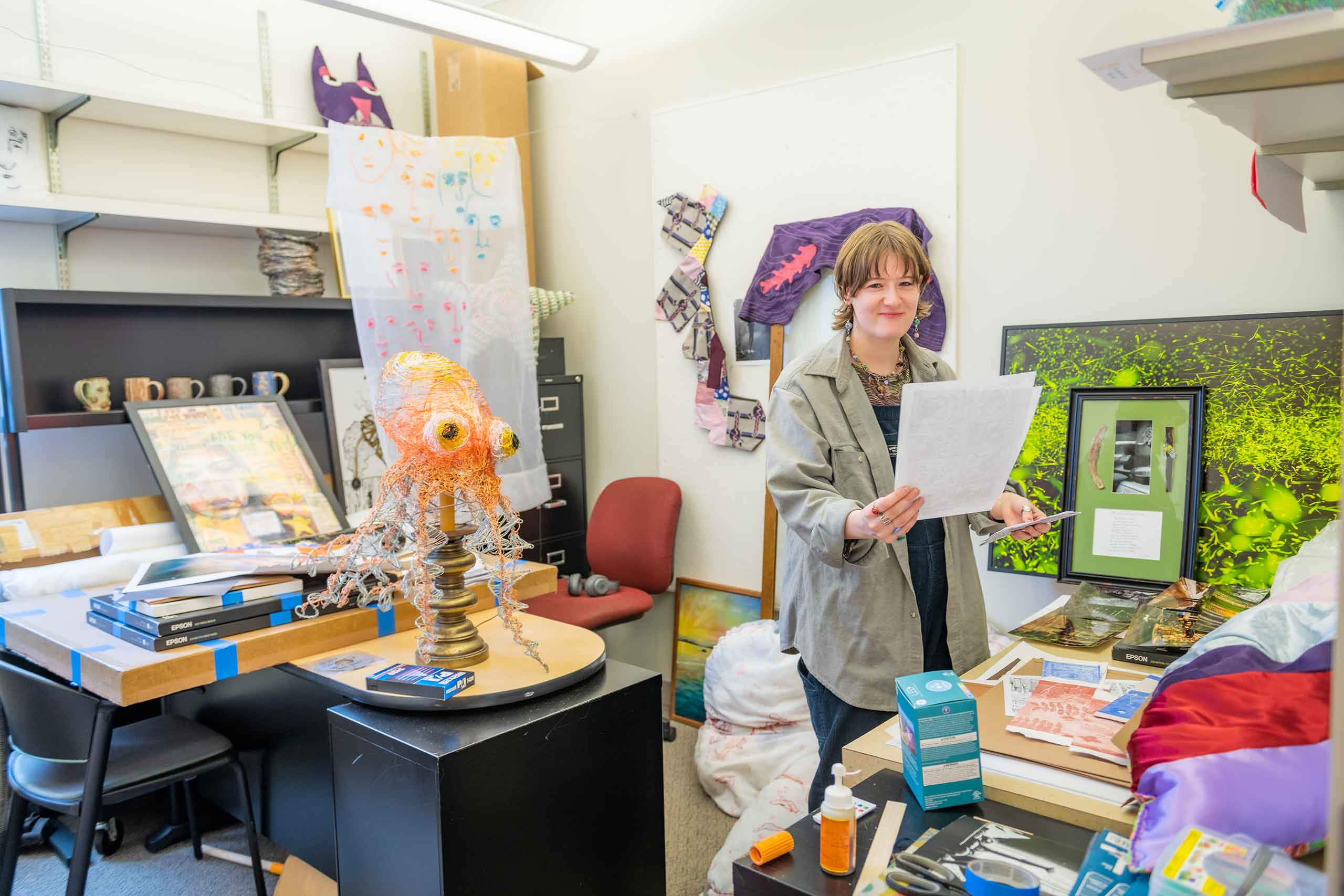
- The Creative Intermedia Seminar — one of media, culture, and the arts’s signature course categories — culminates in a public demonstration of student work. You’ll analyze media critically; and you’ll also make it, show it, and put it into the world.
- Clark’s location in the heart of New England, with proximity to Boston, Providence and the Worcester arts community connects students to a working media landscape: including production companies, arts organizations, journalism outlets, and music venues.
- Through Clark’s Becker School of Design and Technology, students have direct access to collaborators in game design, interactive media, computer science, and creative writing — fields where the most interesting interdisciplinary work is happening.
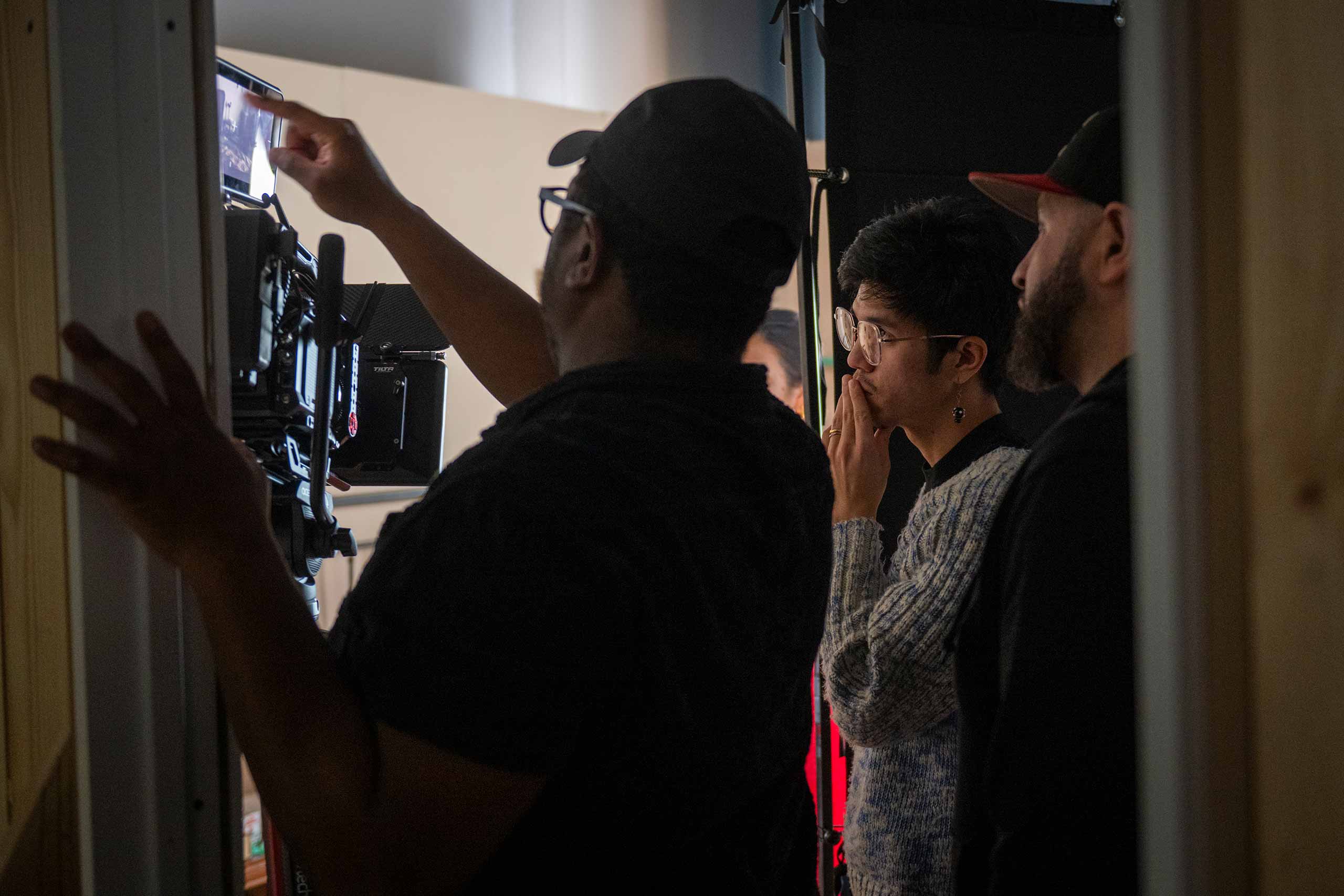
- The Department of Visual And Performing Arts has a strong commitment to contemporary and emerging forms — including digital film scoring, virtual reality, video essays, podcasting, microbudget social documentary, meme culture, acoustic ecology, and interactive theater — while developing a deep understanding of historical and theoretical frameworks.
Featured courses
Meme Culture and Comedy Theory
This course directs a psychoanalytic lens at postmillennial “meme culture” in order not only to understand our love for memes as a communication medium, but also to understand the nature of human subjectivity vis-à-vis humor, jokes, and laughter.

Podcasting – technique & story
This course is designed to acquaint students with all aspects of podcasting — from sound gathering to post production — to help them become effective producers and storytellers.

Soundscapes & Acoustic Ecology
This course is an introduction to acoustic ecology, the study of the relationship between living things and their surrounding soundscape. We will reconsider the place of humans in the natural world, and how the sounds we experience – both the ones we make and the ones we are subject to – studying the relationship, mediated […]
“My artwork has evolved from drawing and painting to exploring other media. I’m watching my skills grow and develop, as well, in the media, culture and the arts program. And I can’t wait to see where it takes me.”
Alli Jutras
Class of 2019
Frequently asked questions
What exactly is the media, culture and the arts major?
Media, culture, and the arts is an interdisciplinary major that combines hands-on media production with the historical study and critical analysis of media. It draws on faculty and courses from across the university — including art history, screen studies, music, theater, English, sociology, and game design — and asks students to work seriously in three registers: making things, understanding where they come from, and analyzing what they mean. It’s a rigorous liberal arts major with a broad scope.
How is media, culture, and the arts different from screen studies or visual arts?
Those majors go deep in a single medium or discipline. Media, culture, and the arts is broadly focused by design. A screen studies major focuses on film and media, while a media, culture, and the arts student studies film history alongside music history. They may also produce a podcast, analyze meme culture, and design a public-facing intermedia project. Media, culture, and the arts is ideal for students who are curious about exploring and challenging the boundaries between disciplines.
Is it OK if I don’t know what kind of media I want to work in?
Yes — and in fact, the media, culture, and the arts major is particularly well suited to students who are drawn to multiple forms and don’t want to choose yet. The curriculum requires you to work across at least three different production disciplines before you focus. Many students discover unexpected strengths and interests in the process.
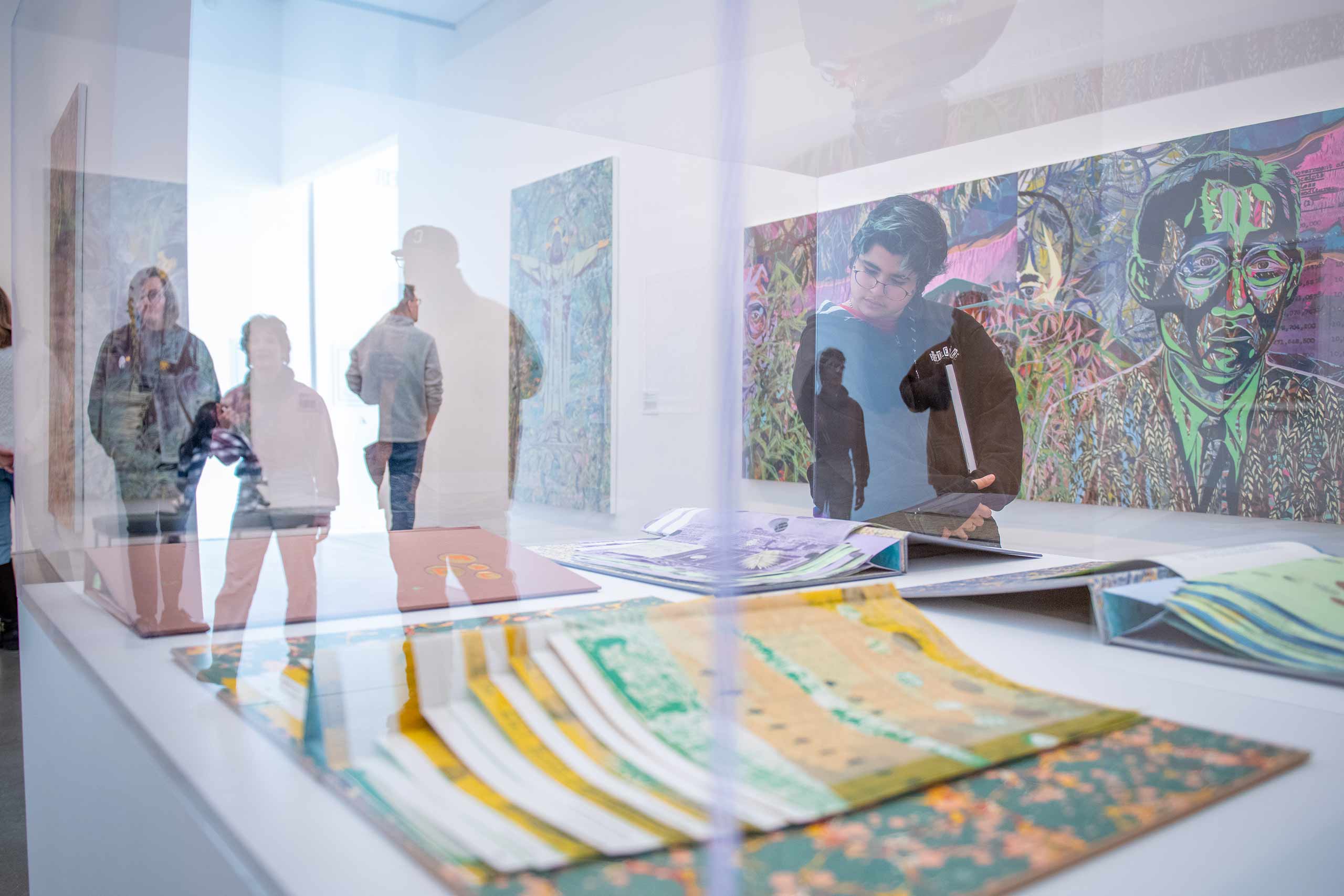
Above: Media, culture and the arts major, Sky Deitch ’23 curated The Lounge — a community art exhibit featuring 40 artists, including Clark students and Worcester residents — as their capstone project. Housed in the Traina Center for the Arts, the exhibit was designed to make art accessible and spark genuine conversation.