
Eating Ethically: Navigating Tough Choices in a Complicated Food System

Professor Ken MacLean, Ph.D., Sustainability and Social Justice and the Strassler Center for Holocaust and Genocide Studies, advocates for mindful eating, urging consumers to educate themselves about where their food comes from and the conditions under which it is produced.
By navigating these ethical dilemmas with awareness and intention, individuals can strive to make more responsible and meaningful food decisions.
To start, what is ethical eating?
MacLean: For me, especially in the classroom, one of my goals is to have students better understand where their food comes from, under what conditions, and what are the costs or impacts that can be positive or the ecosystems in which they emerge, the species, especially animals we consume for meat, on up to our health and the ways we eat in terms of interacting or having a social connection with people.
I don’t want to tell people what they should and shouldn’t eat. I would say the overarching principle for me might be no harm while bearing in mind it is almost impossible to eat today in our globalized food systems without somebody bearing the cost.
And that’s one of the challenges, as with awareness, recognizing that, and then saying, okay, is it possible for me to do harm reduction? In what ways can I become a more knowledgeable consumer and perhaps change my food ways support those organizations, what have you, that are trying to promote food ways that have a greater positive or beneficial impact than those that do not?
How do you personally balance animal welfare, labor rights, and environmental justice as a consumer?
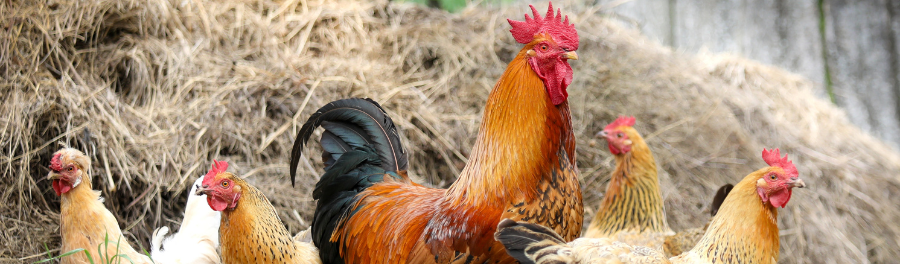
MacLean: In an ideal world, you would buy free range, uncaged chickens, for example, or beef or pork that was raised and slaughtered humanely. But short of going to the places where these foods, these animals are raised and the foods made out of them, it’s really difficult to verify. In fact, most animal raising places, certainly the more industrialized structures, you’re forbidden from going in or filming or anything.
To a certain degree, you have to take a leap of faith and trust when a product says it is X, Y, and Z, that the odds are greater than something that doesn’t say it. Whether you try and eat chicken that’s free range, cage-0free, organic, no hormones and so on. The challenge is that these foods generally cost more, sometimes a great deal more. And not everyone is in a position to spend that much more because of their income levels, the size of their family and so on. Everyone has to make decisions in the context of opportunities and importantly, the constraints they face.
How can an individual consumer be more mindful? Can a person actually make a difference?
MacLean: A well-educated consumer has the option or possibility of being a more ethical consumer, bearing in mind that sometimes knowledge be implemented because of the constraints you find yourself in. But without that knowledge, you can’t make an informed choice as soon as the choice is available to you. So as an educator, it’s hardly surprising. My answer is do research! Teach yourself, learn more.
If you have the resources and the commitment, support local food producers. Supporting local organizations like REC, the Regional Environmental Council, which, unlike most food markets, actually offers vegetables and other items that communities consume.
Learning about different food traditions, supporting them, and trying new dishes can be a powerful way to connect with others.
It fosters mutual understanding, appreciation, and assistance, creating a shared experience that brings people together. You might even discover new flavors you love while building meaningful connections across cultures.
Can small businesses adapt to more ethical choices while maintaining profits? Can it be sustainable?
MacLean: One of the success areas has been local food producers who enter into contractual relationships with restaurants that want fresh local foods that go into their dishes they serve. Support local food groups that are trying to help people to have access to healthy food. There are a whole variety of ways. It depends on what your passion is.
Once you figure out your passion, it becomes much easier. Find out what you care about and then see how you can get involved.
What is one thing each of us could do today to be more sustainable?
MacLean: Reuse and repair things instead of throwing them out. Buy things that have been lightly worn, instead of fast fashion that is going to fall apart in six months. Don’t upgrade your cell phone every time a new model comes out.
Consume less is the easiest way to be more sustainable.
I think just becoming more conscious of what we put in our bodies and eating better foods helps things become more sustainable. The standard rule is when you shop, shop around the where you can find fresh foods and avoid the middle to the extent you can. But, it’s not wrong to treat yourself every now and then – but it should be a treat and not an everyday thing.