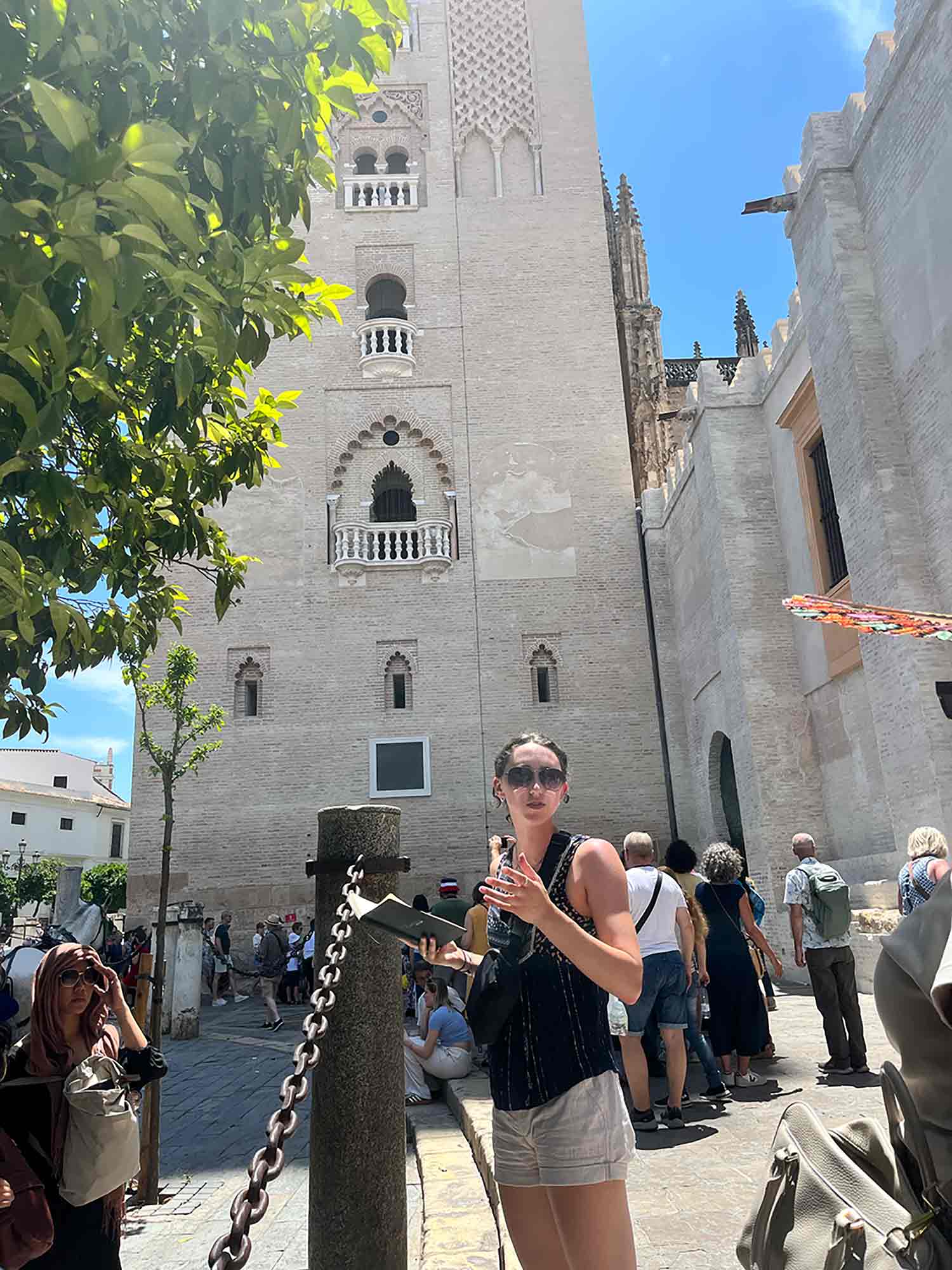

Studying abroad is about stepping into a new way of seeing. Cultural adjustment is a natural part of this journey.
You may begin with excitement, followed by moments of confusion, discomfort, or even doubt. This is all part of the process. With curiosity, humility, and preparation, culture shock becomes less of a barrier and more of a bridge. Moving through these stages helps you build the empathy, adaptability, and perspective that global citizenship requires.
One of the best ways to ease this transition is by learning the rhythms and realities of your host culture.
Start with the basics
- Government: Who is the president? What kind of government do they have?
- Language: Learn a few common phrases for your country of study.
- Food: You might be cooking for the first time abroad; learn some basic recipes and figure out measurement conversions.
- Laws: Learn them so you can follow them.
Respectful and sustainable travel
At Clark, we view sustainability through a wide lens—one that includes not just environmental responsibility, but cultural awareness, ethical travel, and global justice.
This approach is inspired by our membership in the United Nations Academic Impact (UNAI), which connects Clark to universities around the world working to advance the UN Sustainable Development Goals—from climate justice to peacebuilding to inclusive education. When you study abroad, you become part of a global learning community. Following the tips below can help you engage responsibly with the communities who welcome you.
- Use the local language as much as you can.
- Learn about cultural norms by talking with and learning from locals.
- Dress in accordance with the host country’s cultural expectations.
- Learn about your travel destination and how it might be involved in sustainable practices such as their human rights record, environmental conservation record, commitment to peace, etc.
- Do not take photos of people without their direct permission. Be respectful, some religions and cultures forbid photography. For more tips on responsible photography abroad, read the Overseas Security Advisory Council (OSAC) Report.)
Reduce your environmental footprint
- Bring a reusable water bottle and drink tap water when possible; either from the tap or after boiling when necessary
- Learn about local recycling and composting practices (rules and schedule) and follow them. They will probably be surprising to you!
- Use sustainable accommodations and transportation available when you travel
- Take buses, trains, and other local public transportation options to meet people, see another side of your host country and be green
Identity
Students who are preparing to go abroad should also be thinking about navigating their identity against the backdrop of another culture. Students should be aware of the cultural expectations and norms as they relate to race and gender, and building relationships abroad.
What is it like to be part of a non-majority racial group in a racially homogenous country? Or to experience being in the racial majority for the first time? How might the experiences of women differ from those of men? What do LGBTQ+ students encounter in cultures that are more or less accepting than the U.S.? These are just a few of the important identity-related questions to consider before going abroad and to continue reflecting on during your time away. Supporting this exploration is a key focus of the Study Abroad Office.
We recommend the following resources for LGBTQ+ students planning to study abroad:
LGBTQ+ Travel Safety Index: 203 Countries Ranked in 2023
Global Trans Rights Index: 203 Countries Ranked in 2023
Diversity Abroad publishes several guides that provide additional information and considerations for students studying abroad.
Study Abroad glossary
Culture shock
A sense of confusion, uncertainty, or anxiety that can affect people adjusting to a new cultural environment. Culture shock is not simply being “shocked” by cultural differences, but rather the gradual process of adapting to unfamiliar norms, routines, and expectations. It can manifest as feelings of homesickness, frustration, or fatigue, sometimes without an obvious connection to cultural causes. Understanding culture shock as part of the broader experience of cultural adjustment or transition fatigue can help students reframe these emotions as a normal part of adapting to life abroad.