Who are you and what are your practitioner sites?
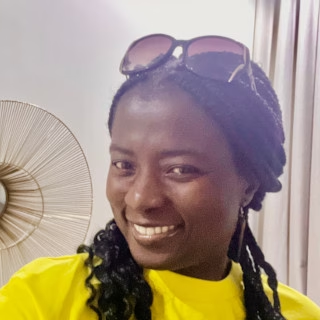
My name is Chantal Kassa, an Education Specialist with 20 years of experience across K–12 and community college settings. I currently teach middle school mathematics in the Nashoba Regional School District. I believe students thrive when they are appropriately challenged and learn in supportive, nonjudgmental environments where they feel safe to take risks and grow. This belief shapes my work both inside and beyond the classroom. As the founder of Skillz n’ Chillz, a youth entrepreneurship and enrichment program, I design hands-on experiences that allow students to explore their interests, discover their talents, and connect learning to the real world. Through entrepreneurship camps, career exploration, job shadowing, and mentorship, students gain experiences that build confidence, agency, and a broader sense of what is possible for their future. Across both spaces, my work is grounded in helping learners discover their strengths, take ownership of their learning, and connect what they learn to life beyond the classroom.
What inspired you to join the Doctoral Program in Transformative Education?
My decision to pursue the Doctoral Program in Transformative Education grew from questions emerging through my experiences as a middle and high school math teacher. Over the years, I have become increasingly concerned about students’ dependence on others, fear of failure, reluctance to take initiative, and lack of persistence and grit, and a tendency to settle for less than their potential – patterns that can limit their growth and success well beyond school. Yet my work with Genius Hour–style projects showed me a different possibility. When students are given meaningful ownership, space to pursue their interests, and opportunities to work through authentic challenges, I have seen curiosity, confidence, and capabilities emerge that traditional instruction does not always reveal.
These observations shaped my interest in reclaiming the classroom – creating spaces where students are active participants in learning, where productive struggle, curiosity, independence, and the joy of learning are normalized. For me, this also means valuing unstructured and interest-driven learning and recognizing that sometimes innovation means going back to basics: giving students room to think, explore, create, struggle, fail, and try again. It means reconsidering who holds the power to shape learning and making room for the tremendous potential our students bring. Transformative Education appealed to me because it offers the opportunity to examine these questions more deeply while connecting research, theory, and practice.
What do you hope the Doctoral Program in Transformative Education will help you accomplish in the future?
We ask students to be independent, resilient, adaptable, and prepared for an increasingly complex world, yet much of their educational experience leaves little room to practice these skills. What would education look like if we intentionally gave students more responsibility for their learning and more opportunities to develop the skills they will need as they move into adulthood? This question sits at the heart of my doctoral journey. I hope the Doctoral Program in Transformative Education will help me explore it through research and practice, with the goal of identifying strategies and models that can extend beyond individual classrooms and programs and be adapted across public schools and communities. Ultimately, I hope to contribute new knowledge that helps build an education system that prepares students not simply to pass the next test or earn the next grade, but to navigate the uncertainty, complexity, and possibilities of the world beyond school.