Memorandum of Understanding formalizes city-university partnership
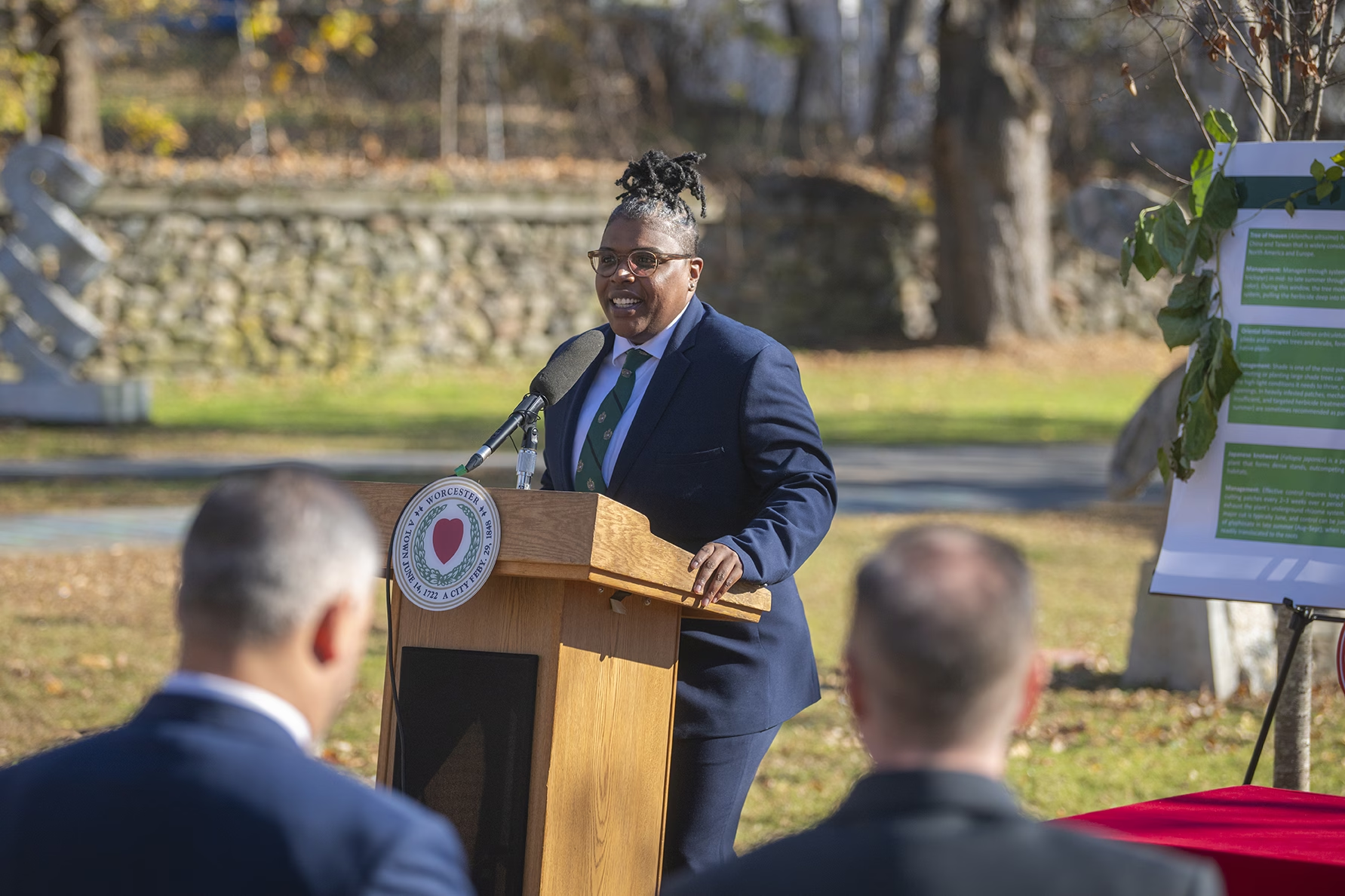
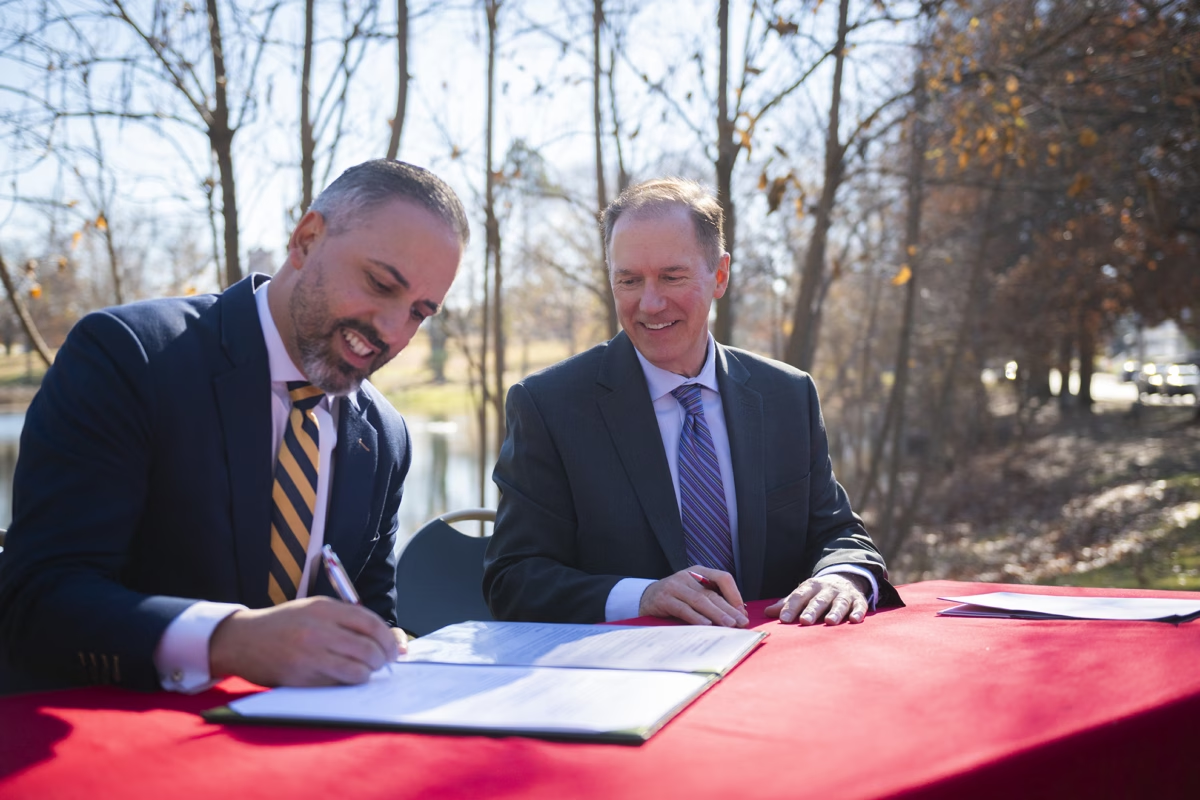
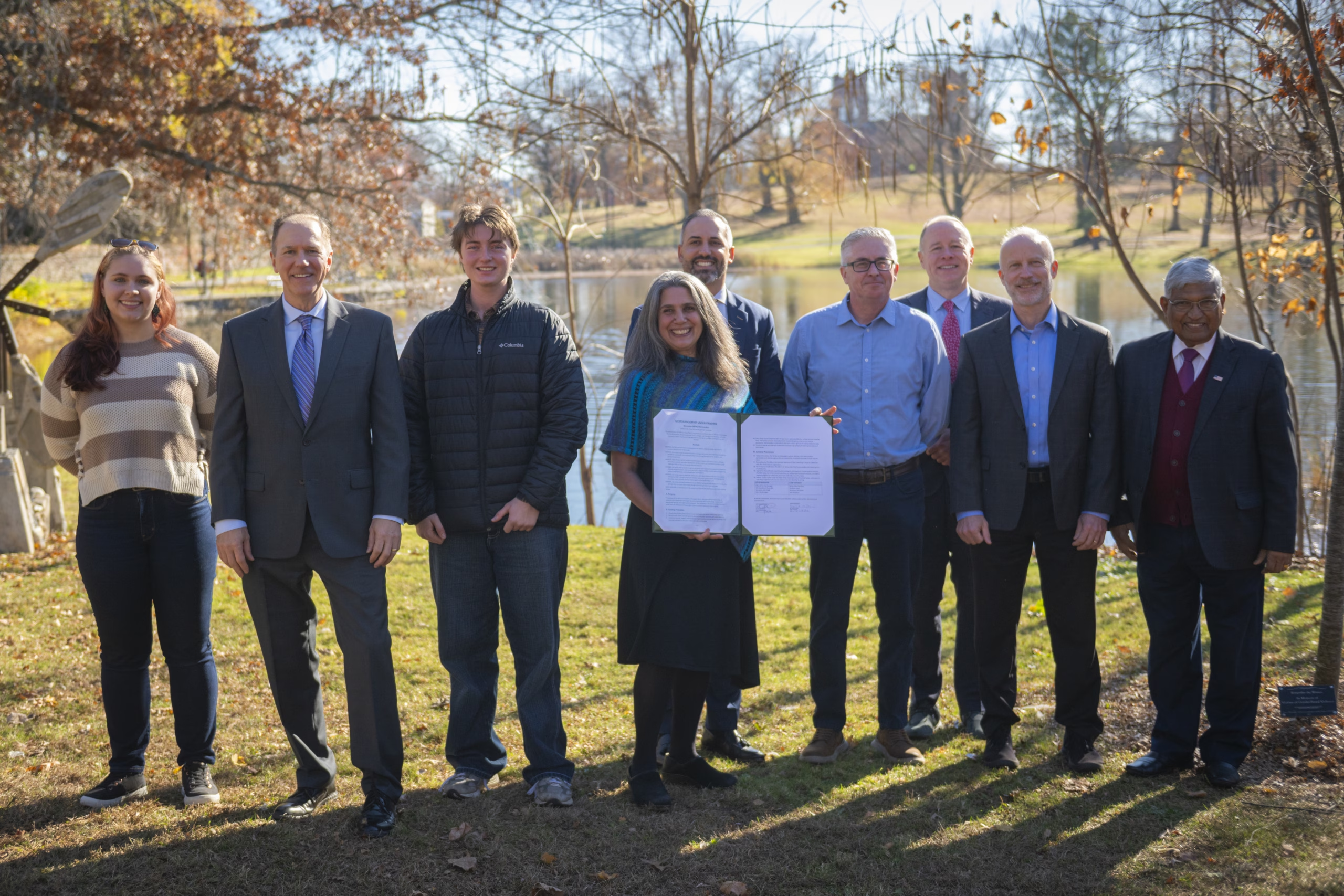
On an unseasonably warm mid-November day in University Park, Clark University and the City of Worcester signed a Memorandum of Understanding (MOU) that connects the city’s priorities with Clark’s teaching, research, and applied learning.
The newly formed Worcester Impact Partnership is supported by the Arthur Vining Davis Foundations’ Project IMPACT (Internships, Meaningful Practice, and Career Transitions). The funding, received in February, links Clark’s Problems of Practice courses and other applied learning experiences with paid internships, strengthening the connection between academic work and career preparation.
The partnership’s first project will address three invasive plant species affecting the city’s natural ecosystem: Tree of Heaven, which spreads prolifically and is a favorite of the destructive spotted lanternfly; Oriental Bittersweet, a vine that chokes native trees and blocks sunlight; and Japanese Knotweed, which crowds out native plants and degrades stream banks and wetland habitats.
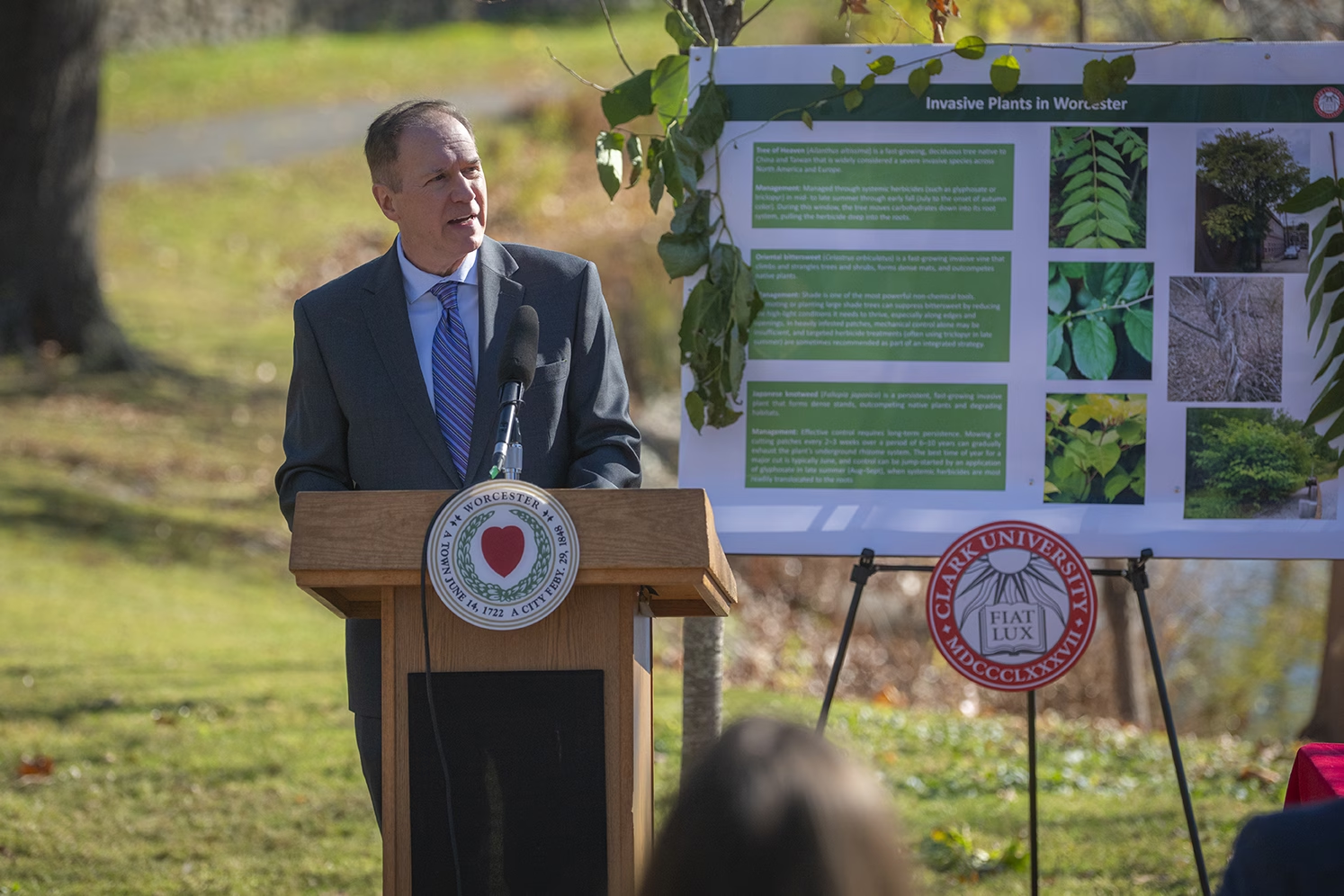
“The health and vitality of the city is inextricably linked to the health and vitality of Clark University,” President David Fithian said at the Nov. 18 signing ceremony. “This project allows more of what happens in Clark classrooms to extend into the world, and allows more of the world around us to come into the educational process for our students.
“Clark can bring faculty expertise, student research opportunities, and, in time, through our courses and through internships, opportunities to have an impact on real-world challenges that the city faces.”
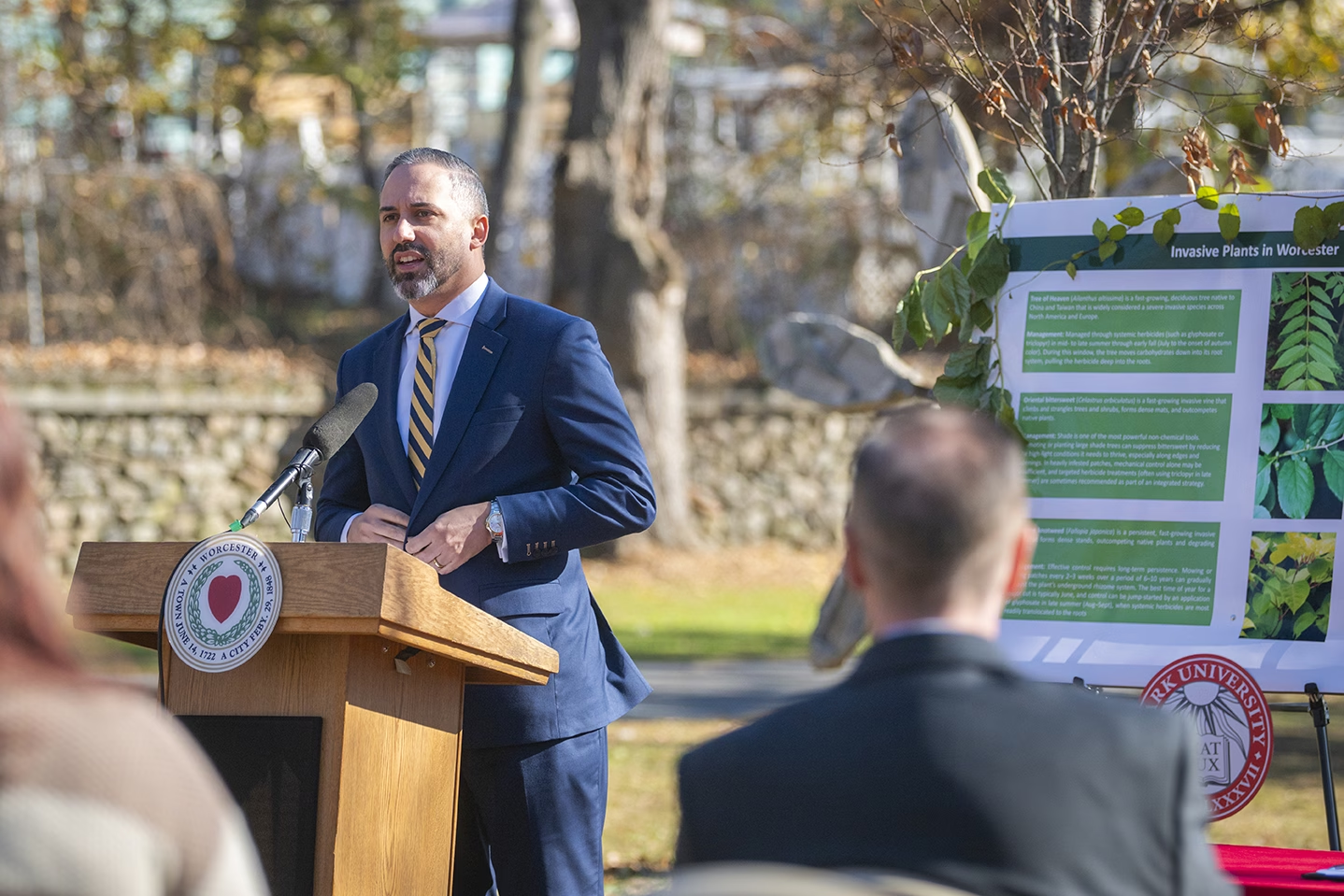
Worcester City Manager Eric Batista said the MOU will allow the city to begin collaborating with Clark’s School of Climate, Environment, and Society to address a very visible issue in the city. “Invasive plants have been taking over our trees, streets, and parks, choking out native vegetation, and negatively impacting the animals and insects that rely on the vegetation for food and shelter.”
The city created an invasive species management plan, he added, but lacks the capacity and resources to develop and execute it.
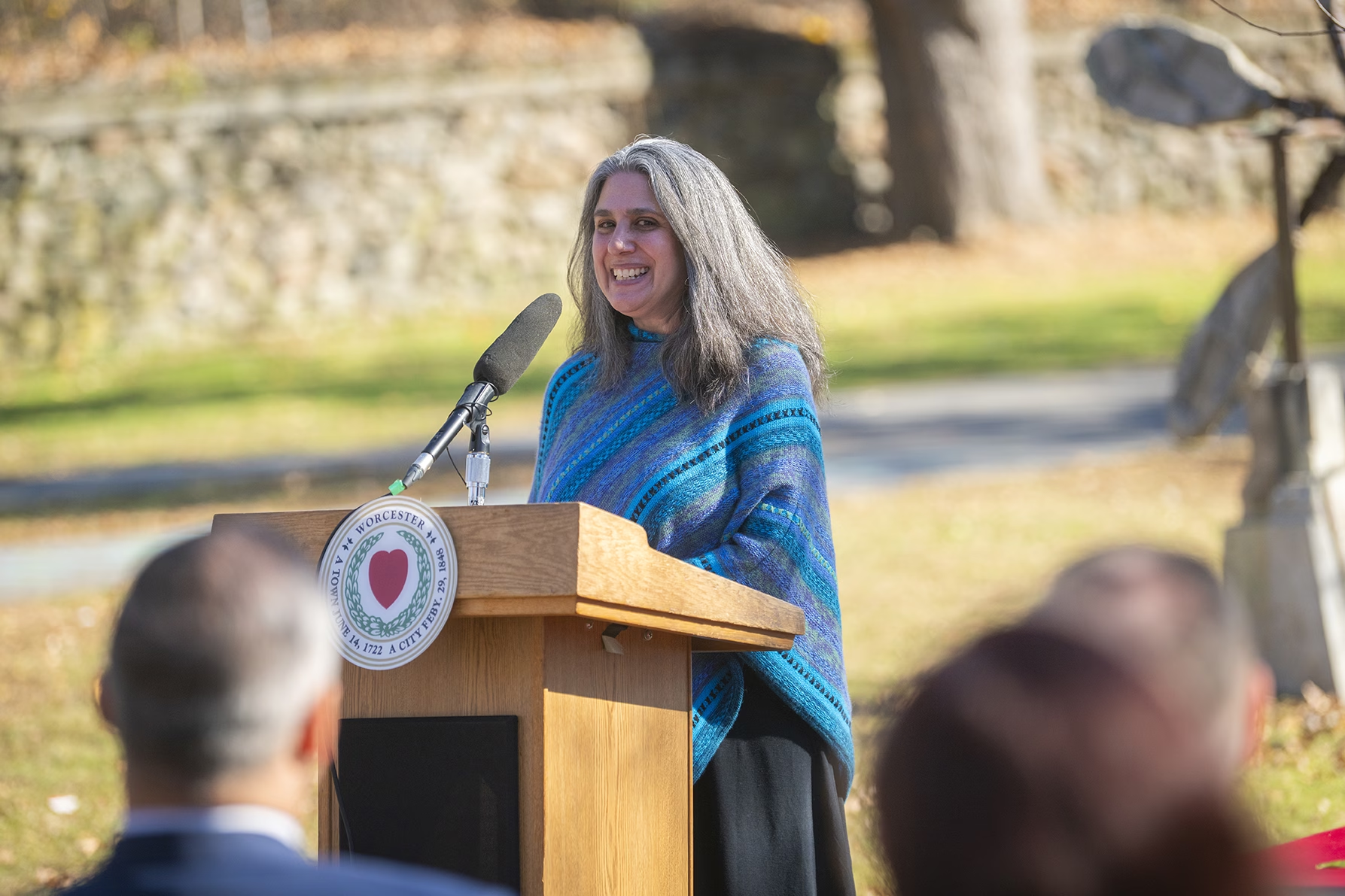
Dean of the College Laurie Ross noted that she has served as a research partner with the city for 20 years, focusing on youth violence and interventions. “I’ve seen the value and the role that a university research partner can play in these kinds of efforts, and I’ve deeply appreciated how the city manager, the mayor, and all the municipal offices have facilitated our access to information and have really been open to so much of the work that we do together.
“Our community partners play a huge role as teachers and give so much of their knowledge and time to our students — I’m thrilled that we will be able to give something back to our partners and to the city.”
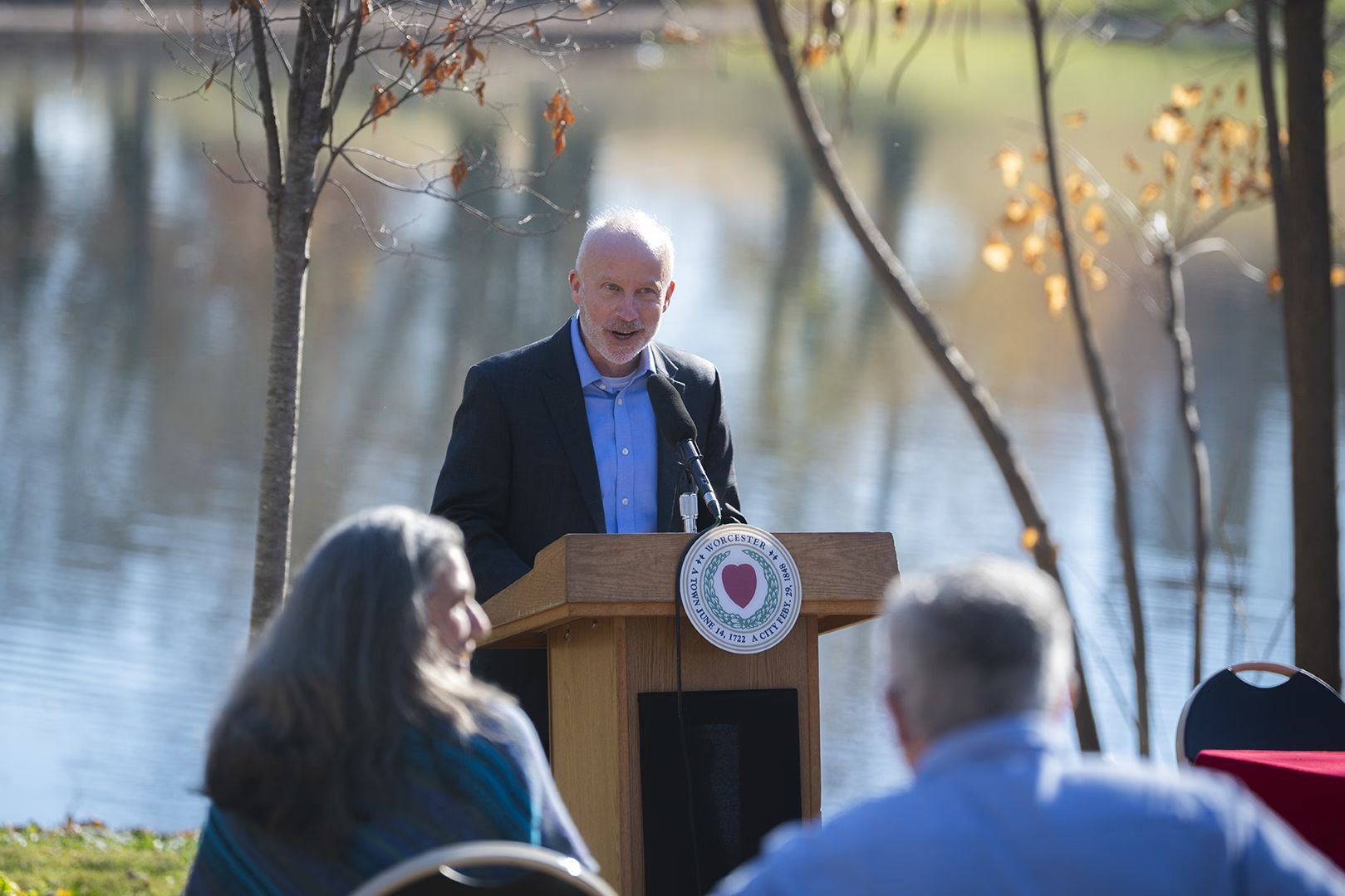
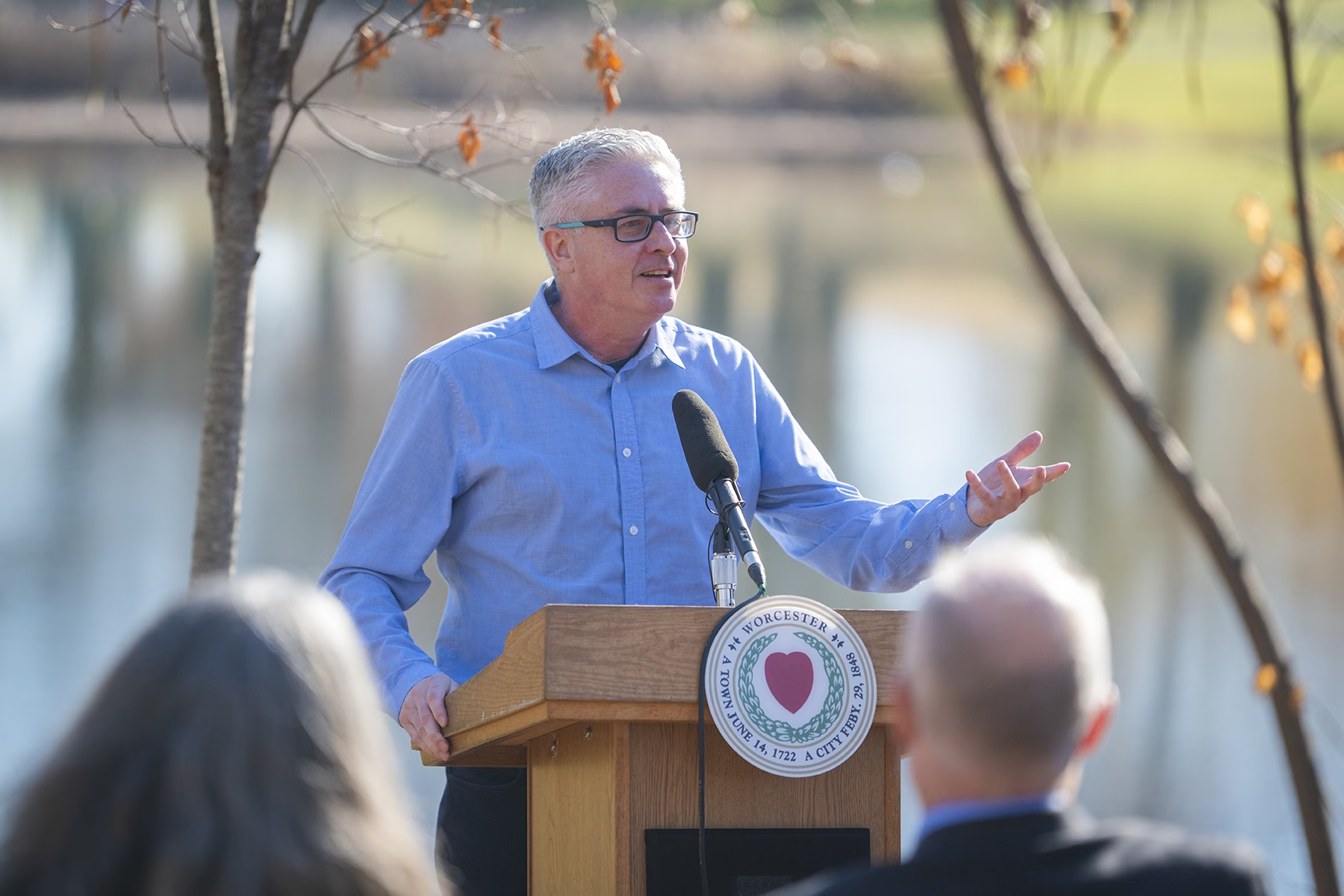
John Odell, Worcester’s chief sustainability officer, said the MOU “formalizes a long-standing partnership built on a shared commitment to research, innovation, and environmental stewardship.” He cited the city’s collaboration with Clark students and faculty on tree canopy and urban heat island research, which has provided valuable information.
Odell said students will help identify and map priority invasive species on municipal properties throughout Worcester, assess the value and impact of targeted management efforts, and provide residents with the tools and knowledge they need to address invasive species on their own properties.
“We are strengthening a collaborative, data-driven approach to environmental stewardship that will enhance the health, resilience, and sustainability of our community for years to come,” Odell said.
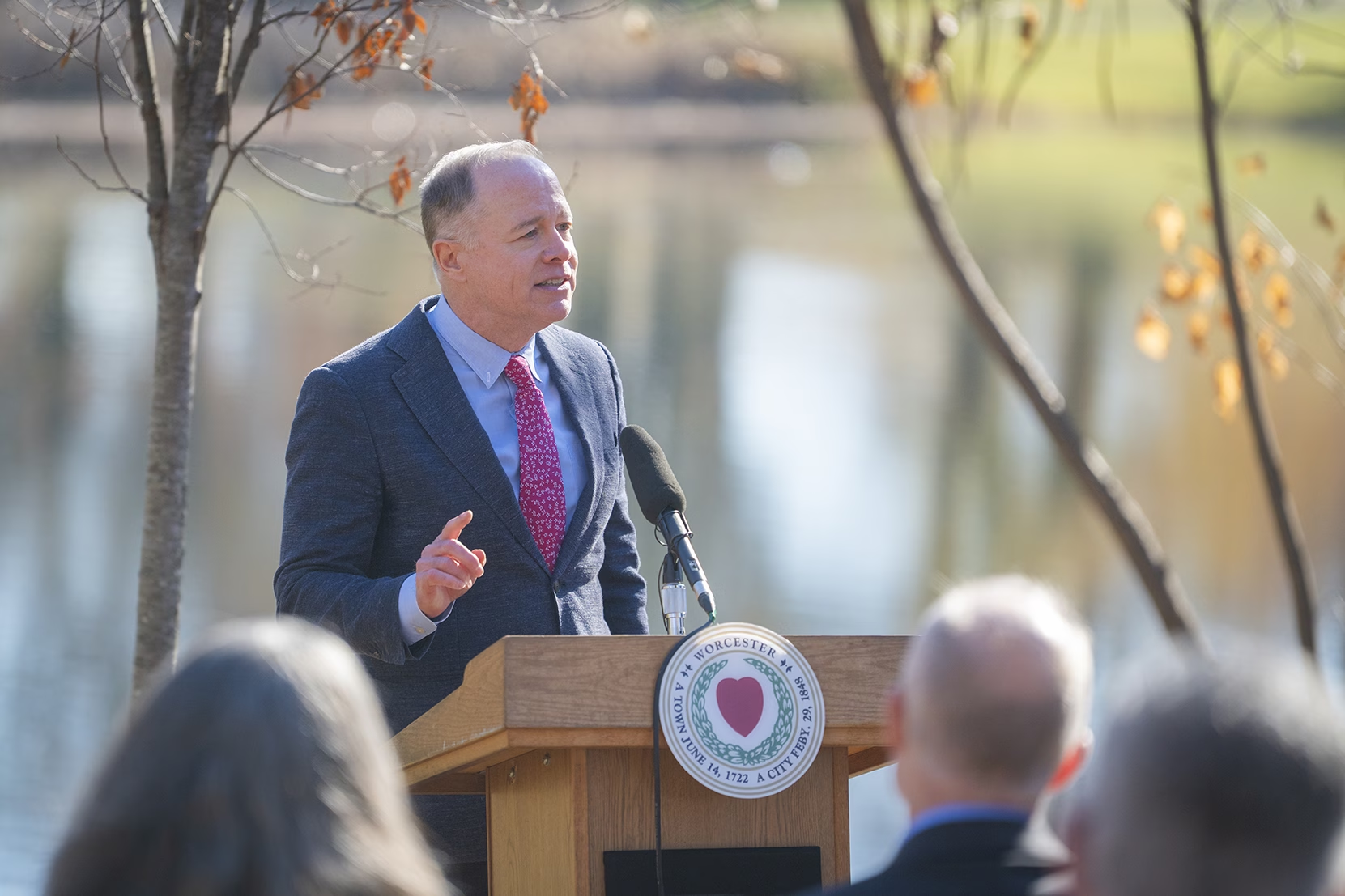
Lou Leonard, the D.J.A. Spencer Dean of the School of Climate, Environment, and Society, said the school was created to take on environmental challenges like this “and build new and deeper collaborations between universities and society.
“This partnership between the City of Worcester and Clark University represents that kind of deep and authentic partnership where cities take the lead, showing us their vision for the future, and universities bring expertise and energy from faculty and students to contribute to that vision,” Leonard said. “To make this work, Clark and CES are designing our programs and courses to take on city and community needs.”
“When cities and universities work together in this way, we become a force multiplier that can meet this moment that we all face,” Leonard said. “To our partners in the city, you set the vision, and we will bring our faculty, our students, and our energy to make it real.”
Geography Professor John Rogan, who is co-director of the Human-Environment Regional Observatory (HERO) at Clark, said that before the outbreak of the Asian long-horned beetle nearly 20 years ago, 80 percent of the city’s street trees were Norway maples — itself an aggressive invasive species.
“The lack of plant diversity in cities can lead to extreme vulnerabilities,” Rogan explained. The longhorned beetle infestation resulted in 30,000 trees being cut down across Worcester and replaced with resilient native plants.
Rogan added that the Hadwen Arboretum, a 26-acre urban forest owned by Clark, has been a “living lab” for faculty and students to work together on research projects, including how to combat invasive vegetation.
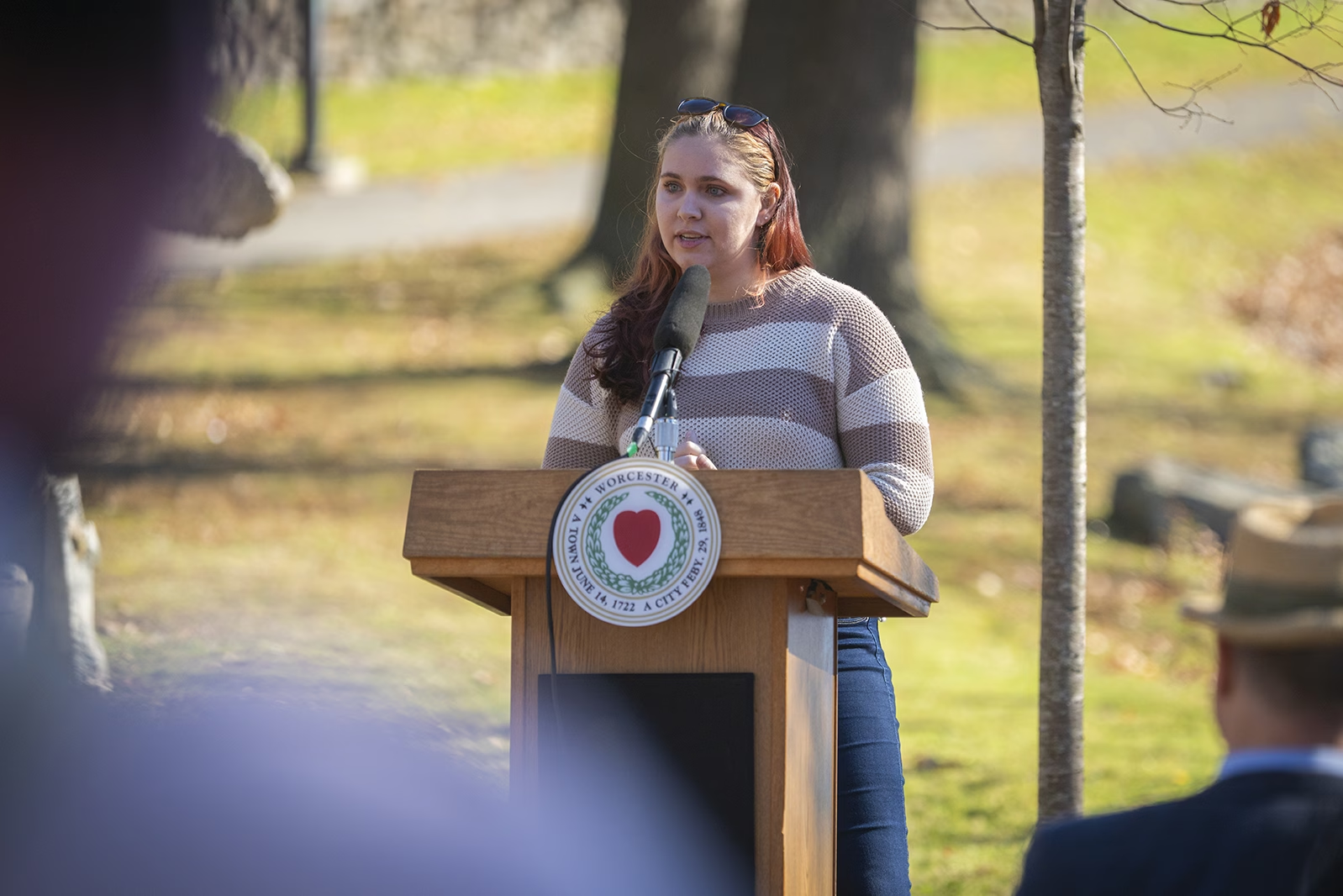
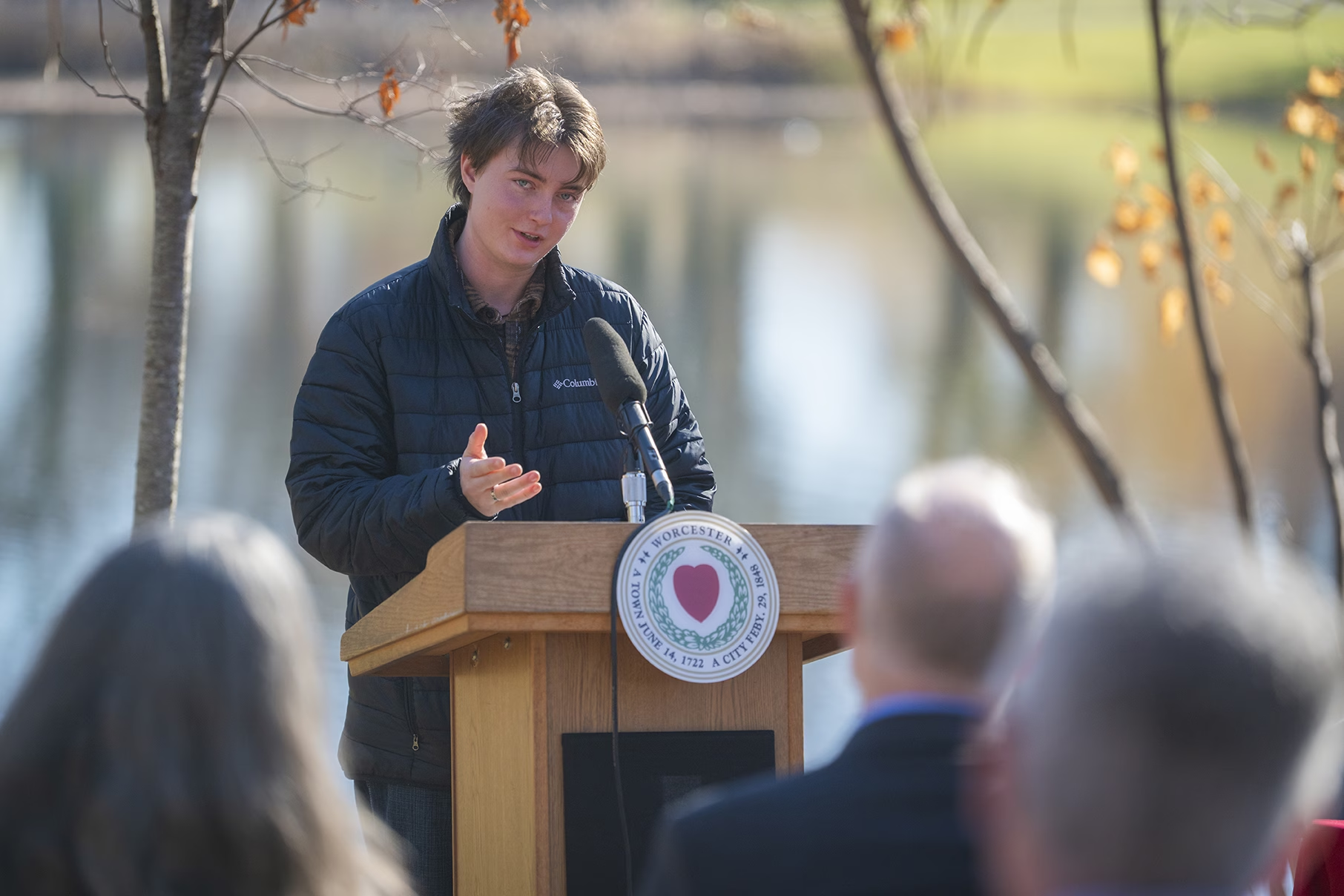
Doctoral student Daley O’Keefe, who has conducted biology research in the Arboretum as part of the Mathis Lab, and Jamie Young ’27, a Hadwen forestry coordinator and former HERO fellow, each spoke about the importance of Clark students’ research on biodiversity and the effects of invasive plants.
“Learning more about invasive plants and how they change our environment, especially within cities and with the resources that we have at Clark University, is essential,” O’Keefe said. Eradication may not be possible, but reducing their prevalence can help “bring back that native biodiversity that makes our city so beautiful.”
Young said that invasive species have a knack for survival. “They survive freezes and heat waves that their native counterparts cannot,” he said. “They push out plants that can sequester carbon better than they can or create wildlife habitat for native species. These problems will only become bigger as climate change becomes more intense, and invasives will thrive in that.”