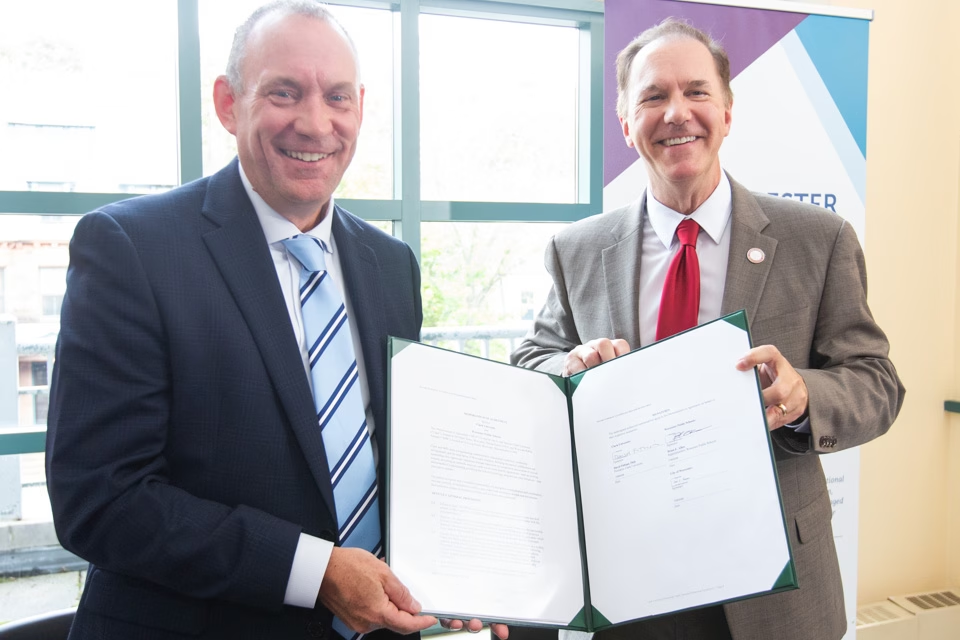

Clark University and the Worcester Public Schools today signed a Memorandum of Understanding that formalizes and strengthens a decades-long partnership dedicated to improving educational opportunities for Worcester students, supporting educators, and creating pathways to college and careers.
The agreement, which was signed at a ceremony held at Claremont Academy, just a short walk from Clark, establishes a framework for continued collaboration across teaching, learning, research, professional development, and community engagement. The MOU reflects both institutions’ shared commitment to educational excellence, opportunity, and community impact.
“This partnership is not simply an agreement between institutions. It is a partnership carried forward by people who care deeply about Worcester and its future,” said Clark President David Fithian, shown above right signing the MOU with Worcester Public Schools Superintendent Brian Allen). “We have been part of Worcester for nearly a hundred and forty years, and over that time, we have learned a simple but important truth: The future of Clark is inseparable from the future of Worcester. When Worcester thrives, Clark thrives. When Worcester students succeed, our entire community succeeds. And when institutions work together to expand opportunity, everyone benefits.”
Importantly, Fithian said, the knowledge, learning, and opportunities shared by Clark and WPS flow in both directions. “This is truly reciprocal,” he said.
Worcester Public Schools Superintendent Brian Allen, himself a Clark alum (Class of 1992), noted that more than 200 Clark University alumni work for the Worcester Public Schools, including 120 classroom teachers, nine principals, six assistant principals, and instructional coaches. Many are graduates of Clark’s Master of Arts in Teaching program, which has been a pipeline for teachers into the city’s schools.
He cited Clark’s accessible programs and dual enrollment offerings that “contribute to our mission of preparing thoughtful, engaged students for lifelong success in an evolving world.” Since 2000, 165 Worcester residents have attended Clark tuition-free through the University Park Partnership Program, he said, and the UPP scholarship zone was expanded by 26 streets in 2023, enabling an additional 1,100 students to qualify for the scholarship. This fall, eight graduates of the University Park Campus School and two graduates of South High School are attending Clark tuition-free with the help of UPP scholarships.
“Thanks to this partnership with Clark University, we’re opening doors to life-changing opportunities for students, including those who didn’t think it was possible to pursue higher education,” Allen said.
Under the MOU, Clark and WPS will collaborate in several key areas, including:
- Curriculum development and classroom partnerships between Clark faculty, students, and WPS educators;
- Internships, practica, clinical experiences, and other field placements for Clark students in WPS schools;
- Joint research and faculty collaborations;
- Professional development opportunities for WPS teachers, administrators, and staff;
- Expansion and support of scholarship opportunities for Worcester students;
- Development of summer and afterschool enrichment programs;
- Creation and growth of dual enrollment and early college programs; and
- A “Grow Our Own” teacher pipeline initiative designed to support Worcester students, paraprofessionals, and community members interested in pursuing careers in education.
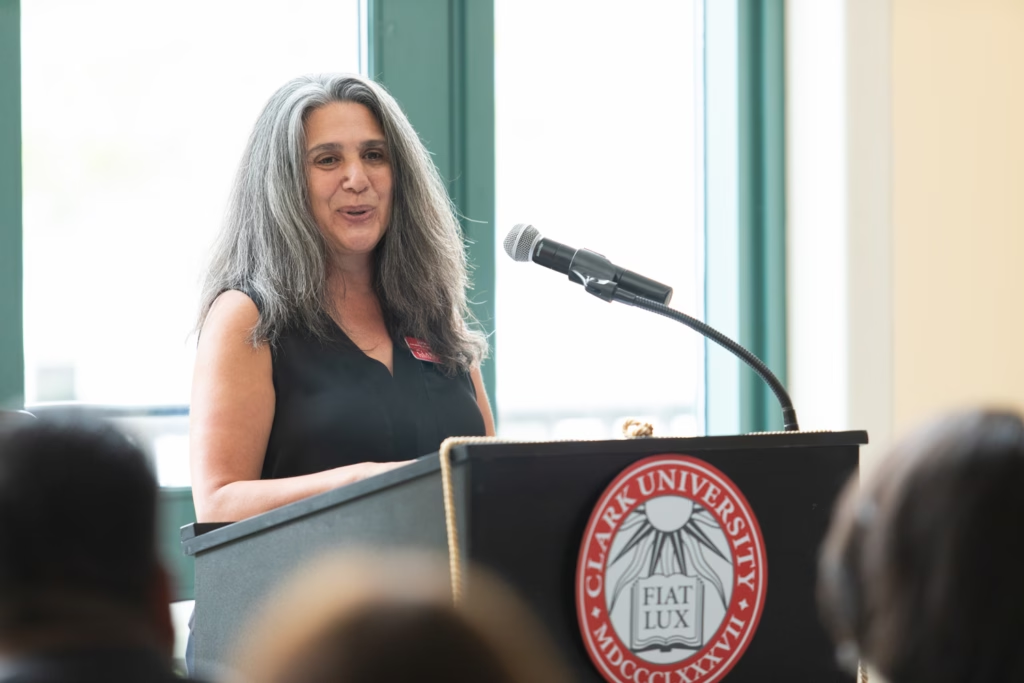
Laurie Ross, associate provost and dean of the college, noted that while Clark and the Worcester Public Schools continue to collaborate on meaningful educational experiences, excitement also is building for future initiatives. Among those are the expansion of pre-K-12 STEM outreach opportunities with Clark faculty, a more intentionally structured set of college offerings for high school students, and fresh possibilities envisioned in the work done through the University Park Scholars program, which fosters community connections.
The future of Clark is inseparable from the future of Worcester.
President David Fithian
“Our students thrive together,” Ross said, “and our educators are learning together.”
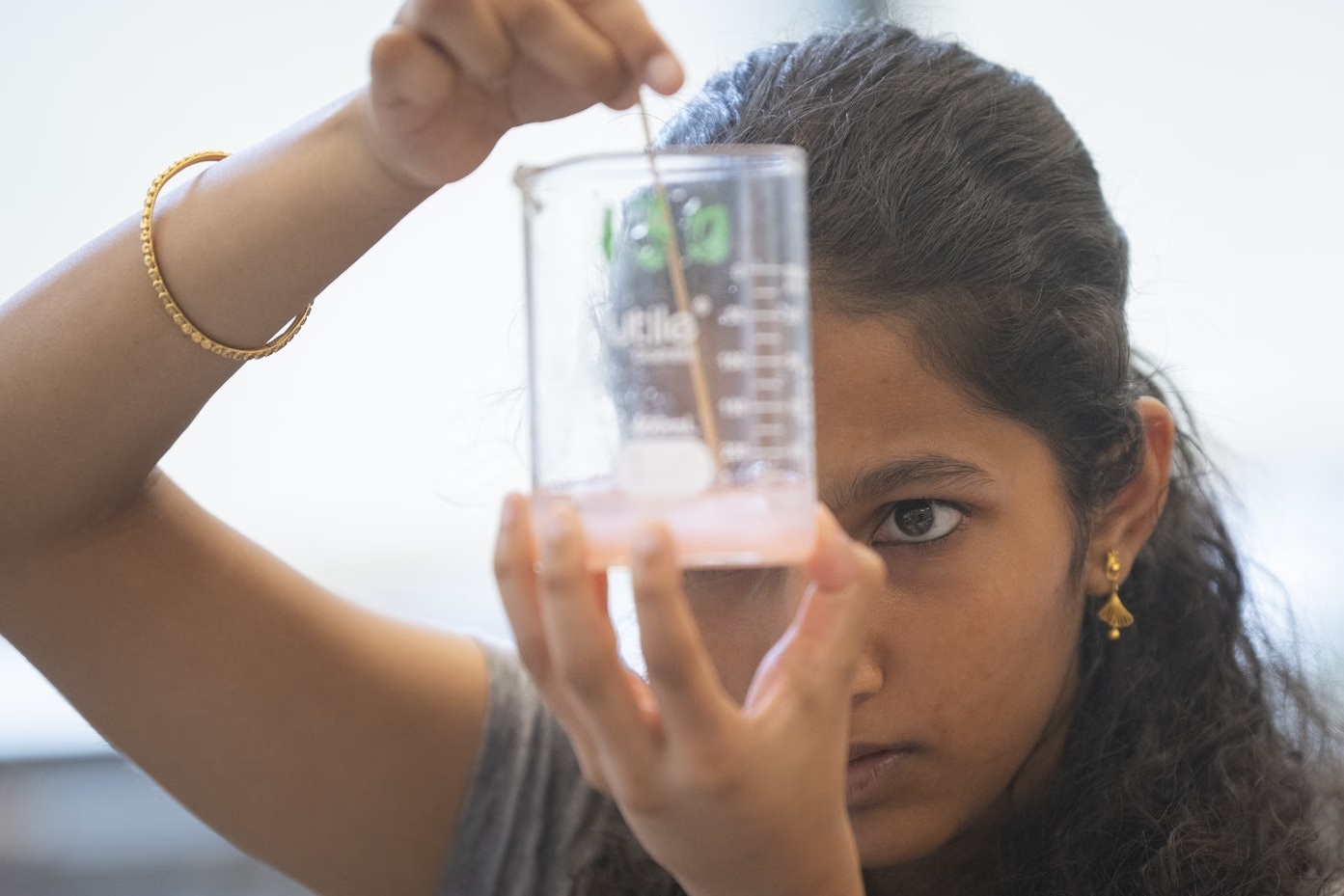
Clark faculty across multiple disciplines have forged meaningful partnerships with community organizations to expand educational opportunities for elementary- and high-school students; to conserve urban green spaces; to improve housing and health care and more. Clark faculty frequently host students in their classrooms, and partner to give place-based STEM demonstrations at local waterways; the Education Department works with the WPS to evaluate, design and expand bilingual offerings; and historians in Clark’s Strassler Center for Holocaust and Genocide Studies are collaborating with high schools to teach students about genocide.
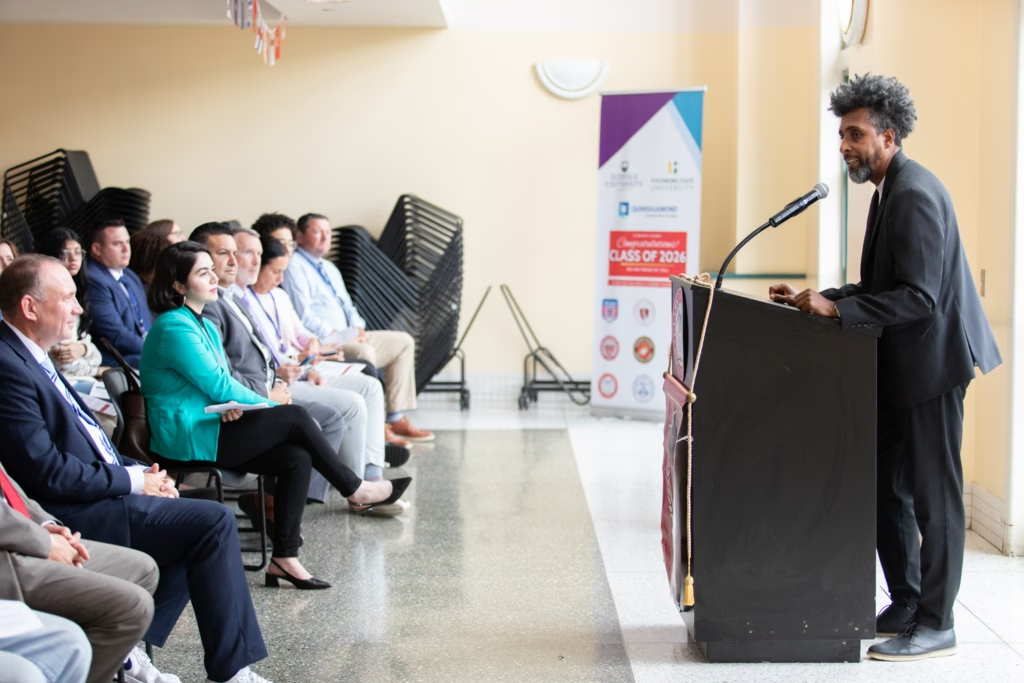
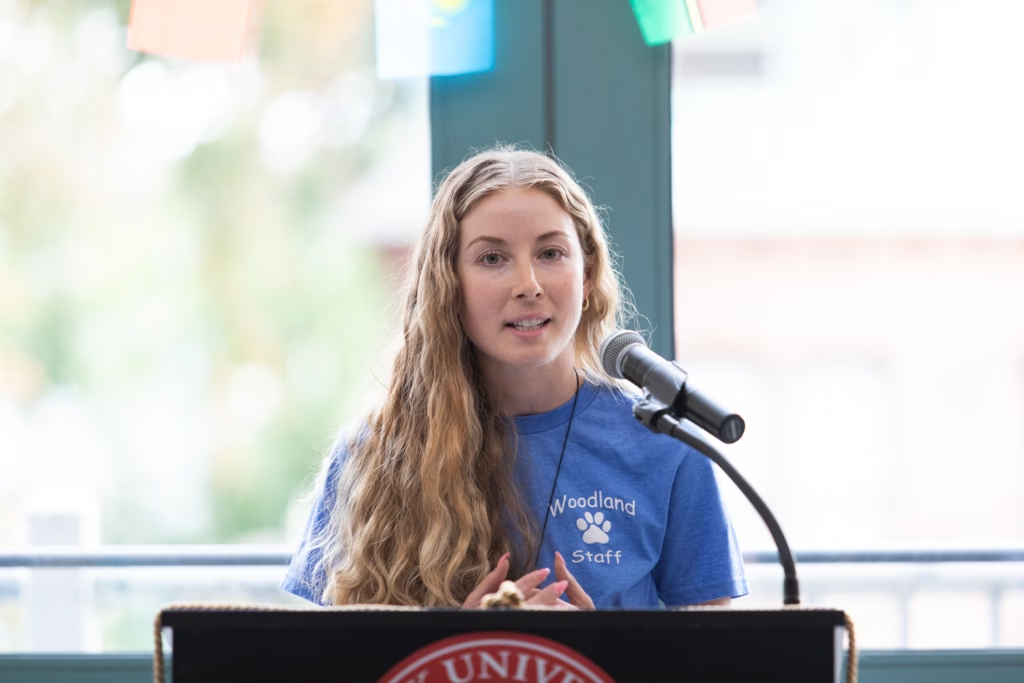
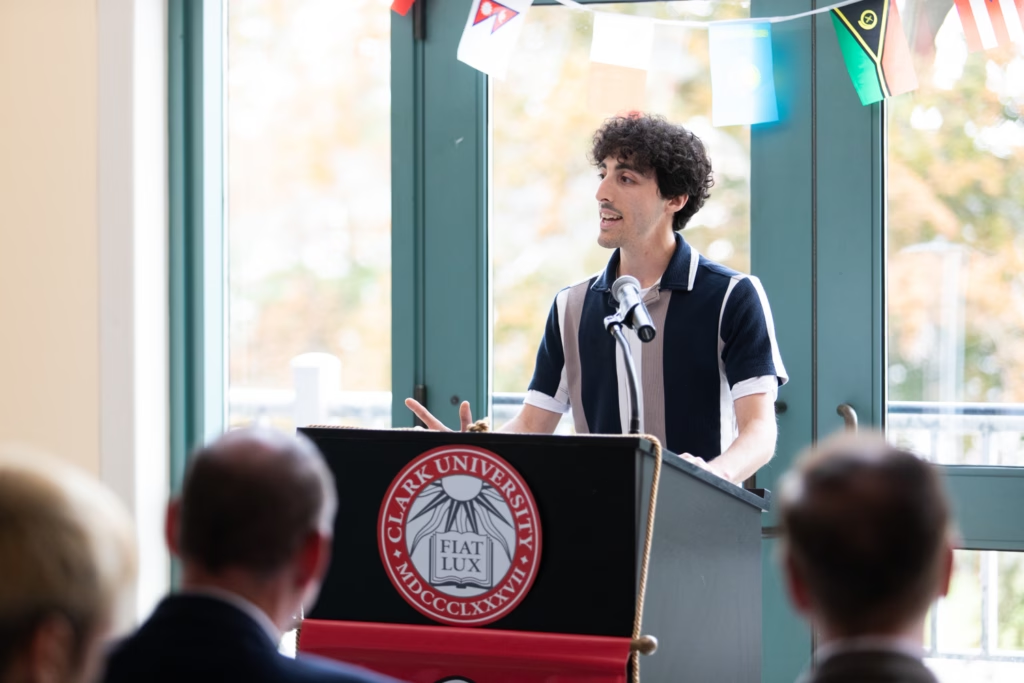
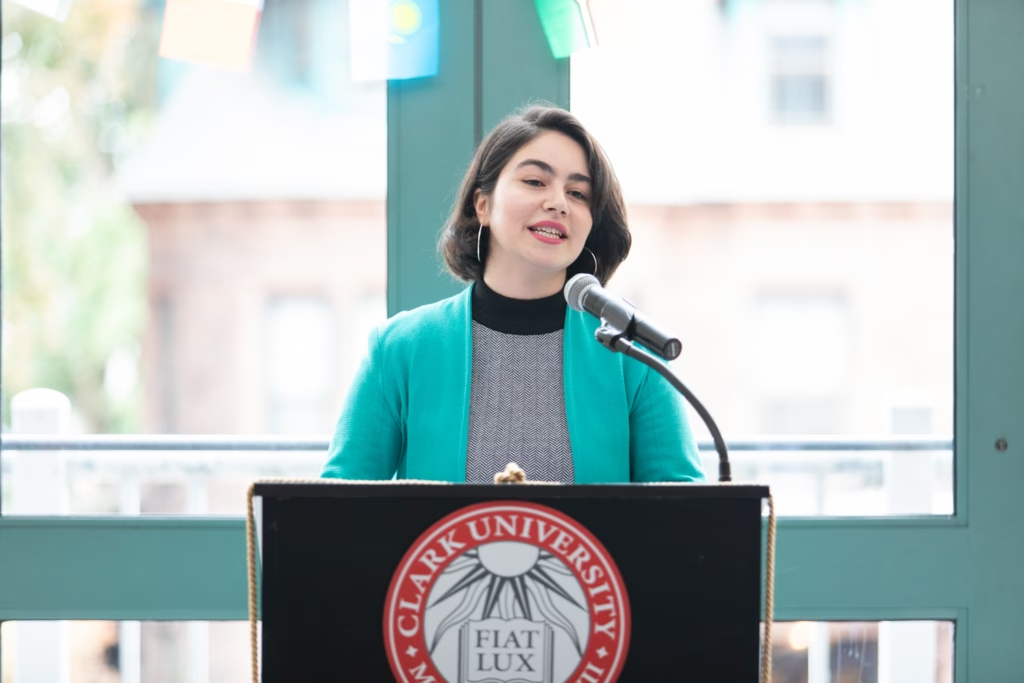
The signing ceremony at Claremont Academy, one of Clark’s six partner schools, featured speakers who shared how this enduring partnership has impacted their lives. Speakers included Anahit Marutyan ’29, a graduate of Claremont Academy who is now a sophomore at Clark; Nate Kapiloff ’22, MAT ’23, a math teacher at Claremont Academy who participates the Bruce Wells Scholars Upward Bound program; Eduard Arriaga-Arango, associate professor and chair of the Department of Language, Literature & Culture, who spoke about Clark’s Herencia y Cultura Hispánicas (HCH) program (or Hispanic Culture and Heritage program) that enables Spanish-speaking undergraduates and Worcester residents to connect over language; and Sophie Stanton ’20, MAT ’21, a Clark alumnus who spoke about her experience teaching in a dual-language program at Woodland Academy.
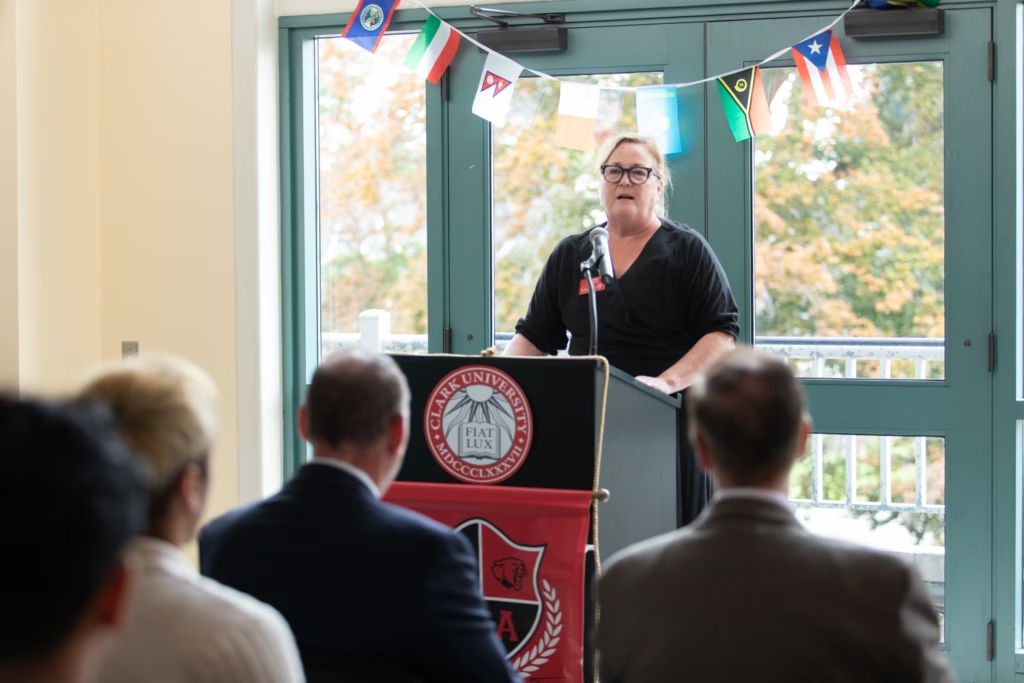
Several of the 22 candidates currently in the MAT program also attended the event. Holly Dolan, chair of the Department of Education and director of the Adam Institute at Clark, offered welcoming remarks.
Next year will mark 30 years since the opening of the University Park Campus School, the neighborhood “School with a promise” that quickly earned a reputation as a national model for town-gown partnership.
The MOU agreement states that Clark and WPS leaders are required to meet regularly to assess progress, identify new opportunities for collaboration, and ensure the partnership continues to meet the evolving needs of students and educators.