‘There’s a million different ways to go about pursuing your interests’
Jackie Wallis ’26, M.S. ’27, visited the Monterey Bay Aquarium as a kid growing up in Northern California, gazing in awe at the extensive jellyfish exhibit and peeking at the garden eels. She dreamed of becoming a marine biologist.
Next year, after Wallis earns her master’s degree in biology through the 4+1 Accelerated Master’s Degree program, she could find herself doing the work of those childhood dreams.
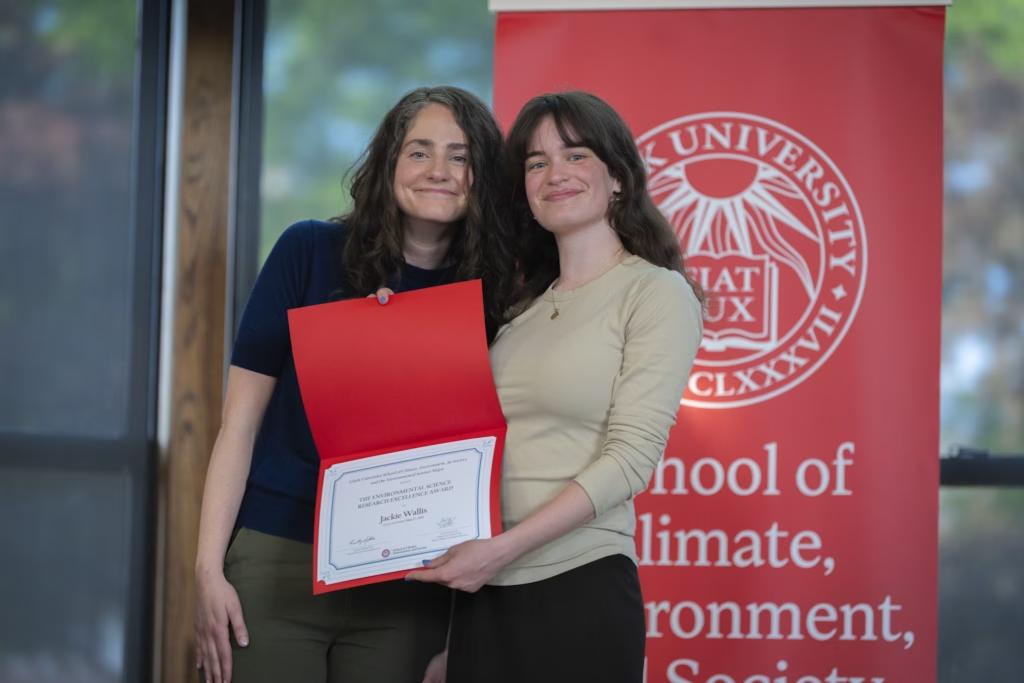
“To have a full roundabout moment, I could work at this aquarium that I grew up loving, but from a microbiology entry point it is so cool,” Wallis says during an interview by the Ahlgren lab in the Lasry Center, where she has spent countless hours conducting research throughout her Clark career. “I think it just goes to show that when you go to college, you realize there’s a million different ways to go about pursuing your interests.”
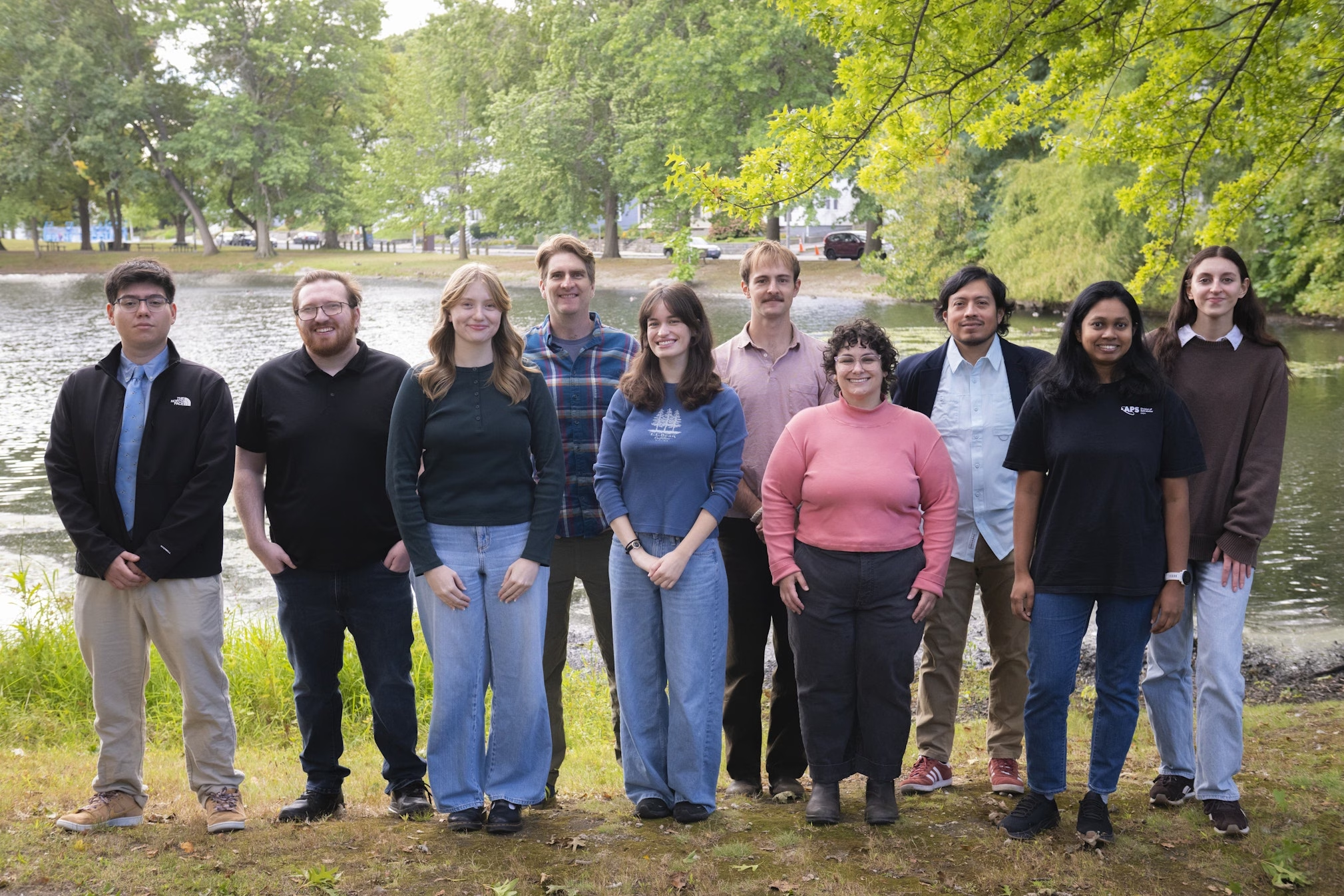
Wallis met her advisor, Biology Professor Nathan Ahlgren, just a month or so into her first year at Clark, while she was an environmental science major on the environmental and conservation biology track. The two attended a seminar at the George Perkins Marsh Institute, and connected. A few months later, Wallis joined the professor’s lab, which researches the ecology and evolution of marine cyanobacteria.
“Last year, every second that I wasn’t in class, I would be in the lab working through all of the 100-plus samples that I had collected alongside the Worcester Cyanobacteria Monitoring Collaborative. I extracted DNA with the end goal of sending it off to get processed and sequenced,” she says.
These days, Wallis’ work in the lab looks much different. She is a teaching assistant for Ahlgren’s Physiological Ecology of Marine Algae course and spends a lot of time prepping the space for students conducting experiments on a strain of cyanobacteria. “These bacteria are responsible for about 50% of the oxygen on Earth. They’re extremely important for humanity’s survival, and only if there’s an overabundance do you get the toxic blooms.
“Learning how to teach and help plan curriculum is a new set of skills that I haven’t had to use before now,” she acknowledges.
‘It has taught me tenacity’
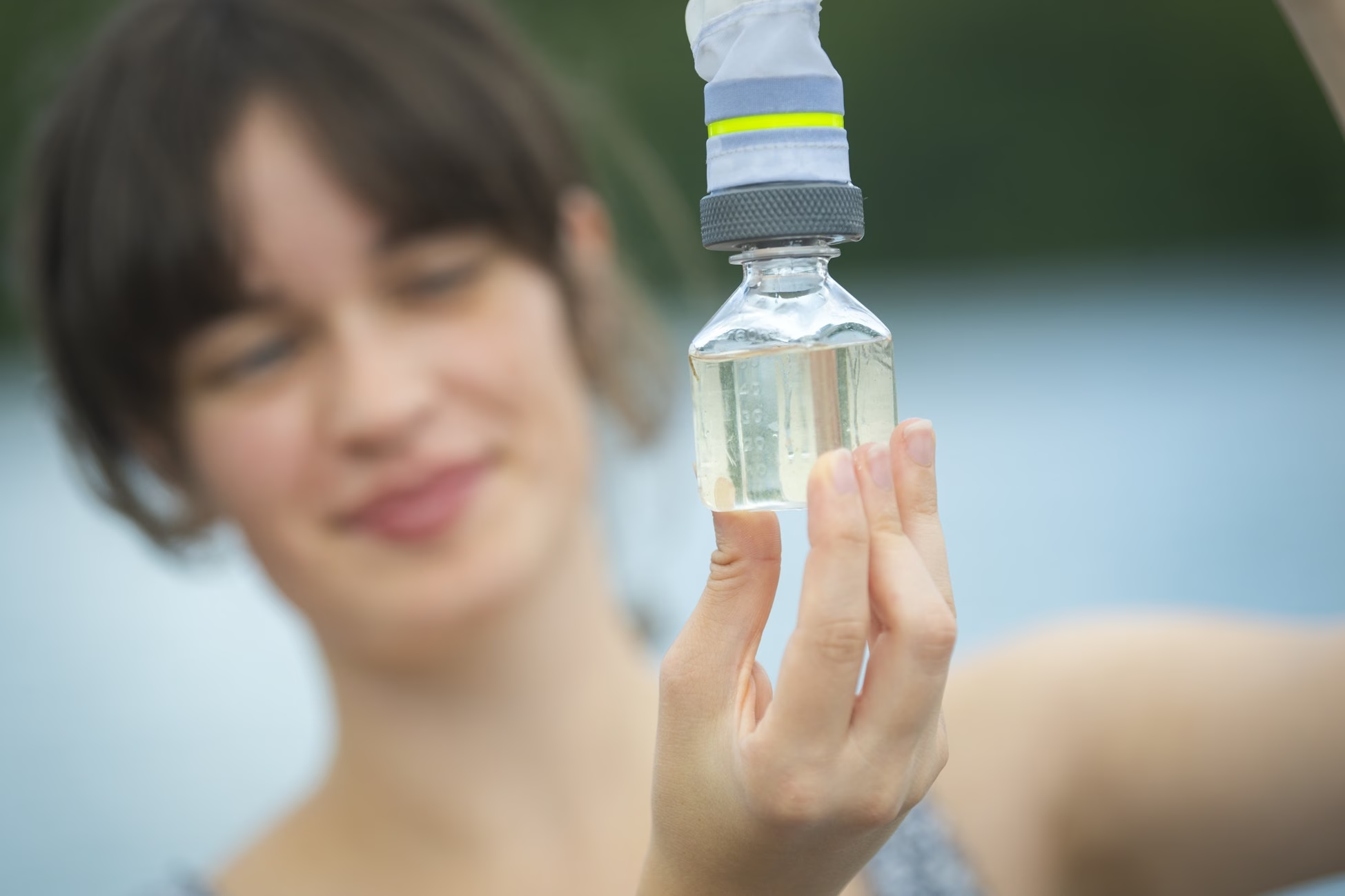
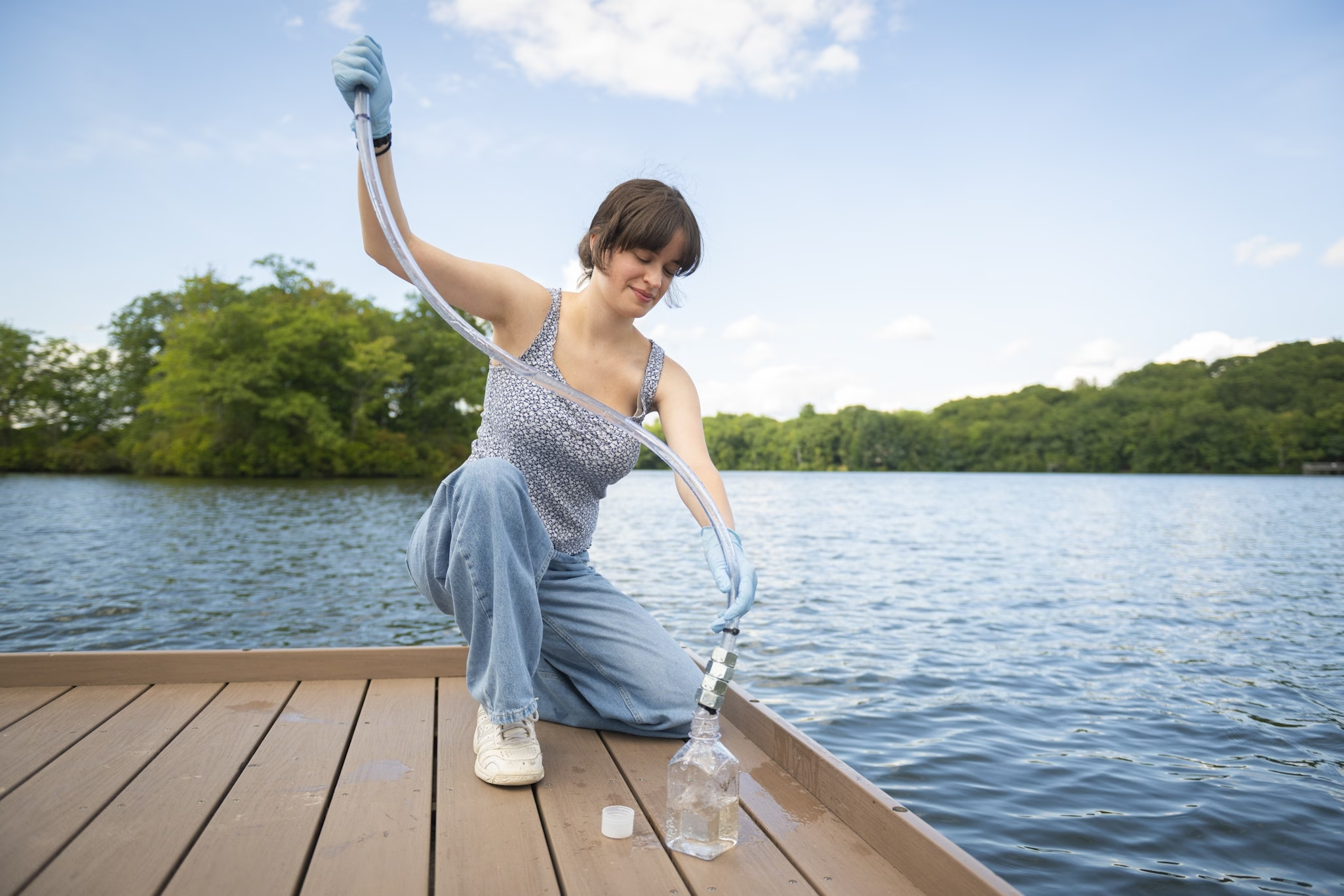
The lab collaborates with the Worcester Cyanobacteria Monitoring Collaborative, a group of volunteer community scientists who collect water samples from about 20 ponds to monitor for cyanobacteria. The Ahlgren lab does further testing of the samples, extracting DNA for sequencing to better understand their composition.
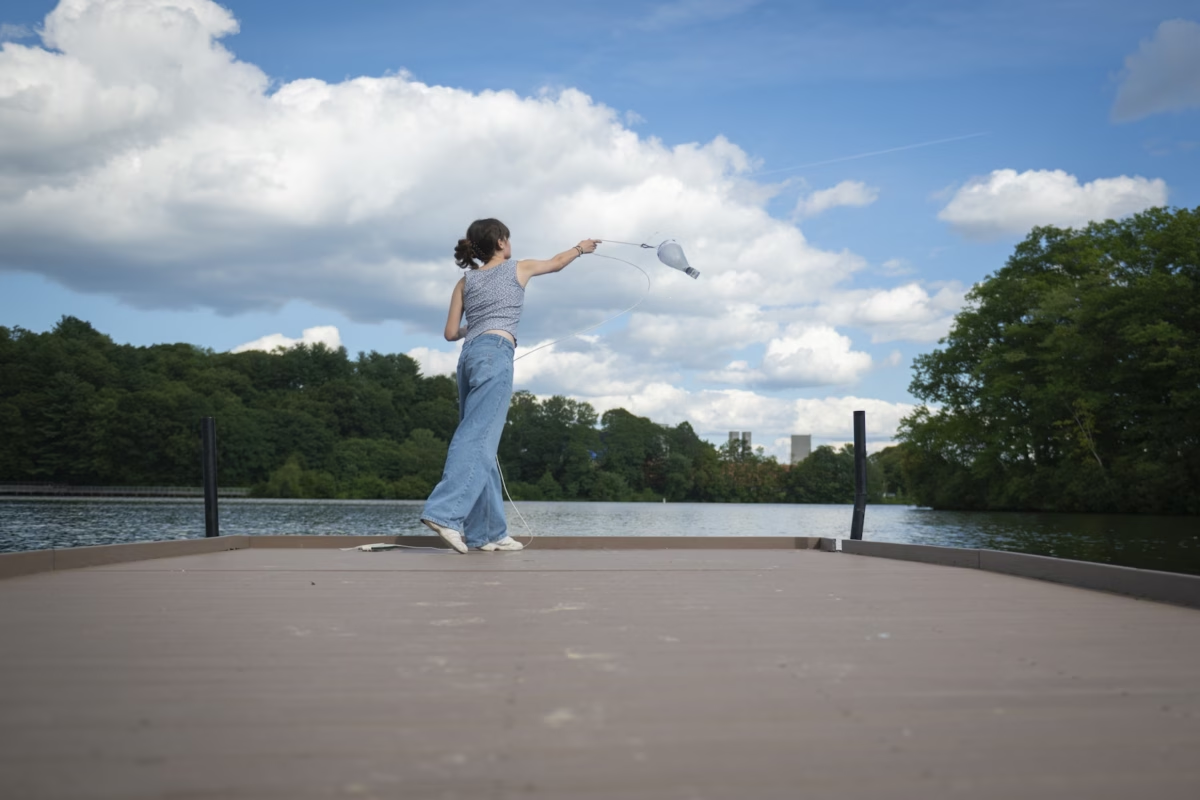
The summer Wallis was a rising sophomore, she stayed on campus, supported by the Penn Research Award, and used the Ahlgren lab’s flow cytometer to examine the samples and report findings back to the city. These samples became the basis of her master’s thesis.
“My project is a snapshot of summer of 2024,” she says. “My goals are to understand what’s driving the bacterial communities of these ponds, which species are dominant, and how does being in a super urban environment like Worcester affect the composition of these ponds.”
Wallis developed an interest in studying urbanization as an undergrad. “My thesis is focused on how land use and urbanization are affecting these communities,” she says, “and how the communities are changing over the summer and the sampling period.”
Wallis believes urbanized freshwater bodies are understudied and notes that these water bodies are especially important in Worcester, where people rely on them for recreation. As Wallis continues to analyze the samples, she is observing less influence of urbanization than she was initially anticipating, likely due to the high number of different organisms in the samples.
“There are so many smaller interactions at play,” she says, “so I’m working to uncover as much as I can.”
Wallis appreciates the opportunity to carry an undergraduate project into her master’s program.
“The work has been able to grow and develop as my scientific brain has been growing and developing,” she says. “It has taught me tenacity to work with what I’ve done in the past and build on it for who I am now.”
Wallis plans to take her findings to the Association for Oceanography and Limnology’s 2027 Aquatic Sciences Meeting in San Juan, Puerto Rico, from Feb. 28 to March 5. “I’ll be excited to finally explain my research to people in the field,” she says.
‘All the different places my research can take me’
This past summer, Wallis worked in the Ahlgren lab to install a flow cytometer that’s also a single-cell sorter.
“We were lucky enough to get this crazy instrument,” she says. “It has the potential not only to identify the characteristics of the cell, but based on parameters you set, sort each individual cell into multiple groups.”
The lab inherited the machine from Duke University, where it had been in storage. Wallis dusted off the parts and reassembled it, juggling myriad cords and pieces.
Wallis spent summer 2025 at the Bigelow Laboratory for Ocean Science in East Boothbay, Maine, after receiving a coveted spot in the National Science Foundation Research Experiences for Undergraduates program, which connects small cohorts of students with active research projects. At Bigelow, Wallis contributed to a team working with mixotrophic organisms — species that can both eat other living beings and grow via photosynthesis, such as a Venus flytrap — to develop ways to quantify how much they’re eating versus photosynthesizing. The research will help to explain how these organisms are able to grow and dominate the food chains.
“I was really grateful to be a smaller part of a larger project,” says Wallis. “I think completing small tasks that aid the larger project helped reframe how I approach research and made me a better researcher.”
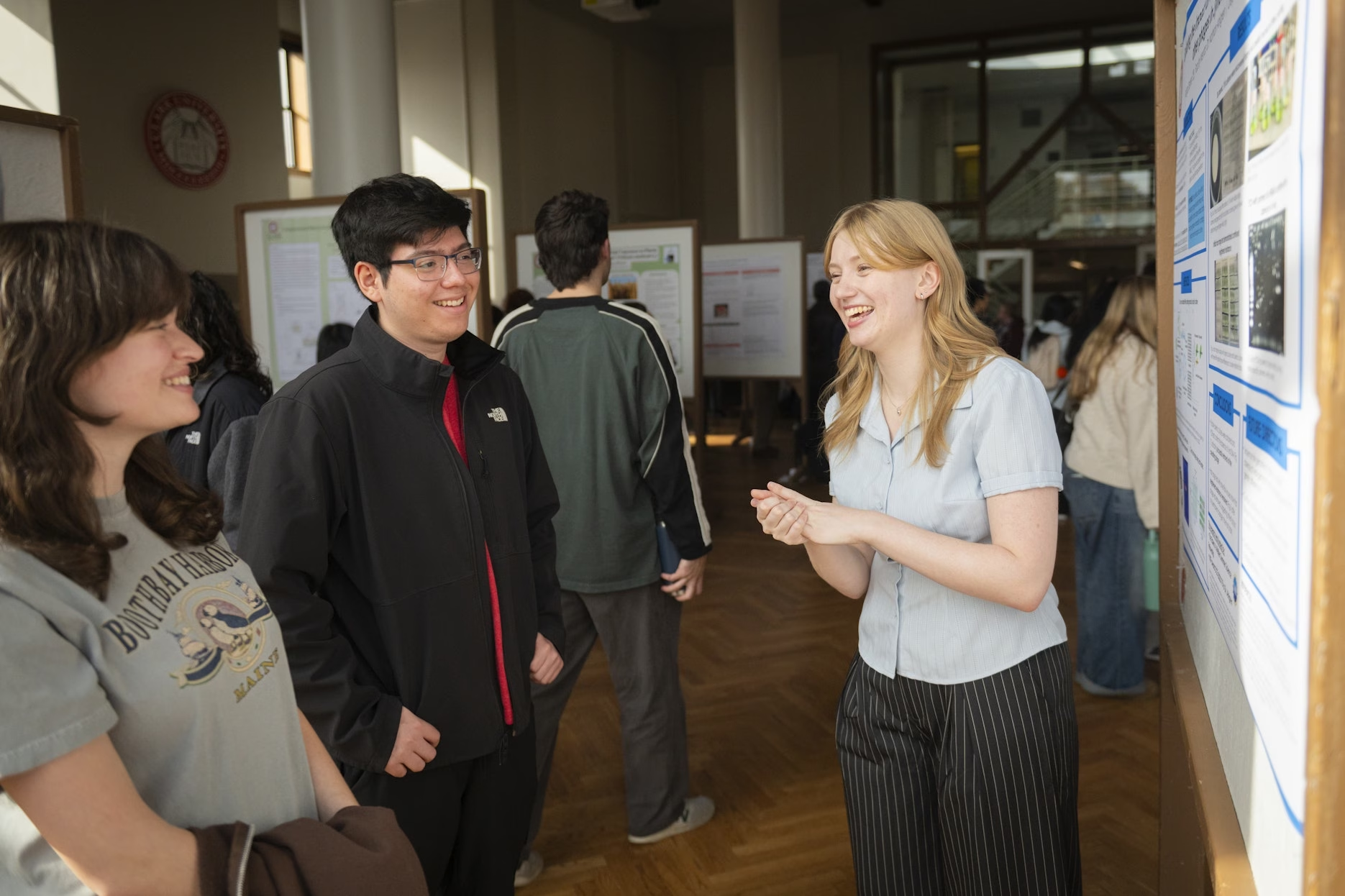
This past February, Wallis traveled to Scotland to present her Bigelow work at the Ocean Sciences Meeting, supported by funding from the Office of the Dean of the College.
“That was such an eye-opening experience because these conferences are massive,” says Wallis, adding that more than 8,000 attended the showcase. “It opened my eyes to all the different places my research can take me. I met so many interesting people, and it was a total step out of my comfort zone because I was presenting research from this big team across multiple universities and research institutions.”
Wallis has also presented her work on campus at several iterations of ClarkFEST.
Welcome to Clark! How about some research?
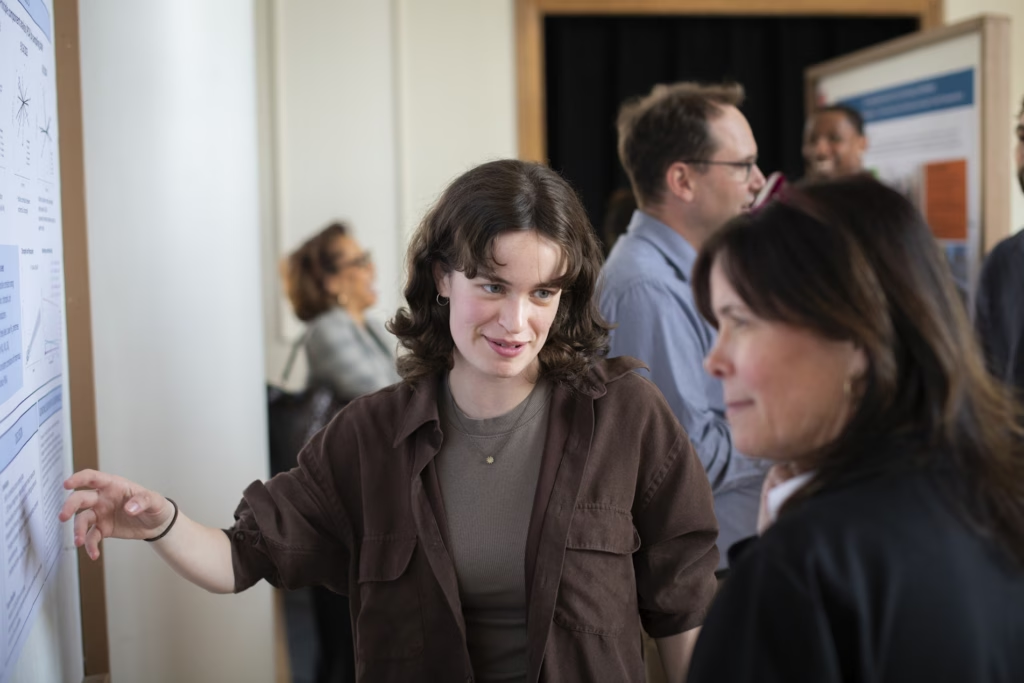
When Wallis was a high-schooler considering Clark, admissions ambassadors assured her that students here are empowered to start research experiences early in their college career. Finding a spot in the Ahlgren lab as a first-year student, Wallis quickly saw that promise come to fruition.
It became a full-circle moment when Wallis started working as an admissions ambassador herself and shared those same assurances with prospective students.
“I started telling people the same thing, ‘I promise, there’s research and great faculty here,’ ” she recalls. “That was a lot of fun for me.”
Outside of the lab
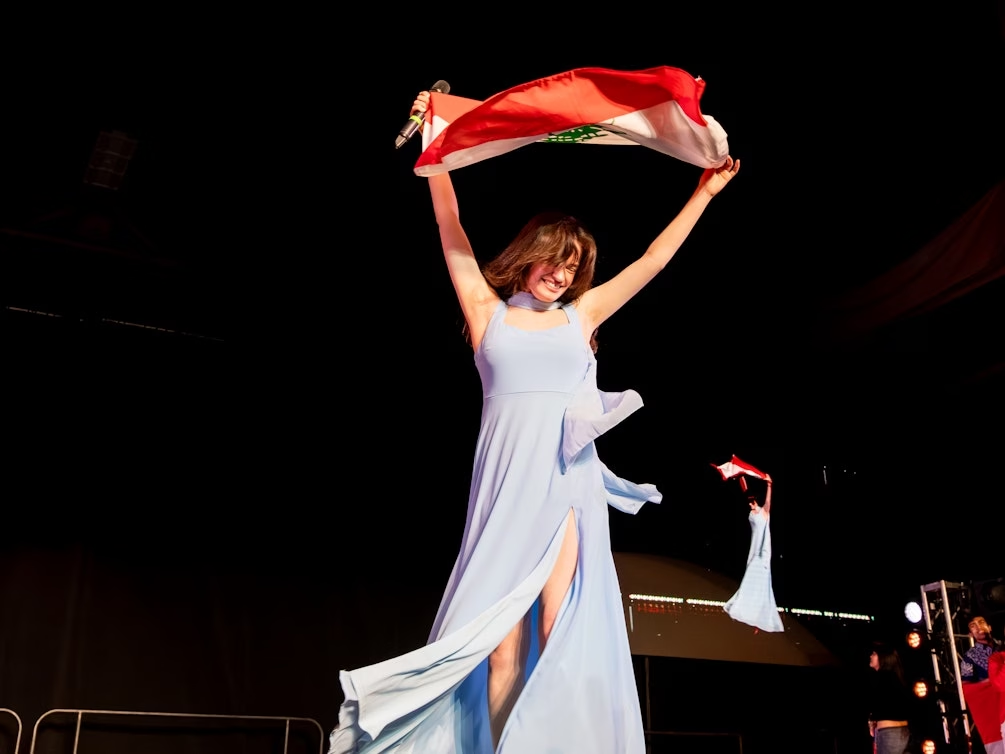
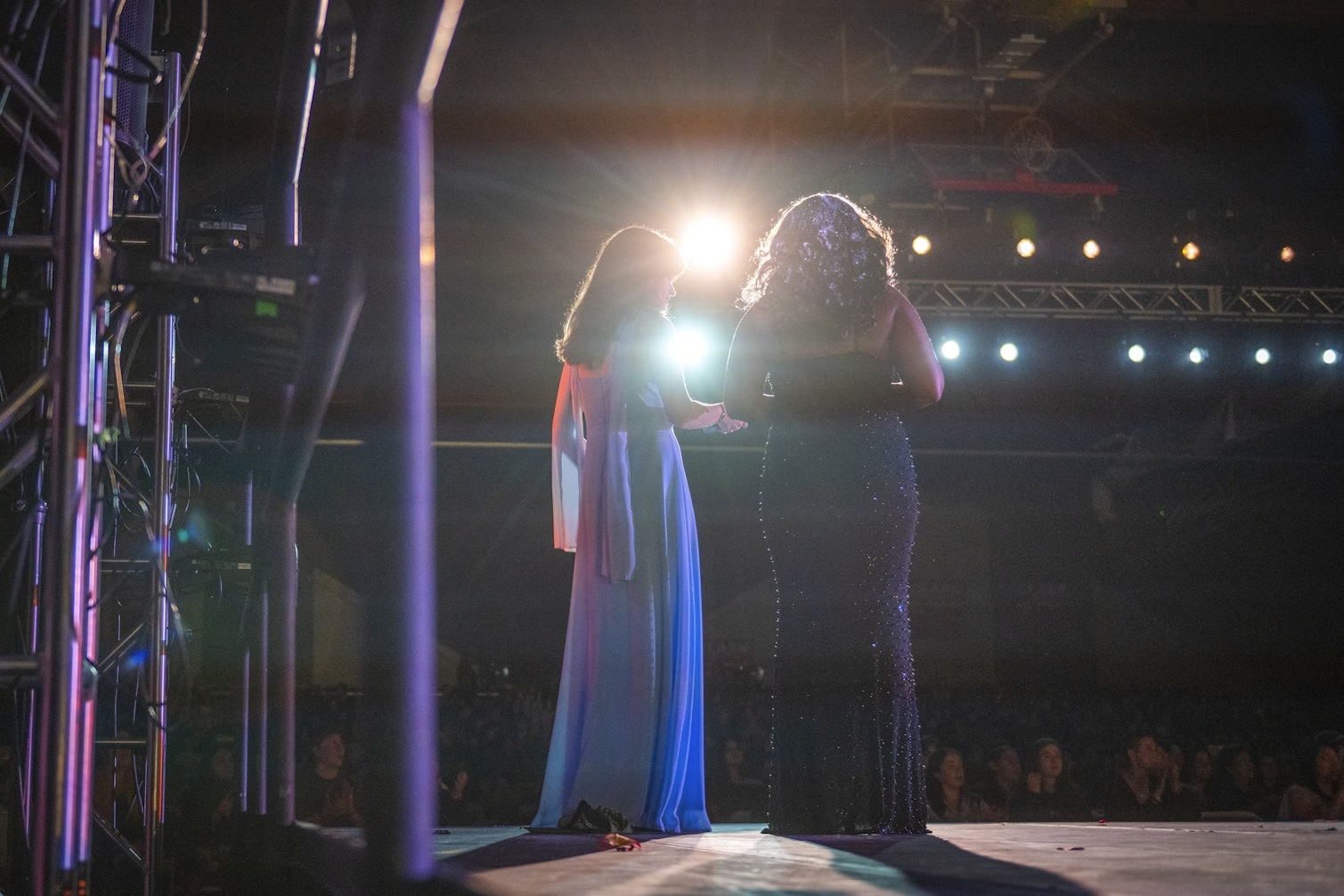
Wallis traded the flow cytometer for a microphone her senior year as a host of International Gala.
“I did theater in high school, and I had totally left that behind going to college. I guess I yearned for the stage in my heart,” she says, laughing. “Gala is my favorite Clark event. I’ve always loved watching it, but I have two left feet, as most scientists will say, and I wasn’t about to dance. So, I had a great time holding the mic and cracking jokes.”
Wallis has also spent time with the pollinators club and dabbled in club volleyball. She’s grown fond of Main South and Worcester more broadly, often heading off campus to attend Worcester Red Sox or Worcester Railers HC games.
“We’re so fortunate that we’re in Main South, to be able to engage with all of these cultures and have access to delicious foods and smaller stores,” she says.
Life after Clark
Wallis hopes to stay in research and ecology after graduation, perhaps as a research assistant, and wants to land on the East or West coast.
“The job market for science is super variable. Connections are important, so that’s why you have to go to conferences as an undergrad,” she says. “Just being near hubs for marine science would be the dream, even if I’m not directly involved with them yet.”
She may pursue a doctoral degree after a few years in the field.
“I love ocean science and working with cyanobacteria, but my secret passion is avian microbiome research. You can tell by what’s in a bird’s gut where they’ve been migrating to, what food they’ve been eating, if there’s any underlying diseases that they have. That feels like a bunch of mysteries waiting to be uncovered.”