Massachusetts’ inaugural Heat Resilience Officer appointed
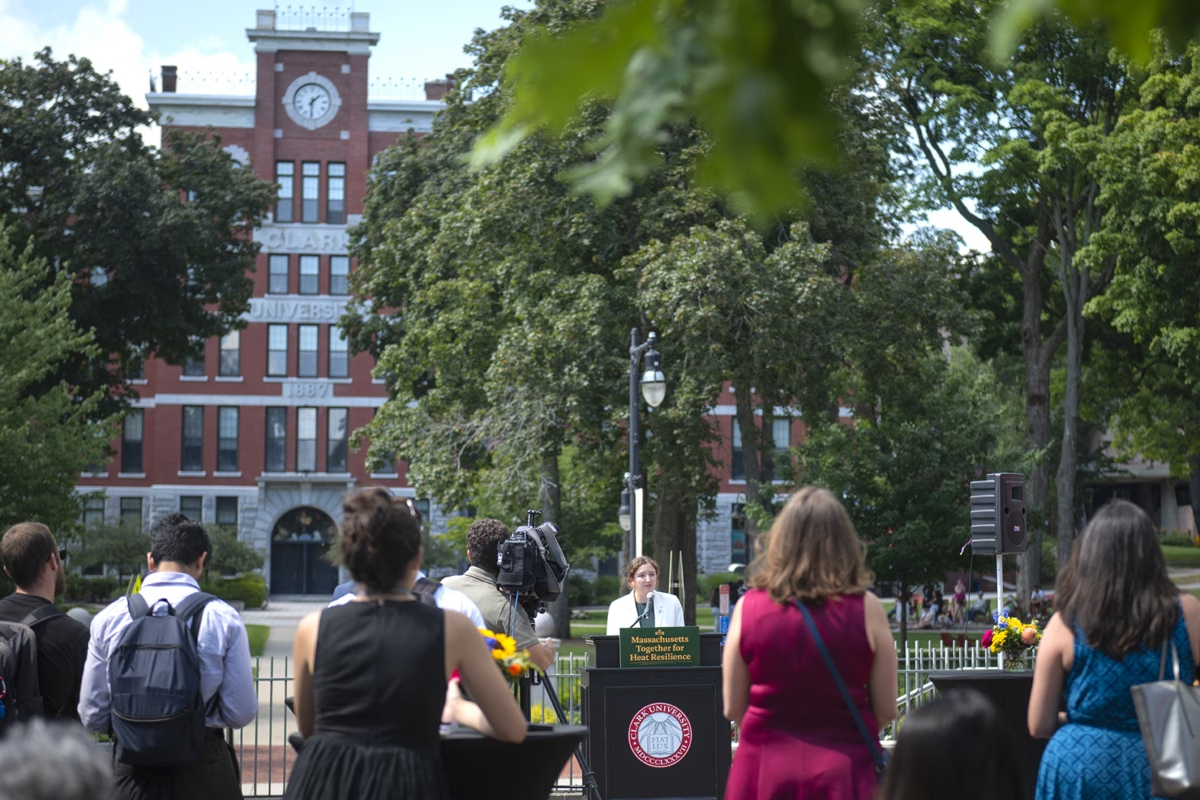
Under the midday sun on the plaza outside Clark University’s Shaich Center, Massachusetts Climate Chief Melissa Hoffer announced the appointment of the state’s first-ever Heat Resilience Officer, Katie Schlick.
The new post kickstarts Governor Maura Healey’s community-centered partnership to tackle extreme heat throughout Massachusetts — from schools and neighborhoods to workplaces and our electric grid.
Clark President David Fithian greeted the attendees, who included representatives from state agencies that wrestle with the impacts of overheated conditions within urban neighborhoods, where asphalt, brick, and concrete trap heat and make life more difficult for residents.
“I want to thank Governor Healy and Climate Chief Hoffer for their foresight in establishing this position and for choosing to make the announcement in Worcester, where some neighborhoods have become quiet battlegrounds against the kind of extreme heat that impacts families and businesses and endangers our most vulnerable citizens,” Fithian said. “The work ahead of us — all of us — is as complex as the challenges that inspire it — encompassing economics and politics, ecology and law, the sciences, and social justice and climate equity. We support your ambitious and urgent mandate.”
Massachusetts is taking bold, coordinated action to protect and uplift our communities.
Massachusetts Heat Resilence Officer Katie Schlick
“Extreme heat is becoming more common, more intense and more dangerous in Massachusetts,” Governor Maura Healey said in a press release. “We need to be ready for what that means for our families and communities.”
Extreme heat is the deadliest weather hazard in the U.S., said Massachusetts Climate Chief Melissa Hoffer.
“Extreme heat and droughts have caused global crop losses this year and threaten water supplies, as well as infrastructure, like railways and runways, that was not built to withstand these temperatures,” Hoffer said. “Ecosystems like forests, which can help us mitigate the effects of extreme heat, are stressed. This is what climate change looks like.”
“Amid another record-breaking year of heat and smoke, Massachusetts is taking bold, coordinated action to protect and uplift our communities,” Schlick said. In her new role, she will work alongside state and local leaders “to broaden understanding of the heat challenge and equip ourselves with diverse solutions that will leave the Commonwealth more prepared and more resilient.”
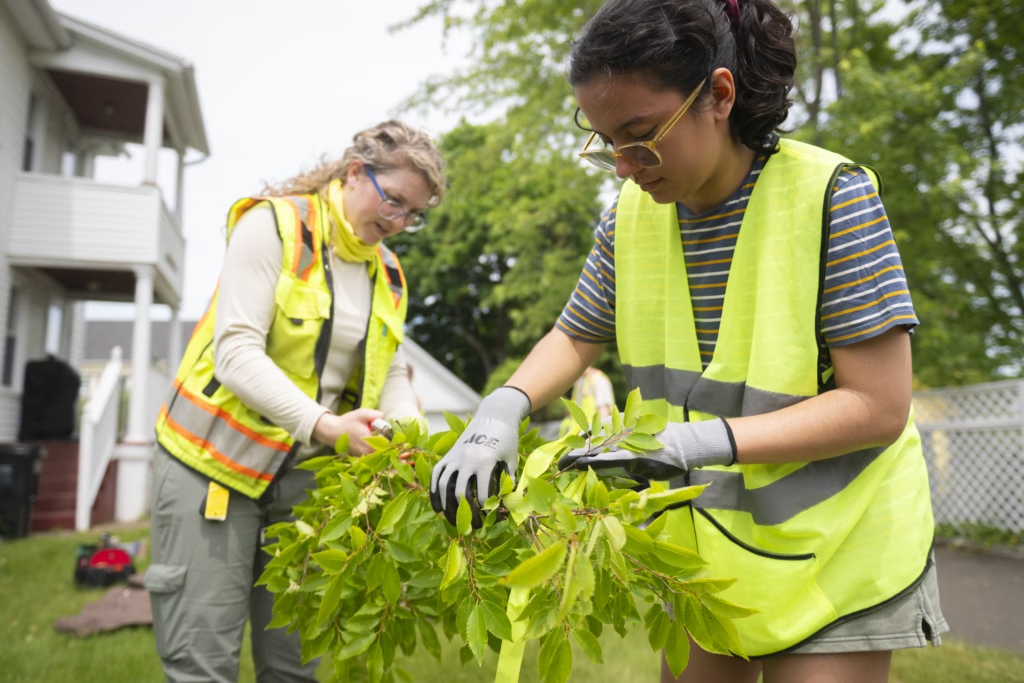
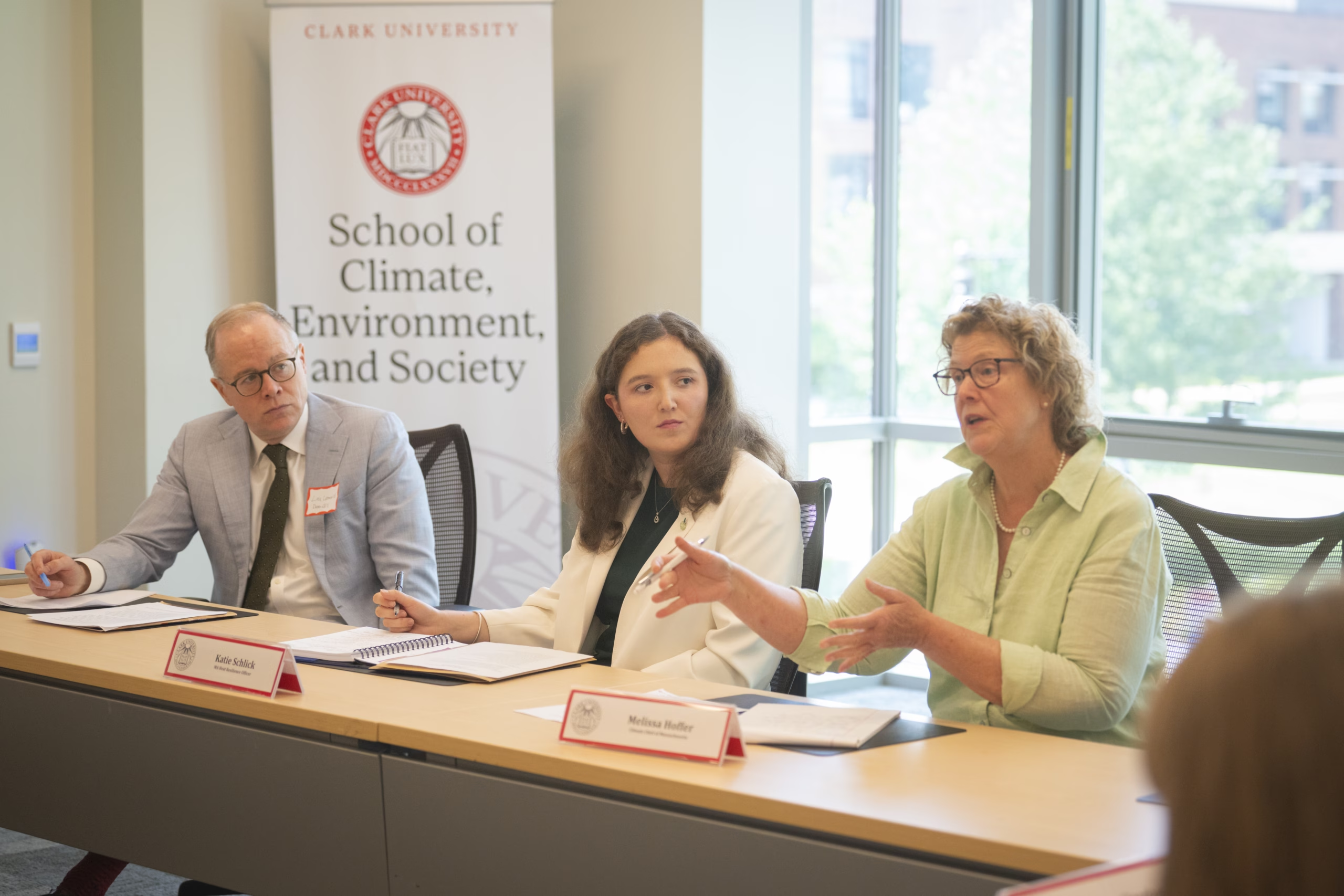
The announcement was preceded by a roundtable discussion involving Schlick, representatives from various state agencies and community groups, and faculty and students involved with Clark’s Human-Environment Regional Observatory (HERO) program, which engages students in applied research focused on urban environmental conditions, climate resilience, tree canopy, and community sustainability. HERO students Daisy Merkowitz and Hadassah Ofosu-Amoani, both seniors, attended the roundtable.
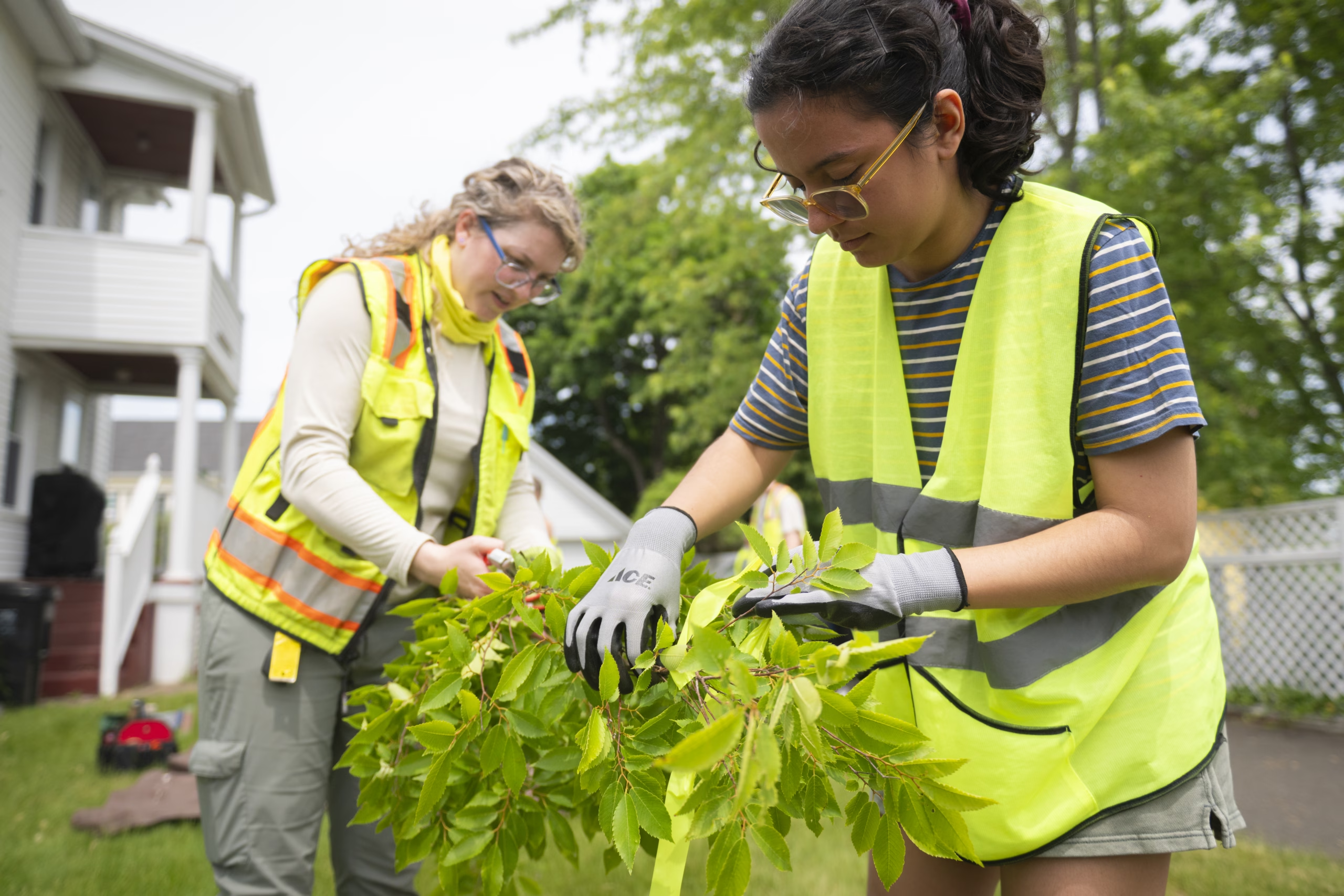
Clark University provides research, data, and community engagement that helps inform decision-making around environmental justice, urban greening, public health, and climate resilience. Since 2017, fellows in Clark’s HERO program have collaborated with the Massachusetts Department of Conservation and Recreation’s (DCR)” Greening the Gateway Cities Program (GGCP), which aims to cool off urban centers full of older housing stock and lacking extensive tree canopies. To date, teams of student researchers have surveyed survivorship, community perceptions, and temperature patterns in a total of 10 Gateway Cities to better understand the role of urban greening in addressing extreme heat.
Working with geography Ph.D. students Aidan Caron and Robert Moore over eight weeks this summer, six undergraduates collected and analyzed data in Chicopee, Holyoke, and Lawrence. They presented their research to a roomful of DCR staff and community members on July 16, and provided feedback and guidance for continuing and improving the program’s future success.
According to Mat Cahill, urban forester with the DCR, the solutions and ideas the HERO Fellows propose make a difference.
“Every year through this collaboration, we’ve brought all these solutions and ideas that you’ve presented back to the program, and it really helps,” Cahill told this year’s six HERO students after their presentation. “These trees are surviving and thriving.”
Millions of Americans have suffered under heatwaves this summer, but in “urban heat islands” — which lack trees and green spaces — the temperatures are even worse. In Massachusetts’ historic industrial cities, for example, central neighborhoods can be up to 20 degrees hotter than in leafier suburban areas just a few miles away.
“It just absolutely cooks” in inner-city, working-class neighborhoods, Geography Professor John Rogan, who co-directs the HERO Program with Geography Professor Deborah Martin, recently told The Boston Globe, which reported on the stark realities of life in urban heat islands.
“The work of our HERO Fellows demonstrates how student research can help communities respond to real-world climate challenges,” said Martin.
According to Martin, in the next few weeks, class schedules and locker combinations aren’t the only things students will be grappling with this fall when they return to their classrooms.
“So many urban schools in Massachusetts don’t have air conditioning; our HERO fellows have found that excessive heat will linger in classrooms an average of 10 days longer,” said Martin. “It is increasingly important to understand how heat affects educational spaces and to identify practical solutions that improve health, comfort, and learning outcomes for everyone.”
This year, Professor Rogan has been involved with another way to keep Massachusetts cities cool – he’s helping to create Miyawaki forests, dense pocket forests designed to absorb stormwater, cool surrounding neighborhoods and restore biodiversity. He and students in Clark’s AmeriCorps VISTA program partnered with high school students, teachers, city officials, Mass Audubon, the Attleboro Department of Parks and Recreation and the Ocean River Institute in Cambridge to create a Miyawaki forest on an unused baseball diamond in Attleboro.
“As proven by HERO’s long-standing, student-powered research, protecting communities from impacts like extreme heat require whole-of-society partnerships among government, communities, and universities. The School of Climate, Environment and Society was founded to catalyze this kind of collaboration,” said D.J.A. Spencer Dean Lou Leonard. “We’re excited to build on today’s conversations and partner with Kate Schlick to advance Massachusetts’ vision for confronting extreme heat head-on, bringing purpose-built research and student energy to deliver actionable strategies for lasting, equitable heat resilience.”