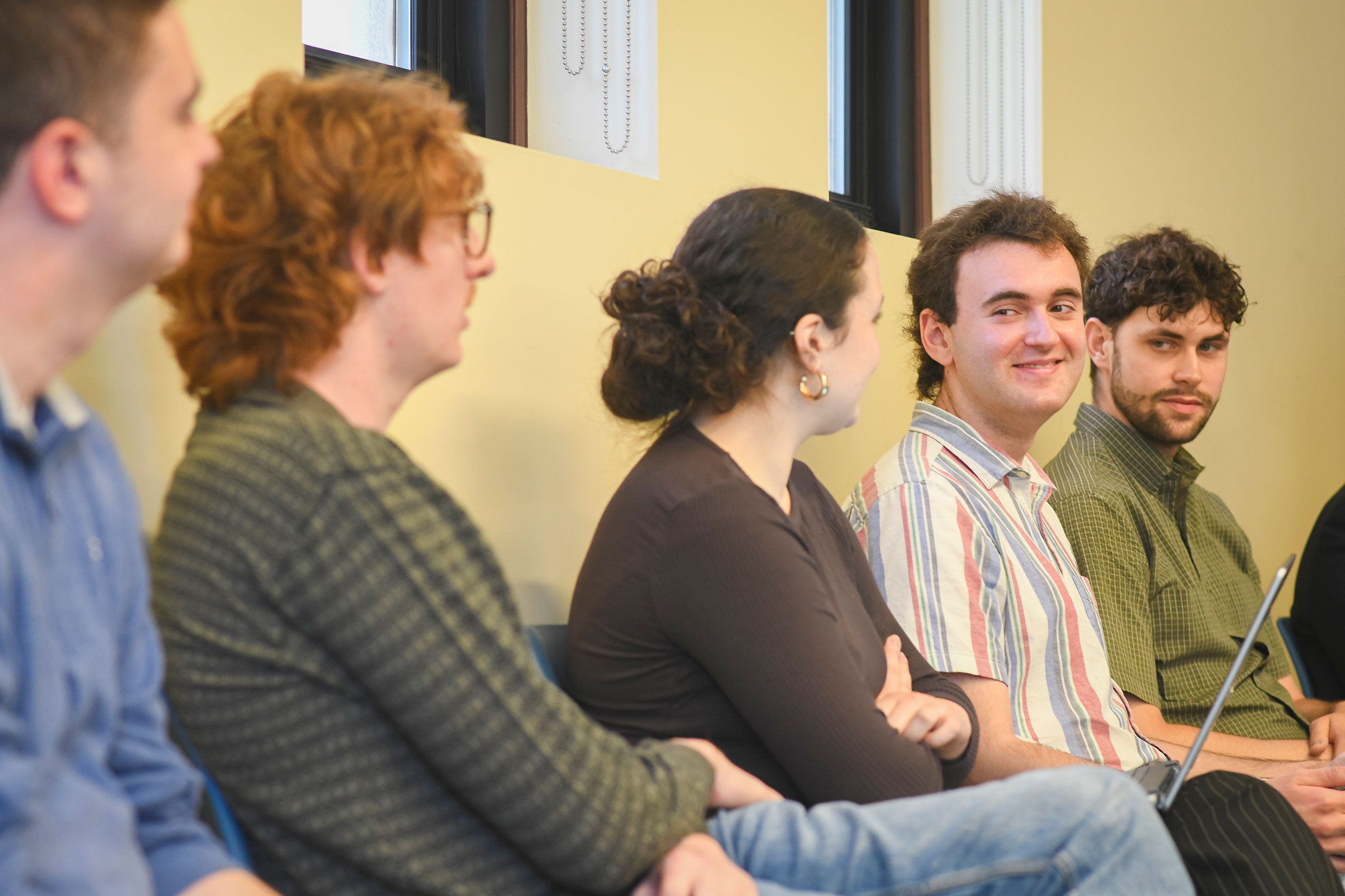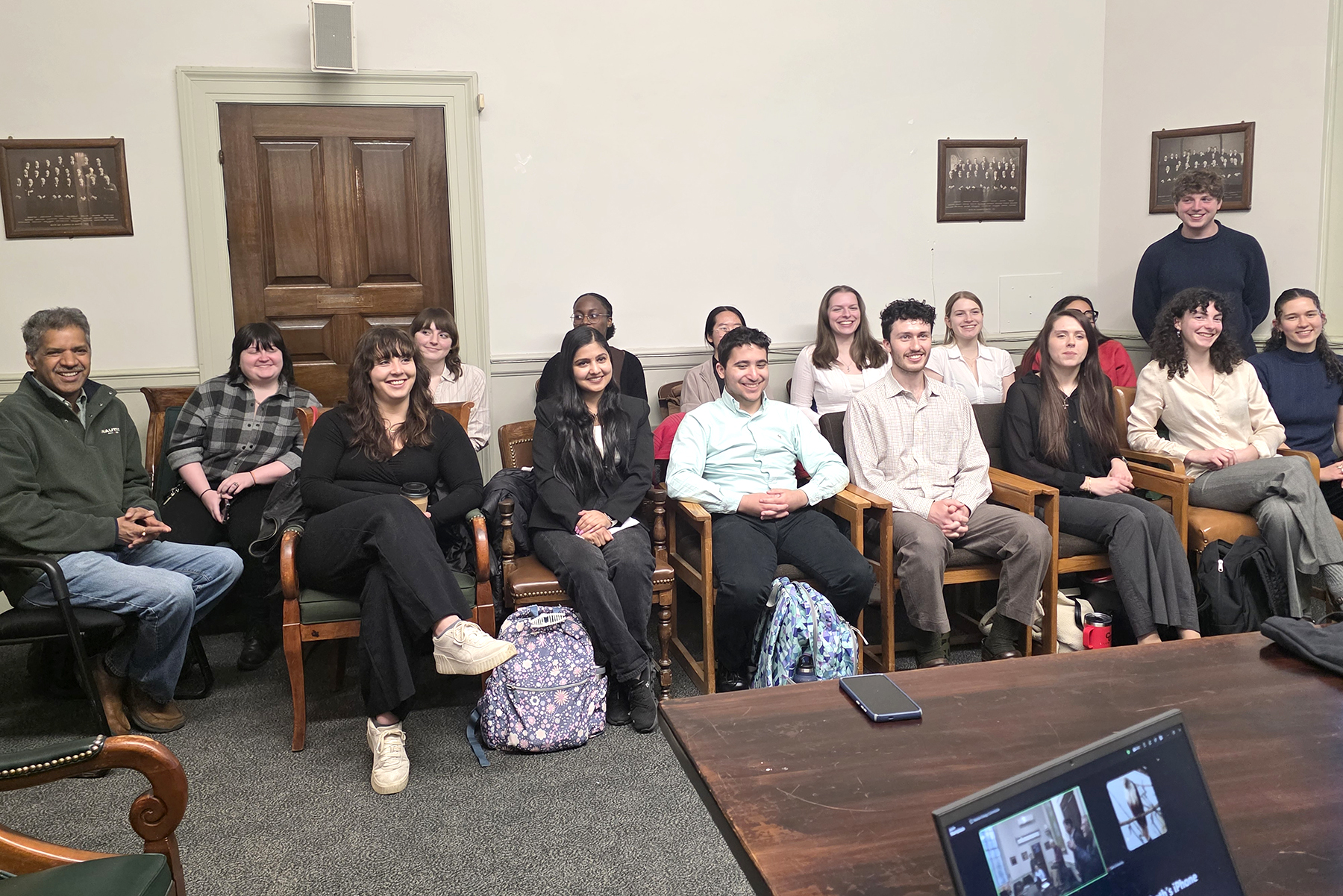

Clark recently celebrated the launch of its new Environmental Humanities program with faculty presentations on their current research, which spans the fields of language, literature, culture, history, sociopolitics.
Affiliated with the School of Climate, Environment, and Society, the program officially launched last fall with a slate of interdisciplinary classes offered by faculty in the departments of English; History; Language, Literature, and Culture; Sustainability and Social Justice; and Visual and Performing Arts. Christina Gerhardt, the Henry J. Leir Endowed Chair in Foreign Languages and Cultures in Language, Literature, and Culture, and English Professor Stephen Levin are the co-founders and co-directors of Environmental Humanities.
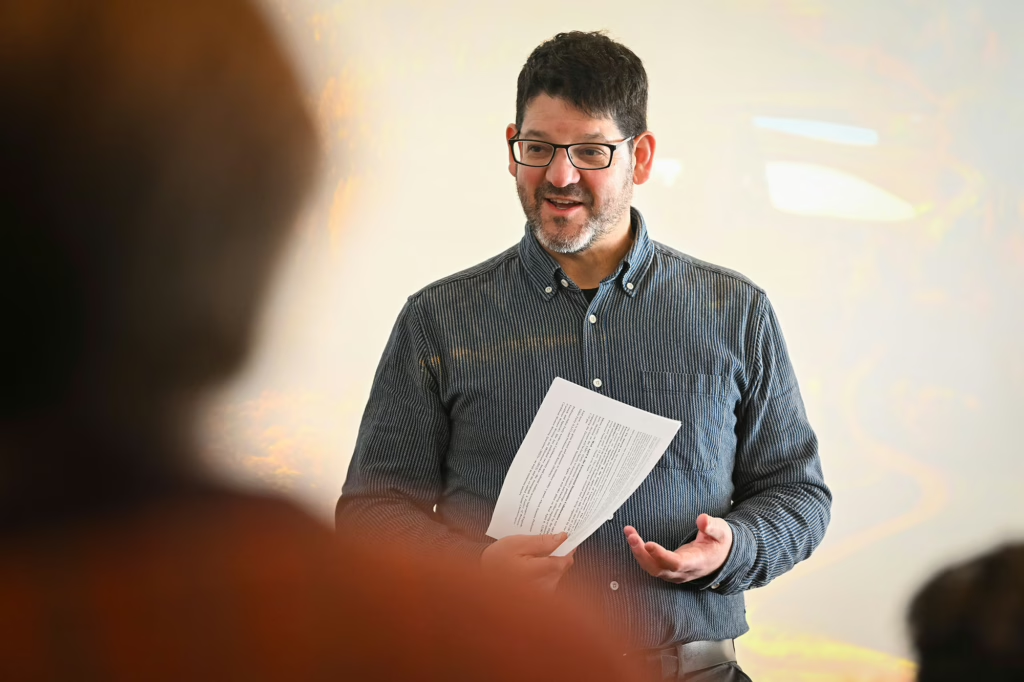
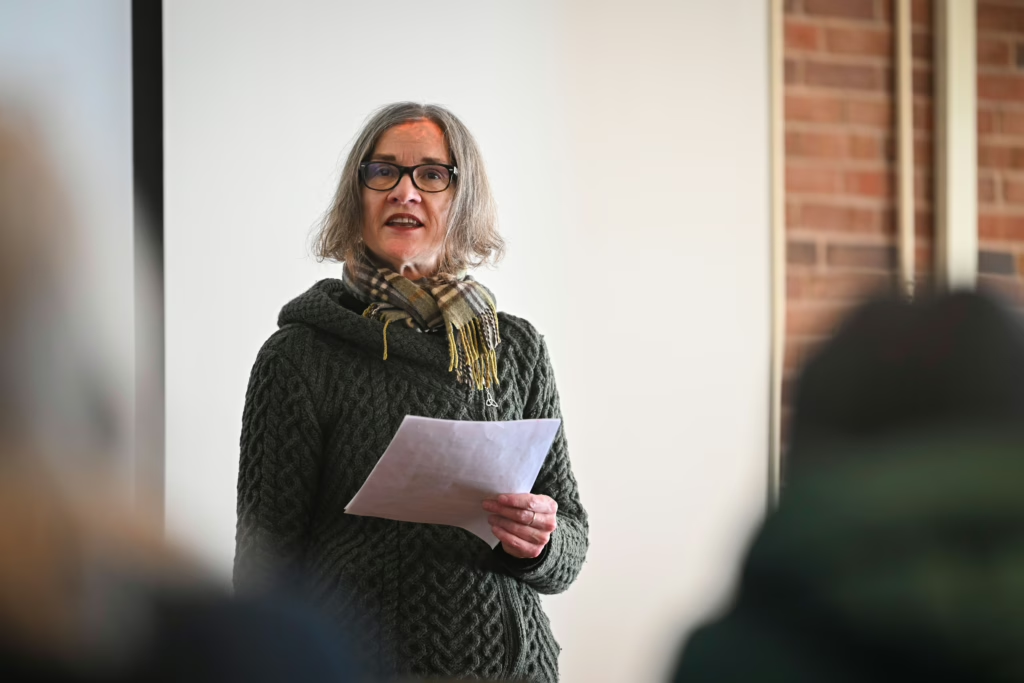
On Jan. 28, they introduced two of the program’s five affiliated faculty: Odile Ferly, associate professor of language, literature, and culture, and Nana Kesse, assistant professor of history (pictured above). They gave a preview of the wide-ranging topics available to students interested in studying and concentrating in the environmental humanities.

Ferly’s study of Caribbean literature centers on mangrove ecosystems, which she described as metaphorically and environmentally significant to the region.
“The mangrove is very important — it’s a breeding ground, it’s a hurricane barrier — but people in the Caribbean don’t really take care of that ecosystem well enough,” Ferly said.
“I saw the mangrove as a representation of female tradition that was also forgotten and neglected in Caribbean literature for a long time, until the 1990s.”
A Fellow of the National Endowment for the Humanities, Kesse studies the histories of water and the environment, slavery and the slave trade, as well as the social and cultural history of West Africa.
Kesse’s current book project, “Living with Water: Aqua-culture, Environment, and Slavery in West Africa,” examines the social and environmental history of Nzulezo, the only stilt-house community on water in Ghana and one of the few in Africa dating back to the 17th century. He explores humans’ relationships with water and animals and uses water as a lens for examining African environmental history, which has been shaped by trade, migration, piracy, and slavery.
He described a highly organized and complex society, with humans’ domination of this water space, pushing pythons, crocodiles, and other aquatic animals “farther away to the periphery of ecology” and creating what he described as a “settlement order.”
“The humans created two overlapping ecological zones,” Kesse said. “The humans occupied the residential zone, and all other animals occupied the non-residential zone.”
On March 12, Kesse will further discuss his research as part of a George Perkins Marsh Institute seminar. Titled “Swimming with Crocodiles: Nzulezo and the Human-Animal Entanglement in Africa,” the seminar is scheduled for 12:15 to 1:15 p.m. in the Lurie Conference Room, Higgins University Center.
Upcoming Environmental Humanities events
Upcoming events sponsored by the Environmental Humanities program, in partnership with the Alice Coonley Higgins Institute for Arts and Humanities, include:
- Emmanuel K. Akyeampong, the Ellen Gurney Professor of History and Professor of African and African American Studies at Harvard University, will present a lecture on “Spirituality and the Ethics of Conservation: the Collapse of Marine Fisheries,” from noon to 1:15 p.m. on Thursday, March 19.
- An Environmental Humanities Collaborative, a forum for faculty to discuss research and teaching in the environmental humanities, will take place from noon to 1:15 p.m. on Wednesday, April 8.
Both events will be held in Dana Commons’ Higgins Lounge.