‘Horror is the genre that most reflects what is going on in the real world’
Spooky season is here, and with its arrival come creepy costumes, slasher films, and tall tales about things that go bump in the night. What exactly is it that attracts people to macabre media like a moth to a flame?
“So many people are drawn to horror because, in my opinion, horror is the genre that most reflects what is going on in the real world,” says English Professor Jacqueline Morrill. “It is not the same as comedy or romance or even drama. Horror is allowed to touch on things that make us feel incredibly uncomfortable. It lets people explore their inner demons. It lets people question things that we’re not supposed to question.”
Horror movies and stories are like roller coasters, says Morrill, the creator of Clark’s Women in Horror Month, allowing viewers to feel excitement, fear, and a lack of control, but from the safety of home or a theater alongside friends.
“The fact that there are so many things out of control for us on any given second of the day — that’s horror,” says Morrill, who teaches courses including Horror, Serial Killers & the Grotesque.
After finding an audience of horror lovers on campus, Morrill started Clark’s Women in Horror Month, which is held each February.
“I wanted to do it in February because February typically has 28 days, which follows the 28 days of a menstrual cycle. It felt a little tongue in cheek,” she says. Morrill mainly wanted to bring students together to highlight diversity within horror.
“So much of what we often see — creators, artists, writers, those big Hollywood names — are mostly males,” says Morrill. Her original goal of bringing more attention to female creators and artists expanded. “By the third year, it snowballed into, how do we include the LGBTQ community? How do we include neurodivergence? How do we include ethnicity, race, and culture within horror? Now it’s become much more than just Women in Horror Month. It’s become a ‘everybody in horror month,’ but I keep Women in Horror Month as the title to pay homage to the original idea.”
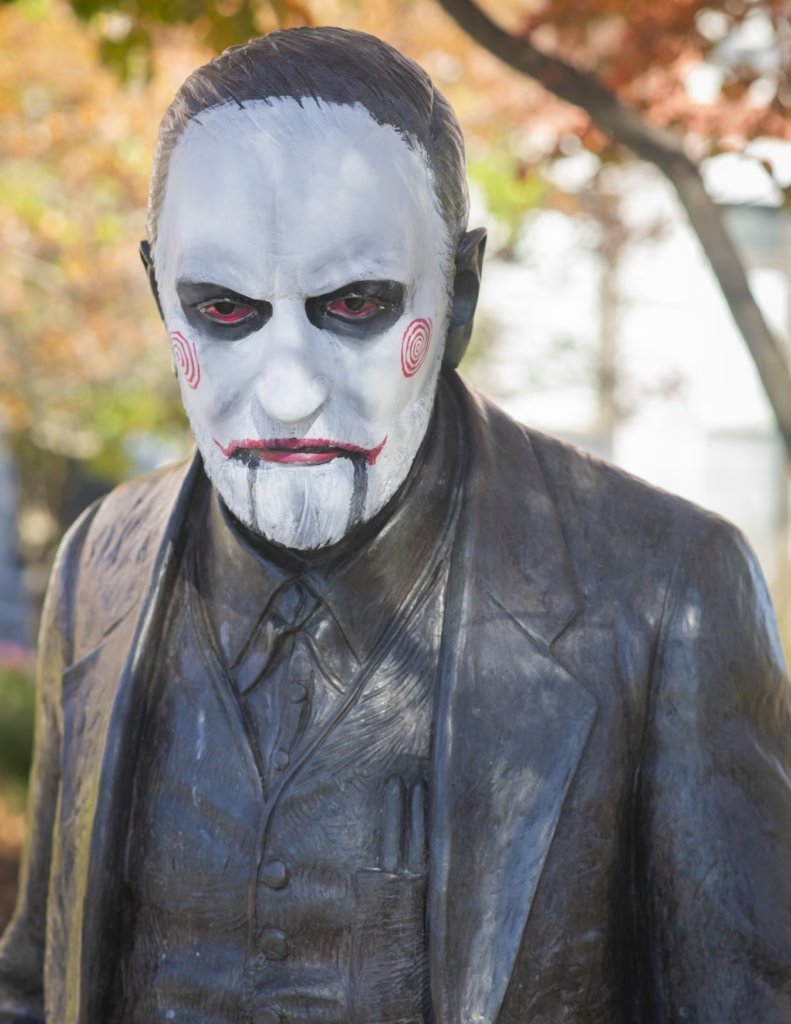
In class, Morrill and students often discuss themes of gender and sexuality in horror.
“The monstering of characters who are trans, characters who are monstered because of their race, their ethnicity, or because they’re stereotypically considered to be hysterical” are horror components students want to analyze, says Morrill.
“Another huge theme would have to be ableism,” adds Morrill. “We’re seeing a lot of monsters and villains who are physically disabled or have some kind of disfigurement to their bodies. Even when you look at classic serial killers like Jason Voorhees (from the “Friday the 13th” franchise), who was from the very beginning stereotyped as having some kind of mental development issue within his character, ableism is a huge part of that.”
Artificial intelligence is an emerging trend within horror, with frightening plotlines around evil phones, computers, and smart houses.
“Movies like ‘M3GAN’ and ‘M3GAN 2.0’ explore the idea of androids, or the fear of sentient robotic beings. Are they humans if they can’t feel actual human emotions, and are they a danger to us,” says Morrill.
Morrill became bewitched by spooky stories around age 5, when her dad brought home “Child’s Play,” the 1988 film featuring the knife-wielding killer doll Chucky.
“I probably shouldn’t have seen it at such a young age, but it obviously affected me, and I just continued watching and reading and viewing horror, and that’s become 99% of things that I consume now,” says Morrill, whose favorite genre is slasher horror.
“I love a good quiet villain with a knife,” she says, “but I also am very drawn to the dark, super emotional, stereotypical [entertainment company] A24 elevated grief-stricken horror films.”
Morrill saw the 2026 psychological horror film “Backrooms” in the theater with three of her former horror students.
“I am so impressed at the fact that the director, Kane Parsons, who’s only 20 years old, was able to make this incredible movie with basically only practical effects,” she says. “I think it’s going to set a trend for a new evolution of horror movies.”