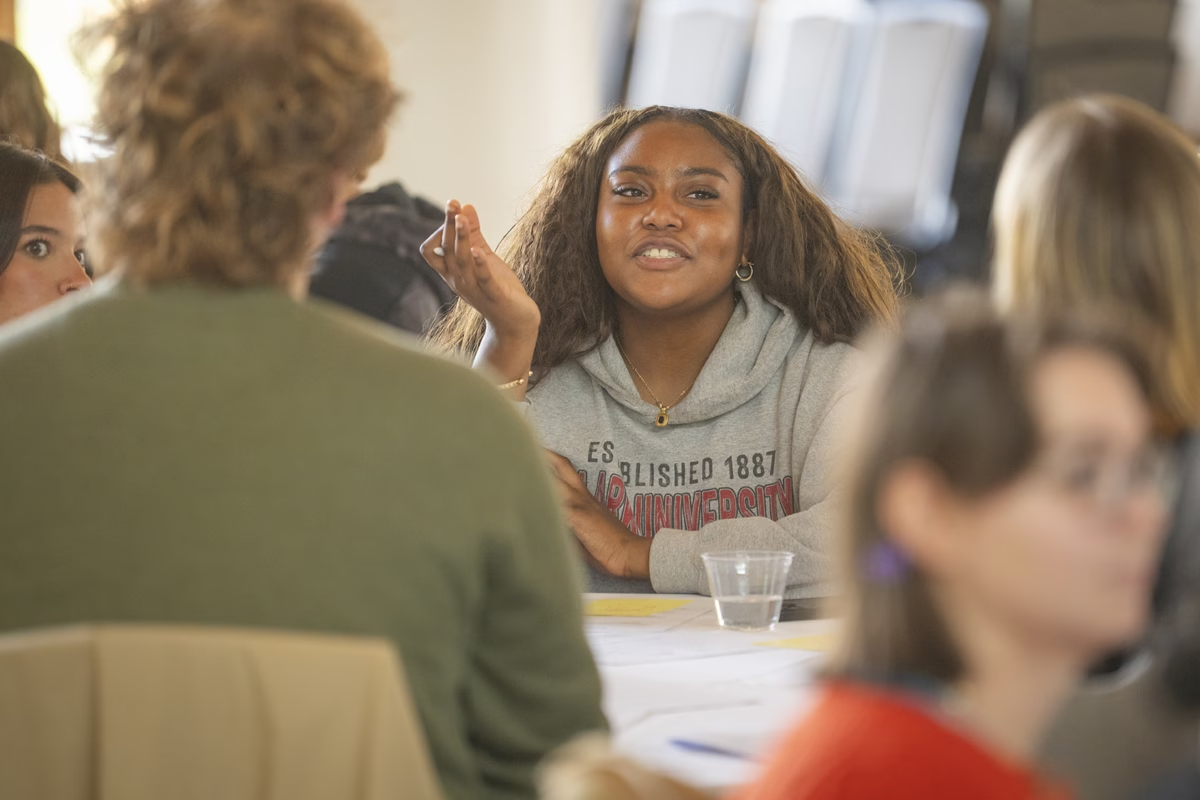
In this anniversary year of the United States, the nation’s history is being celebrated and scrutinized, disassembled and debated, reconsidered and reconstructed.
If nothing else, the semiquincentennial has provided an opportunity not just for a deep look into the past 250 years, but a chance to envision what we might become over the next 250. Does where we’ve been help inform where we’re headed? What values do we hold as a nation? What does a successful democracy look like?
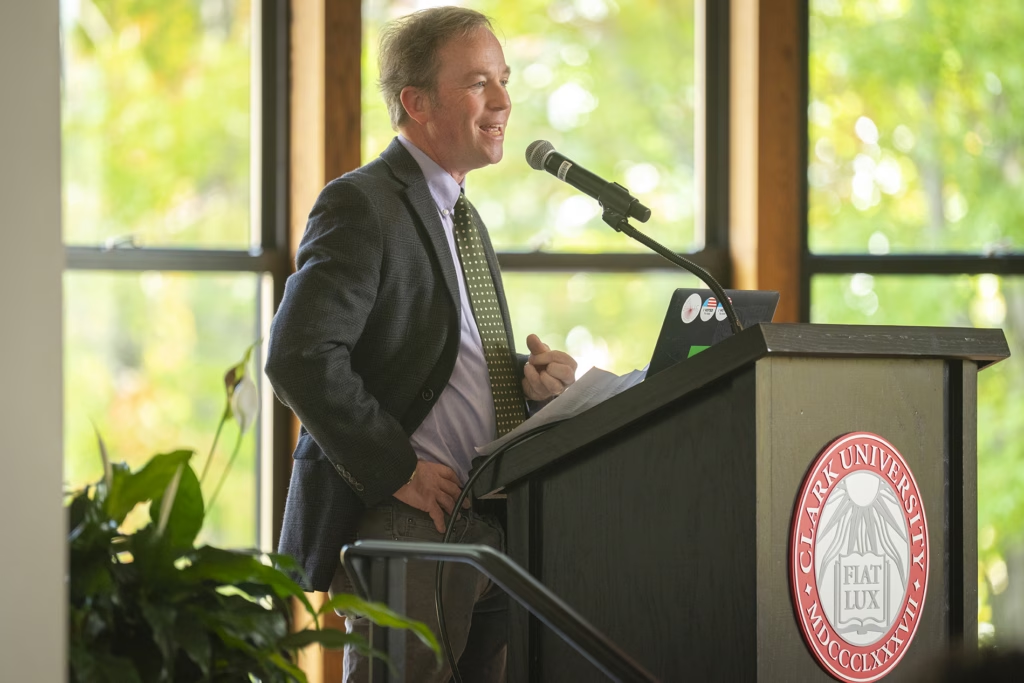
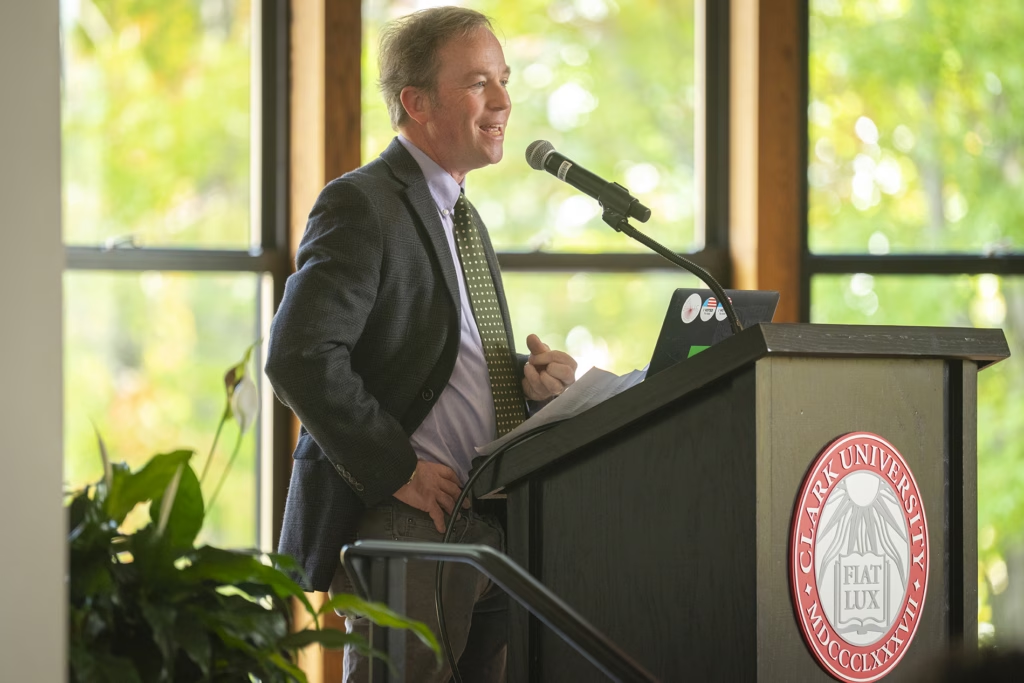
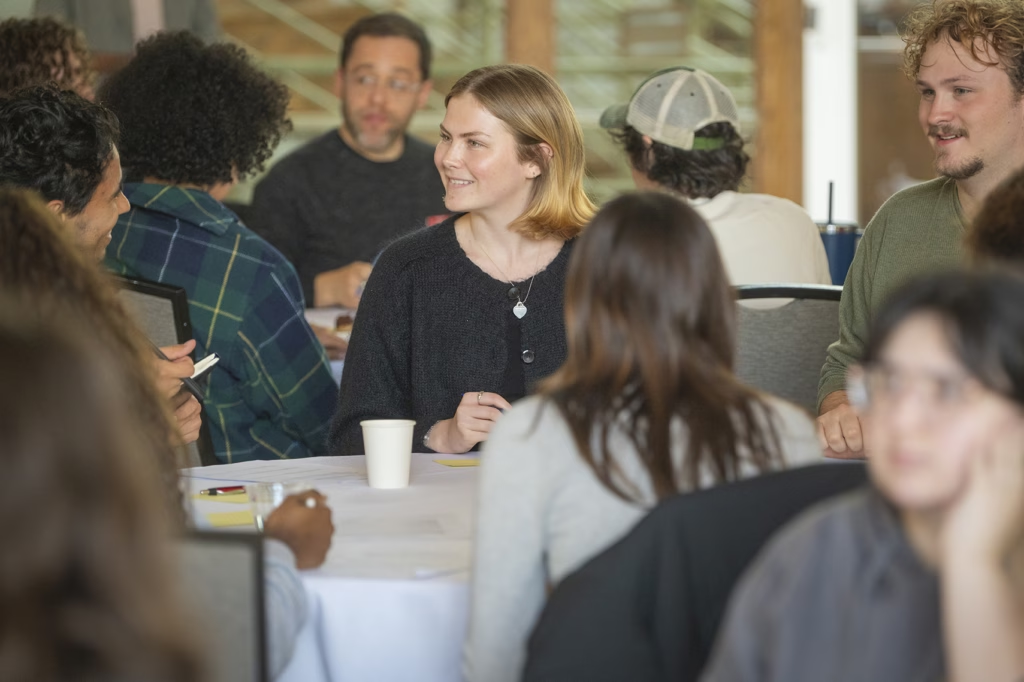
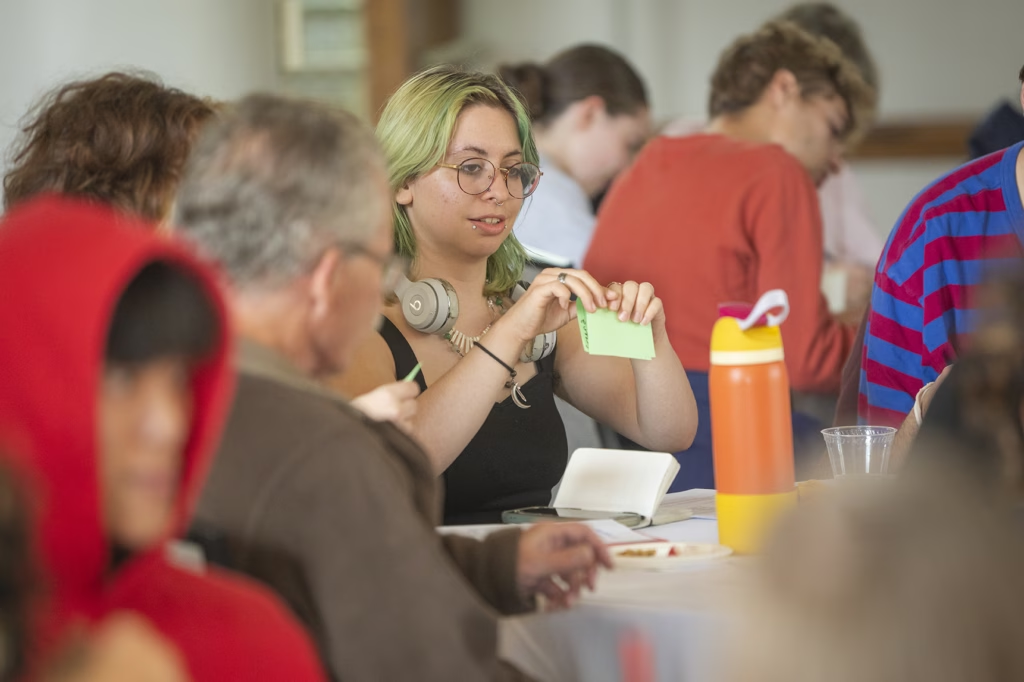
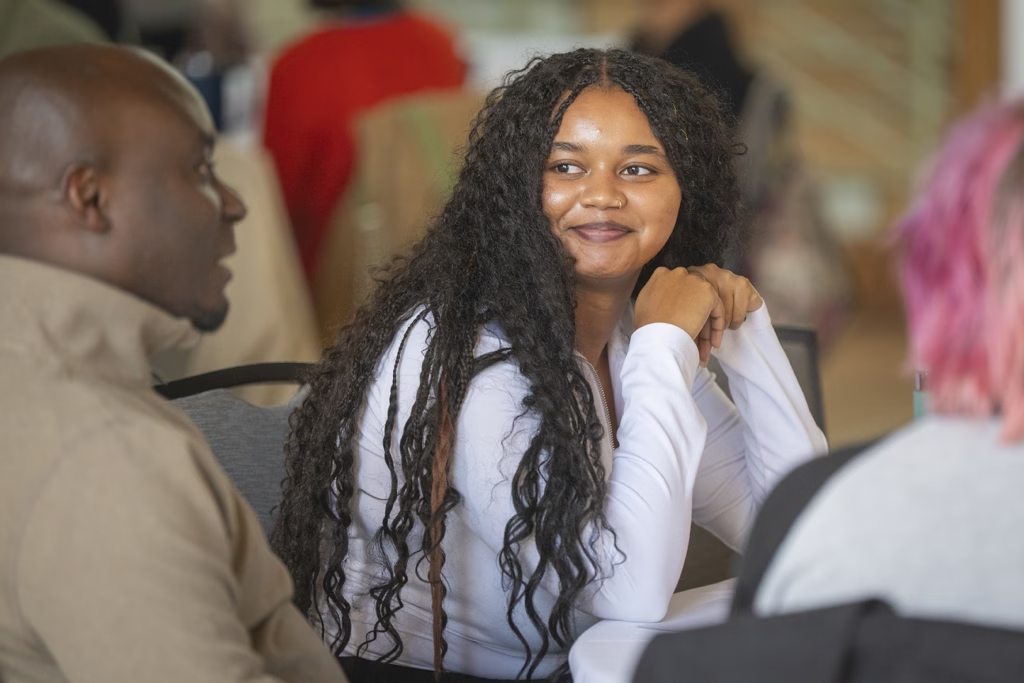
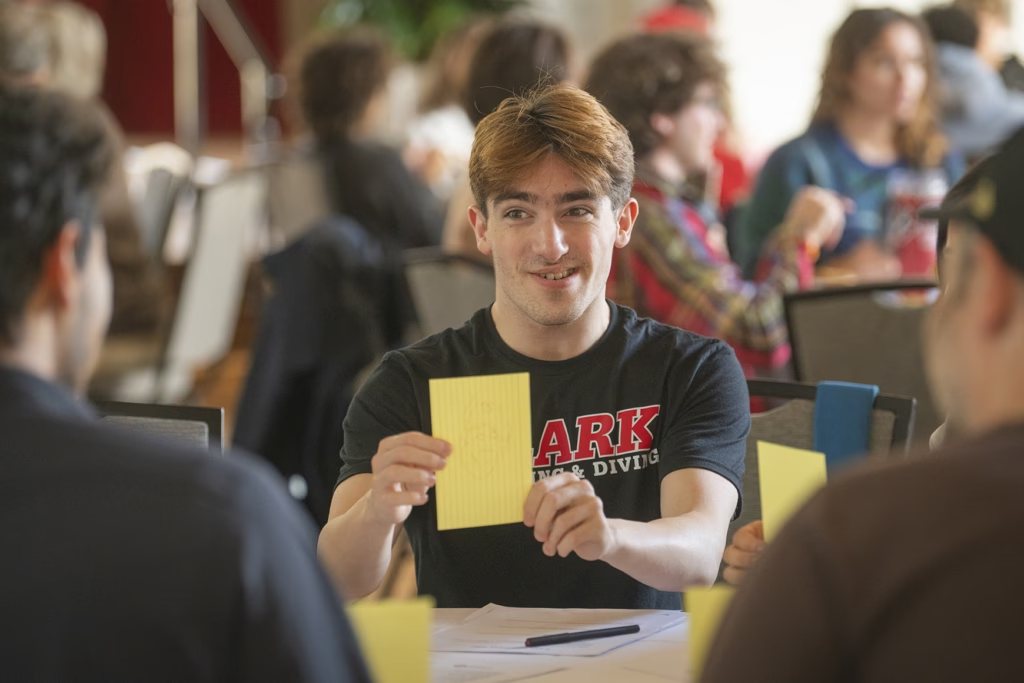
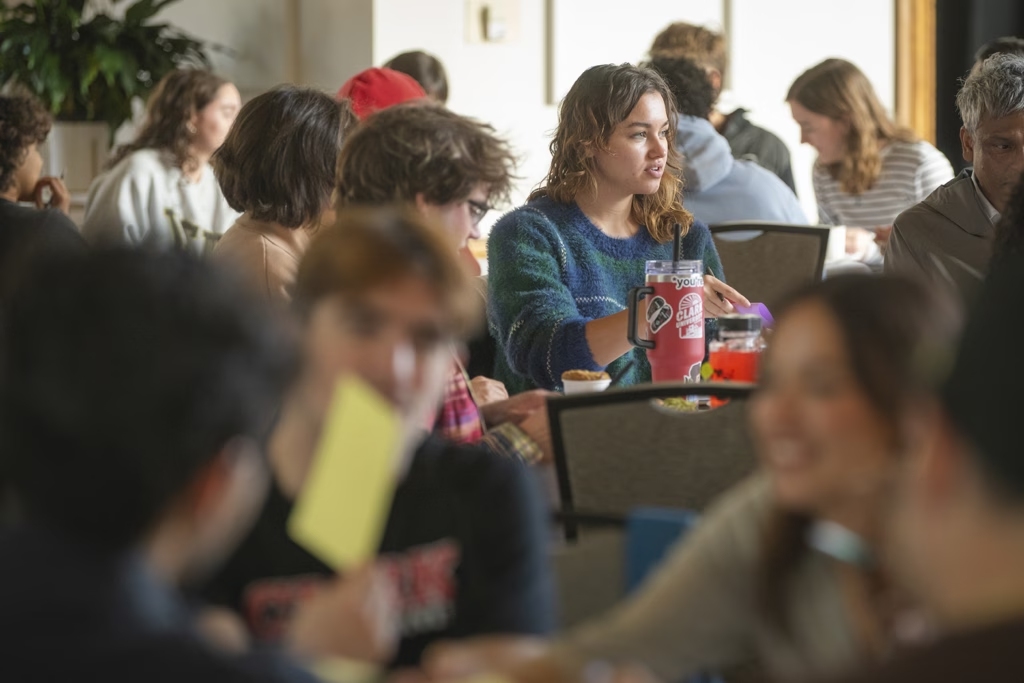
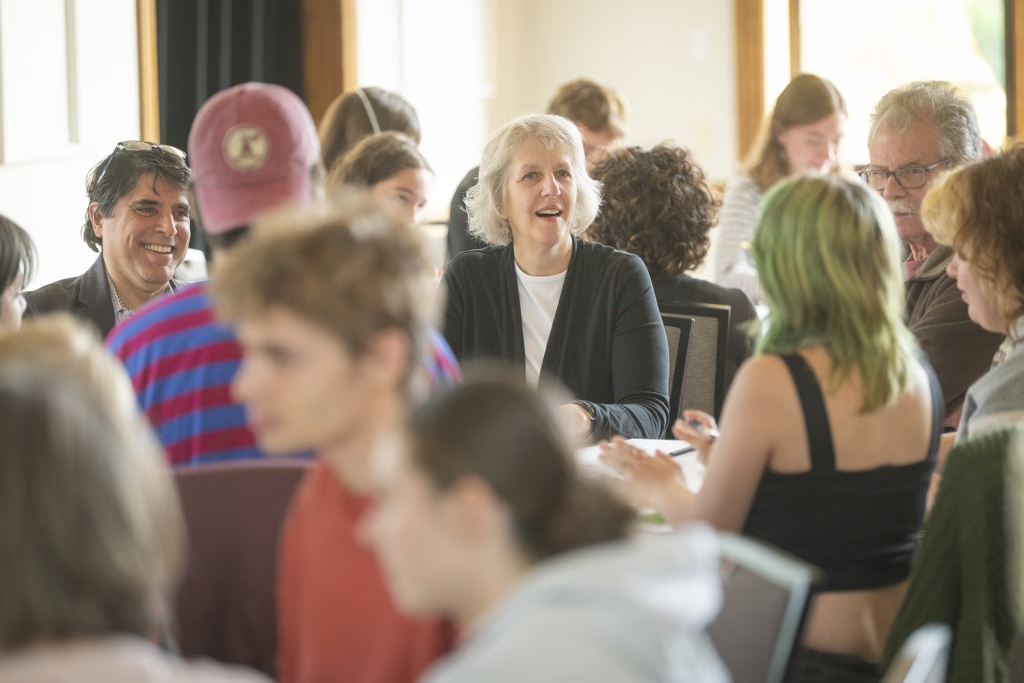
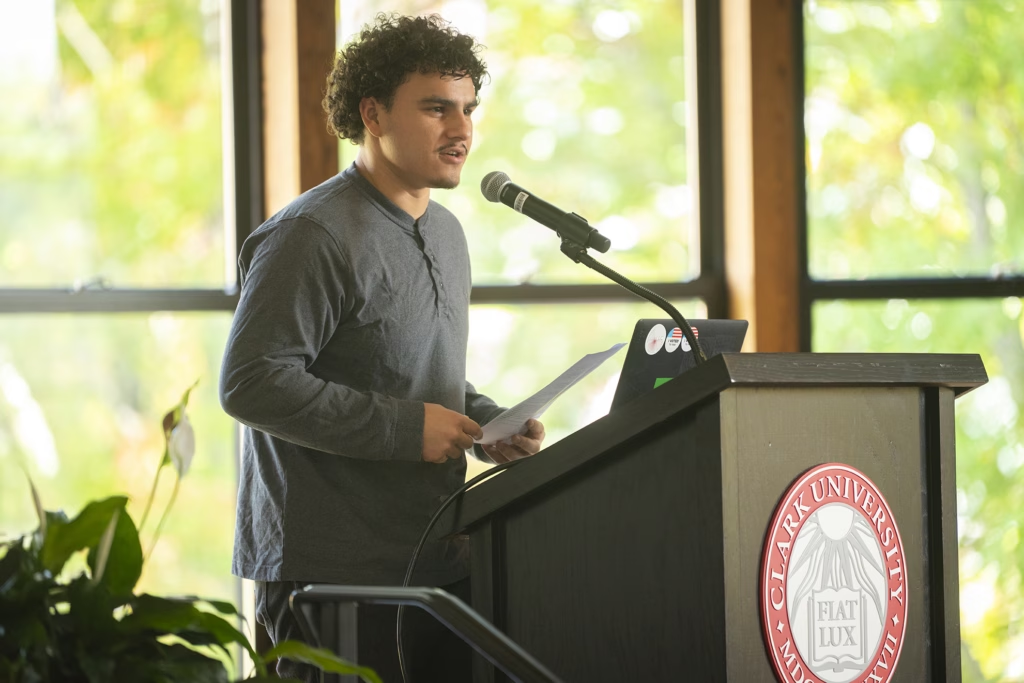
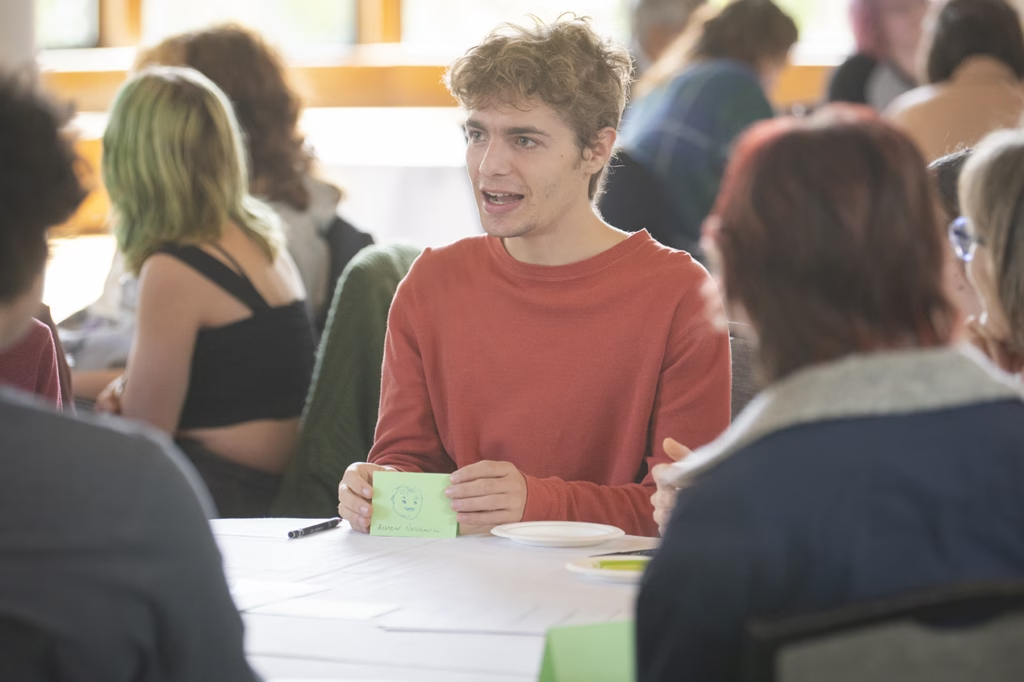
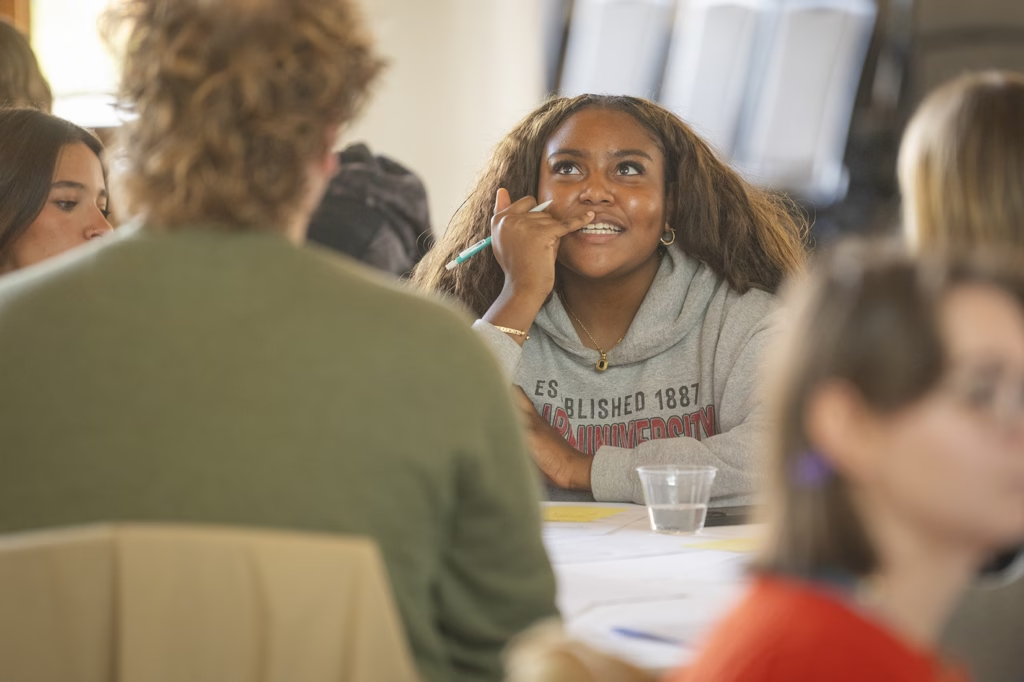
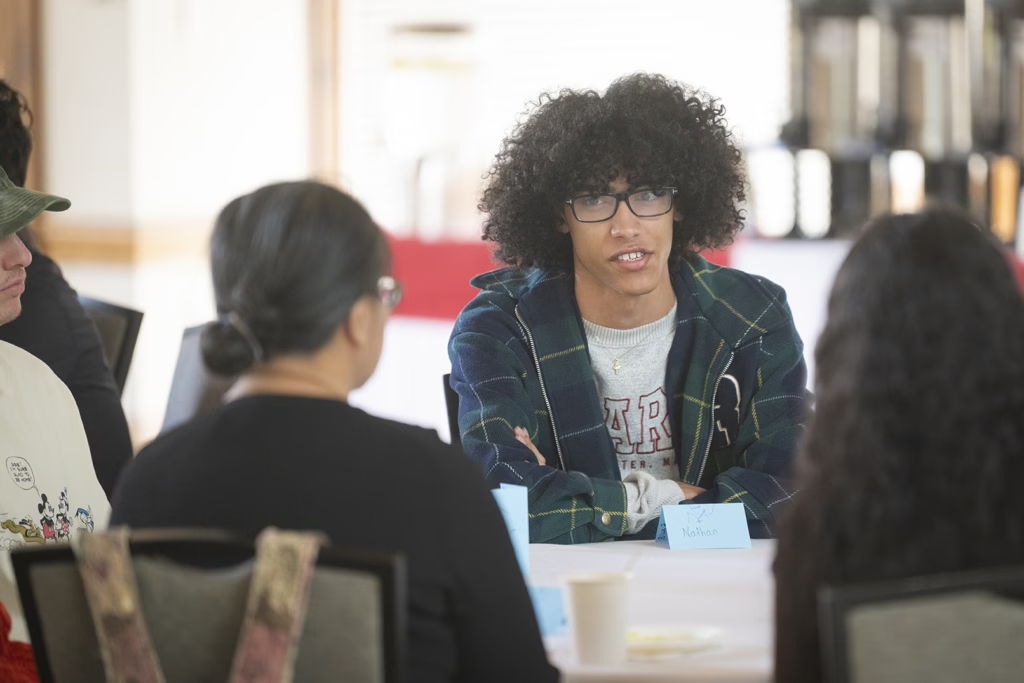
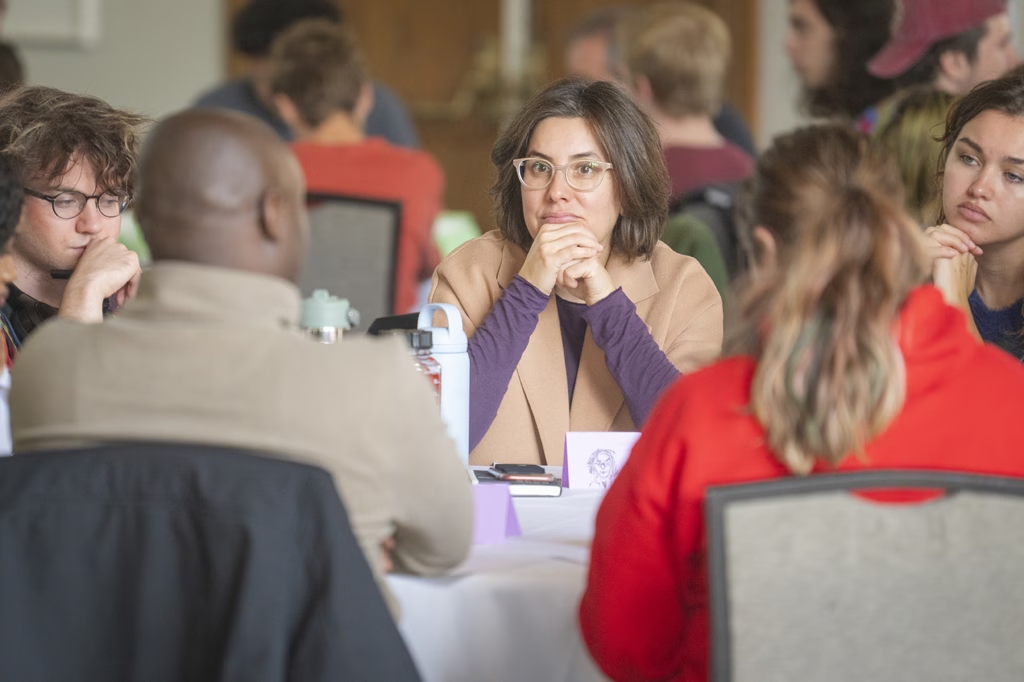
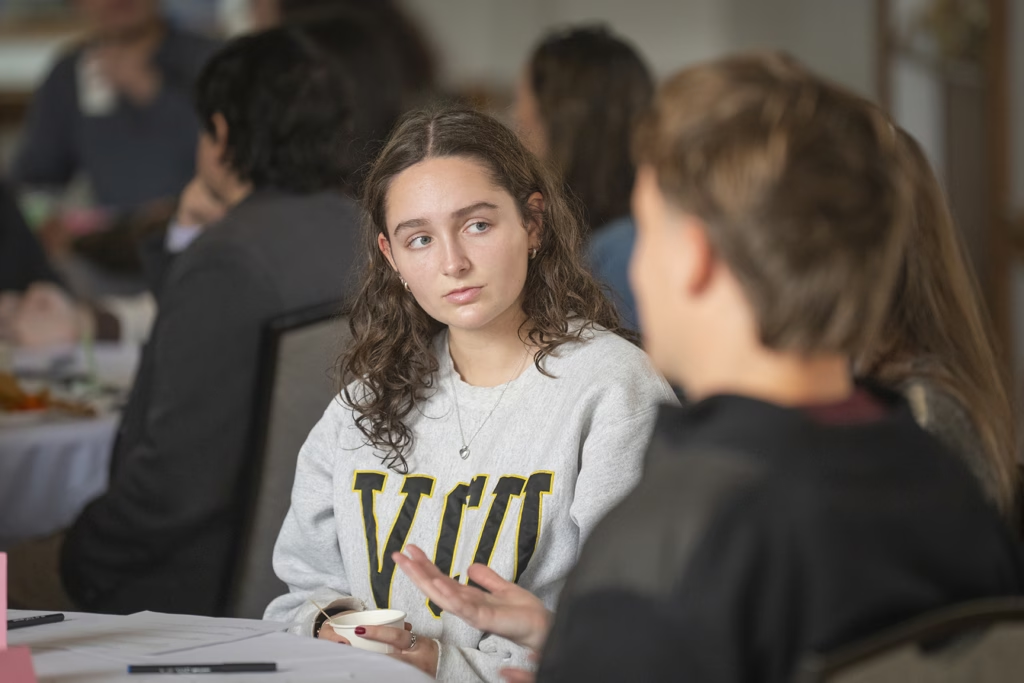
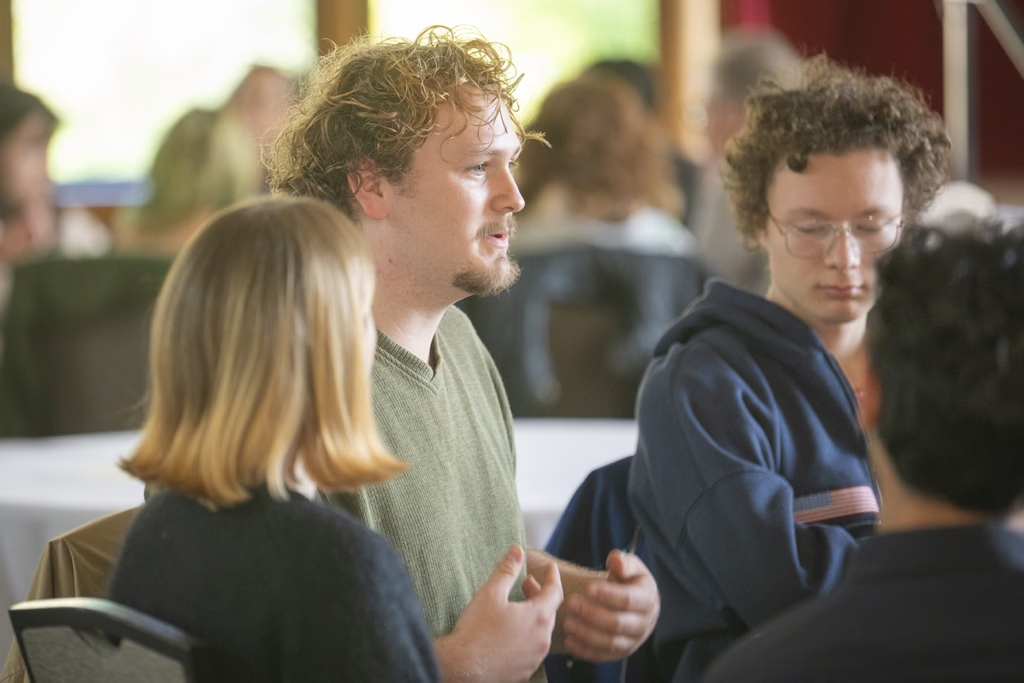
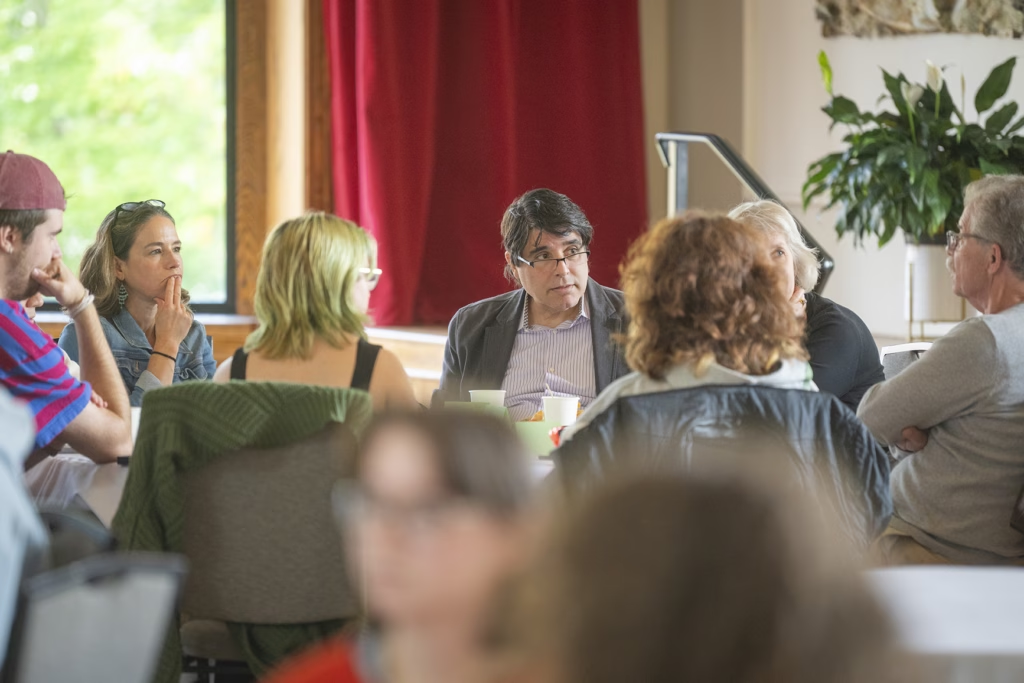
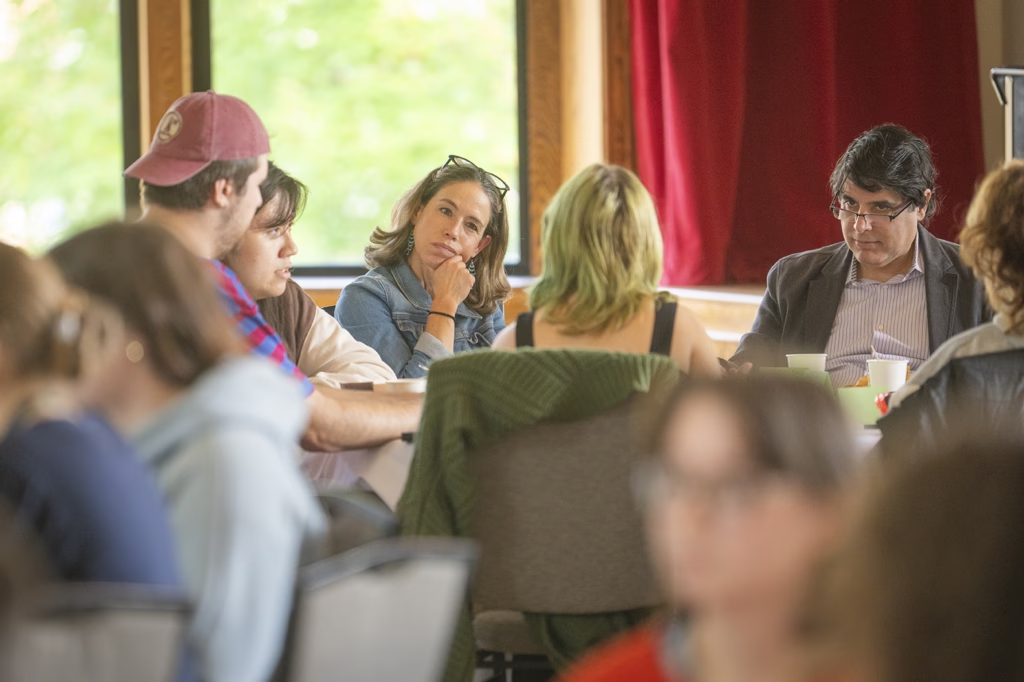
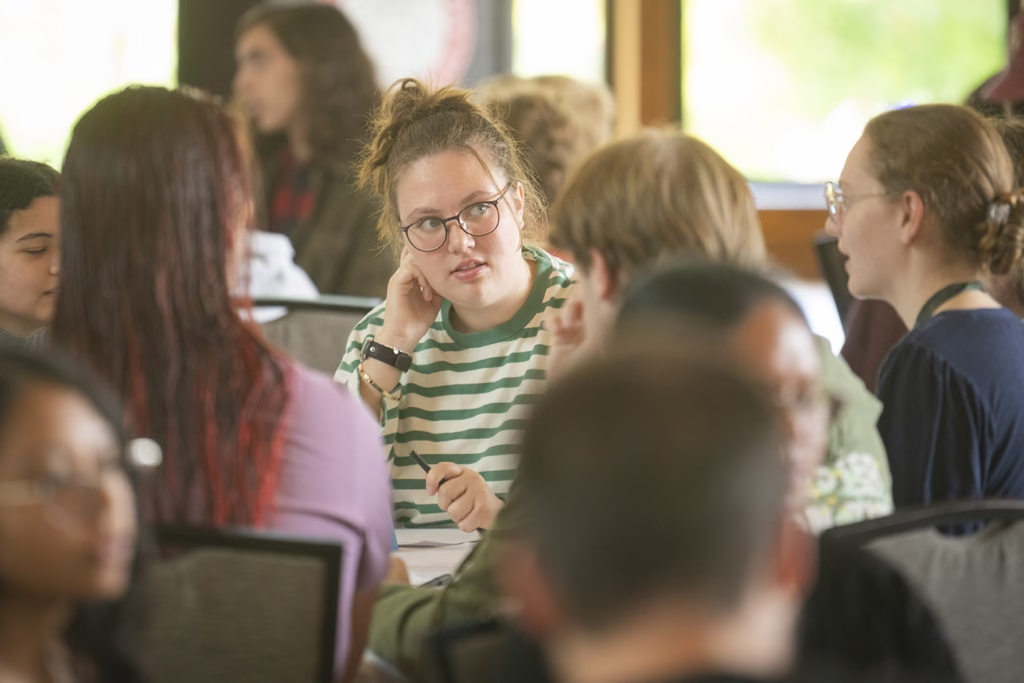
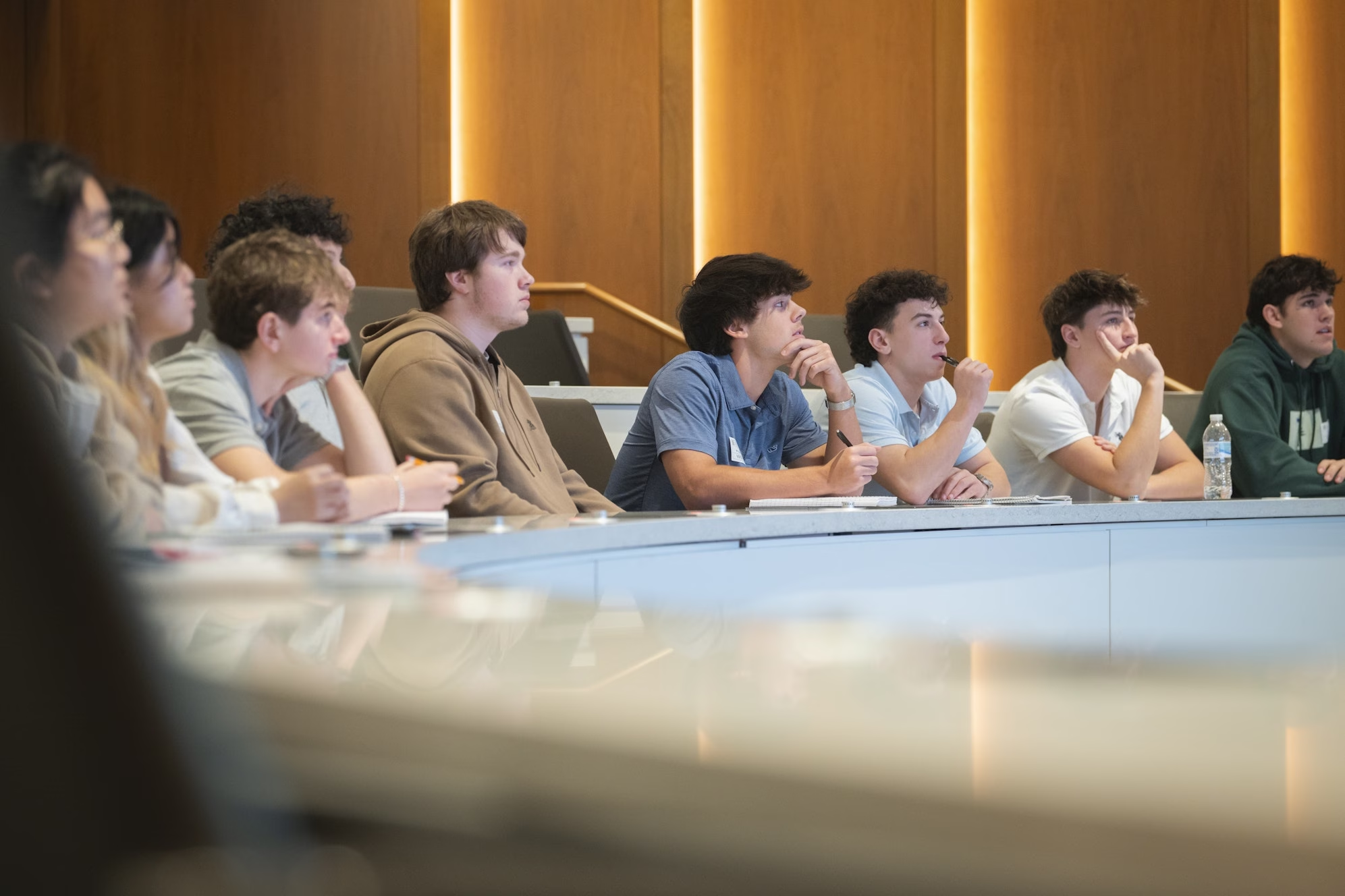
On Wednesday, the School for Civic & Global Engagement hosted an event where students, faculty, and staff sat at eight roundtables in Tilton Hall and wrestled with these and other meaty questions meant to evoke thoughtful, challenging, and always civil discussions. “Last 250/Next 250” was organized by students who have agreed to participate in the Deliberative Citizenship Network (DCN). Political Science Professor Rob Boatright and History Professor Nina Kushner secured a grant for Clark to take part in the DCN, led by Davidson College to include over two dozen colleges and universities that house programs in civic discourse and deliberation.
As part of the grant, 10 Clark students were trained to be deliberation facilitators, eight of whom guided Wednesday’s discussions. The event’s rulebook was straightforward: participants were expected to engage with humility, empathy, kindness, and curiosity. While differences of opinion were inevitable, participants were encouraged to respect differing perspectives, use evidence to support their arguments, and seek common ground when possible.
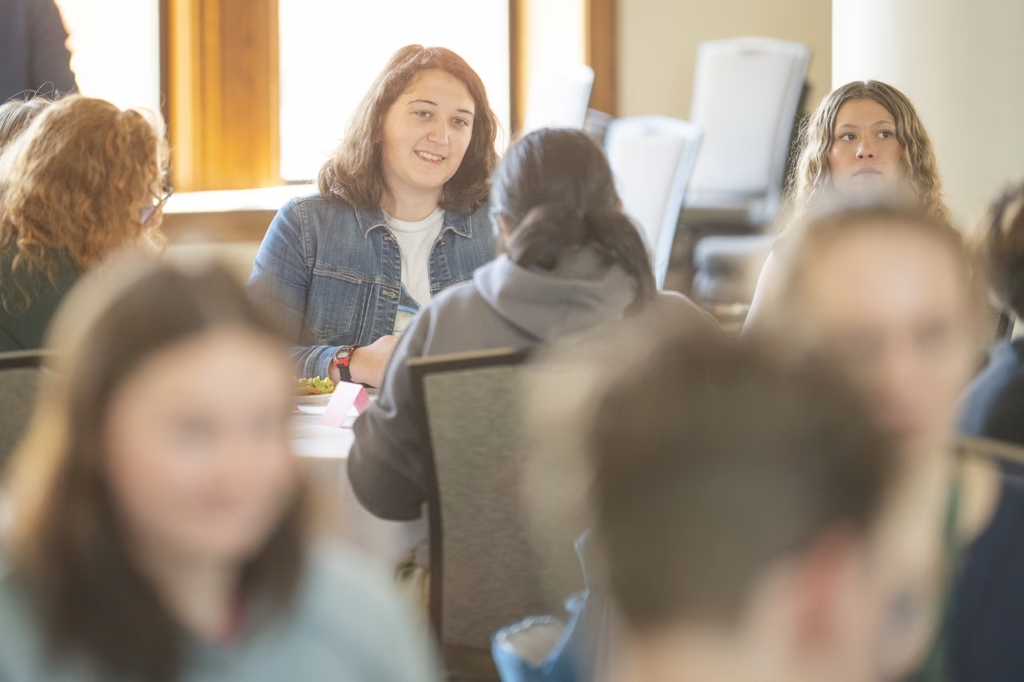
At a table where the participants were led by facilitator Ben Misner ’28, Molly, a student, offered her hope for a productive session, noting that “it’s important to be open and listen to other people rather than ascribe labels to their ideas.” Fellow student Nathan agreed, saying that it’s important to recognize that an opinion is meaningful to the person expressing it “even if that opinion is different from yours.”
The group moved through questions about topics ranging from the nature of anniversaries — and the relative value of celebrating them — to how history should be taught and the United States’ identity on the world stage.
Fellow student Jayda said it’s important to understand the corners of American history that can go unexplored, including its legacy of oppression of Native Americans and incursions into other countries. She referenced the “dichotomy” of celebrating the birthday of one of the world’s most powerful countries while also acknowledging some of the ugliness in its past.
The group talked about how the geographic, cultural, and demographic vastness of the United States foments diversity but impedes the wider sharing of traditions and norms. Is it feasible, Ben asked, to consider new occasions for celebration built on new foundations? Molly pointed out that the idea has legs, noting that celebrating Juneteenth and Indigenous Peoples Day reflect an evolving definition of the American identity.
Evan Wilson, associate dean of the college, noted that the American Experiment is not static and is constantly being reshaped and refreshed, citing women earning the right to vote as a milestone.
The table’s participants concluded the event’s first half with a robust discussion about the nature of history itself. Drew, a student, noted that, at 250 years old, the U.S. is still a relatively young country, and its history is often interpreted through a to-the-victor-go-the-spoils lens.
Today, Molly said, many topics are considered a “third rail” in the classroom because they confront uncomfortable truths. Even textbooks, once considered the paragon of objective analysis, are increasingly deemed untrustworthy because of the biases of their authors, some of the participants said.
Student deliberation facilitators for “Last 250/Next 250” were Jesus Arriage ’28, Kathleen Driscoll ’28, Sam Espach ’28, Ben Misner ’28, Maya Mahan ’28, Kennedy Griffin ’27, Quinn Jones ’28, and Madison Dircks ’26, who is currently pursuing a master’s in public administration. Espach and Jones will represent Clark at the National Student Dialogue event at the University of Delaware’s Biden School of Public Policy & Administration.