Author describes generational impact of Holocaust in new book
It wasn’t until after his mother’s death that Charlie Scheidt’s family history was revealed to him. Tucked away inside an old armoire, he discovered a treasure trove of documents — letters, passports, identification papers — detailing his parents’ escape from Nazi-occupied Europe prior to World War II and evoking the trauma of the Holocaust that echoes across generations. Secrets he hadn’t known, emotions he hadn’t experienced, connections he hadn’t made, emerged from those pages.
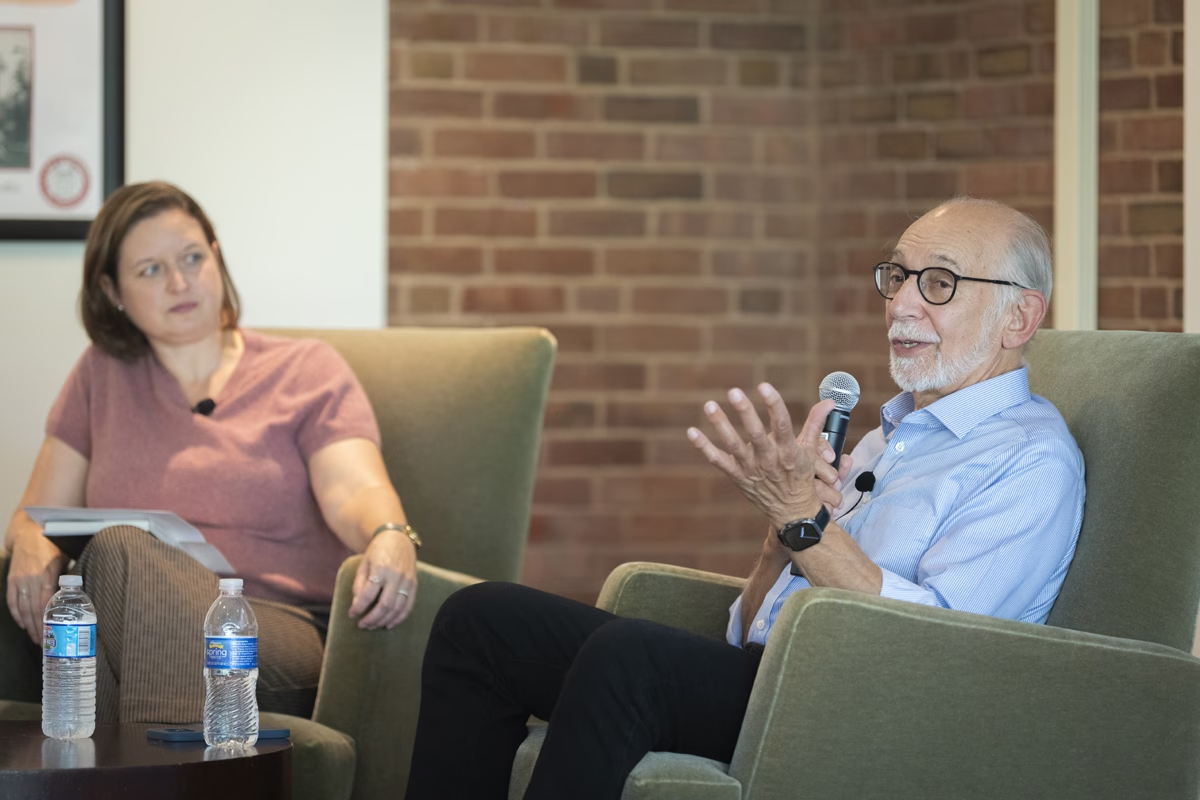
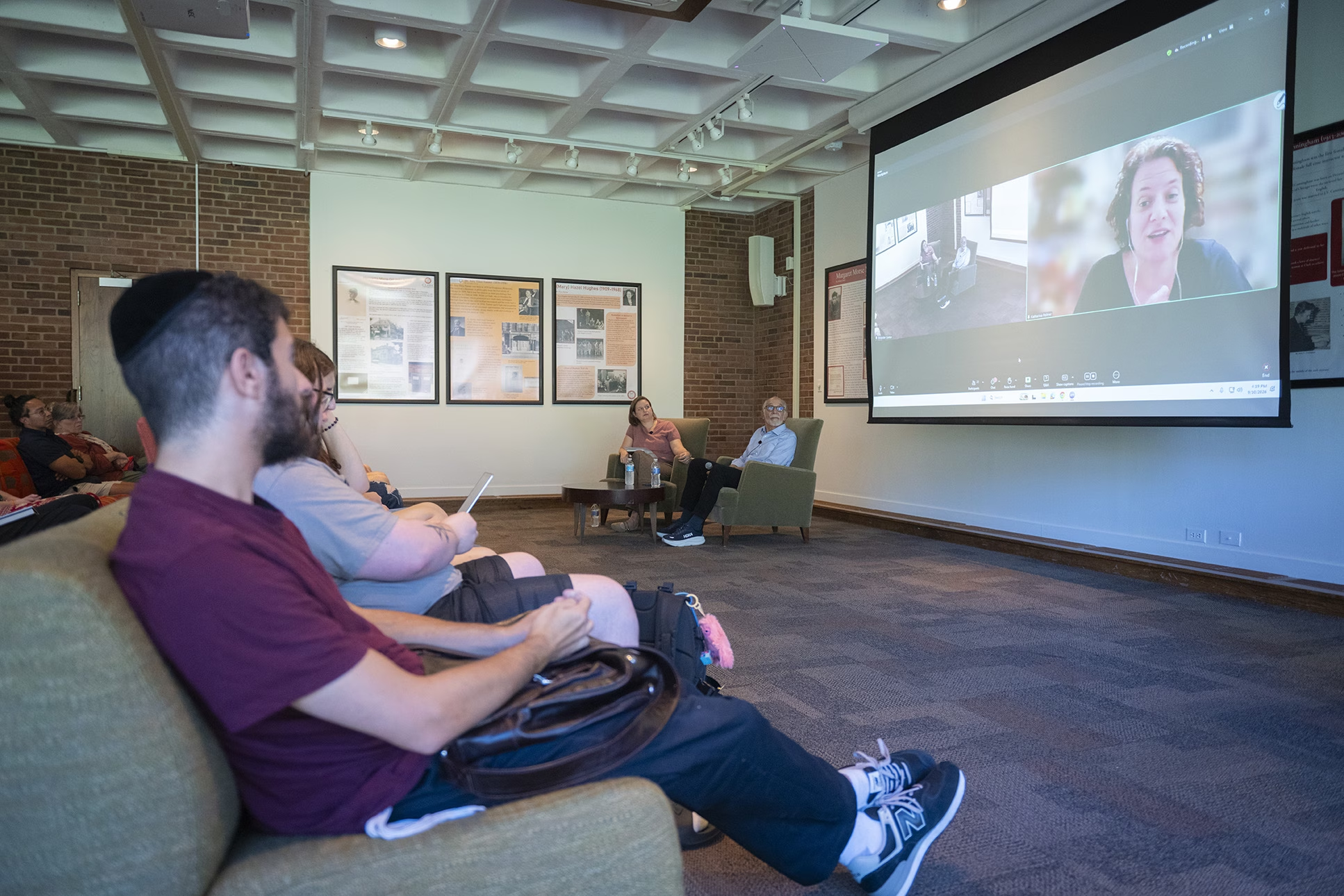
All that rich and painful history comes alive in Scheidt’s book “Inheritance: Love, Loss, and the Legacy of the Holocaust.” Scheidt spoke in the Higgins Lounge at Clark on Sept. 10 about the decade he spent researching and writing his family memoir. He was joined via Zoom by his co-author and researcher, Kat Rohrer, an Austrian filmmaker. Rebecca Erbelding, curator and archivist at the United States Holocaust Memorial Museum, moderated the discussion, which was sponsored by the Strassler Center for Holocaust and Genocide Studies, Clark University Hillel, Temple Emanuel Sinai, and Congregation Beth Israel.
Scheidt recalled the story of his father, who in 1933 fled from Germany to Switzerland, one step ahead of the Gestapo who had been trying to apprehend him. Scheidt’s parents would eventually make their way to Paris, then New York, settling in a close-knit German-Jewish refugee community.
For years, Scheidt knew only the “basic outline” of his parents’ saga, including the fact that “bad guys had been after my dad.” But during his childhood, little attention was given to the past. Instead, “the emphasis was on my growing up in safety.”
After his father’s untimely death, Charlie, now a young man, stepped in to lead Roland Foods, the business his parents had founded, growing it into a leading imported specialty food company.
Weeks before his mother died, she told him about the papers she’d saved in the armoire, hidden behind clothes. She told him, “I just want you to know they’re there.”
Scheidt said he was unwilling to “plunge into the past” and left the documents alone for 20 years. But in retirement, he began to believe that, within those papers, there was a story to be told. Rohrer agreed. The two traveled throughout Europe, visiting places where his extended family had lived and consulting with archivists to fill in holes in the narrative.
“There is magic to being in a place where you imagine your family has been,” Scheidt said. “Walking in those footprints is very valuable.” He noted that the railroad tracks his father had sprinted across to escape the Gestapo still existed.
Scheidt witnessed firsthand the traumatic effects of persecution and exile not only among his extended family — including an aunt and cousin who survived the Ravensbrück and Bergen-Belsen death camps — but also among community members who had fled Europe to the United States. But the full impact was lost on him until he and Rohrer began researching and writing “Inheritance.”
“Only by working on the book did I understand how scarred my family was,” he said. He recalls conversations between his parents and an uncle during the McCarthy hearings of the 1950s as they pondered whether there would be a purge of U.S. citizens. “They were asking, ‘Where do we go next?’” he said. “I grew up around people who felt so vulnerable.
“My parents did not give details about their experience, and I respected their desire for silence,” Scheidt said. “But did my mother want me to delve into those documents? That was the debate. Once I imagined my father fleeing across the railroad tracks, I needed to address a story that was not being told. I needed to tell their story.”
Charlie Scheidt shares enduring connection with the Strassler Center. He has generously funded several visiting professorships and, through the Scheidt Doctoral Fellowship in Genocide Studies, and is providing five years of full funding for a current graduate student. His support helps amplify and advance the Center’s urgent and consequential work.