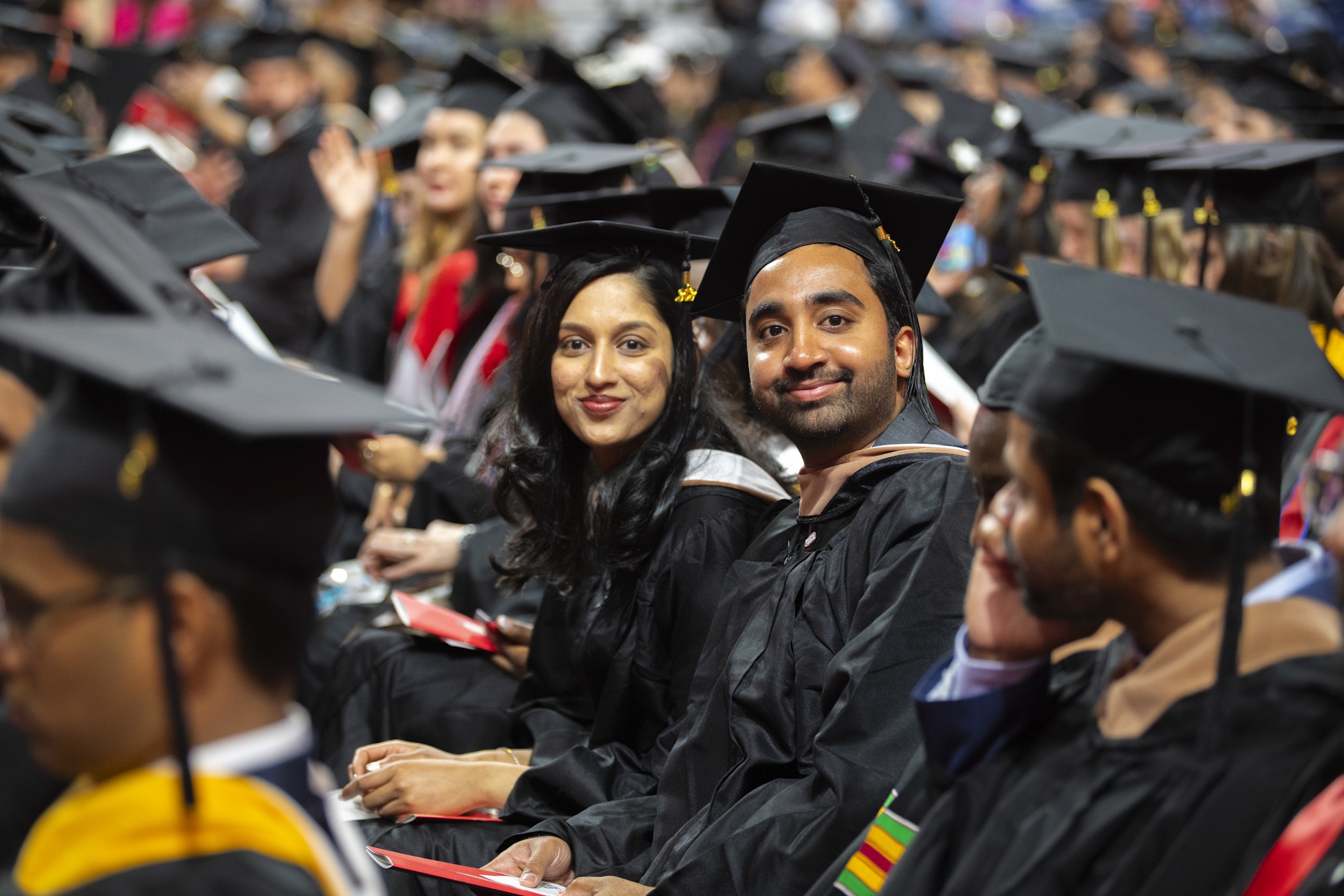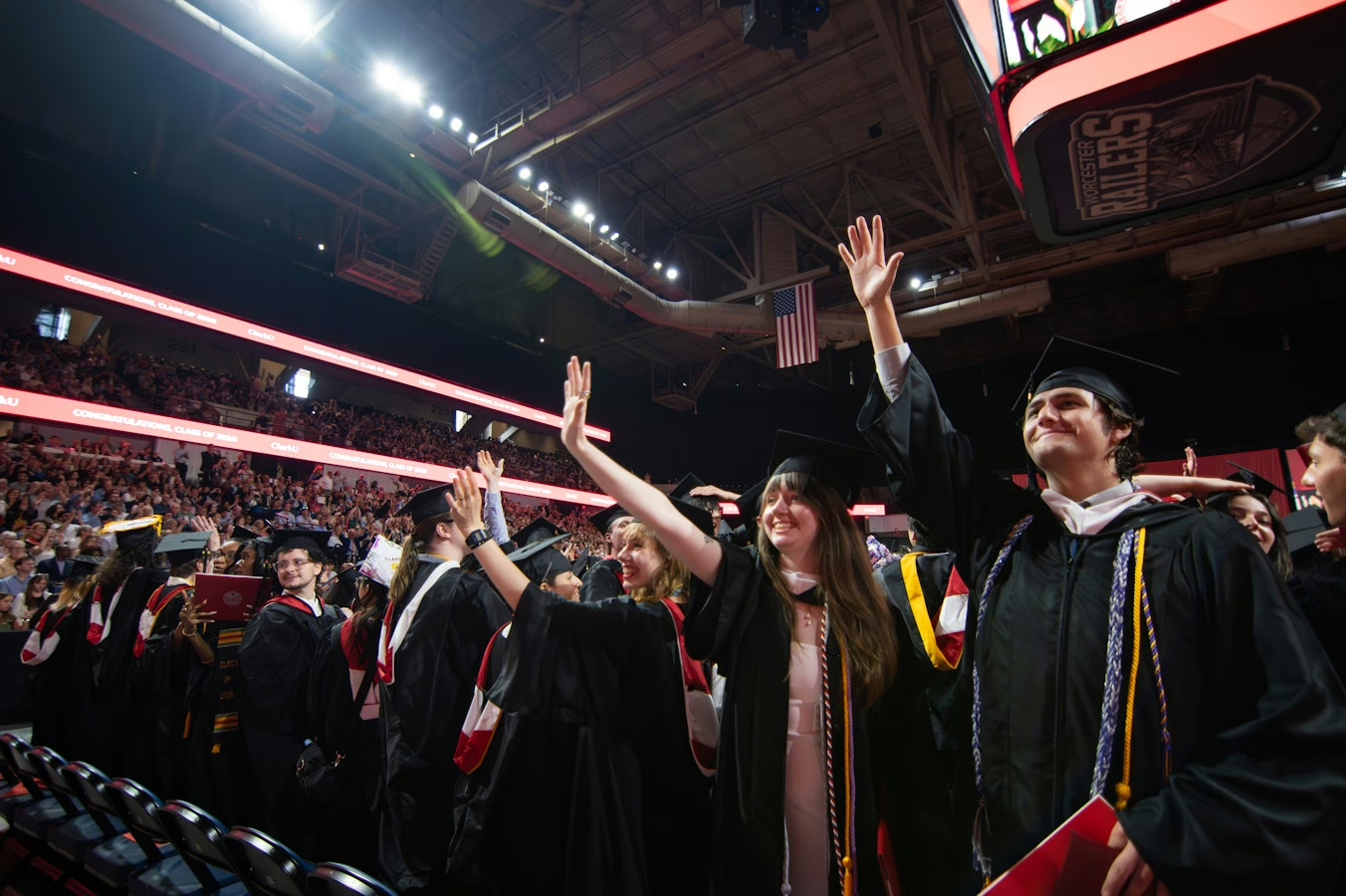
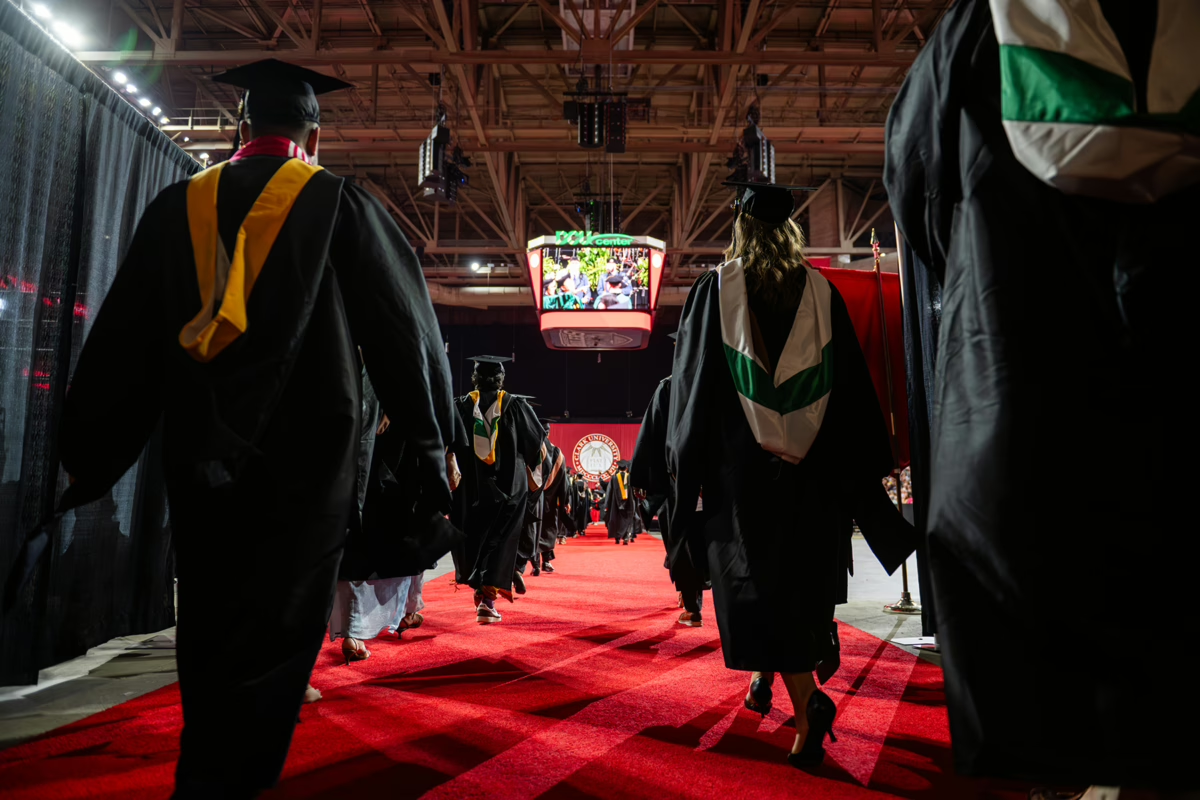
University confers 636 graduate degrees
“Have a big vision. Communicate it in ways people can understand.”
Sir Andrew Steer, one of the world’s foremost climate experts, congratulated Clark University students receiving master’s and doctoral degrees at the Graduate Degree Commencement Ceremony and encouraged them to act boldly and remain hopeful, no matter their path.
The Class of 2026 included graduates from 49 states and 69 countries. In a separate ceremony held earlier in the day, the University conferred 612 bachelor’s degrees.
“As Clark graduates, I know you will rise to the challenges and opportunities we share as global citizens,” President David B. Fithian ’87 said. “Among other skills you developed, I imagine you grew more resilient. Resilience is not simply endurance, and it is not the absence of difficulty. It is the capacity to persist with purpose when circumstances are demanding, uncertain, or disrupted. … You did not advance because the path was smooth, but because you kept going — thoughtfully, steadily, and with determination.”
“Let the skills you’ve developed by being so engaged at Clark — critical thinking, resourcefulness, resiliency, confidence in your voice, bridging difference through dialogue, and more — now help you to be the global citizens and leaders we need to be deeply and thoughtfully and passionately engaged in the challenges and opportunities before us,” Fithian added.
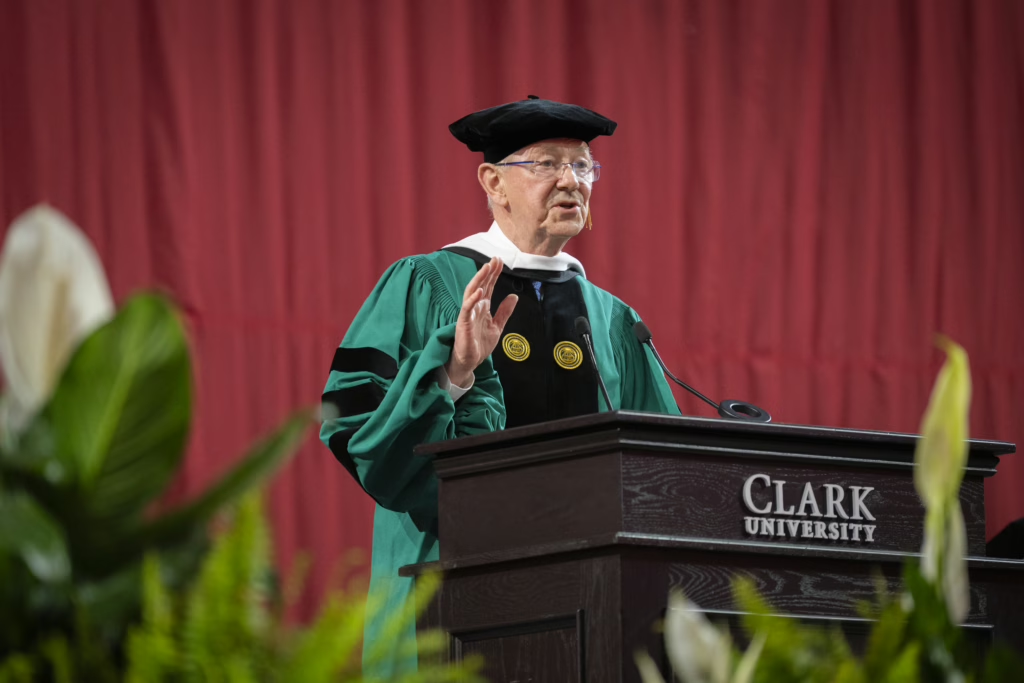
In his address after receiving a Doctor of Humane Letters degree, Steer acknowledged that the students are graduating into a world with several major challenges — among them, AI, the erosion of trust in facts and truth, and dysfunctional governments. The last half-century has seen unimaginable progress and growth — demographically, technologically, and economically. “But this explosion of the human economic footprint has put unprecedented pressure on the planet and created severe inequality and social challenges.”
Steer praised Clark’s School of Climate, Environment, and Society for including economics in its interdisciplinary lineup, which “is pointing precisely to the systems change we will need to address climate change.” And every single member of the Class of 2026 has a part to play, he said, whatever their field — education, finance, social work, healthcare, the arts.
Acknowledging that his speech was meant to offer inspiring advice, Steer turned to the United States’ semiquincentennial for motivation. In 1776, he explained, public opinion of the American Revolution was low — but that changed rapidly after Thomas Paine published his 47-page pamphlet, “Common Sense.”
“In it, he argued: ‘Don’t make this too complicated. It’s common sense! Don’t try for incremental change. Make a clean break,’ ” Steer said.
Drawing inspiration from Paine and the others fighting for independence in 1776, Steer imparted five pieces of wisdom:
- Have a big vision. Communicate it in words people can understand.
- Recognize that progress may require disruptive change. “Be a smart disrupter.”
- Don’t be afraid to say what you think, even if it goes against the trend. “Nobody asked Thomas Paine to write ‘Common Sense,’ but he wrote it anyway — it changed the world.”
- Make friends. The tide of the American Revolution was turned by the arrival of French troops and arms, which Benjamin Franklin secured with diplomacy and charm. “He made the case irresistible. So must we.”
- Remember that hope is a discipline. Despite early losses, with defeat imminent, George Washington held onto his hope and convinced his soldiers to stay with him. “At times, you too will need that audacious hope and moral backbone — please do not be afraid to fail.”
Steer then turned his gaze fifty years into the future. “What will the world look like? My prediction is that it will be cleaner, greener, healthier, more prosperous, and more just. It’s up to you.”
Roy DiNicola ’90, chair of the Board of Trustees, congratulated the students on reaching this milestone. “Commencement is one of life’s important rites of passage,” he said, “a pause to recognize your achievements, and a step forward into a world that very much needs the skills you’ve developed here at Clark.”
DiNicola added that the graduates have been well prepared to deal with the sometimes-intimidating future.
“As you leave Clark, you carry with you not just a degree, but a way of thinking and engaging with the world,” he said. “Our hope — indeed, our confidence — is that you will use your education not only to succeed, but to contribute. To lead with purpose. To ask better questions. To build, to challenge conventions, and to care.”
“At times, you too will need that audacious hope and moral backbone — please do not be afraid to fail.”
Sir Andrew Steer
Kristen Williams, professor of political science and chair of the faculty, urged the graduates to remember that knowledge is power.
“Think of your own educational experiences at Clark, whether in the classroom, internships, study abroad, community engagement projects, archival research, or fieldwork. While you came to Clark not as a blank slate, but as a person bringing your knowledge and curiosity, you were invariably asked to ponder research questions: ‘How?’ and Why?’
The graduates’ experiences at Clark “lead to the development and enhancement of important skills that are necessary for democracy and civic engagement,” including communication, critical thinking, problem solving, and analysis. She urged the graduates to uphold their responsibility to put those skills toward a meaningful and productive life.
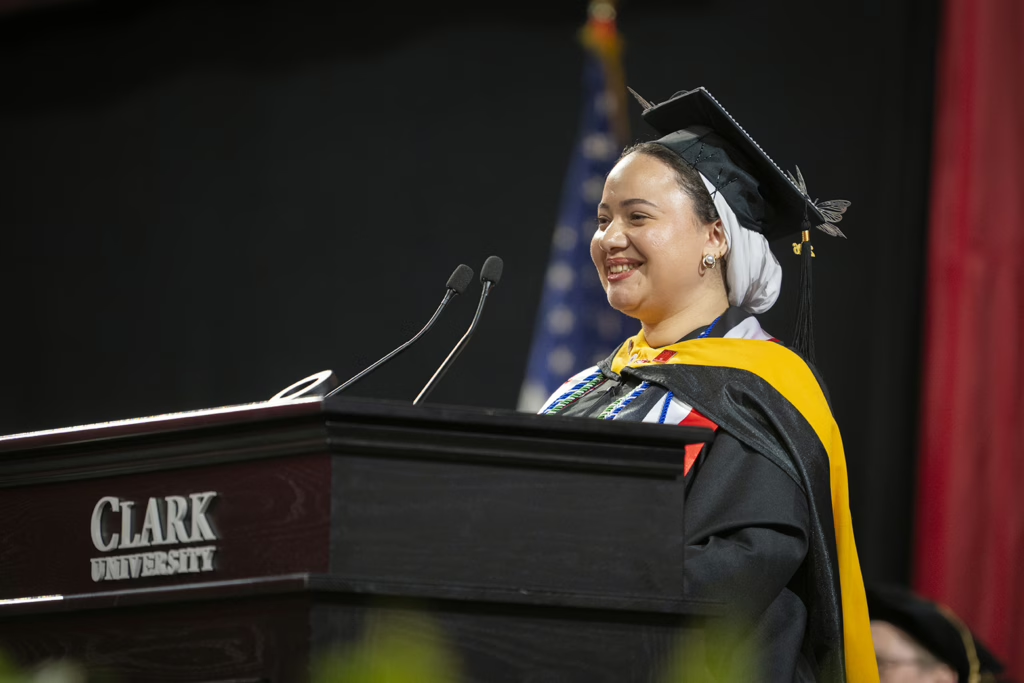
Nourhan Beshir Attia, graduating with a master’s in environmental science and policy, delivered the graduate student address. A native of Egypt, she shared that the COVID-19 pandemic forced the cancellation of her bachelor’s degree ceremony in 2020. “So, standing here today, in my late twenties, finally getting this moment — I am deeply, deeply grateful,” she said.
“When I came to Clark, I thought I was looking for acceptance as someone coming from Egypt,” Beshir Attia said. “As a modest Muslim hijabi woman, I wondered: Will I belong here? And yes, I found people who respected me. But the most important thing I found was something I wasn’t expecting. I found the moment I stopped waiting for permission to be myself.”
Eventually, she said, she stopped asking if she belonged and started knowing that she did. “You start to notice everyone else in the room,” she added. “Who celebrates you? Who supports you? Who quietly makes space for you to grow? Who doesn’t try to dim you?”
She also discovered that the university experience was never just about getting a degree. “It was about writing your authentic story,” she said. “You don’t need to have a perfect story. You just need a real one.”
She congratulated her fellow graduates on their accomplishments and on just being in the room. “Sometimes, being in the room is the bravest thing you can be,” she said. “And maybe that’s the story for many of us.”
Once all degrees were awarded, Fithian brought the ceremony to a close. “What we celebrate today is not only what you have completed at Clark, but what you have contributed — to knowledge, to practice, to each other, and to the life of this University.”