NYT columnist Thomas Friedman moderates Clark climate panel
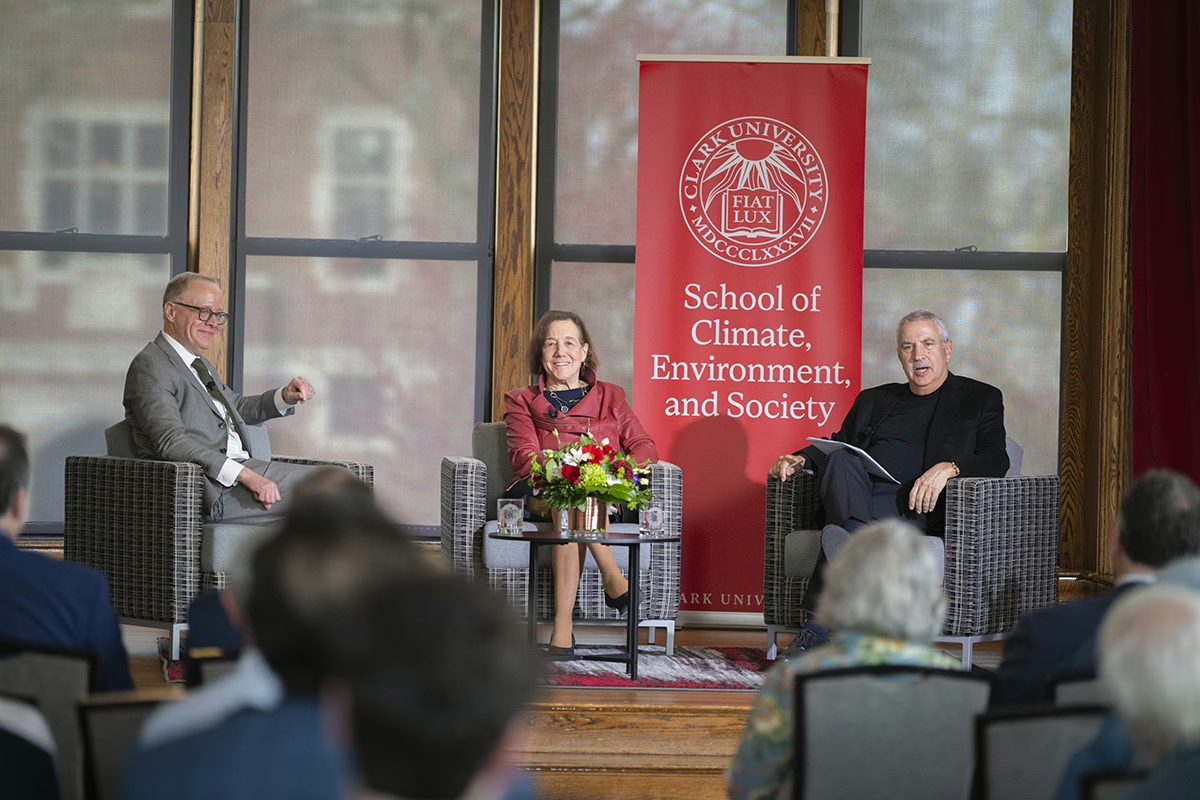
Our shared climate future, and the imperative to improve its prospects for all of us, brought together a panel of thought leaders and an audience eager to hear their perspectives at the Climate Forum in Tilton Hall on April 13.
The panelists, Thomas Friedman, the Pulitzer Prize-winning New York Times foreign affairs columnist; Mindy Lubber, president and CEO of the sustainability nonprofit Ceres; and Lou Leonard, D.J.A. Spencer Dean of the School of Climate, Environment, and Society, unpacked some of humanity’s most pressing challenges — from unfettered climate degradation to the disruptive power of artificial intelligence — but also shared a dose of optimism, with the appropriate guardrails.
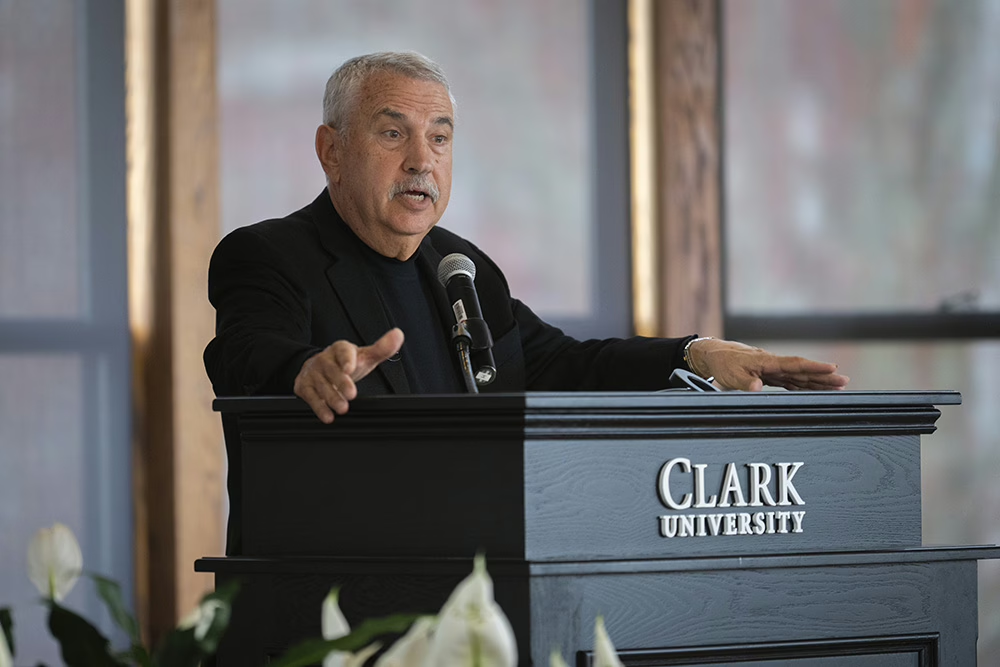
Following introductory remarks by Clark President David Fithian, Friedman set the tone for the event, describing how his reporting has brought him to the “edge of humanity” (the civil war in Syria, where he witnessed staggering cruelty and inspirational kindness), the “edge of technology” (his research into the global technology economy that led him to write his 2005 bestseller “The World is Flat”), and the “edge of environment” (observing the need for humans to intentionally and collaboratively adapt to their shifting environments).
The universe-originating “big bang” of 13.8 billion years ago is being followed by a human-created big bang, Friedman posited, marked by nuclear proliferation that has given us the tools for world destruction, the creation of our own cyberspace “galaxy,” an earth that is groaning under climate disruption, and the “genesis moment” in which AI will bestow on humans the godlike ability “to create anything from a molecular level” even if they’re lacking the ethical and moral framework to do it justly and wisely.
Mother Nature has acted as a buffer for most of our climate excesses, Friedman noted, with the ocean alone absorbing 90 percent of carbon emissions. But that buffering ability is waning, threatening to push us into even more destructive weather patterns. Finding solutions will require the sort of collaborative, interdisciplinary approach centered in the School of Climate, Environment, and Society, which is “opening at exactly the right time,” he said.
“Interdependence is no longer our choice,” Friedman said. “It’s our condition.”
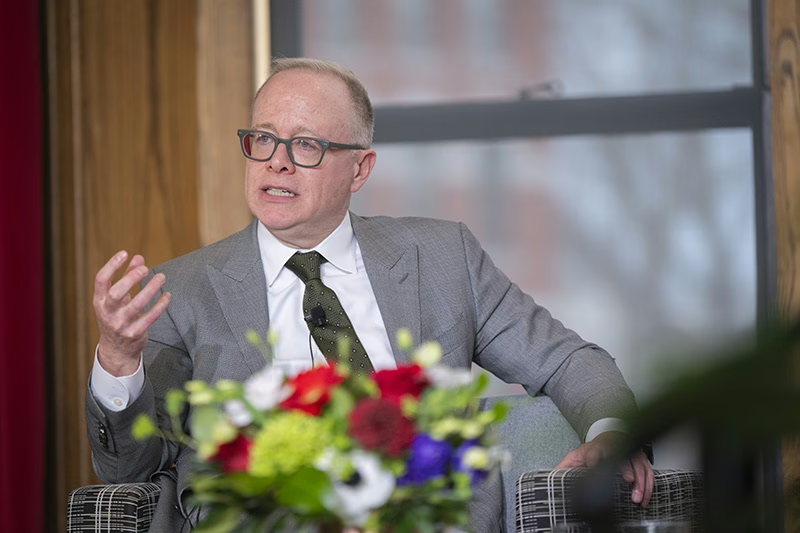
During the discussion moderated by Friedman, Lubber spoke of the profound influence of the private sector in filling the climate vacuum left by the federal government’s withdrawal from the Paris Agreement and the administration’s active dismantling of environmental protections. Companies are getting involved on their own terms by pursuing investment opportunities that contribute to the greater climate good while also providing financial gains.
But Lubber cautioned that there is a “chill” among CEOs who, during the first Trump administration, were eager to publicly share their support for climate action as a priority, but who have shown far greater hesitancy to do so during the second administration. The fear of retaliation, she said, “is beyond troubling.”
Leonard said he was attracted to the dean’s role at the School of Climate, Environment, and Society because of the potential for higher education to be a catalyst for the creation of effective networks and collaborations, given that the “top-down” approach is no longer working. “Clark is not big enough to be the only answer, but we can show what it looks like to build deep partnerships on the ground,” he said. Surveys have shown that Americans want to engage in finding climate solutions and building healthier communities, Leonard added.
“Outside of D.C., the climate agenda is full-speed ahead,” Friedman said. He noted that some of the most important changes occur when companies are incentivized by a profit motive to do good things, such as investing in climate-positive action. “Green is the new red, white, and blue.”
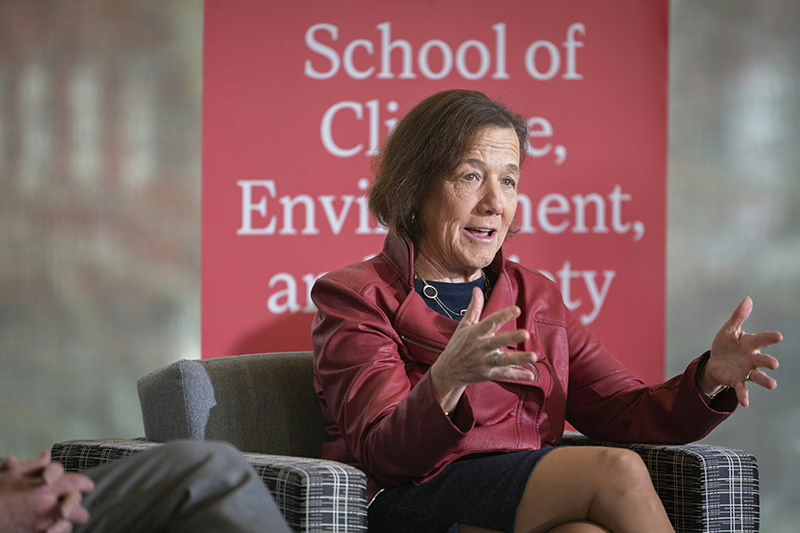
Lubber said more work needs to be done to “connect the dots” between climate change and its impacts, including last year’s fires in California. For instance, it’s important to emphasize that the Amazon rainforest’s critical role as “the lungs of the world” is being compromised by deforestation.
In climate discourse, it’s more effective to “tell a story rather than make a point,” Friedman said. To that end, Leonard said, Clark’s embracing of an environmental humanities curriculum is giving the University an avenue to meld globally relevant research with the liberal arts to craft compelling storytelling around the climate crisis.
“Interdependence is no longer our choice. It’s our condition.”
thomas friedman
The topic of AI was raised during the question-and-answer session. Lubber addressed the significant sustainability challenges posed by the construction and operation of data centers, which are ravenous consumers of energy and water. Data centers should be using recycled water and “green steel,” she said. “Water is underappreciated [as a resource],” Lubber said. “If you don’t have enough water, you can’t build a future.”
Friedman said the world is at a profound inflection point when it comes to AI. He recently reported on the artificial intelligence company Anthropic’s latest Large Language Model (LLM), which has found flaws and loopholes in the software systems of some of the largest technology companies. “It freaked them out,” he said. The companies were given an opportunity to fix their code “before the LLM is released into the wild,” but there is real potential for catastrophic misuse in the wrong hands, Friedman added.
It’s imperative that the U.S. and China, the world’s two AI superpowers, collaborate on rules and ethics surrounding the use of AI, he said. “We are on the cusp of one of the most disruptive moments in history.”
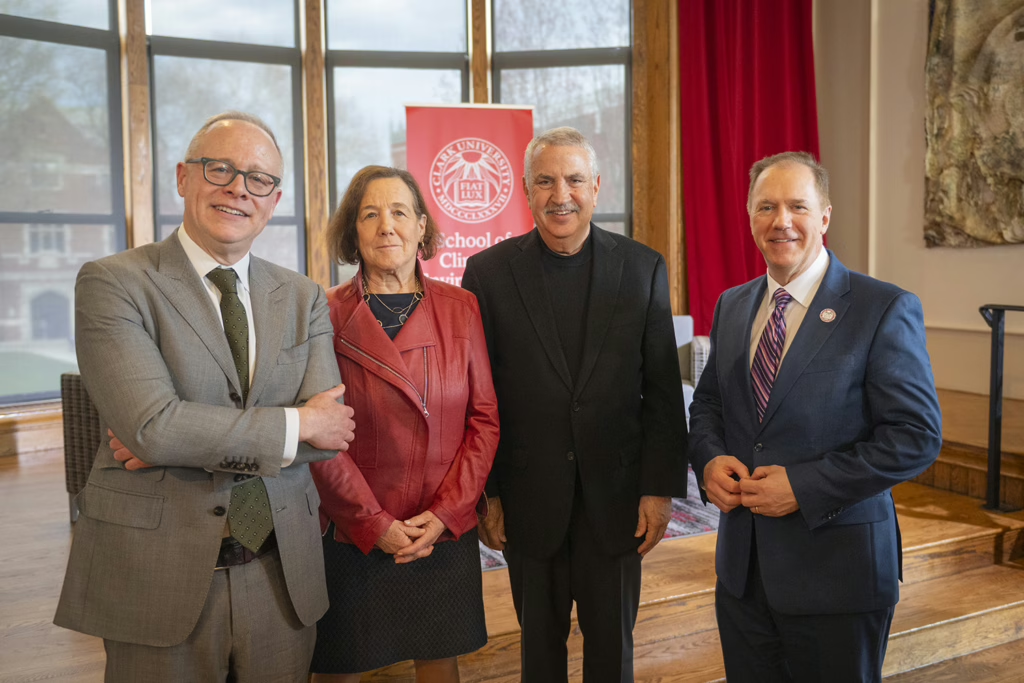
In a final question, the panelists were asked how they’re feeling about the future. Leonard called himself a “pragmatic optimist” who is encouraged by the emergence of substantive climate science “that we can learn from” and that will prompt humanity “to come together to make better decisions.”
Lubber described herself as an “eternal optimist,” albeit one who is “incredibly nervous” about new technologies with explosive influence, and as well as about unchecked climate decline that will have generational impacts. “When I think about climate change, it’s like a bus coming at our kids with ferocious speed, and we’re not jumping in front of it,” she said.
Harking to his Minnesota upbringing, Friedman struck a hopeful concluding chord. With a smile, he asked, “Pessimism. What’s the point?”