Event celebrates 30th anniversary of “Lone Star”
John Sayles chuckles when he’s thanked for taking some time on a Saturday afternoon for a Zoom interview.
“When you’re self-employed, Saturday and Sunday don’t mean a whole lot,” he says.
The director-screenwriter-novelist-and-sometimes actor knows plenty about the work of Work.
Over the course of a nearly 50-year career in the movies, Sayles has forged a reputation as a true cinematic maverick, creating a series of personal and uncompromising films like “City of Hope,” “Passion Fish,” and “Matewan,” which bore into subjects that have both shaped and haunted this country for generations: race, immigration, political corruption, labor strife, and just who gets to define what it means to “be” an American.
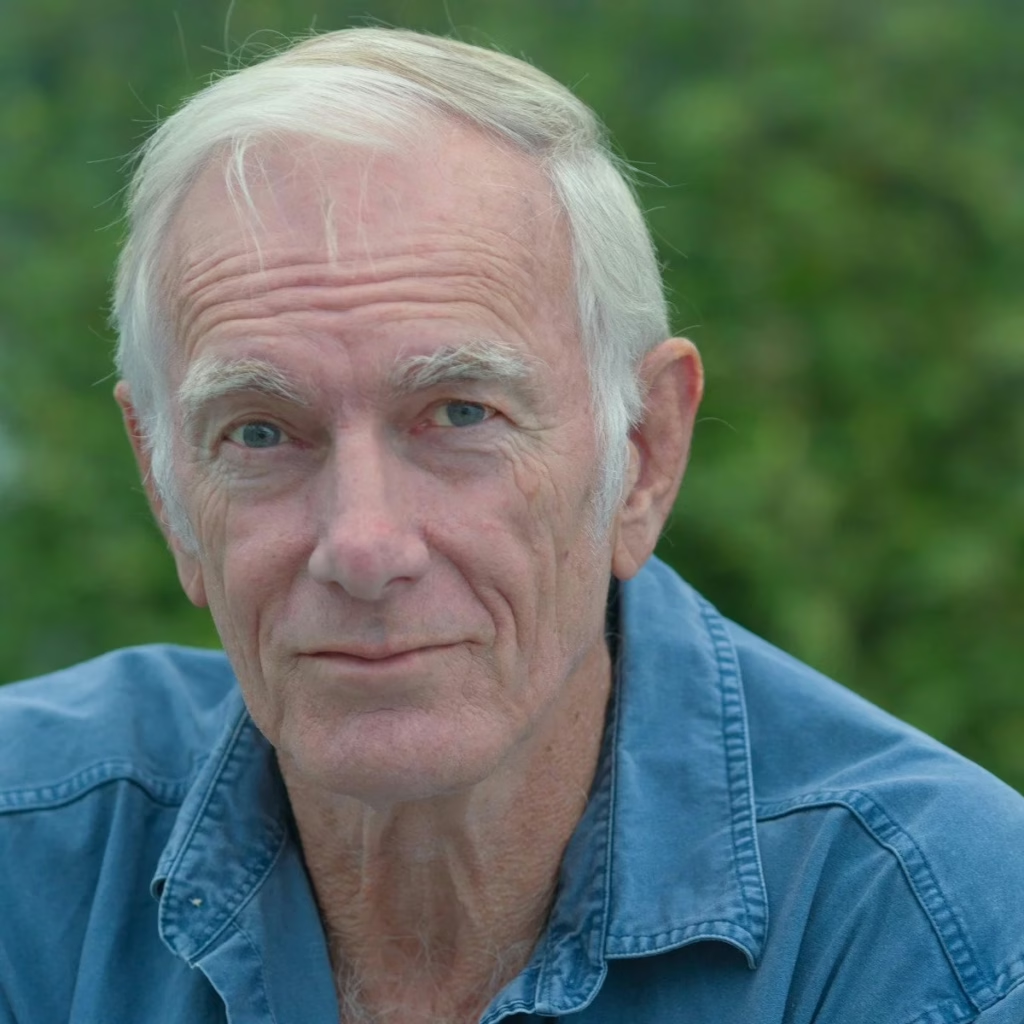
Sayles will be on campus on Thursday, March 26, for a screening of his sprawling 1996 neo-Western “Lone Star” followed by a Q&A. The event, co-sponsored by Screen Studies and Media, Culture, and the Arts with support from community partners Cinema Worcester and the Shawna Foundation, begins at 7 p.m. in Razzo Hall and is open to all.
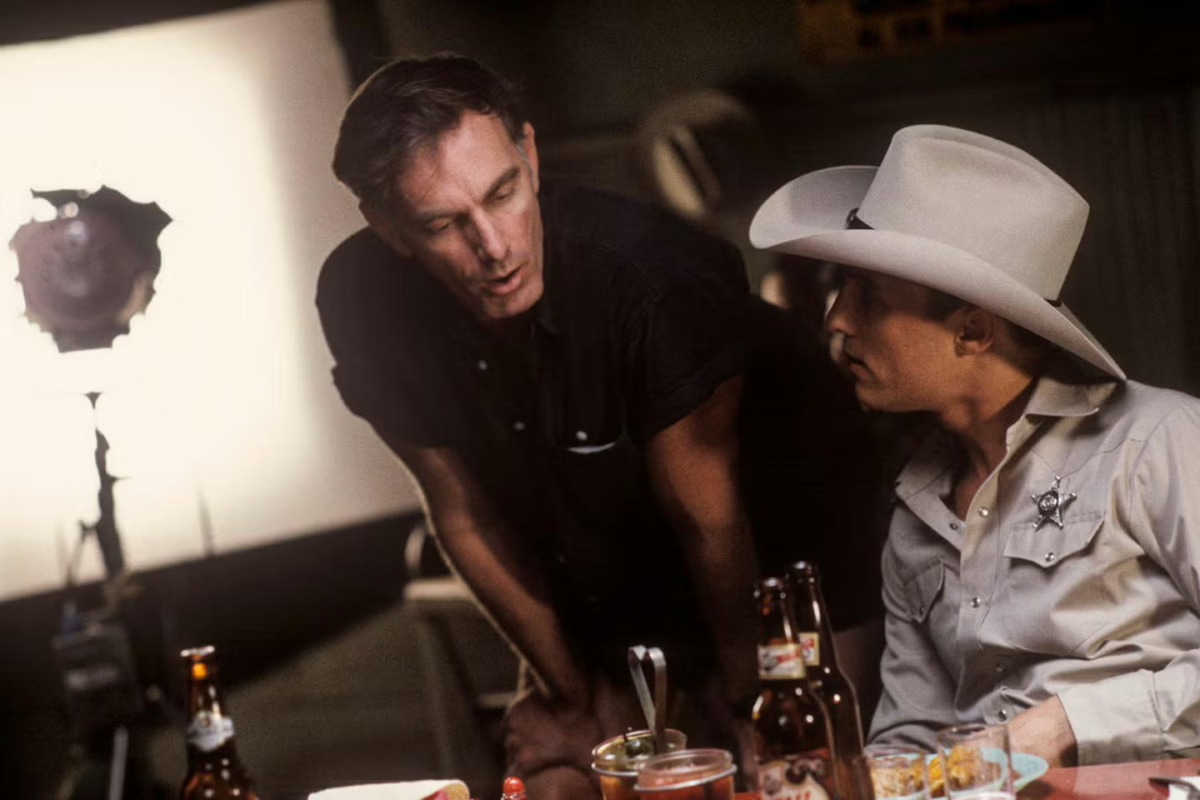
“Lone Star” begins with the discovery of human remains in the desert outside a small Texas border town. The bones are identified as belonging to Charlie Wade (Kris Kristofferson), the local sheriff who decades earlier had terrorized the town’s Mexican-American and Black communities before he mysteriously went missing, apparently murdered. Sheriff Sam Deeds (Chris Cooper) has a deeply personal reason for wanting to solve the crime: a prime suspect may be his late father, Buddy (played by a young Matthew McConaughey, shown above with Sayles), a lawman who feuded with Wade. That buried skeleton in the desert represents more secrets that Sam may want to uncover.
Sayles weaves together several plotlines that feel achingly relevant, including the controversial efforts of a Mexican-American teacher (Elizabeth Peña) to incorporate Mexican perspective into the traditional tale of the siege of the Alamo. Today’s disputes over what’s included in textbooks and lesson plans “are as much of a battlefield as they ever were, maybe even more so,” he notes.
The kernel for “Lone Star” was planted in Sayles’ childhood watching actor Fess Parker portray frontier legends Daniel Boone and Davy Crockett on television, and seeing John Wayne star as Crockett in the 1960 film “The Alamo.” The legends they built were powerful and enduring.
Then, in the late ’70s, Sayles was writing the script for the low-budget horror flick “Piranha,” which was filming in rural Texas, and he was struck by the infusion of Mexican culture and influence in the everyday life and operation of the local communities. On a day off, he took a bus to visit the Alamo in San Antonio and encountered a peaceful demonstration outside the fort led by Tejanos (Texans of Mexican descent) carrying signs that read “Tell the whole truth.”
Inside the fort, he immediately encountered an oil painting depicting a scene from the John Wayne movie. “I thought, ‘This is interesting.’ The first thing you saw was this preserving of the Hollywood version of the Alamo,” he says. “We weren’t talking about everything that happened here — and I got interested in the tension around that. I thought this was really fertile ground to tell a story.”
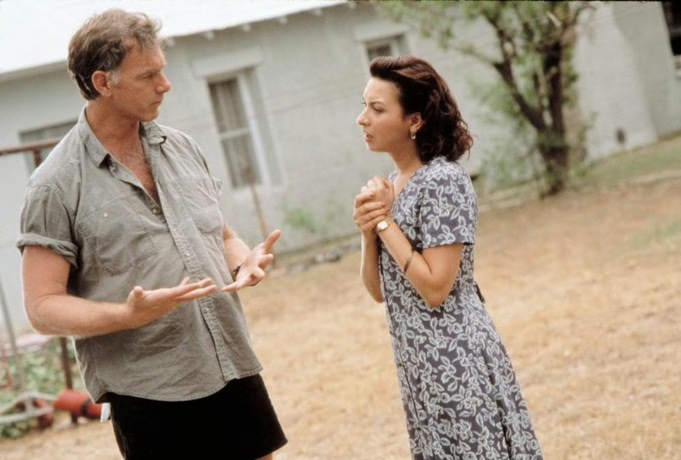
Storytelling is what has kept Sayles churning in his film and publishing careers. His first movie as writer-director, “The Return of the Secaucus 7” (1979), chronicled seven former college friends reuniting at a summer house to reminisce about their glory days and provided the blueprint for the similarly themed “The Big Chill” four years later.
Sayles’ films have chronicled the 1919 Chicago Black Sox scandal (“Eight Men Out”), unraveled the messy political workings of an American city (“City of Hope”), and exposed the encroachment of real estate development into coastal Florida (“Sunshine State”). He’s also written for numerous television series, most recently “The Gray House,” about four women whose spying on behalf of the Union helped turn the tide of the Civil War. The series is now streaming on Prime Video.
Until fairly recently, television had been a haven for many writers, with streaming services offering more funnels for steady work. A glut of content has led to a course correction and dwindling opportunities, Sayles notes.
“They were making good stuff, but too much of it,” he says. “Most of the young writers I know who were gainfully employed cranking out these episodes are now unemployed.”
The hardest property to get made and distributed is a standalone feature film, Sayles acknowledges. With the old theatrical model now largely broken (theatrical films, he notes, are generally regarded as “loss leaders” to build some buzz for their streaming debuts), few investors are willing to take a chance on an unproven property. If your film isn’t the sequel to a popular film or a Marvel movie, there’s little interest in backing you. “Yeah, we haven’t gotten other people’s money to make a movie in about 20 years,” he says in response to a question about the current “landscape” of the film industry. “I think you have to have land to have a landscape.”
Sayles has been devoting himself to writing novels. His latest, “Crucible,” is an epic tale about Henry Ford’s attempt to dominate the automotive industry and the city of Detroit from the 1920s through the Second World War. He’s been promoting “Crucible” on a book tour, and already has completed his next novel, “Gods of Gotham,” about political corruption and social and cultural upheaval in New York City in the early 1950s.
His trip to Clark is the result of some serendipity. Sayles lives in Connecticut, and his neighbor is Simon Pinchbeck ’25, who majored in screen studies. Pinchbeck mentioned Sayles to Professor Soren Sorensen, who invited him to speak at Clark to help celebrate the 30th anniversary of the release of “Lone Star.”
When told that the famed film-review duo of Gene Siskel and Roger Ebert gave “Lone Star” an unqualified rave on their syndicated program 30 years ago, Sayles laughs and says the pair were especially supportive of independent filmmaking.
“Because they had a national audience, a review like that really helped quite a bit,” he says. “The movie may not have been playing in a theater near you, but they let you know it was something worth seeking out. They encouraged people to widen their tastes a little bit.”
The ever-humble Sayles is quick to point out that Siskel and Ebert, years earlier, had introduced a “Dog of the Week” segment showcasing the week’s worst movie. The very first film earning “Dog of the Week” status? “Piranha.”