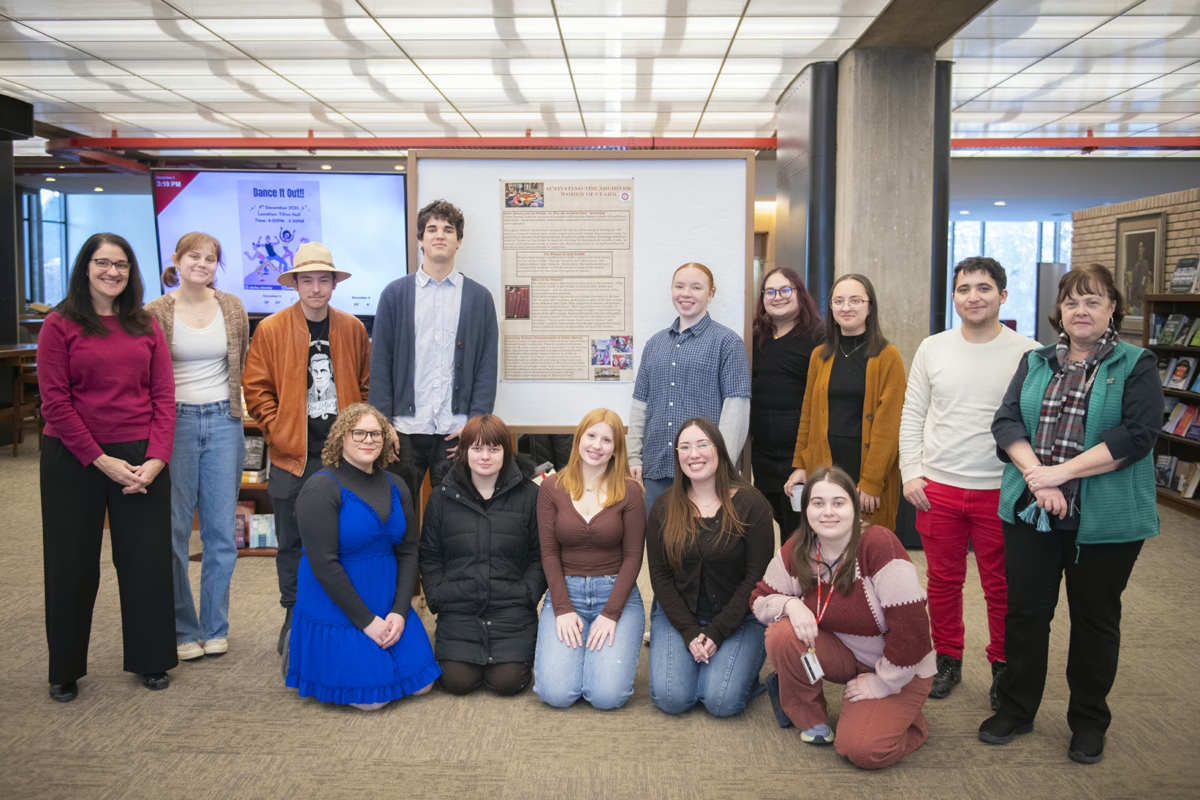
(Standing) Professor Mindy Marchand, Kihm Calico ’28, Cole Gushee-Nelson ’26, Tristan Cousineau ’27, Isabella Hagen ’28, Alistair Borg ’25, Jules Opulencia ’25, Derek Fino ’26, and Cindy Shenette, head of Archives and Special Collections. (Kneeling) Rose Marble ’28, Alyssa Ritskowitz ’28, Weslee Tyler ’27, Ella Medeiros ’28, and Abby St. Amand ’25.
A prison reformer.
A naturalist.
A geographer.
A child psychologist.
They were among the women with ties to Clark University whose accomplishments often transcended their time. These women pushed against societal, cultural, and academic norms they deemed unacceptable to make a deep impact at Clark and throughout the wider world.
Their achievements were brought to life through research conducted by students in the Women in Public (History) course taught last semester by Professor Melinda Marchand in the Department of History.
Marchand’s students partnered with Cindy Shenette, head of Archives and Special Collections, to investigate and chronicle the women’s stories, then showcase them in a Goddard Library poster presentation at the conclusion of the fall semester.
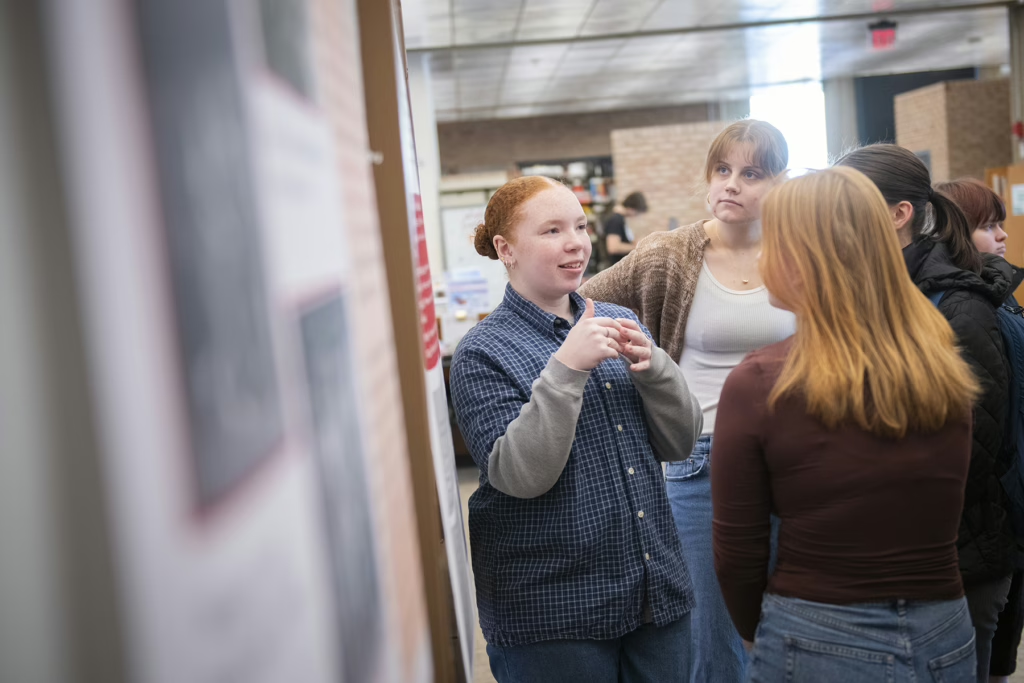
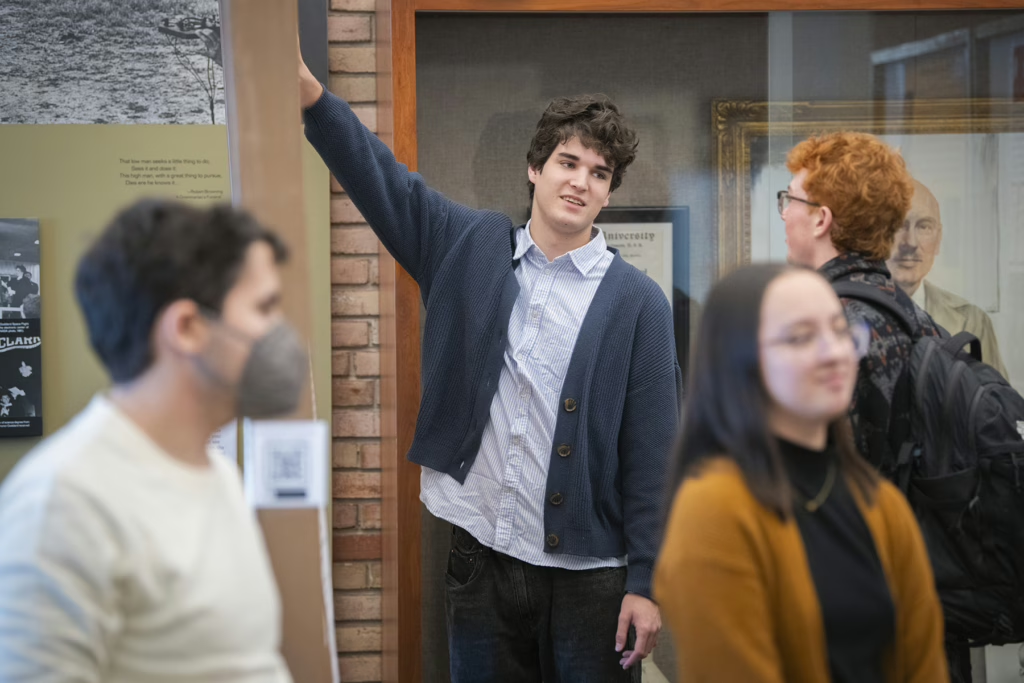
According to Marchand, her students “balance public history with academic history” in a way that not only hones their research skills but also “makes good citizens.” To that end, Marchand has forged community partnerships throughout Worcester County to generate engaging opportunities for student public history projects, including one last summer that traced the origins of the EcoTarium, the city’s renowned museum of science and nature, which was founded in 1825 as the Worcester Lyceum of Natural History.
The December poster display was the culmination of hours spent in the Archives learning about Clark’s groundbreaking women. The work gave students an inroad into discovering how the women’s contributions have been represented in public history and to studying cultural perspectives surrounding their individual and collective impacts.
Who are some of the Clark women featured in the exhibition?
Irene Yurkevicz ’73 fought for reproductive justice as one of the originators and later director of the student-run Birth Control Information Center, which led education and counseling initiatives on campus and in colleges and high schools in Worcester. Her story was recounted by history major Weslee Tyler ’27 in a display that included newspaper clippings of Yurkevicz’s work to expand birth control information services in the city.
M. Hazel Hughes, Clark’s dean of women and first women’s basketball coach, arrived at Clark in 1942, just as the formerly all-male University was welcoming its first women students. During her 26 years at Clark, Hughes was an indefatigable advocate for all Clark women, especially student-athletes, and her leadership and commitment are reflected in the M. Hazel Hughes Award, presented annually to an accomplished senior female athlete. Rose Marble ’28, a club basketball player herself, wrote about Hughes’ contributions for the exhibition.
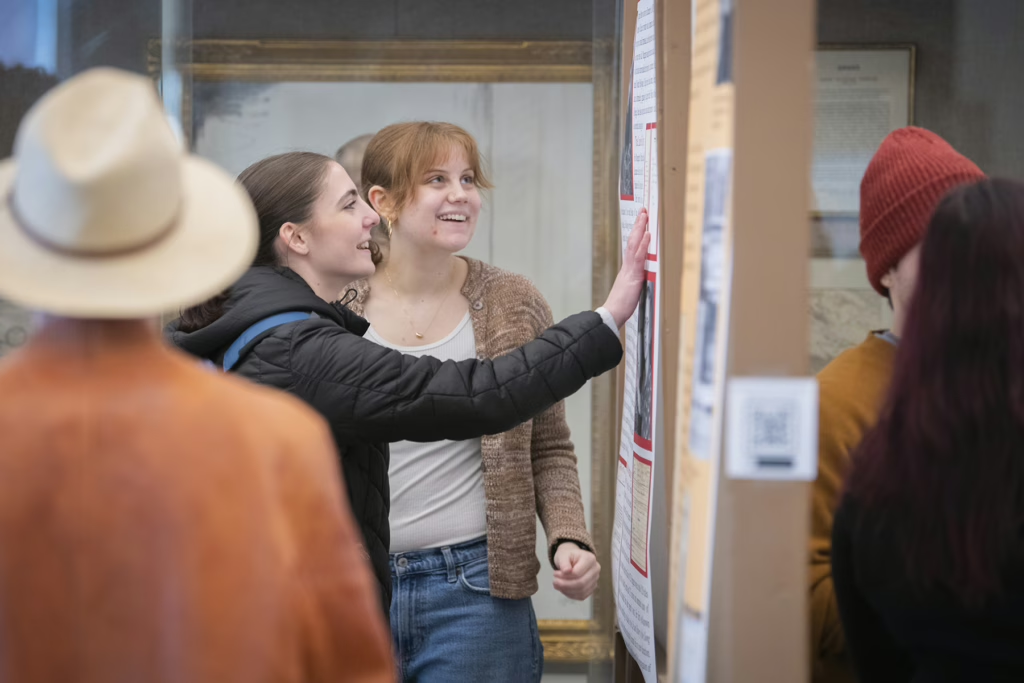
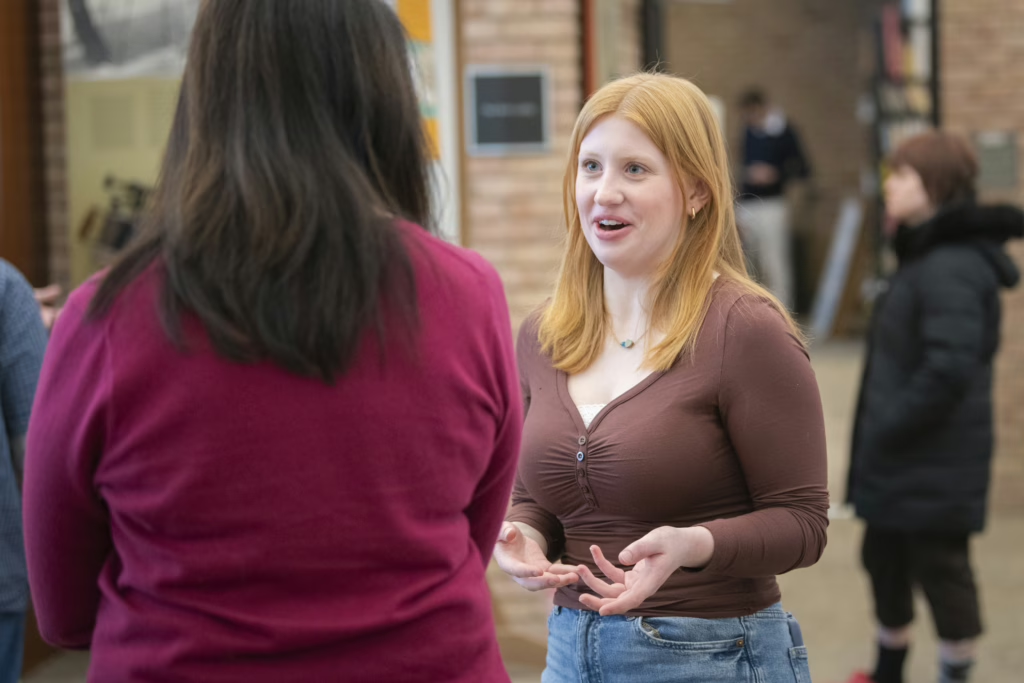
The poster display noted several “firsts.”
Joining the Clark faculty in 1922, geographer Ellen Churchill Semple was the University’s first female faculty member as well as the first female president of the American Association of Geographers (Semple’s story was presented by Alyssa Ritskowitz ’28).
Dr. Jessie Cunningham of the English Department would later become the first female professor to receive tenure at Clark. Cunningham’s background was researched by Isabella Hagen ’28, who is double-majoring in history and sociology.
Dr. Caroline Amelia Osborne was the first woman to earn a doctorate at Clark, noted Derek Fino ’26. She’d already earned her medical degree from the Women’s Medical College of Pennsylvania before studying biology, psychology, and psychiatry at Clark, receiving her Ph.D. in 1908. Osborne later worked as a physician and psychologist in the treatment of children.
Miriam Van Waters, Ph.D. 1913 (researched by Tristan Cousineau ’27), was a renowned penal system reformer who advocated for rehabilitation rather than punishment as the better course for easing the transition from incarceration to civic life. Van Waters’ reforms made headway during her term as superintendent of the Massachusetts Reformatory for Women, with her efforts receiving special acclaim from Eleanor Roosevelt.
Margaret Morse Nice, M.A. 1923, wrote 250 scholarly articles about birds, and an astounding 3,313 reviews and summaries. According to student researcher Kihm Calico ’28, her first well-known ornithological publication was “Studies in the Life and History of the Song Sparrow,” which was described at the time by Nobel Prize-winning animal behaviorist Konrad Lorenz as “the first long-term field investigation of the individual life of any free-living wild animal.”