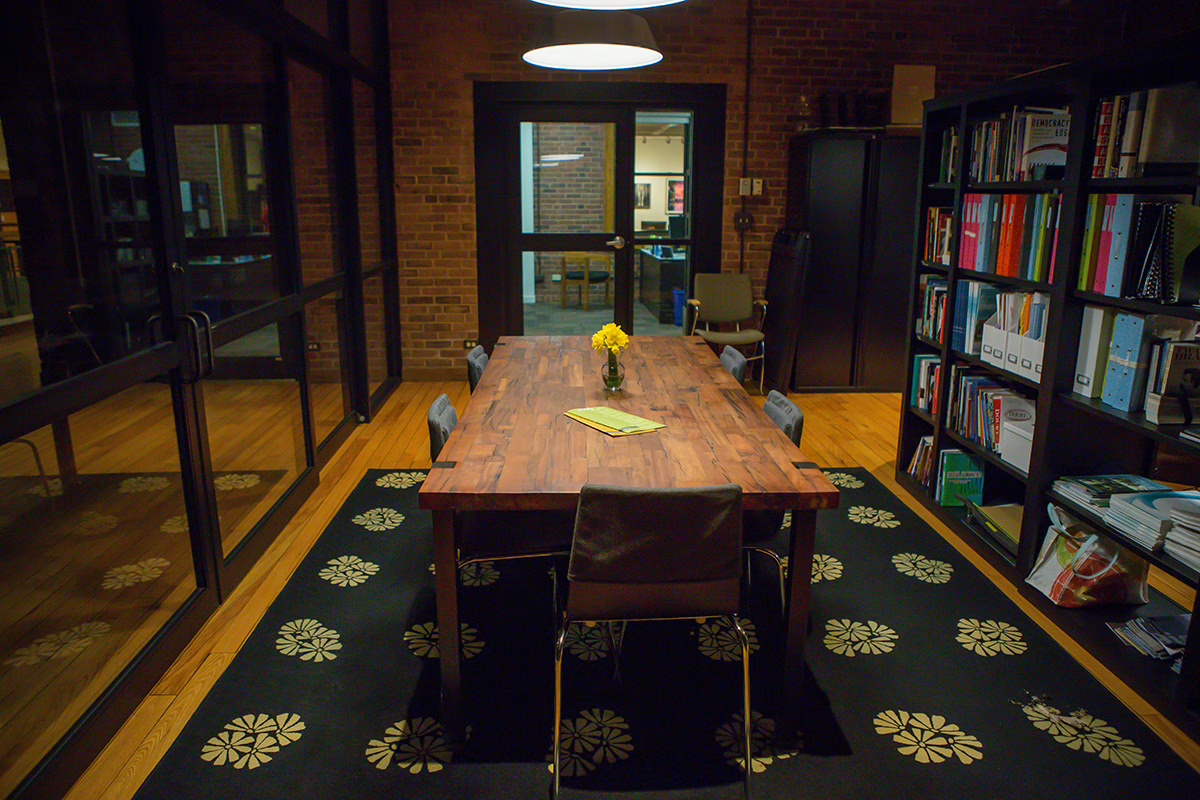

Located in the Center for Media Arts, Computing, and Design, 3rd Floor
The Arts/Tech Incubator is a cutting-edge facility fostering innovation at the intersection of creative arts and emerging technologies. A joint endeavor of the Alice Coonley Higgins Institute for Arts and Humanities, the Becker School of Design and Technology (BSDT), and the Department of Visual and Performing Arts (V&PA), the Incubator operates as a vibrant hub for experimenting with cutting-edge tools across the arts and humanities, and provides a fertile ground for artists, technologists, and scholars to explore, experiment, and execute pioneering projects. An important goal of the space is to further infuse these potentialities into the Clark University curriculum.
The Incubator is guided by an annual cohort of two faculty fellows and four collaborative faculty, who help lead demonstrations, workshops, and programming. Faculty and students actively experiment with digital media, VR, AR, interactive technologies, and other emerging tools. Regular presentations of project plans give scholars an opportunity to refine ideas and receive feedback, and the space welcomes guest artists and scholars for talks, residencies, and collaborative work. Resources for travel, convenings, and project development help sustain a robust and scalable integration of arts-and-technology practices into the wider curriculum. Graduate students from BSDT contribute essential consulting and technical support for courses and creative projects that bridge traditional humanities with contemporary digital practices.
At the center of the Incubator’s mission is a commitment to deep, thoughtful engagement with the concept of play. Recognizing play as a powerful engine for exploration, the Incubator invites participants to rethink its possibilities in a technologically advanced world. Through interactive installations, immersive performances, and experimental game design, it encourages new forms of creativity that use VR, AR, and related technologies to craft intellectually rich and emotionally resonant experiences.
Far more than a playground for technology, the Incubator is a platform for developing experimental and immersive artworks and performances — and a critical support for development in the arts curriculum — that challenge conventional forms and invite meaningful audience engagement. Artists and creators use the unique affordances of VR and AR to craft experiences that are felt, participated in, and embodied—offering audiences opportunities to enter alternative realities, inhabit new perspectives, and become active contributors to the narrative.
By integrating technology into the arts and humanities curriculum, the Incubator ensures that students learn not only to consume digital media but to create with it—expressing complex ideas and emotions through new tools. Courses offered within the space guide students in examining the aesthetics, narrative structures, power dynamics, and politics of contemporary immersive media. These classes challenge students to think critically about technology’s social impact and to imagine how their own creative work can shape cultural conversations.
A thriving community of makers and thinkers with its advanced tools and collaborative ethos, the Incubator empowers creators to push the boundaries of their disciplines, engage audiences in new ways, and redefine the role of technology in the arts. In doing so, the Incubator enriches both the academic curriculum and the broader cultural landscape, shaping the future of arts and technology for years to come.
The Incubator’s ongoing activities are supported in part by a generous external foundation and engage the Higgins Institute’s Digital Humanities Research Collaborative.