
Current Research
Over the past 26 years, HERO has welcomed more than 200 undergraduate students to work on challenging human-environment research projects.
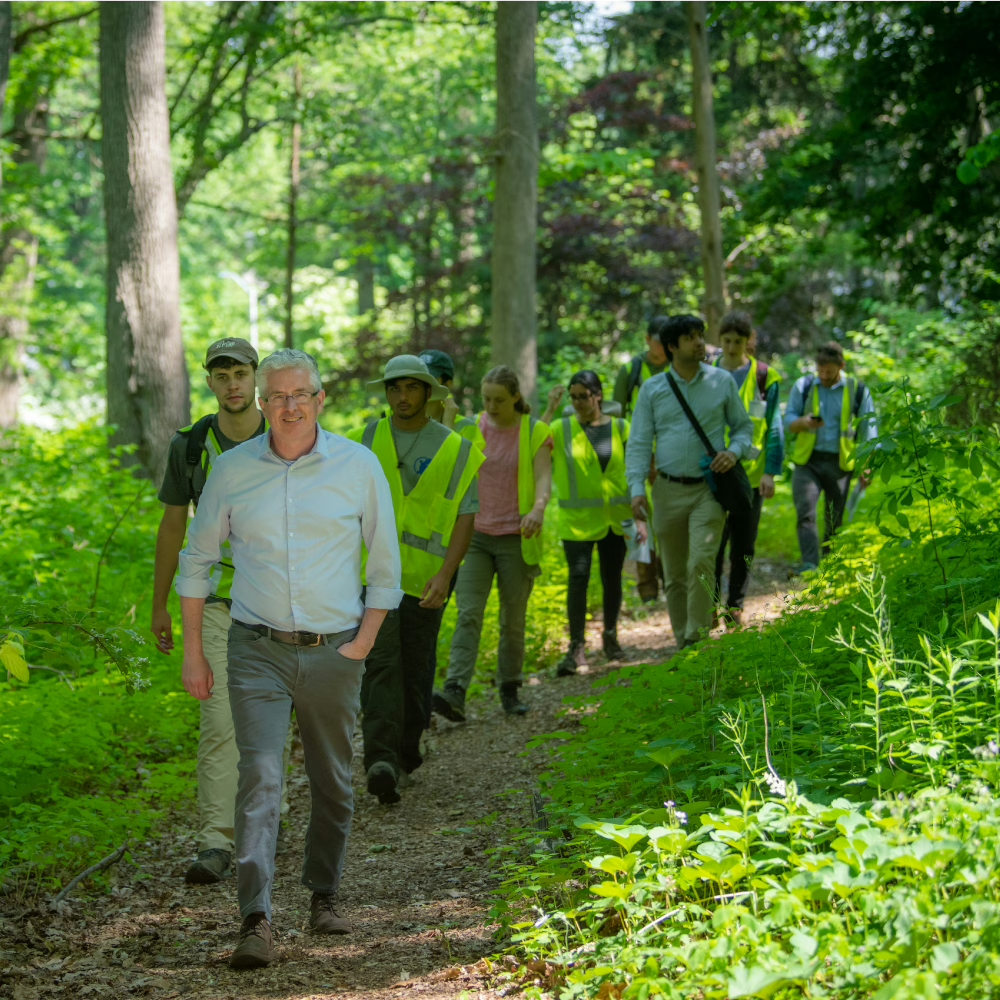
The HERO program is currently collaborating with the Massachusetts Department of Conservation and Recreation’s Greening the Gateway Cities Program. The collaboration involves the inventory of juvenile trees along public roads and at private residences, as well as the survey of residents and other stakeholders in Worcester.
Program Information
The summer portion of HERO typically begins the week following University Commencement and continues until mid-July (8 weeks duration). During these weeks, students participate in fieldwork, research, data analysis, and presentations. Fieldwork often includes daily travel to and from field sites in Massachusetts. The program concludes in July with a final presentation to members of the Clark and Worcester community (HERO Stakeholder Summit).
During the following academic year, HERO students continue to apply their research in weekly meetings with HERO faculty and Graduate Research Assistants to formulate larger independent projects. Students will have opportunities to attend local and national conferences to present research and represent the HERO program.
HERO Research Model
The HERO model engages a multi-generational team of researchers, including two faculty co-directors, graduate student mentors, and the HERO students. Our work includes orienting field trips, in-depth biophysical and social field research, qualitative, GIS, and statistical analytics, consultations with and presentations to local officials and stakeholders. We also offer mentoring to Worcester Technical High School Environmental Science students.
Student managers
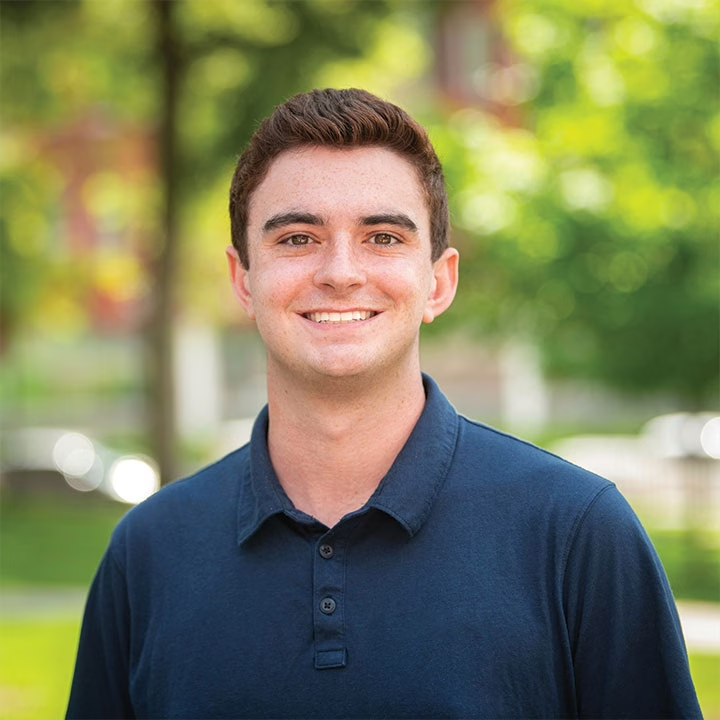
Aidan Caron
Aidan is a doctoral student in the Graduate School of Geography. His dissertation research integrates urban forestry and GIS/remote sensing, with a particular focus on developing digital and geospatial tools to support urban tree planting initiatives. He holds dual bachelor’s degrees from the University of Connecticut in Geographic Information Science and Political Science. Beyond his role in the HERO program, he has worked alongside organizations such as the U.S. Department of Transportation, the Wildlife Conservation Society, and the Capitol Region Council of Governments.
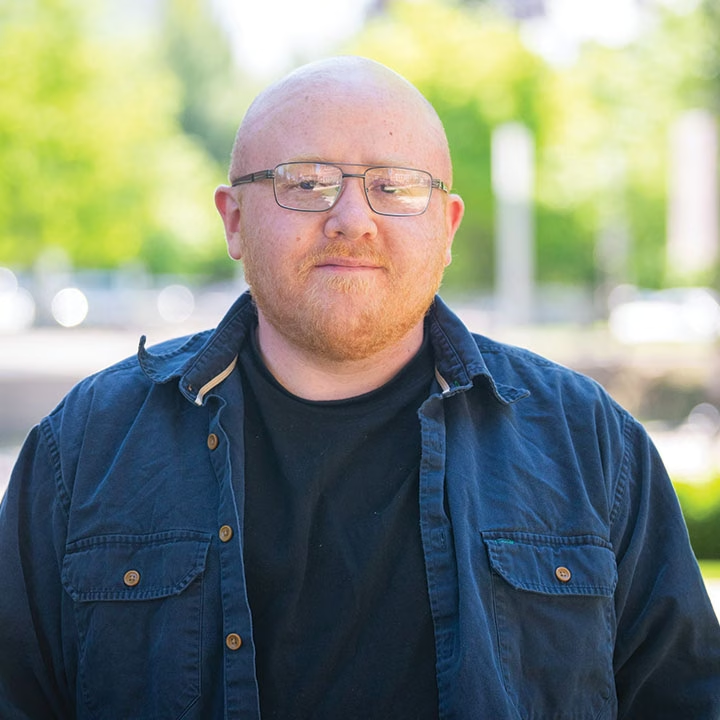
Robert Moore
Rob holds a bachelor’s and master’s degree in environmental science from Cleveland State University in Ohio. He has over 5 years of environmental research and field experience. The primary research goals of his dissertation center ecological studies of urban forests using geospatial technologies and methods. All environmental systems are deeply fascinating, and he wishes to support work of any kind that benefits people and the environment.
Previous Summer Highlights
Read the summaries of previous HERO summer research projects along with the PowerPoint slides.
2025 (Leominster and Worcester)
The research project of HERO 2025-2026 saw the team return to tree survey in the city of Leominster, where the DCR’s Greening the Gateway Cities Program first planted trees in 2016. The HERO team re-surveyed the health of trees in residential yards and public streets. The work also involved interviews with residents and community partners to gauge their perceptions about the successes and challenges associated with the tree planting program. The outcome of the project contributed an important second round of tree health survey information to our DCR partners. The findings of the project help the DCR refine and improve tree species selection in the context of planting site variability, and planting season, and build upon their existing communication strategies in partnership with the communities they collaborate with throughout Massachusetts. The team also worked in collaboration with the City of Worcester’s Department of Sustainability and Resilience to interview property and business owners in the Main South and Green Island neighborhoods. The outcome of that ongoing work indicates a lack of specific knowledge about the City’s green initiatives, lack of space for trees on properties, and the issue that businesses may not own the property they operate in. Ongoing work by HERO involves the collection of more data concerning tree perceptions of business and property owners.
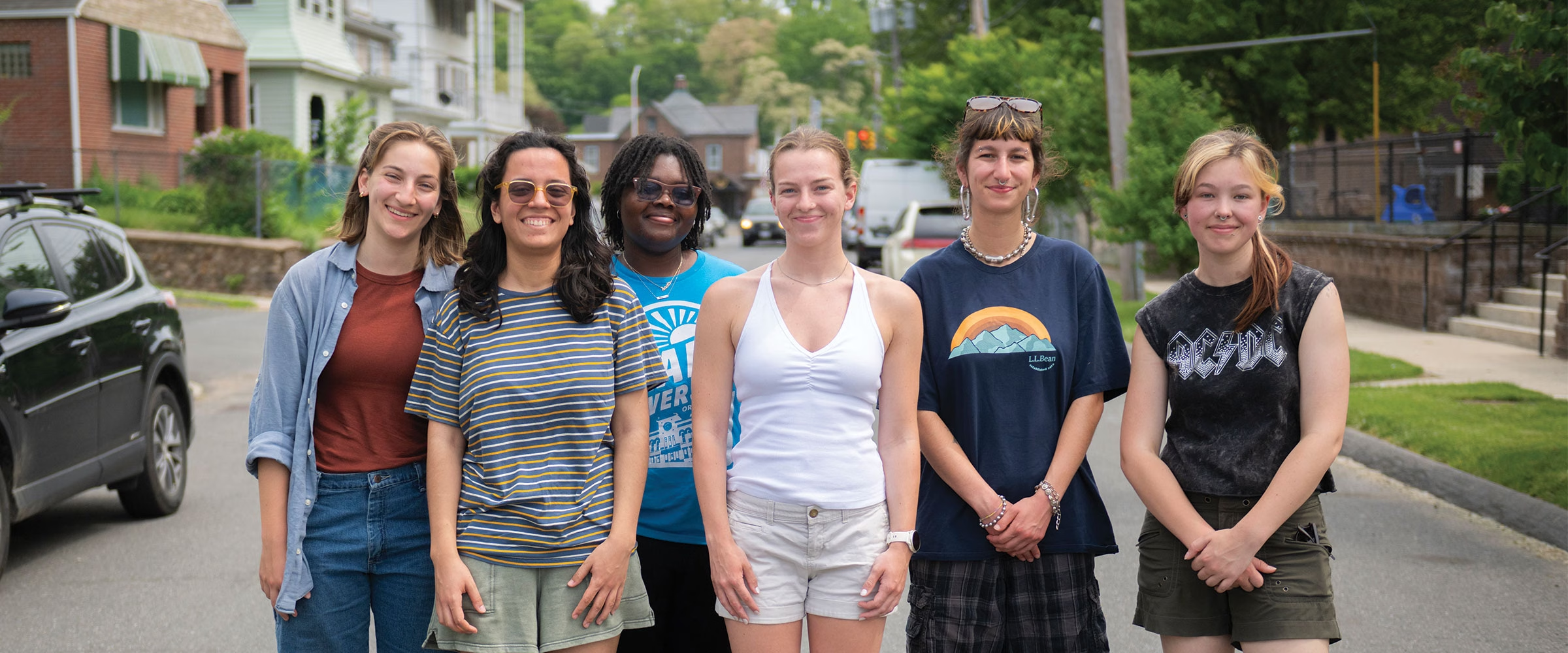
We were joined this year by six Clark undergraduate students from a variety of departments and programs.
HERO 2025-2026 Media
- ‘We stepped out of our comfort zone’
Clark News, 8/7/25
2024 (Chelsea and Holyoke)
The research project of HERO 2024-2025 saw the team return to tree survey in the cities of Chelsea and Holyoke, where the DCR’s Greening the Gateway Cities Program first planted trees back in 2013. The HERO team re-surveyed the health of trees in residential yards, that had been surveyed about ten years prior. The work also involved interviews with residents and community partners to gauge their perceptions about the successes and challenges associated with the Greening the Gateway Cities Program. The outcome of the project contributed the first round of decadal scale tree health survey information to our DCR partners with regard to the Greening the Gateway Cities Program. The findings of the project can help the DCR refine and improve their tree species selection in the context of planting site variability, and build upon their existing communication strategies in partnership with the communities they collaborate with throughout Massachusetts.
We were joined this year by seven Clark undergraduate students from a variety of departments and programs.
HERO 2024-2025 Media
- HERO still super after 25 years
ClarkNow, 8/8/24
2023 (Worcester)
The research project of HERO 2023-2024 saw the team return to tree survey in Worcester – focusing on the Burncoat and Greendale neighborhoods that experienced extensive tree removal in 2010-2012 in response to the Asian Longhorned Beetle Outbreak. The HERO team re-surveyed the health of trees in residential yards, that had been surveyed ten years prior. The work also involved interviews with residents to gauge their perceptions about tree care and neighborhood resilience. The outcome of the project contributed important first-of-a-kind information to the Massachusetts Department of Conservation and Recreation partners to help with current and future tree planting efforts in Worcester, and other Greening the Gateway Cities sites.
We were joined this year by seven Clark undergraduate students from a variety of departments and programs.
HERO 2023-2024 Media
- New study: Plant more trees in Worcester to combat rising temperature
Worcester Telegram & Gazette, 1/20/23
- Have city residents cared for new trees after beetle attack? This study may surprise you.
Worcester Telegram & Gazette, 7/20/23
- Work continues after Asian longhorned beetle destroyed thousands of Worcester trees
Worcester Telegram & Gazette, 6/1/23
2022 (Rhode Island)
The research project of HERO 2022-2023 involved collaboration with Worcester’s Broad Meadow Brook Wildlife Sanctuary and Groundwork Rhode Island. Collaboration with Broad Meadow Brook had the HERO team conduct interviews with residents who live in close proximity to the conservation area, in order to assess their perceptions of the site. The findings of the project contributed valuable information to the sanctuary’s ongoing wetland restoration program. Working in Rhode Island towns – East Providence, Cumberland, and Central Falls – the team surveyed street tree health and local air/surface temperature, and air quality. The findings of the project contribute important information about the success of tree planting in environmental justice neighborhoods in Rhode Island.
We were joined this year by five Clark undergraduate students from a variety of departments and programs.
HERO 2022-2023 Media
- Shady Projects Look to Lower the Temperature
ecoRI News, 7/1/22
- ‘Everything a geographer should know’
ClarkNow, 7/13/22
2021 (Worcester)
The research project of HERO 2021-2022 involved collaboration with the City of Worcester’s Department of Sustainability & Resilience. The student team used historical wetlands data to document the change in Worcester’s hydrology over the past 170 years, in relation to ongoing flooding that occurs during the summer months. The team also conducted an intensive data collection campaign to survey air temperature, surface temperature, and air quality in the Green Island neighborhood. The findings of the research contributed new information to the City of Worcester’s conservation planning team to address the goals laid out in the Green Worcester Plan, launched in 2021.
We were joined this year by five Clark undergraduate students from a variety of departments and programs.
HERO 2021-2022 Media
- When the going gets hot, Clark’s HERO fellows get going
ClarkNow, 8/13/21
- Clark University students look to improve Worcester environment
Central Mass Town Square, 9/16/21
- Climate change a ‘grave concern’ in Worcester, and city has a plan, but is it achievable?
Worcester Telegram & Gazette, 8/27/21
2020 (Chelsea, Revere, and Holyoke)
The theme of HERO 2020-2021 was Greening the Gateway Cities, but with a new focus on the influence of juvenile tree cover on local air temperature in three Massachusetts gateway cities that we had surveyed in previous years: Chelsea, Holyoke, and Fall River. The three-city air temperature analysis produced new information to the Department of Conservation and Recreation concerning the early-stage influence of new trees on local air temperatures. The HERO team did a remarkable amount of high quality work despite the disruption caused by the COVID-19 pandemic. We were delighted to keep the program running in its 21st year!
Additionally, we worked together at Clark University’s Hadwen Arboretum, planting new trees and removing invasive plants in collaboration with the Worcester Tree Initiative of Tower Hill Botanic Garden. For more information about the Hadwen Arboretum click here.
We were joined this year by five Clark undergraduate students from a variety of departments and programs.
Stakeholder Summit Research Presentation
Thursday, July 9, 2020 at Clark University
HERO 2020-2021 Media
- HERO Program Tree Planting
Clark University, 7/14/20
- Holding out for a HERO
Worcester Telegram and Gazette, 10/7/20
2019 (Leominster and Pittsfield)
The theme of HERO 2019-2020 is, again, Greening the Gateway Cities, which extends our previous analysis of juvenile tree health and stewardship to two new Massachusetts gateway cities: Leominster and Pittsfield. This tree inventory and stakeholder assessment is built upon last year’s research conducted in Chicopee and Fall River in collaboration with the Department of Conservation and Recreation. We are joined this year by six Clark undergraduate students from a variety of departments and programs.
Stakeholder Summit Research Presentation
Thursday, July 11, 2019 at Clark University
HERO 2019-2020 Media
- HERO at 20: Clark environmental program observes a big milestone
ClarkNow, 9/10/19
2018 (Chicopee and Fall River)
The theme of HERO 2018-2019 is Greening the Gateway Cities where we extended our previous analysis of juvenile tree health and stewardship from Worcester to two Massachusetts gateway cities: Chicopee and Fall River. This tree inventory and stakeholder assessment built upon last year’s research conducted in Chelsea, Revere, and Holyoke in collaboration with the Department of Conservation and Recreation. We are joined this year by six Clark undergraduate students from a variety of departments and programs.
Stakeholder Summit Research Presentation
Thursday, July 12, 2018 at Clark University
HERO 2018-2019 Media
- Clark HERO Fellows work to green Massachusetts’ Gateway Cities
Clark University ResearchMatters, 6/5/18
2017 (Chelsea, Revere, and Holyoke)
The theme of HERO 2017-2018 was Greening the Gateway Cities, where HERO fellows extended previous analysis of juvenile tree health and stewardship from Worcester to three Massachusetts gateway cities: Chelsea, Revere, and Holyoke. This particular research focus is expected to be a multiyear effort. This tree inventory and stakeholder assessment complements the previous several years of research conducted in Worcester in collaboration with the Department of Conservation and Recreation and the Worcester Tree Initiative.
Stakeholder Summit Research Presentation
Thursday, July 13, 2017 at Clark University
HERO 2017-2018 Media
- Clark students share secrets of tree survival after beetle scourge
Worcester Telegram & Gazette, 7/16/17
- HERO tree-restoration efforts takes root in Massachusetts’ gateway cities
Clark University ResearchMatters, 7/25/17
2016 (Worcester)
During summer 2016, HERO focused on a continued analysis of tree survivorship, looking at trees planted by the Worcester Tree Initiative (WTI) and the Department of Conservation and Recreation (DCR), including street trees; tree inventory and mapping mixed with surveys and interviews; and dynamics of the tree-planting programs and stewardship. These particular focus areas have incorporated research skills such as tree surveying and GIS/RS analysis, social research (e.g. interviews or focus groups), and qualitative data analysis.
Stakeholder Summit Research Presentation
Thursday, July 14, 2016 at Clark University
HERO 2016-2017 Media
- New crop of ‘HERO’ researchers to help protect Worcester’s trees
Clark University ResearchMatters, 6/3/16
- College Town: Satellite imagery tracks tree growth in Clark study
Worcester Telegram & Gazette, 7/24/16
- “There is no syllabus for this”
Clark University ResearchMatters, 7/18/16
- Clark students track survival rate of trees planted after beetle scourge in Worcester
Worcester Telegram & Gazette, 7/14/16
- After beetles and bulldozers, new urban forest emerges in Holden
Worcester Telegram & Gazette, 6/11/16
2015 (Worcester)
Students in the HERO summer program presented their findings on July 30, 2015. Coverage of the tree replanting efforts in Worcester post-ALB infestation were the topics of this year’s summer study. Students assessed the health of the tree-replanting initiative conducted by Mass DCR and WTI (Worcester Tree Initiative) to replace trees the USDA APHIS (Animal Plant Health Inspection Service) had to removed to eradicate the beetle. As part of their study, these students went into the field conducting interviews with neighbors and other stakeholders, as well as surveying the health of the newly planted trees and how to continue to care for them. In the fall, HERO students will present their research to the office of the USDA APHIS in Massachusetts; at Fall Fest, an on-campus, University-wide research presentation program; and in the spring will travel to San Francisco for the American Association of Geographers annual meeting.
Stakeholder Summit Research Presentation
Thursday, July 30, 2015 at Clark University
2014 (Worcester)
Students in the HERO summer program presented their findings on July 31, 2014. Coverage of the Asian Longhorned Beetle Stakeholder Summit included members of the HERO summer REU site program alongside stakeholders from the local neighborhood, including residents and city and state officials who have been active in the ALB issue.
Stakeholder Summit Research Presentation
Thursday, July 31, 2014 at Clark University
Click to watch: full video
HERO 2014-2015 Media