

Our economics faculty collaborate frequently with fellow economists from across the globe, as well as faculty from other Clark departments, and publish their findings in top academic journals. Their impactful research has been recognized worldwide through:
Faculty research areas
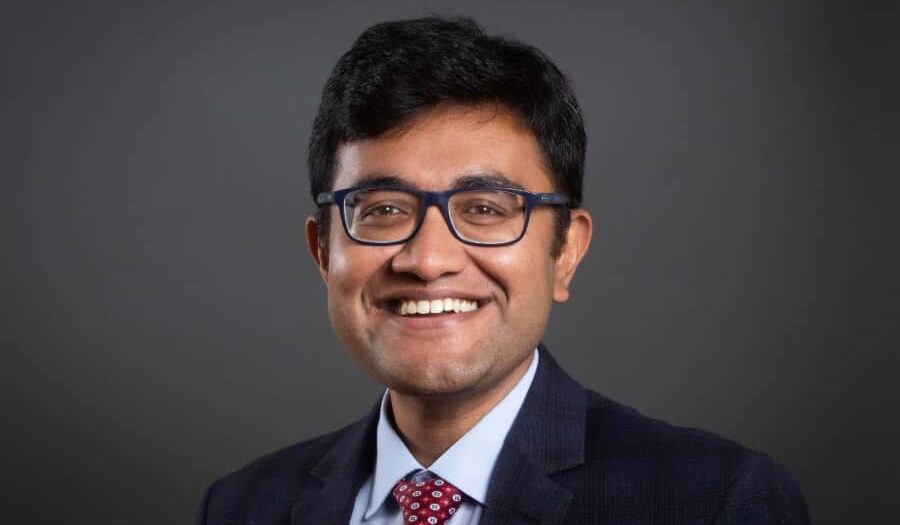
Moshi Alam
Moshi Alam is a labor economist who examines the economics of inequality and policies that address these issues. His current research focuses on assessing the incidence of equity-based labor market policies, optimal redistribution across different locations, and the empirical design of school-allocation mechanisms to increase welfare. He earned his doctorate in economics from the University of Wisconsin–Madison, holds a master’s from the Indian Statistical Institute and bachelor’s from Jadavpur University, India.
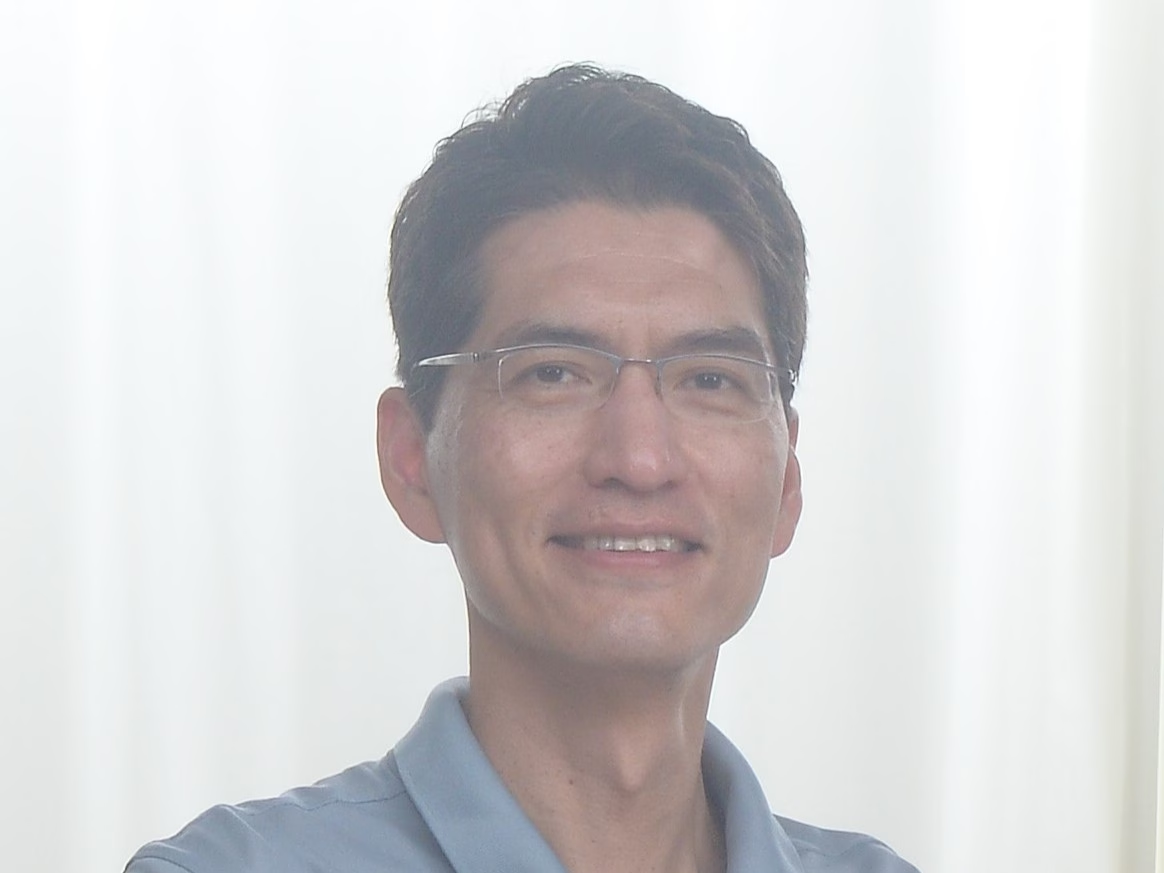
Sang Hoo Bae
Sang Hoo Bae is an industrial organization economist whose research applies game theory and applied microeconomics to examine firms’ strategic behavior and market interactions. His research covers digital markets and intellectual property, supply-chain strategy and governance, technology adoption, sustainability, sports economics, and public choice. His recent work focuses on strategic decision-making in multi-tier supply chains, blockchain and supply-chain finance, earnings management, and competition and governance in complex economic environments. He earned his doctorate in economics from Michigan State University and his bachelor’s degree from Pusan National University in South Korea.
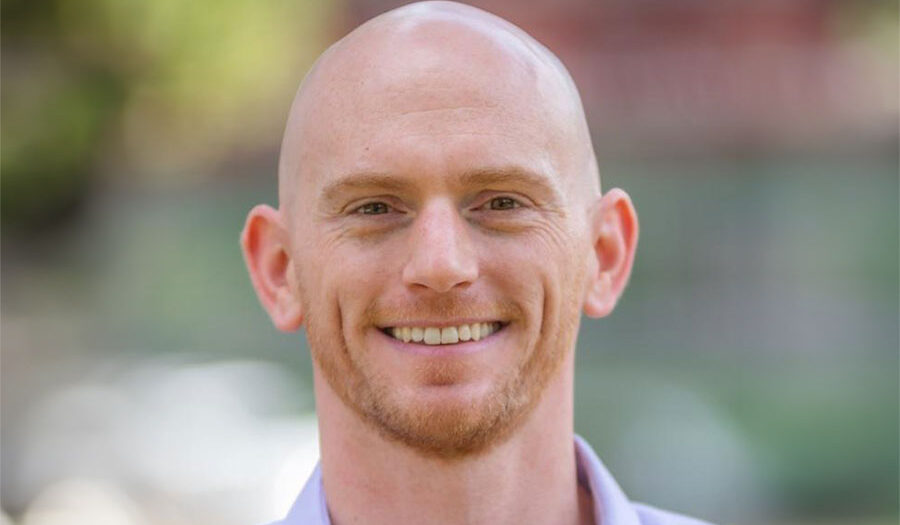
Jon Denton-Schneider
Jon Denton-Schneider studies economic development, health economics, and economic history. His research has been funded by the National Institutes of Health and focuses on two main questions. First, what policies have successfully broken intergenerational cycles of poverty and poor health in developing countries, both past and present? And second, what are the historical and cultural factors that created such disparities in the first place? Jon collects novel historical and geographical data to use for causal identification in large administrative datasets to test hypotheses generated by economic theory as well as anthropologists, historians, public health scholars, and sociologists.
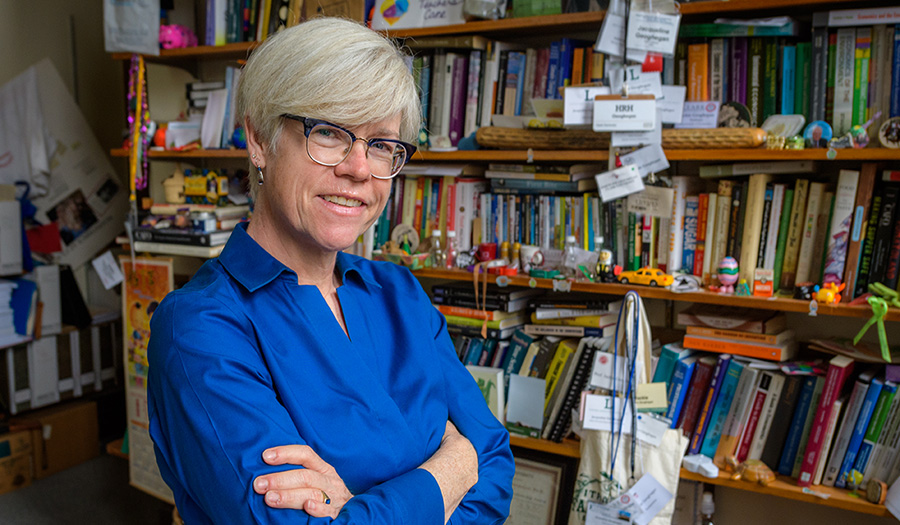
Jacqueline Geoghegan
Jacqueline Geoghegan is a leader in developing spatially explicit econometric models of land use and land-use change using Geographical Information System (GIS) data and technology. She hs established three large interdisciplinary research projects in this broad area of inquiry: first, at the University of Maryland, in a post-doctoral position, focusing on urban sprawl and agricultural land preservation in Maryland; and subsequently two projects at Clark University, concentrating on agricultural development and tropical deforestation in Southern Mexico; and a project that investigates the urban renewal of the neighborhood surrounding Clark University in Worcester, MA. She continues to use spatial analysis in her recent research including
Mehedi Hasan Oni
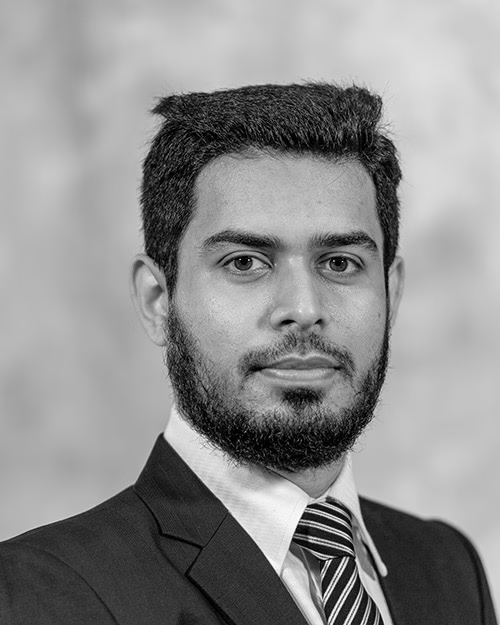
Mehedi Hasan Oni studies macroeconomics with a focus on inequality, environmental and energy economics, and public finance. His research examines how macroeconomic shocks and policies affect households across economic and demographic groups using quantitative macroeconomic models informed by microdata and econometric methods. His current work studies the distributional consequences of energy price shocks, climate policies, income taxation, and trade policies.
Kensuke Suzuki
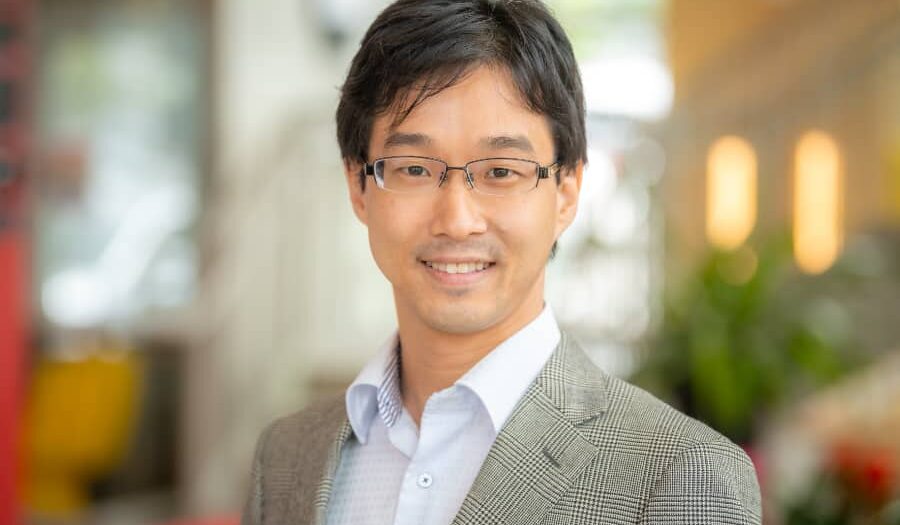
Ken Suzuki studies international trade and spatial economics, with an emphasis on understanding how economic policies affect workers and firms as well as shape aggregate economic outcomes at the national and regional levels. Using a quantitative general equilibrium framework, his current research examines the implications of Japan’s immigration policy for local labor market outcomes, the impacts of Chinese economic reforms on regional growth, and how trade policy shapes structural transformation across countries. More recently, he studies the impact of population aging on economic activity across space and how infrastructure development shapes city structure and productivity.
Magda Tsaneva
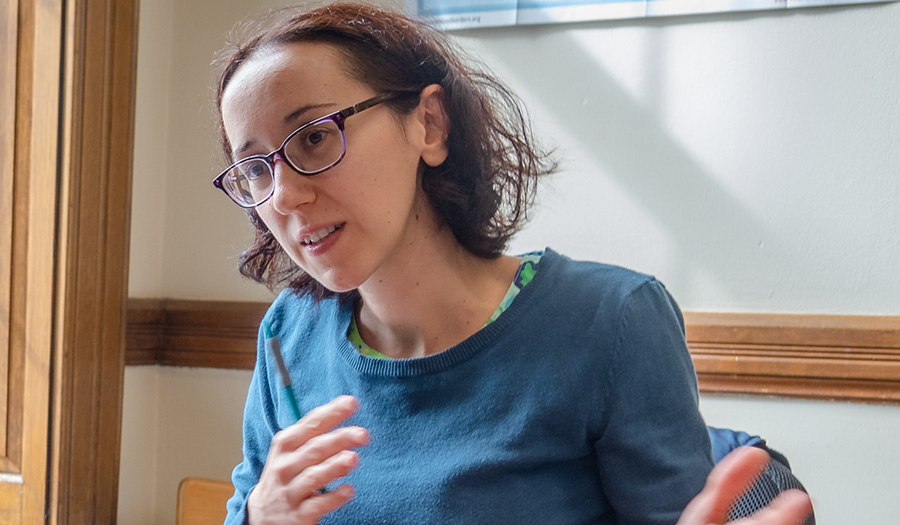
Magda Tsaneva is an applied microeconomist specializing in development economics. Her work examines how government policies and unexpected shocks affect mental health, early marriage and childbearing, and children’s educational outcomes. More recently, she has focused on understanding how air pollution, extreme weather, and other environmental stressors influence health outcomes and healthcare systems.
Edouard Wemy
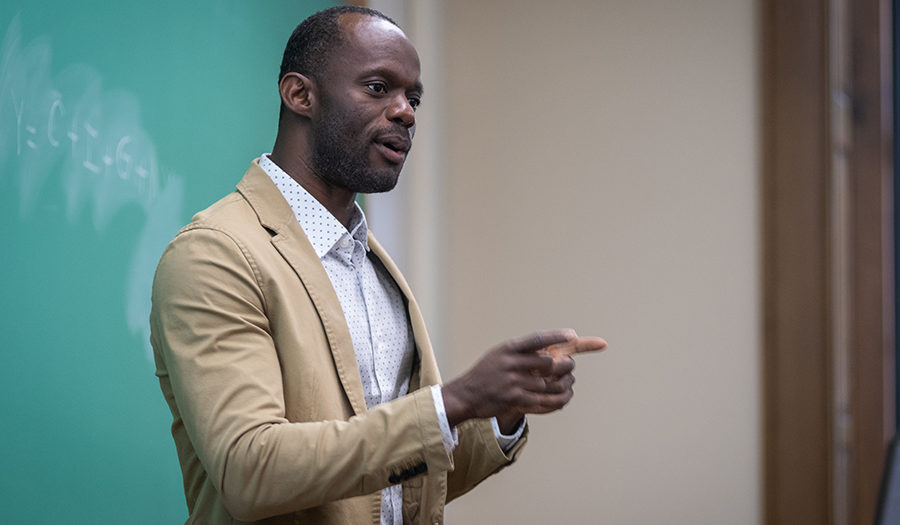
Edouard Wemy is a macroeconomist whose research interests are in the field of structural macro econometrics which applies macroeconomic models in empirical analysis and policy design. Using this methodology, he examines the relationship between the dynamics of the share of total income allocated to workers and technological innovations, with the goals of evaluating the degree of substitutability between workers and machines. In addition, his research deals with issues related to the manifestation of technological innovations and their integration into macroeconomic models used to understand the causes and management of fluctuations in economic activity. More recently, Edouard has collaborated with other economists to examine the state of the sovereign debt in Sub-Saharan Africa and understand the transformation of the African debt landscape since the era of the Heavily Indebted Poor Country (HIPC) and the Multilateral Debt Relief Initiative (MDRI).
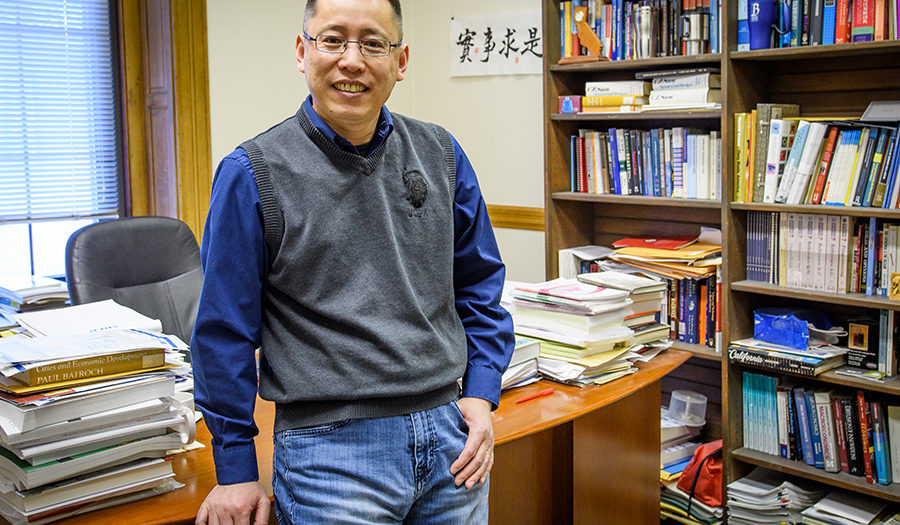
Junfu Zhang
Junfu Zhang specializes in applied microeconomics, with a focus on urban and regional economics. His research interests include urbanization in China, regional economic development, entrepreneurship and job creation, and racial housing segregation. He teaches microeconomic theory, applied game theory, and urban economics.