

Emma Nicodemus ’25 reimagines international development in Namibia
When Emma Nicodemus ’25 arrived in Namibia, she entered a country shaped by contrasts—where the Atlantic Coast meets the world’s oldest desert, occupation meets independence, and where the legacies of colonialism still shape daily life.
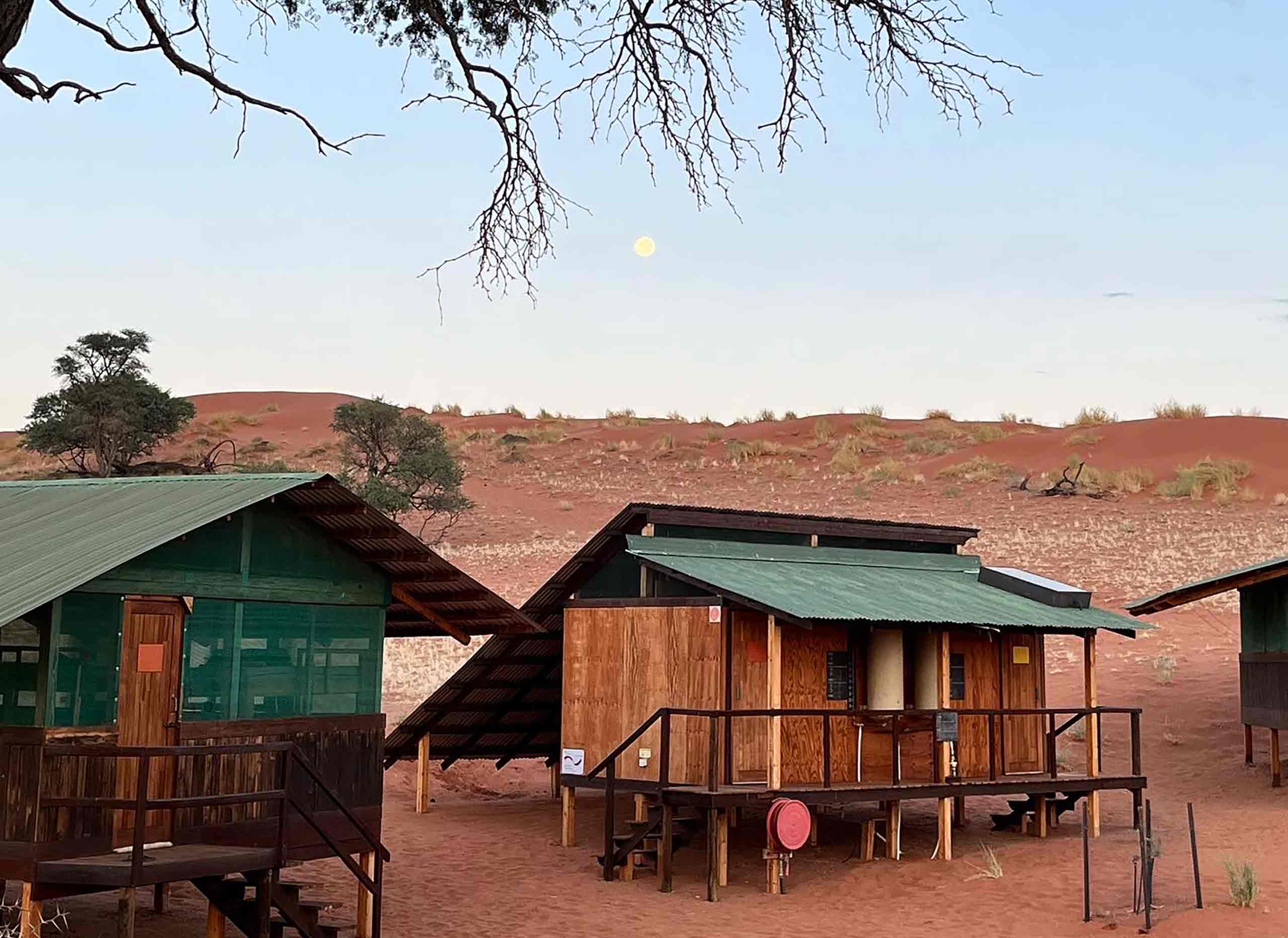
Once colonized by Germany and later ruled by apartheid South Africa, Namibia only gained independence in 1990. The imprint of that history remains visible in its languages and political systems that demonstrate the intersections between power, privilege, and identity and how they impact communities.
Emma’s program offered courses in history, politics, and environmental studies at a local study center in Windhoek. As an international development major, she valued the immersive nature of the curriculum—connected to place and to people. Classroom topics unfolded in tandem with travel across the country: coastal conservation areas, desert towns, national parks, and a visit to a German-built ghost town. The excursions prompted difficult but essential questions: Who gets to tell the story of a country? And how is that story visible in daily life today?
“There’s a tendency in international development to come in with solutions,” she said. “But what matters most is taking the time to listen, and to build something together.”
“You get somewhat of a free pass in Namibia for not being from one of the original colonizing countries,” she observes. “But aid from the U.S. was structured in a way that led to reliance—a debt cycle. It’s important to be critical of Western knowledge.”
The program included an internship placement and Emma worked with Physically Active Youth, an afterschool program focused on athletics, education, and life skills for Namibian students. She helped develop curricula on leadership, sex education, and financial literacy. She appreciated how the work was rooted in conversation with the community—not based around models imported from abroad.
“There’s a tendency in international development to come in with solutions,” she said. “But what matters most is taking the time to listen, and to build something together.”
The experience not only reinforced the concepts she had studied through her major—it opened doors. After returning from Namibia, Emma landed a competitive internship with the Aspen Institute’s Global Opportunity Youth Network in Washington, D.C., where she supported international development research and operations.
From global relations to community-level education programs, Emma’s time abroad sharpened her questions about aid work, and helped her imagine a different way of engaging international partners—one grounded in respect, relationship, and responsibility.