
Ph.D. in Developmental Psychology
Research
A core part of graduate training in developmental psychology involves participation in one of the active labs or areas of research described below. Students join one or more of these groups and remain active throughout their graduate studies. Click on the individual labs or research groups to learn more about the topical focus and students, postdocs, and visitors involved.
Note as well that the developmental forum provides an opportunity for all members of these groups (as well as other interested individuals) to regularly come together to discuss current research and salient issues pertaining to developmental psychology of interest to all in the program.
Recent dissertations
Faculty research areas
-
Learning, Language, and Cognition Lab
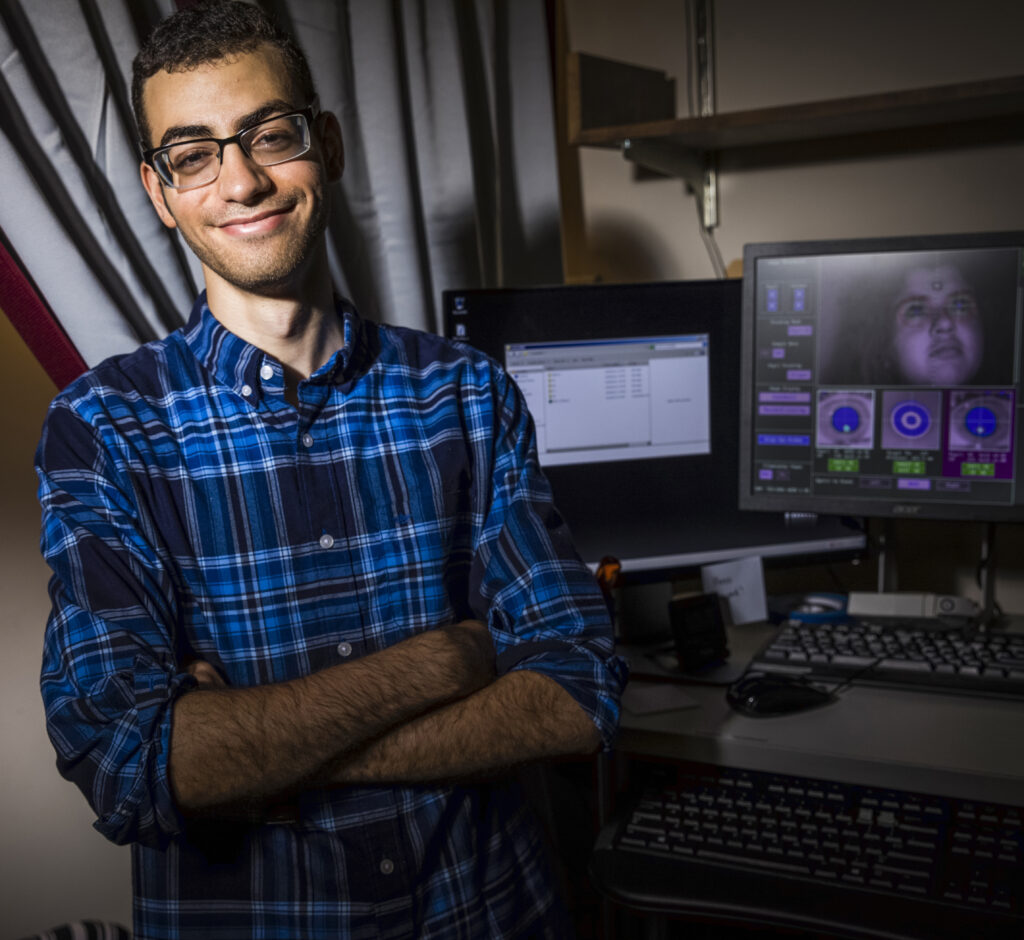
Our research group examines cognitive development, particularly in school-aged children in school contexts. We examine the malleable factors influencing learning and subsequent academic achievement, especially for minority race and language students as well as those growing up in poverty. A context of focus is bilingual education. Within these contexts, we examine how children organize semantic knowledge and build a knowledge base both within and across lessons with the long-term goal of informing educational policy and practice. This investigation entails examining the encoding and manipulation of semantic memory as well as conceptual representation across languages. The work is inherently interdisciplinary and we work with others in the departments of education and language and culture. We use a variety of methods, including experimental behavioral studies, observation, and eye-tracking. Our work takes place in the laboratory, in the community, and in collaborating classrooms.
-
Research in Child Development Across Context
Our research, led by Ana Marcelo, examines the influence of risk and protective factors on child development across diverse ecological contexts with particular emphases on culture and adversity. Our first line of research examines children’s pretend play, creativity, and emotional expressiveness as related to their socioemotional and academic adjustment in different contexts (e.g., school, peers, home). Our second line of research focuses on children’s experiences related to their ethnicity, race, and culture. We are interested in examining ethnic-racial identity in early childhood and its influence on children’s encounters with bias and discrimination and if and how these experiences may vary across different contexts. We use different methods, such as behavior observation, quantitative measures, and qualitative interviews, and examine across different informants, such as teachers, caregivers, and children.
-
Developmental Forum
The developmental forum meets regularly during the academic year to examine theory and research in developmental psychology. All members of the developmental program (including all developmental graduate students and faculty in residence) and others (graduate students, faculty, and visitors from other programs and institutions) gather to discuss current theoretical and methodological issues, share updates on ongoing and upcoming projects, present and receive feedback on future talks, grant proposals, and manuscripts. The goal of the developmental forum is to collectively learn from one another and provide a support network to help strengthen the work of all members of the Clark community interested in developmental inquiry.
-
Narrative Practices in Identity
Our research group focuses on theoretical issues central to identity research such as agency, difference, and change. We approach them from a qualitative (narrative) perspective, and we apply them to empirical phenomena such as adolescent and post-adolescent identity formation, close friendship, transition into work (for college students and refugees), fatherhood (including incarcerated fathers), and elderly women’s encore careers. Our investigations explore how these phenomena are understood from the perspective of those who experience and live through them. Current projects include a Handbook on Identity, as well as volumes in Bamberg’s book series, Studies in Narrative. Students are invited to join the editing process to gain professional experience.
-
Higher Education Research Group
Our research group, led by Nancy Budwig, examines learning and development in both formal and informal learning contexts, with a focus on ways engagement in communities of practice contributes to the gradual construction of meaning systems. Prior work of the group studied the role of language in the construction of culturally relevant meaning systems as well as how different cultural meaning systems impacted successful entry into school. More recently, focus has shifted to examining ways that higher education also can make better use of socio-cultural approaches to learning and development. We study college student and faculty perspectives on designing environments to foster better learning and well-being, and the implementation of curricula that aim to prepare students to successfully transition into college, as well as successfully transition into the world of work and civic life. We also create tools to evaluate and improve learning and development on college campuses.
Recent publications
-
- Chakraborty J., & Esposito A.G. (2024). Adult learners self-derive new knowledge through integration of novel information and prior knowledge and are more successful with reactivation. Mind, Brain, and Education (in press).
-
- Elsharnouby, E., Dost-Gözkan, A. Adolescents’ Well-Being with Respect to the Patterns of Disclosure to and Secrecy from Parents and the Best Friend: A Person-Centered Examination. J Youth Adolescence 49, 1687–1701 (2020).
-
- Ashdown, B. K., and Faherty, A. N. (In press). Creating culture: Parenting and childcare practices. New York, NY: Springer Publishing.
-
- Budwig, N., Han, H., Fernandes, R.J., Lee, J., Wang, S., and Wolff, B. (2023). Eugenics, prejudice, and human development revisited: The role of structural racism. Human Development, 67 (3), 170–172.
-
- Lee, J., & Budwig, N. (2024). How students make sense of mentorship experiences during the transition from high school to college: A positioning analysis. American Journal of Qualitative Research, 8(3), 167-192.
-
- Budwig, N., Lee, J. & Fernandes, R.J. (Dec. 2023). A developmental and sociocultural approach to the transition from high school to college: The Importance of understanding student meaning-making. Human Arenas of Development.
-
- Park, S., & Esposito. A. G., (2024). Rational number representation, math anxiety, and algebra performance in college students. Cognitive Development, 69, 101417.