
Who are you and what are your practitioner sites?
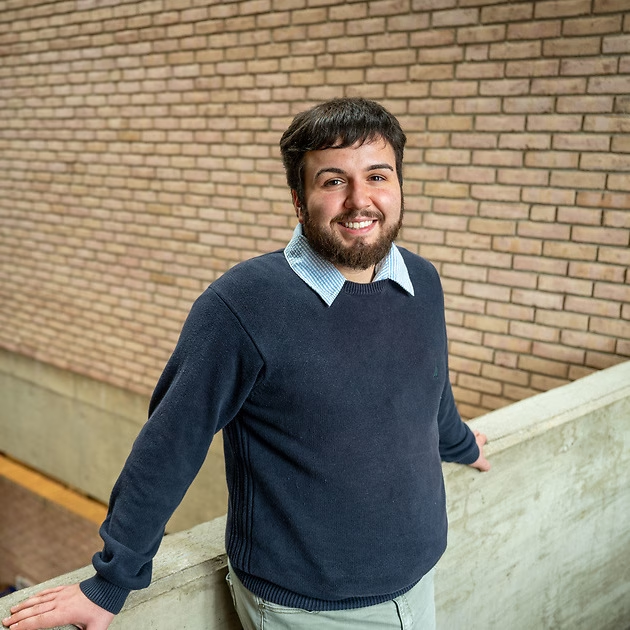
My name is Brett Iarrobino, and I graduated from Clark University in 2022 with my M.A. in Teaching, holding licenses in teaching middle/secondary English Language Arts and theater. I’ve spent the last four years teaching in Worcester Public Schools, first at University Park Campus School, an innovation school serving 7th-12th grade students, where I also completed my student-teaching practicum, and now at Burncoat Middle School for the Arts. I work part-time at the Bruce Wells Scholars Upward Bound chapter operating on Clark’s campus, where Worcester high school students from across the district receive college access prep to prepare them for post-secondary success, and I have enjoyed spending several summers meaningfully connecting our program with the Education Department’s MAT Accelerated Degree Program, allowing middle/secondary pre-service student teachers to build practical skills in the classroom before the school year.
What inspired you to join the Doctoral Program in Transformative Education?
Between my time in undergraduate and graduate studies, my close proximity to campus while at UPCS, and my work with Upward Bound, it is difficult to make the argument that I ever truly left Clark University, even after graduating twice. The myriad programs under Clark’s Education Department – from the undergraduate Community, Youth, & Education Studies major, all the way up to the doctoral program – continue to inspire me in their relentless pursuit of authentic connection with Worcester youth and the programming that works for and with them. I knew going into this program that coming back to this department would only deepen my understanding of what we know education is today, what we know it can become, and everything in between is not only worth studying and interrogating, but is equally worth acting on. The time that I have spent in our city’s schools and the learning I am privileged to be a part of with my own students continues to be one of my greatest joys. I owe it to them and to myself to continue this learning not only in our own classrooms, but in new ones that push my thinking and expand my knowledge with a cohort of learners, educators, and community members.
What do you hope to accomplish in the future?
I am deeply passionate about formal and informal integrations of visual and performing arts curriculum into the English Language Arts classroom. Having worked and learned with the state’s ELA standards for nearly half a decade, it is troubling to see how various agencies and institutions – among them standardized testing and rigid curriculum mandates – erode creative expression in a course that is both universally and recursively instructed to our K-12 students. Even the title of the class, “English Language Arts,” ostensibly positions its subject matter as an art practice, but our tendency to shorten it to only the first word of the ELA acronym betrays both how shallow this concept really is and how anglicized our contemporary classrooms have become. I intend to transform our understanding of what imbuing students with reading, writing, and meaning-making skills can entail, and am curious to measure both the impact art-making practices have on the literacy, self-value, and even civic engagement of our young people.