Jamathon promotes empathy and awareness for those living with schizophrenia
A nor’easter howled outside, the sun hadn’t shone all weekend, and the start of the school/work week seemed forever away. It was a perfect Sunday night to watch a movie in your favorite hoodie with a bowl of microwave popcorn balanced on your lap.
But the people gathered inside Clark’s Center for Media Arts, Computing, and Design this past Sunday had far more ambitious intentions.
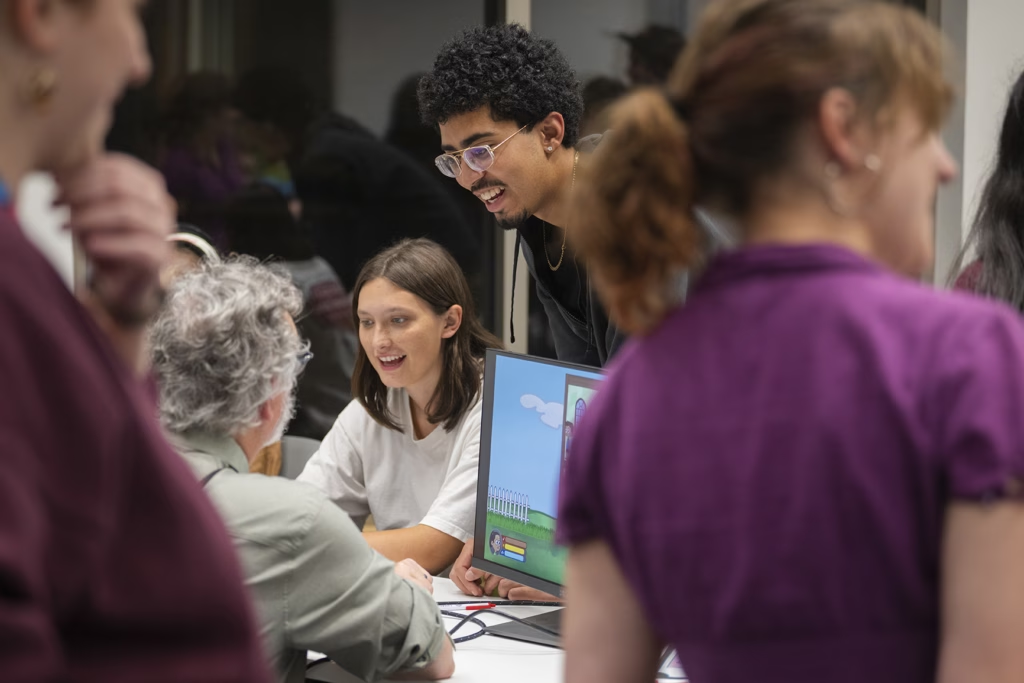
Over the course of two days, Clark students, outside game designers, developers, caregivers, clinicians, researchers, mentors, and people living with mental illness collaborated to introduce game concepts and digital tools that address real-world challenges faced by those who navigate life with psychosis and schizophrenia spectrum disorders. On Sunday night, to applause and cheers from members of the 20 teams who had converged on the Center to create video, computer, board, and card games, the winners of the first-ever Games Matter! Jamathon were announced.
“The winning games were exceptional,” said Paul Cotnoir, dean of the Becker School of Design & Technology, “but the quality of work across the Jamathon was remarkable. What stood out most was the compassion and understanding the participants brought to their work. The involvement of mentors and people with lived experience showed just how important genuine collaboration is when designing games for mental health. For our students, the Jamathon offered a kind of learning that went well beyond what is possible in a traditional classroom.”
JAMATHON WINNERS
Track 1: Games that foster social connection and community
Self-Bear/Hobby Horse
- Lily Valentine-Hetzel ’28
- Preston Chandler, MFA ’27
- Evelyn Zeman ’28
- Luke Stump ’28
- Kaia Sleeper-Spady ’28
Leaping Forward/Nor’easter
- Chris Michelotti
- Alex Tozian
- Madelyn Clack, MFA ’28
- Alex Berger
- Delaney Morton
Cluisine/Coffee Chat Productions
- Chris Kuntz ’27
- Lucian Terhorst ’27
- Matt Zaluski ’26
- Tyler Lee ’27
- Maxwell DeRienze ’27
Track 2: Games that build empathy and understanding
Barriers/The Jamsters
- Max Allen
- Emmanuel Mallea
- Bashar Alqassar
- Dan Lu
- Claire Mayfield
- Tate Donnelly
Deep Cleaning/Innoculi
Of Syn
- Nicolas Fasano ’27
- Gracien Healy ’28
- Elisa Cameron ’28
- Asher Rosenfeld ’28
- Jason King, MFA ’27
- Angel Lekhang ’28
Sunny Day Café/Peak Joy
- Sammi Bosque
- Liam Wang
- Jason Ugles
Games That Teach Real Skills Through Play
Floruit/Tanks
- Tofe Akinyanmi
- Jen Tang
Cliques Beyond The Apocalypse/Ampersand Studios
- Evan Hilla ’27
- Mason Brown, MFA ’26
- Jack Korcuska, MFA ’28
Are You Sure/Times New Roman
- Amanda Keith ’28
- Thalia Shanahan ’28
- Abbie Mylet ’28
- Mali Flint ’28
- Yusef Syed ’28
- Sofia Gamba ’28
Track 4 – Brain Bytes: Gamifying Everyday Choices
Better Quest
- Brien Rondeau, MFA’ 25
- Max Miller, May ’27
- Ben Clingen, MFA ’25
You’ll B-Ouquet/ Rainbow Milk Crusade
- Gabbi Hebert
- Timm Adams
- Andre Mata Assis
- Luca Pasquini
- James Prendergast
- Deven Bullard
No one was keener to see the Jamathon’s success than Gary Labovich ’81. The Clark alum and former trustee had spoken to the participants at Saturday morning’s Jamathon launch, telling them about his experience as the parent of a child with schizophrenia and expressing his hopes that the creative power of the participants could be marshaled for this worthwhile endeavor. Labovich is a board member of the Schizophrenia & Psychosis Action Alliance, which is partnering with the Becker School to develop games that can help reduce loneliness, strengthen social connection, build empathy, and teach practical skills that support recovery. With a significant gift he is funding ongoing academic collaborations between Clark and S&PAA, including the Jamathon.
“The Jamathon exceeded every expectation I had for the event,” Labovich said afterward. “The collaboration among the students, mentors, and those with lived experience was inspiring, creating a design environment that produced compelling and immediate results. I have given many gifts to Clark over the years but none more meaningful than this one. Not only did S&PAA benefit from the outcomes, but so did our students. I am committed to underwriting this event again next year.”
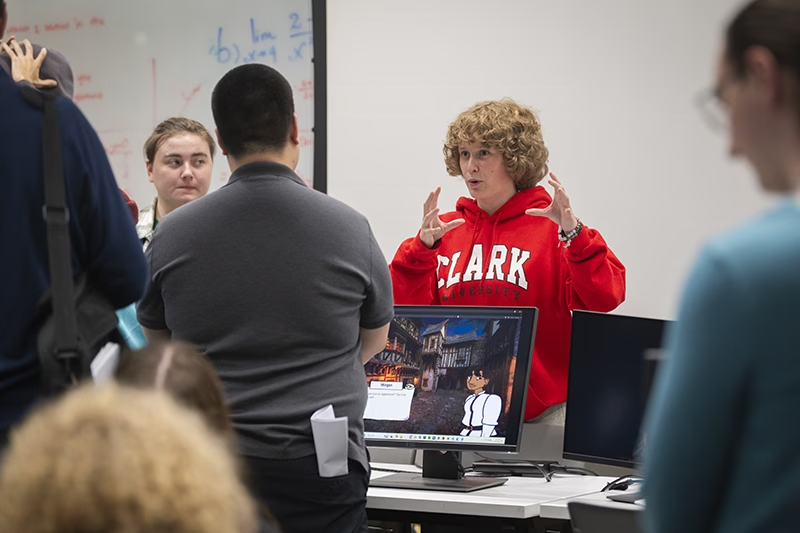
Jamathon designers homed in on one of four distinct tracks: Games that Foster Social Connection and Community; Games that Build Empathy and Understanding; Games that Teach Real Skills Through Play; and Brain Bytes: Gamifying Everyday Choices.
During the game showcase on Sunday night, the teams presented their games to the judges, led by Professor Terrasa Ulm, who proceeded from station to station for demonstrations. The teams were competing for more than $15,000 in prizes provided by the Schizophrenia and Psychosis Action Alliance, Metabolic Mind (RoBlox), Labovich, and other sponsors. Cotnoir cited the efforts of Alex Supron ’25, MFA ’26, and Brien Rondeau, MFA ’25, as well as the students of GAME 125FYI Co-Designing Worlds: Games, Communities, and Societal Impact, as contributing to the event’s success.
Worcester resident and game developer Chris Michelotti described his team’s game, Leaping Forward, as the equivalent of an escape room, with clues and tasks that allow the player to complete daily activities. He noted that the game was designed in consultation with someone who lives with mental illness. “It’s about listening, empathizing, and partnering,” Michelotti said. “It’s amazing the level of support that’s out there when we learn together as a community.”
The student team that designed The Great Medieval Bake-off devised a scenario in which the main character builds social connections and routines to differentiate the real from the unreal. The game offers insights into how isolation can affect a person and the strategies needed to navigate uncertainty. Team members were Alina Afaque, Dominic Lencioni, Eidyn Riggs, Juniper Murdock, and lead programmer John Landa ’30.
Better Together presented a scenario of two people needing to accomplish a series of tasks over the course of a weekend that encourage organizational thinking, time management, and cooperation. Teammates Mateo Figueroa ’29, Timothy Morelli ’29, Sophia De Kruyff ’29, and Pamela Assou ’27 created the game as time-flexible, and with built-in resting periods to foster a non-stressful environment.
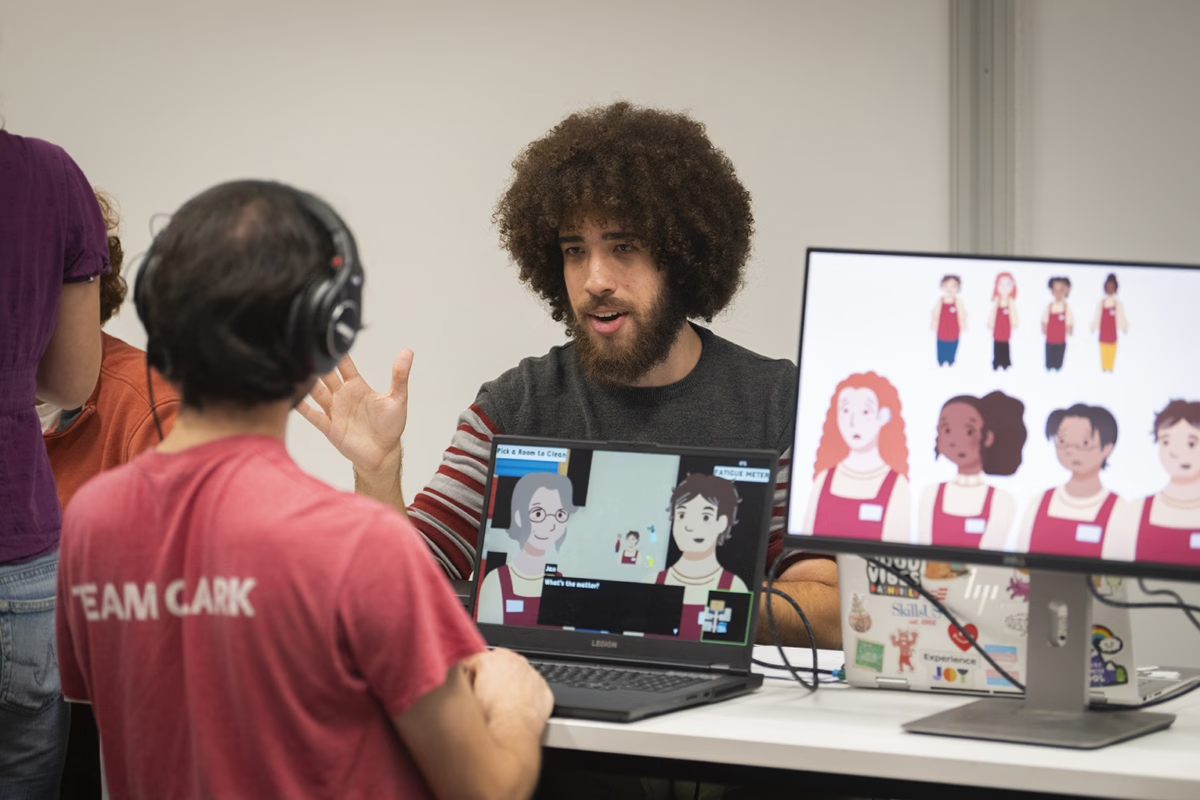
Another game, Better Quest, was designed by Clark alums Max Miller ’26, MFA ’27, Rondeau, and Ben Clingen, MFA ’25, who have formed their own company, Red Rabbit Games. The trio designed their game around the concept of defeating a monster by completing particular tasks that build focus, promote well-being, and encourage socialization, Miller said. “It could be something as simple as talking to a friend, or going to an event,” he said.
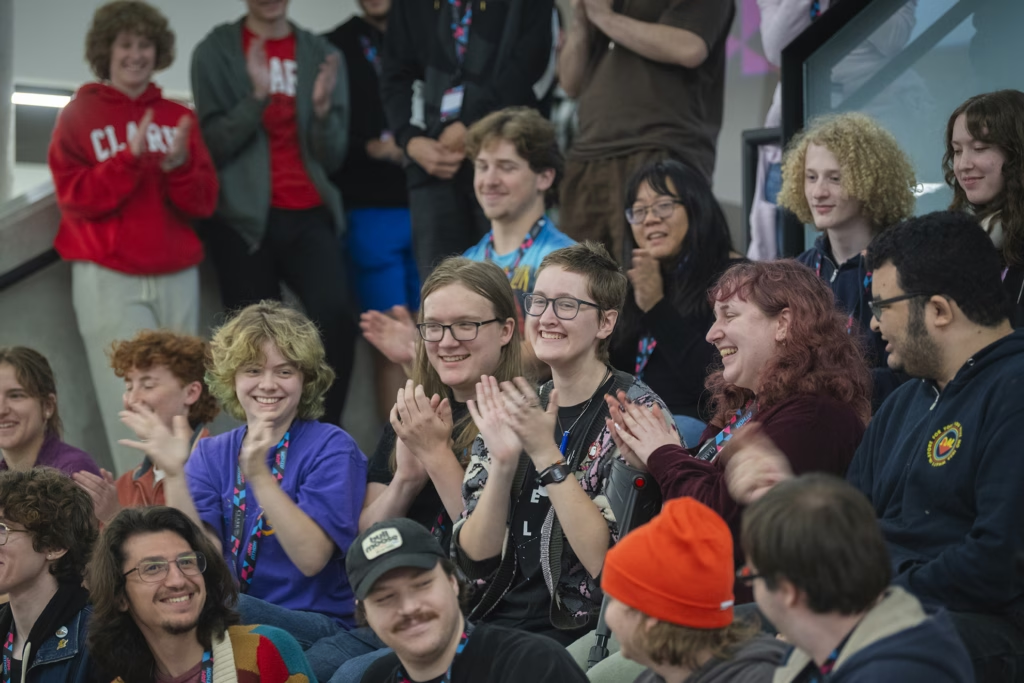
According to Maxwell DeRienze ’27, whose team developed a physical charades-style game called Cluisine, the Jamathon provided a forum that was intense and grueling — as “hackathons” typically are — but which also set a hopeful tone for those living with serious mental illness. He noted that the Becker School’s Games for Good conference last year solidified Clark’s commitment to the development of “serious” games, which serve a socially relevant purpose.
“What I enjoyed the most about participating in the Jamathon was that a lot of care went into the planning and execution with the co-leading organization S&PAA, which was heavily involved in every step. It created a nice community-building experience,” DeRienze said. “It’s good to see the department put a lot of effort into an extra-curricular resource for game design students, especially in a context not limited games as enjoyment.”
“As my team worked out the concept of our game, we received tons of advice and direction from the mentors at the event,” said Asher Rosenfeld ’28. “These mentors were incredibly kind and supportive, and eager to both share their personal experiences with us and learn more about the game-development process. My team learned a great deal about what life is really like for those affected by schizophrenia and psychosis, and bonded with people who have lived with these conditions. It was an eye-opening experience.”
Jim Cicero ’78 moved between the teams asking questions … and answering just as many. Cicero is the parent of a son who lives with schizophrenia, a former scholarship athlete who has long been unable to hold a job or live on his own. The Clark alum attended the Jamathon predominantly because of his affiliation with S&PAA, where he volunteers by running a group for caregivers. His input was personal and invaluable as the games took shape.
Cicero’s story is not uncommon from those of other parents in his group. “You do a lot of self-education [about schizophrenia],” he says. “There is a sense of community in the group, and much of it comes from the grief we are feeling. They call it ambiguous loss, and it’s real.”
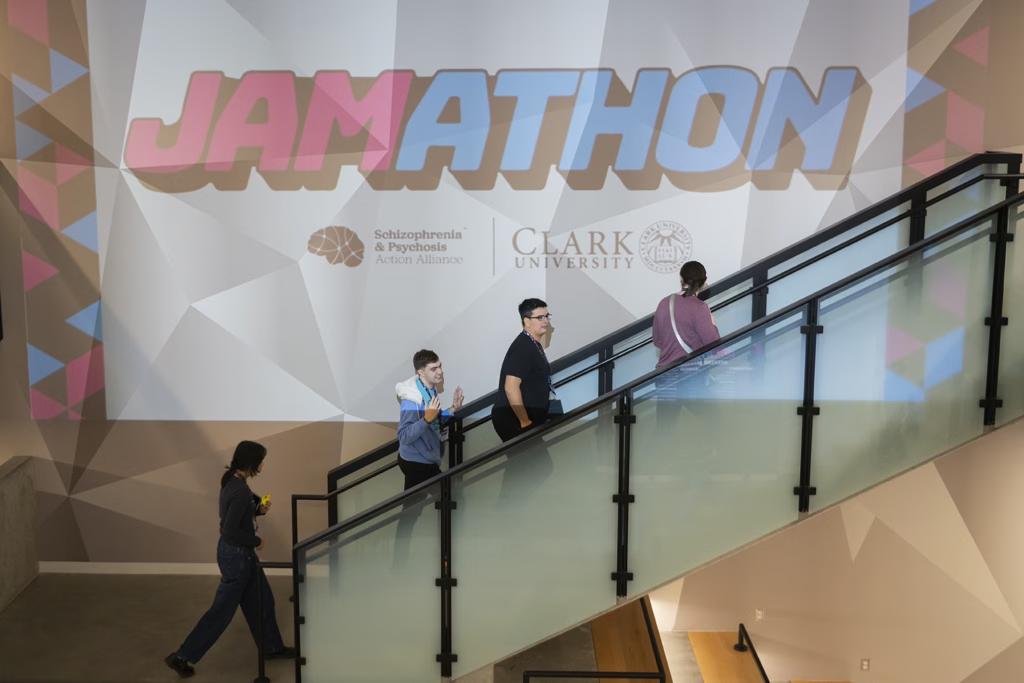
In her introduction to the event on Saturday morning, Krissa Rouse, S&PAA’s director of programs and community engagement, noted that a goal of the Jamathon was to bring awareness and understanding to a condition that is “feared, misunderstood, and even demonized.” On Sunday evening, she addressed all the participants: game designers, judges, mentors, caregivers, and those living with schizophrenia who gave first-hand accounts of their experience.
Rouse said she was deeply moved by what she’d witnessed throughout the weekend. “I heard you all talking about schizophrenia and psychosis, and what I heard was kind, compassionate, and meaningful. It’s overwhelming, and we are so proud of you.”