‘It’s so important for kids to know that someone cares about them and wants to pick books that reflect their experience’
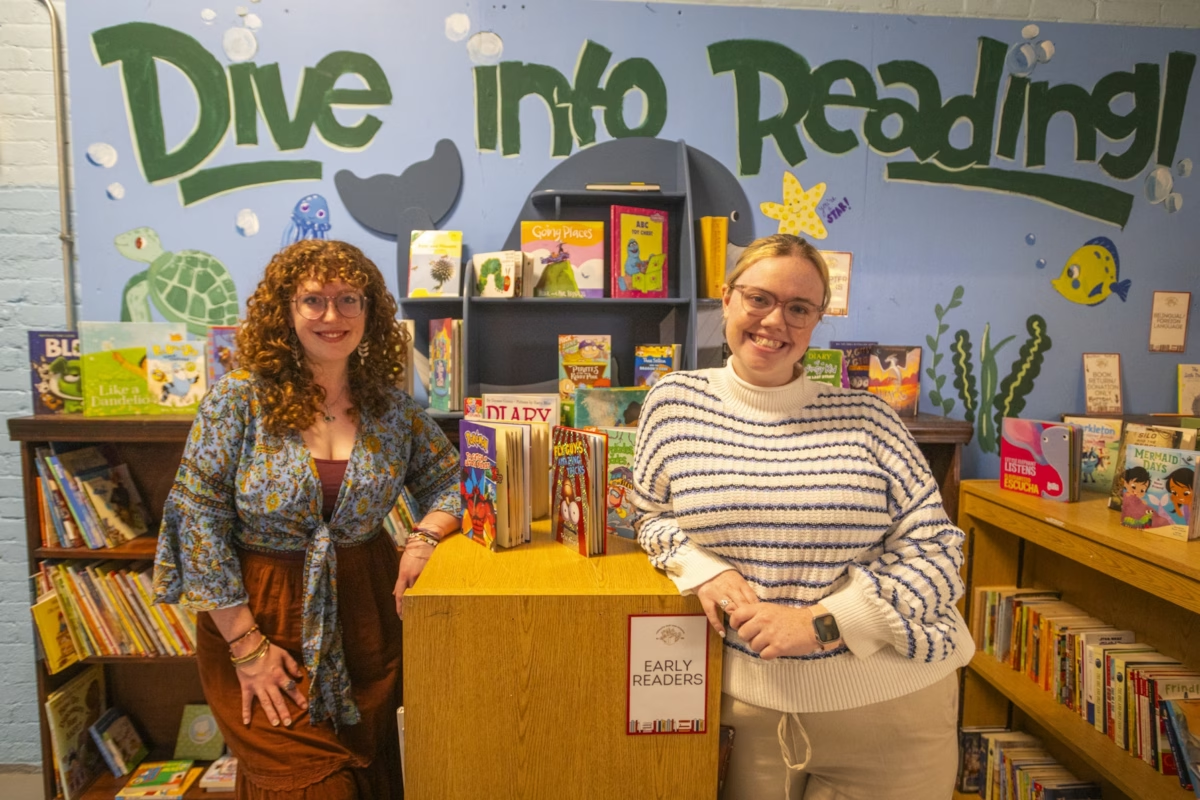
Teachers at the Columbus Park Preparatory School, just a mile from the Clark University campus, have a new way to support their students in becoming lifelong readers. Eager to make an impact and share their love of books, Gwenne Balcius ’26 and Maggie Connors ’26, MAT ‘27, built a cozy, ocean-themed “book nook” at the elementary school last winter.
Initially, the community, youth, and education studies majors wanted to build a Little Free Library on the Clark campus, focusing on politically minded texts. Conversations with mentors and collaborators inspired the pair to expand their idea and focus on local elementary students.
“Opportunists that we are,” Balsius says, “we started asking around to see if we could make this a reality. [Former Clark librarian] Laura Robinson, a mentor and friend, helped us gear it more toward youth, so we started reaching out to community organizations.”
They started collecting titles, and their rooms were piled high with books until they started collaborating with Beth Orsini, founder of independent bookstore Hygge House Books and head of the store’s nonprofit arm, the Community Book Nook Initiative. With a fundraising campaign, some grant hunting, and Orsini’s storage space, Balcius and Connors got to work.
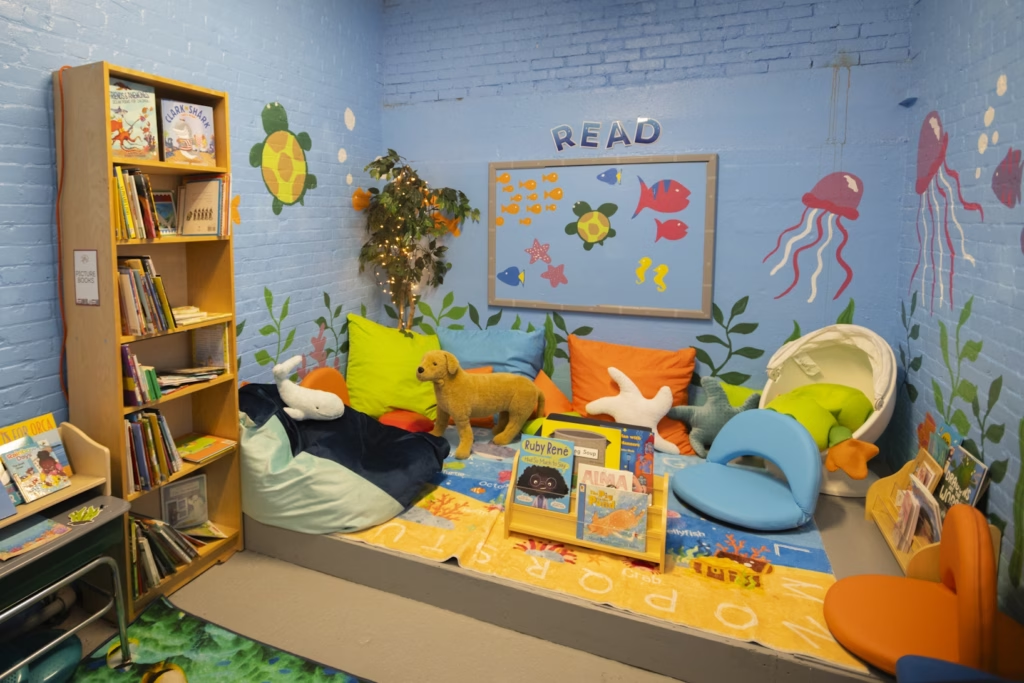
Last December, Balcius, Connors and several volunteers — including Education Professor Eric DeMeulenaere, fellow Clark students, and a few people from the Community Book Nook Initiative — spent two days making the charming library a reality.
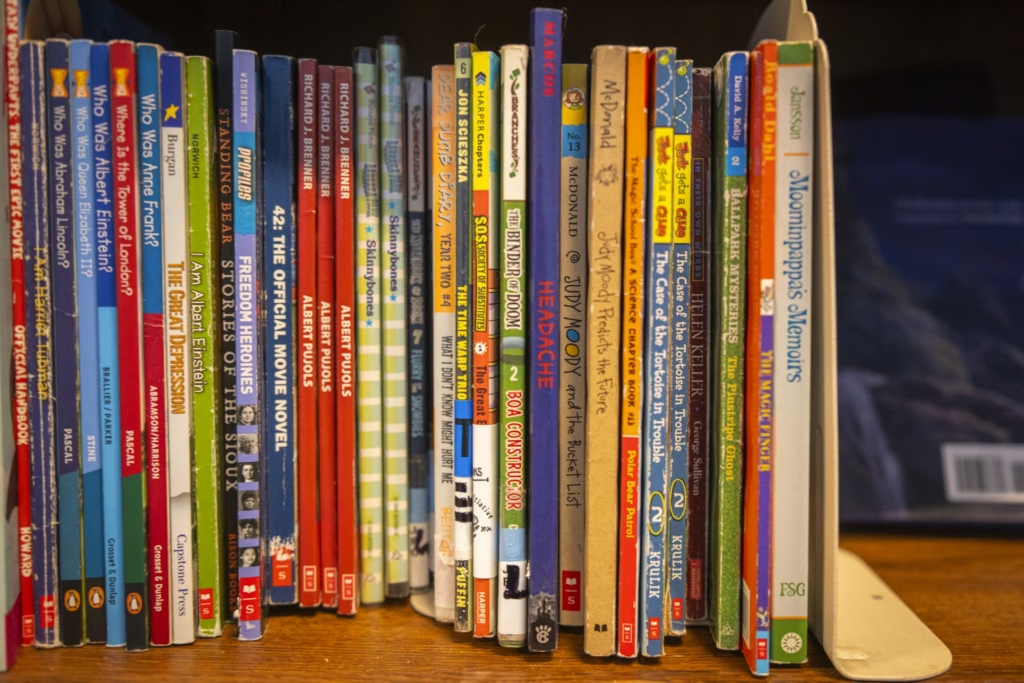
“On the first day, even some Columbus Park students were helping us move chairs,” Balcius says. “Most of our time was spent sorting through the preexisting books in the space, finding which ones were good quality and in good shape. Our priority was giving these students culturally relevant works. Part of our research has been focused on the impact of meaningful texts for kids who are non-American, non-white, or who speak other languages.”
Some of the books kids can flip through at Columbus Park include “Remember Us”by Jacqueline Woodson, “How Do You Say? / ¿Cómo Se Dice?”by Angela Dominguez, or “Parachute Kids”by Betty C. Tang.
Columbus Park Principal Lisa Carginan helped Balcius and Connors after hours and encouraged their creative freedom.
Beyond increasing access to books for Worcester youth, Balcius and Connors wanted to understand how many kids read for pleasure and how new teachers are bridging that gap. They conducted three interviews with graduates of Clark’s Master’s in Teaching program who are now teaching in Worcester Public Schools. For each of them, the data told different stories.
“These teachers are going through a tough transition right now: the rise of technology, lessening attention spans, innovating on how to use tech to support learning. Those we interviewed spoke candidly about a lack of community and a lack of communication between students on track to become teachers and new graduates in the field, who can help us understand what to expect in real life,” Connors says.
“I was focused on teachers’ options and how they handle this discrepancy. Many teachers get handed their curriculum and have to come up with individual solutions,” Connors explains. “It can vary so much between teachers in different districts — how students receive these solutions, how principals respond. For high school teachers, there’s a general belief that reading is something you’re taught when you’re younger, but you’re never done learning how to read.”
Mere access is not the key. Each student has their own needs so teachers must devise individualized action plans.
“People think the solution is to plop any book in a kid’s hands, but there needs to be engagement. And engagement often needs support,” Balcius says. “A lot of teachers described a model of independence with scaffolding. This means giving students the autonomy to choose what they want to read and when, while still supporting them from the sidelines. None of the teachers we interviewed said they’d deny a kid a book based on their reading ability; instead, they’d work them up to it.”
For Balcius, responding to book bans emerging across the country and researching an underrepresented perspective was the most gratifying.
“Someone can point to a text with poor, inaccurate representation and say that it’s good enough even when it will negatively impact readers. For our intervention, we chose texts that were ‘enabling.’ Enabling texts give kids something to latch onto, culturally and linguistically, something that makes them feel positively represented. It’s so important for kids to know that someone cares about them and wants to pick books that reflect their experience,” Balcius explains.
“According to the observations of our educators within our participant population, children are largely reading for pleasure less in schools,” Balcius says. “They noted the causes of limited reading include lack of modeled reading, parents reading in the home around children in early life; an increased use or dependence on technology; a focus on reading as ‘just a school thing’; students not owning books; and long-term systemic issues impacting students across their educational careers.”
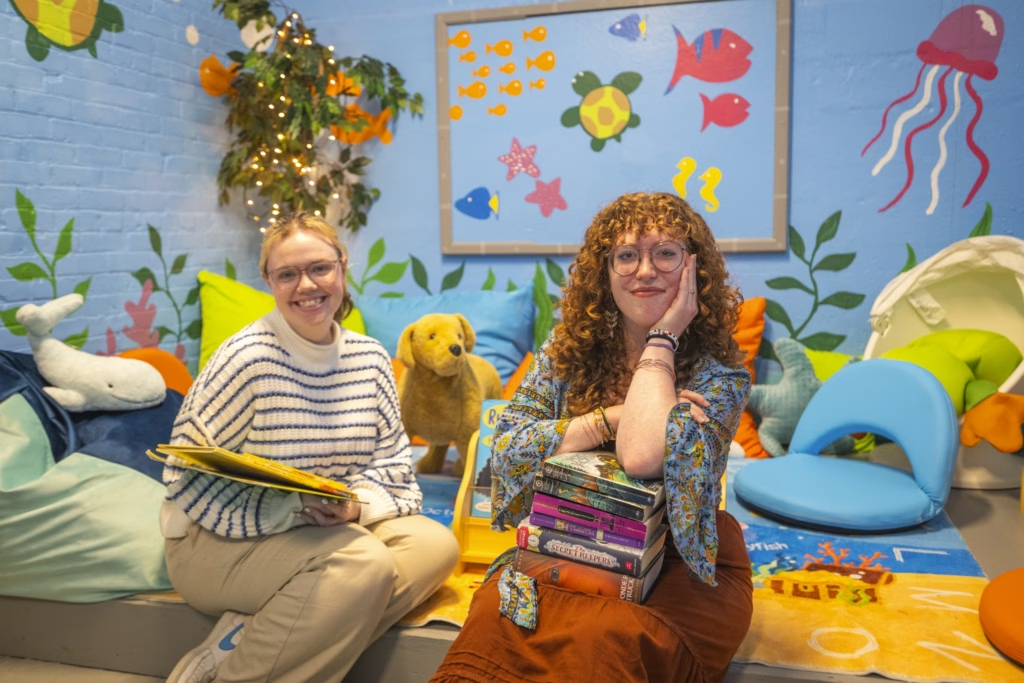
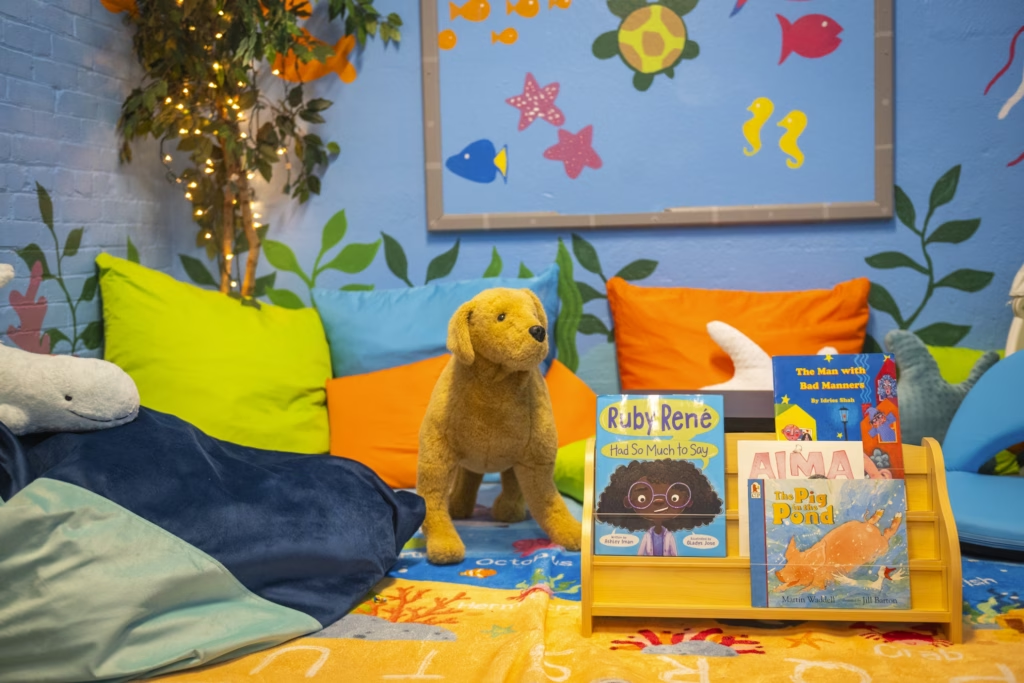
Balcius and Connors hope to ignite in young people a love of reading like they had growing up.
“I still have my childhood library card,” Connors says. “I was surrounded by reading at home — both my brothers loved to read. My mom is in three book clubs right now. Growing up with a lazy eye and glasses, I was bullied. Reading was a kind of escape.”
“My dad would read to me every night before bed,” Balcius says. “Eventually, it got to the point where he’d be reading something to me, and I’d be reading my own book; he’d quiz me on what he had picked, and somehow I would get the answers correct.
“I was a military kid. I moved a lot — California, Virginia, Massachusetts,” she continues. “But you know what every state has? Libraries. They’re great community resources for more than just books.”
During the spring semester, Balcius volunteered at the Millbury Historical Society, where she cataloged more than 300 items. Over the summer, she interned at the Susan B. Anthony Birthplace Museum and was responsible for creating an accessible library system. Connors is gearing up to be an elementary teacher focusing on the arts.
Carginan has given Connors and Balcius updates about the book nook.
“She told us that the kids love the library room to read but also just to relax. Apparently, teachers will take the kids there on class field trips,” Balcius says.
“The best part,” Connors says, “is knowing how many kids have actually benefited.”