Polar scientist’s research with students highlights disappearing sea ice and threatened food chains
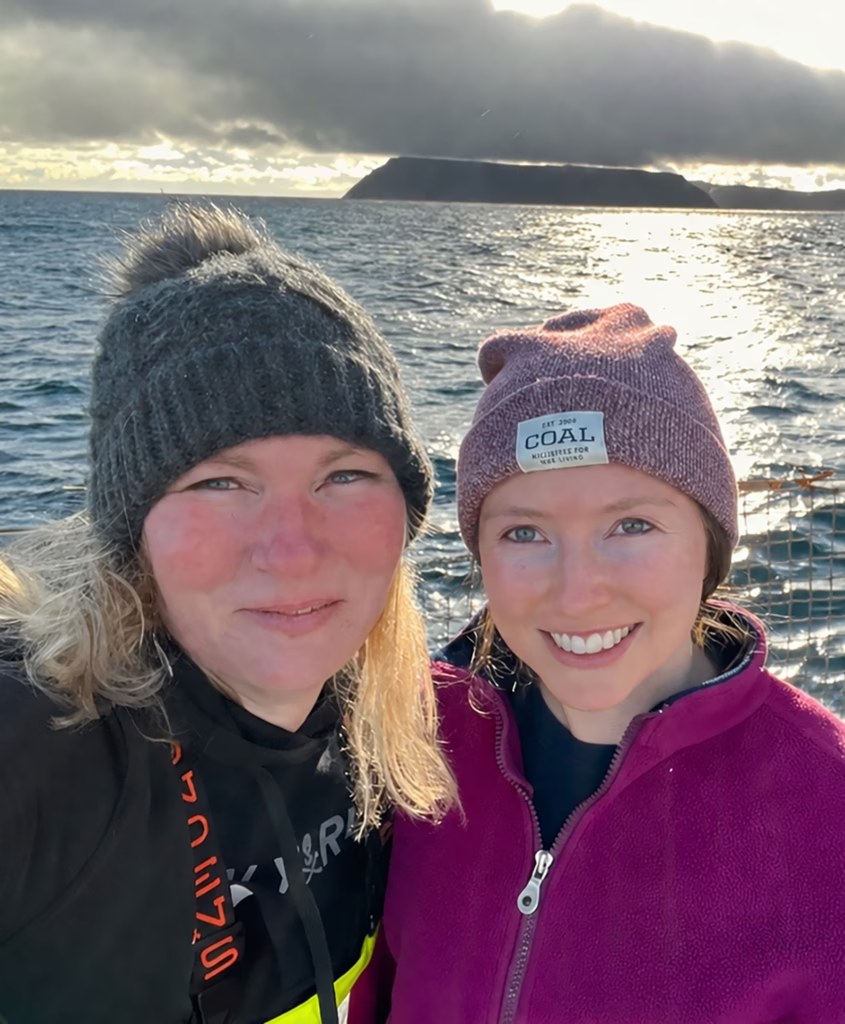
Polar scientist Karen Frey and geography Ph.D. students Morgan Lehman and Anna Zhu of Clark’s School of Climate, Environment, and Society have returned to the Pacific Arctic this summer to study the warming ocean, declining sea ice, and shifting food-web dynamics that impact marine life, from microscopic algae and zooplankton to whales and walruses.
Their research contributes to the Distributed Biological Observatory (DBO), which, since 2010, has brought together scientists from the United States, Canada, China, Japan, South Korea, and Russia to monitor and better understand the impacts of climate change on one of the world’s most rapidly warming regions.
“It’s important to make the same core measurements over long periods of time to get a sense of how things have changed,” says Frey, who has worked with colleagues from the University of Maryland Center for Environmental Science (UMCES) and other institutions. “Annual monitoring in the Arctic allows us to identify changes in these marine ecosystems rapidly.” Frey’s 2023 study in the journal PLOS ONE highlights how these Distributed Biological Observatory sites have shifted in recent decades.
Over 14 years, the Clark-UMCES team has been funded four times with over $11 million in grants from the National Science Foundation’s Office of Polar Programs. In 2025, they received a five-year, $3.5 million grant, of which Frey received $772,000.
This summer — Frey’s 16th trip to the Pacific Arctic since 2006 — she and her colleagues aim to answer an important question: Are Bering and Chukchi sea ecosystems recovering from major sea-ice losses that occurred from 2017 through 2019?
“When you don’t have sea ice, you don’t have sea-ice algae,” she points out. At the bottom of the food chain, changes in microalgae that grow on or inside sea ice can be early indicators of shifting dynamics of marine ecosystems and the Arctic’s food web.
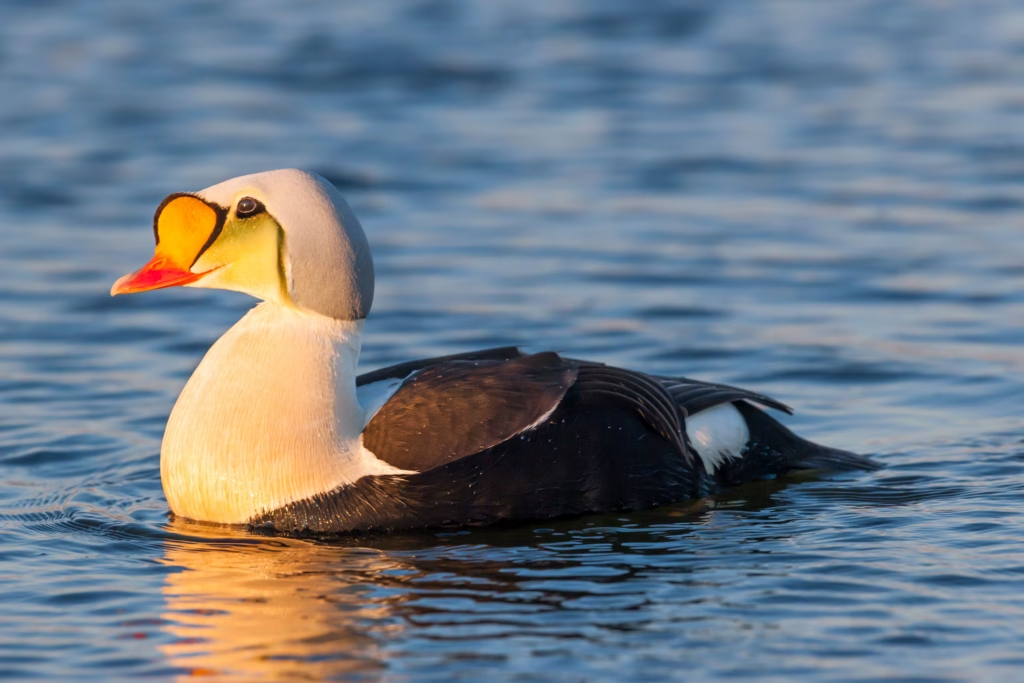
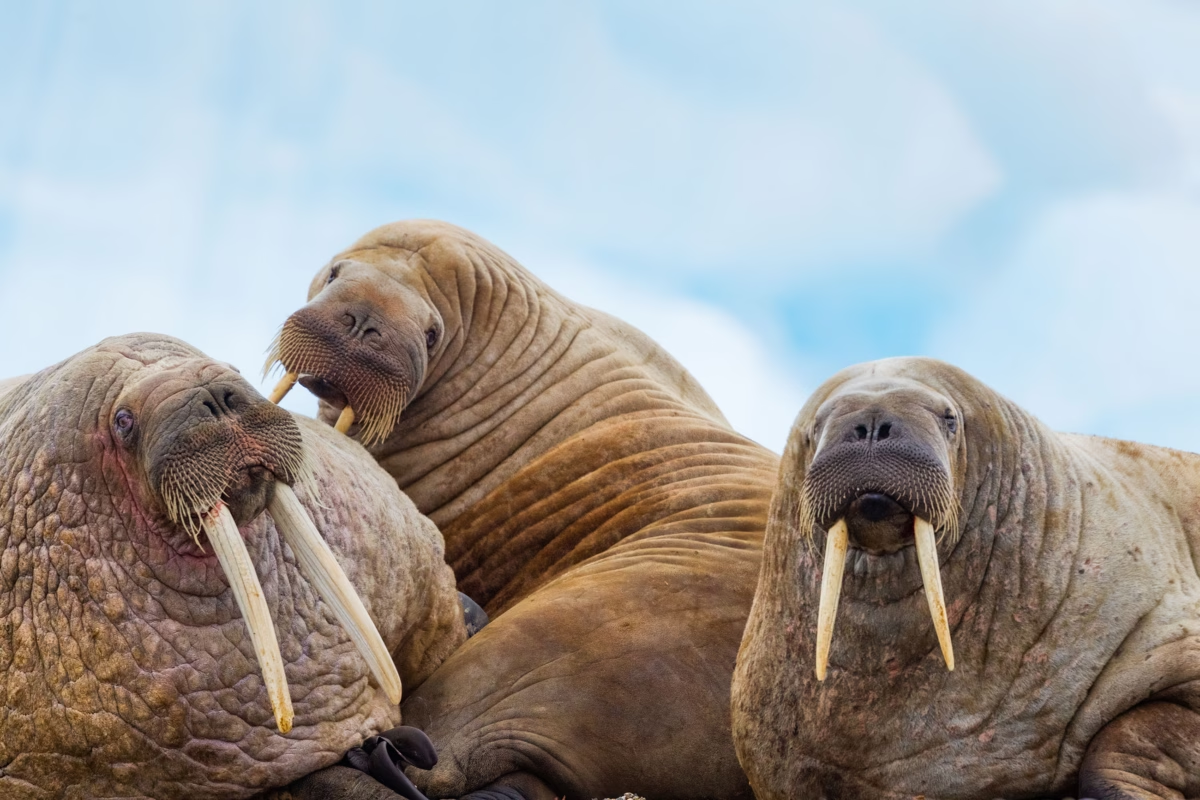
As the ice melts each summer, sea-ice algae sink to the seafloor, becoming food for benthic (seafloor) invertebrates. This food web extends to diving, seafloor-grazing animals like gray whales, who eat crustaceans known as amphipods, and walruses and spectacled eiders (sea ducks), who feast on clams, according to Frey.
“If you care about gray whales or walruses or eiders, you care about sea-ice algae,” she says. “The changes in sea ice and sea-ice algae have great implications for their ability to survive.”
‘If you get mismatches in a marine ecosystem, it can wreak havoc along the way’
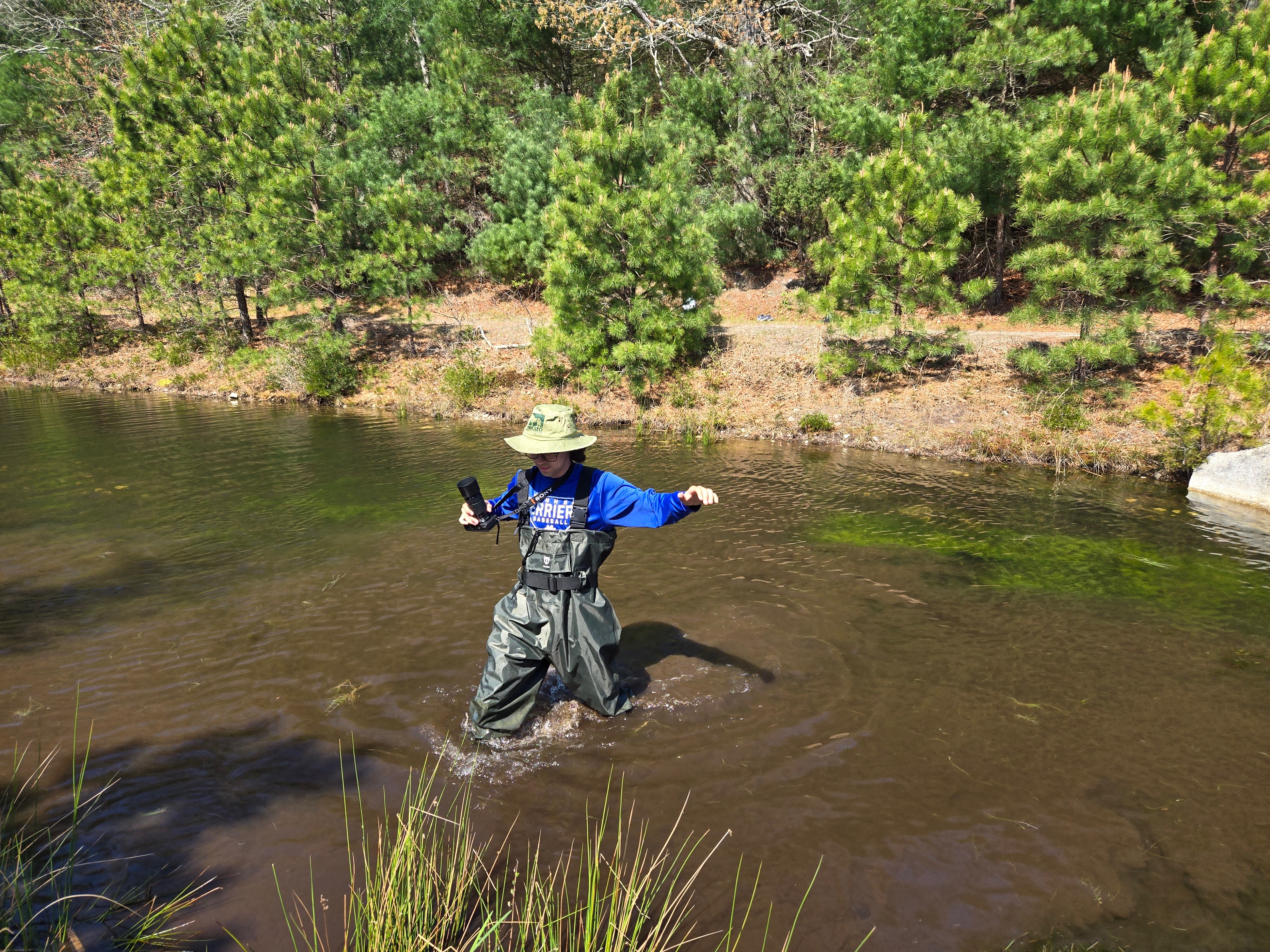
Aboard the Canadian Coast Guard Cutter Sir Wilfrid Laurier in the Bering and Chukchi seas, Frey, her undergraduate and graduate students, and her UMCES colleagues have visited the same biological “hotspots,” every year. They measure seawater temperature, sea-ice conditions, sunlight penetration below the ocean’s surface, phytoplankton productivity, water biogeochemistry, and the benthic ecosystems.
Beyond declining sea-ice algae, the decrease in sea ice has led to increased phytoplankton blooms extending into the fall, according to Frey.
She explored this phenomenon with first author Clare Gaffey, M.A. ’22, Ph.D. ’24; Geography Professor Lyndon Estes; and others in a 2025 article, “Environmental Factors Associated with Fall Phytoplankton Blooms in the Northern Bering and Chukchi Seas,” published in the Journal of Geophysical Research: Oceans (JGR Oceans).
“The open-water ocean season is getting longer, seawater is warming, and it’s taking longer for sea ice to regrow,” says Frey, who has reported such findings as a longtime contributor to NOAA’s annual Arctic Report Card.
“Even though it’s the fall, and the sun is so much lower, there’s still enough sunlight that these blooms are occurring that late in the season, she explains. And “if you get timing mismatches in a marine food web, it can wreak havoc along the way.”
As the authors concluded, “although the implications of this are unclear, the emerging growing season could potentially impact ecosystems by extending the temporal activity of grazers and also alter nutrient distributions.”
‘Algae blooms don’t just respond to warming — they absorb light and generate heat’
As Frey and Gaffey observed the increasing number of open patches of sea water due to melting ice on their Pacific Arctic trip in summer 2022, they wondered what was happening below the ocean’s surface as it became exposed to more sunlight. What would that mean for the formation of new sea ice, the growth of phytoplankton, and even how carbon moves through the ocean, influencing the Earth’s climate?
To answer these questions, Frey obtained an additional NSF RAPID grant, which — along with Gaffey’s NSF Doctoral Dissertation Improvement Grant — funded participation in an international research expedition to the Chukchi Sea, Central Arctic Ocean, and extending all the way to the North Pole. Aboard the U.S. Coast Guard Cutter Healy, the scientists measured phytoplankton, sunlight, and ocean temperatures to understand how these late-season blooms affect the movement of solar energy through the water column extending vertically below the ocean’s surface.
In May 2026, first and second authors Gaffey and Frey reported their findings with colleagues in a JGR Oceans article, “Fresh Phytoplankton Bloom Growth in the Fall and Its Control on Ocean Heating in the Pacific Arctic Region.” (Gaffey is now a postdoctoral researcher at Oregon State University; her work was recently highlighted by the NSF’s Arctic Data Center.)
“At the end of the day, the story’s still the same: The Arctic is warming faster than any other place on the planet.”
— polar scientist karen frey
Shrinking sea ice allows more light into the ocean through “melt ponds” exposing sea water, according to Frey. A bird’s-eye view indicates melt ponds appearing as dark spots amid the white ice.
“Sea ice has a high albedo — a high reflectance. Melt ponds and open ocean have very low albedo,” she says. “Melt ponds act like skylights, letting sunlight pour into the ocean below.”
To complicate matters, the authors found, “algae blooms don’t just respond to warming — they also absorb light and generate heat,” Frey says.
Using light measurements, the team “calculated how much heating is happening in place,” she says. “Where heat is generated matters just as much as how much heat there is.”
The blooms absorb light and redistribute heat within the water column, changing where heat is stored.
“If you have a large algal bloom near the surface, the heat is closer to the surface instead of being distributed vertically throughout the water column, and then there’s a cooling effect further underneath,” Frey say. “That redistribution of heat has the potential to delay sea ice formation and, in turn, reinforce Arctic warming by extending the open-water season, leading to more sunlight and the greater opportunity to have more algal blooms.”
As she reflects on her years of studying the region, Frey concludes: “With warming and sea ice decline, we have seen some significant changes in Arctic marine ecosystems. The big question that remains now is how resilient these ecosystems are to climate perturbations.
“At the end of the day,” she adds, “the story’s still the same: The Arctic is warming faster than any other place on the planet.”